

Monomorium esharre
- Scientific Name
- Monomorium esharre
- Tribe
- Solenopsidini
- Subfamily
- Myrmicinae
- Author
- Bolton, 1987
- Common Name
- Tiny Desert Timid ant
- Distribution
- Found in 2 countries
Monomorium esharre Overview
Monomorium esharre (commonly known as the Tiny Desert Timid ant) is an ant species of the genus Monomorium. It is primarily documented in 2 countries , including Namibia, South Africa. Detailed taxonomic data and occurrence records can be further explored via authoritative databases such as AntWeb or the Global Biodiversity Information Facility (GBIF).
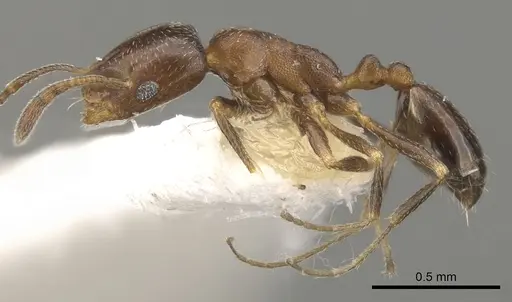
Monomorium esharre - "Tiny Desert Timid ant"
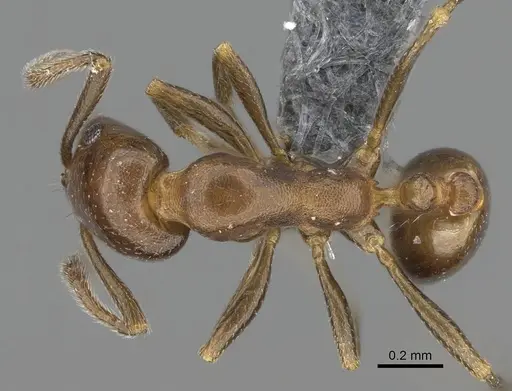
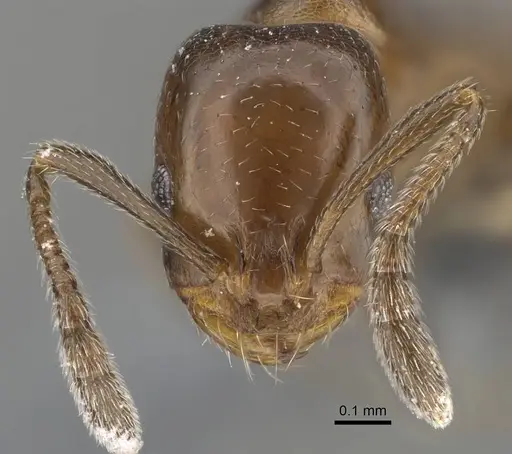
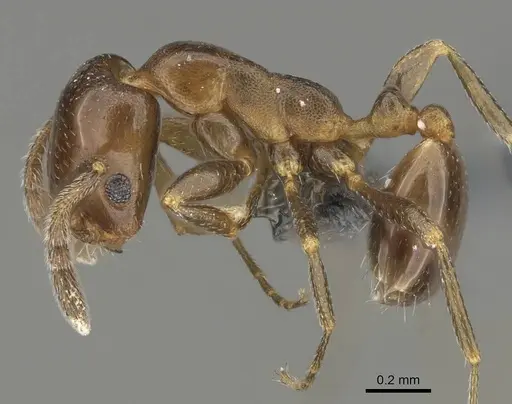
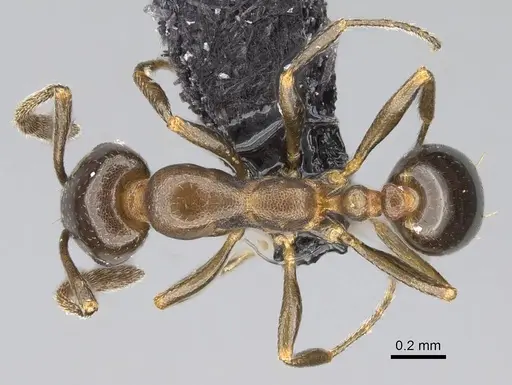
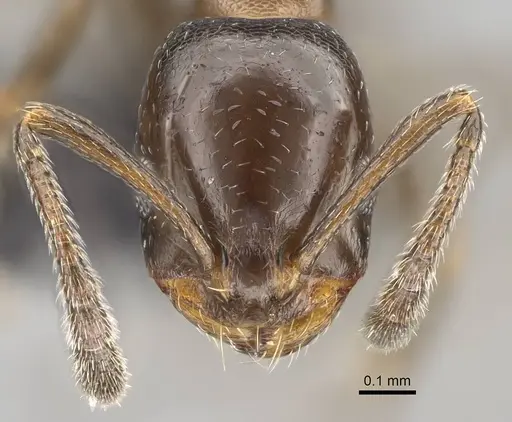
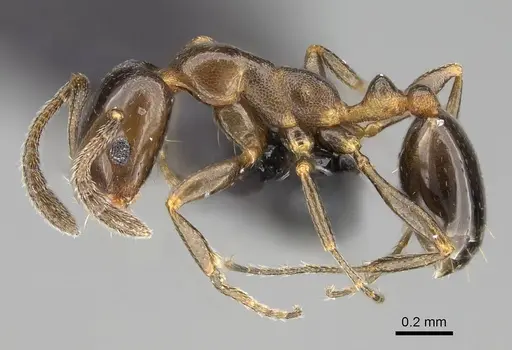
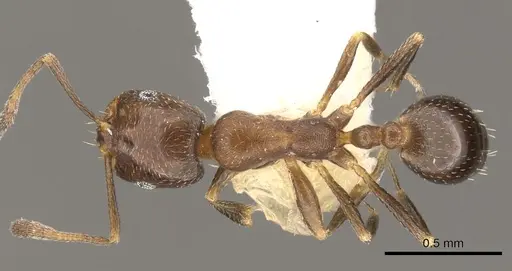
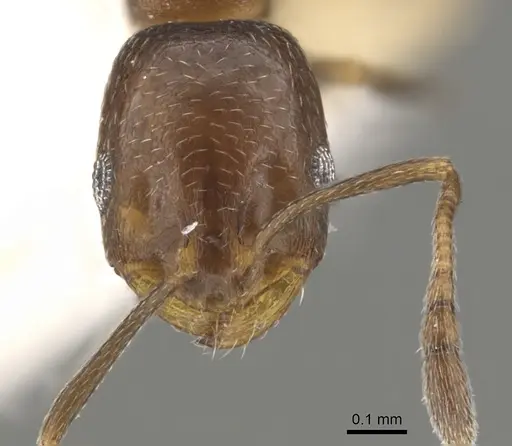
Monomorium esharre is an exceptionally tiny ant species from the arid regions of Namibia and South Africa. Workers measure just 1.9-2.0mm, making them among the smallest ants you could keep. They belong to the Monomorium salomonis species group (mediocre complex), characterized by their very reduced cephalic sculpture and almost no dorsal pilosity. The head and gaster are blackish brown, with the alitrunk somewhat lighter. These ants were collected from the Namib Desert and from a garden in South Africa, indicating they can survive in both extreme desert and more temperate garden environments [1].
This is one of the least-studied ant species in the hobby. We know almost nothing about their colony structure, founding behavior, or specific care requirements. What we do know is that they are ground-dwelling ants found in savannah habitats, and they show very low behavioral dominance in their native ecosystem, they are not aggressive at food sources and rarely monopolize resources [2]. This suggests a docile, non-confrontational species that may be suitable for observation-focused keepers.
Quick Summary
- Difficulty: Expert
- Origin & Habitat: Namib Desert and savannah habitats in Namibia and South Africa [2][1]. Type specimens collected via pitfall traps in the Namib Desert (23°04'S,15°36'E). Other specimens found in South African gardens [1].
- Colony Type: Unknown, colony structure (single queen vs multiple queens) has not been documented for this species
- Size & Growth:
- Queen: Undescribed, no queen specimens have been collected or described
- Worker: 1.9-2.0mm
- Colony: Unknown, no colony size data exists for this species
- Growth: Unknown
- Development: Unknown, no development data exists for this species (This species has never been kept in captivity, so no timeline data exists. Estimates based on related Monomorium species suggest 4-8 weeks at optimal temperature, but this is purely speculative.)
- Antkeeping:
- Temperature: Likely warm-adapted given Namib Desert origin. Start around 24-28°C and observe colony activity. Provide a gentle temperature gradient allowing ants to self-regulate. This is an estimate based on habitat, no specific thermal studies exist for this species.
- Humidity: Likely adapted to arid conditions. Keep nest substrate moderately dry with a small moist area available. The Namib Desert experiences very low humidity, but some moisture is likely available in microhabitats. Offer a humidity gradient with a damp corner and drier areas.
- Diapause: Unknown, no research on seasonal behavior exists. The Namib Desert has extreme temperature variations between seasons, so some form of winter rest is possible. However, desert ants often remain active year-round if temperatures stay suitable. Monitor for natural slowing of activity.
- Nesting: Ground-nesting species. In captivity, a small test tube setup or Y-tong nest with appropriately scaled chambers would work. Given their tiny size (under 2mm), chambers must be very small to prevent workers from getting lost or stressed. A naturalistic setup with fine soil substrate may also be suitable.
- Behavior: Very docile based on field data, they show 0% behavioral dominance and rarely monopolize food baits [2]. Workers are small and likely not capable of stinging humans. Escape prevention is critical due to their minute size, they can squeeze through extremely small gaps. Foraging style is unknown but they are ground-dwelling, so they likely forage on the substrate surface.
- Common Issues: no captive husbandry data exists, this species has never been kept in captivity, so all care is experimental, tiny size makes escape likely without fine mesh barriers and tight-fitting lids, unknown colony structure means you may not know if your setup is appropriate until the colony fails to thrive, no food acceptance data, you will need to experiment with various protein and sugar sources, slow or absent adoption by sellers means finding a colony may be nearly impossible
Why Monomorium esharre Is an Expert-Only Species
This species is genuinely one of the most challenging ants you could attempt to keep because absolutely no captive husbandry information exists. Unlike most ant species in the hobby where at least some keeper experience exists, Monomorium esharre has never been documented in captivity. Every aspect of their care would be experimental. The lack of data extends to basic biology, we don't know their colony structure, founding behavior, development timeline, or preferred foods. You would be essentially pioneering husbandry for a species that scientists know almost nothing about. This makes them suitable only for experienced antkeepers who understand that they may need to try multiple approaches before finding what works. Even then, success is far from guaranteed.
Additionally, their extreme small size (under 2mm) creates practical challenges. Finding appropriately sized food, preventing escape through microscopic gaps, and observing them clearly all require extra effort. Most standard antkeeping equipment is designed for larger species. You would likely need to improvise or modify setups to accommodate their minute dimensions. [1]
Housing and Setup Recommendations
Given their ground-dwelling nature and tiny size, a small test tube setup is the most practical starting point. The test tube should have a very small water reservoir, just enough to maintain humidity without flooding, as their small size makes them vulnerable to drowning. The cotton barrier must be tightly packed to prevent any gaps. Alternatively, a small Y-tong or acrylic nest with chambers scaled to their size could work, but standard commercial nests are likely too large.
For the outworld, keep it simple and small. A small plastic container with smooth walls will help you observe foraging. Because they are so tiny, escape prevention must be excellent, use fine mesh on any ventilation and check all lid seams carefully. Even the tiniest gap is a potential escape route for ants this small. A naturalistic setup with a thin layer of fine soil or sand could also work, mimicking their natural ground-nesting habitat in the Namib Desert.
Feeding Strategy
No specific feeding data exists for this species, but they likely follow typical Monomorium patterns. These ants are generalist feeders that likely accept small insects, honeydew, and sugar sources. However, their tiny size means any prey items must be extremely small. Flightless fruit flies, pinhead crickets, and similar items would be too large, you would need to offer very small prey like springtails, aphids, or tiny fruit fly pieces.
Start by offering a small drop of sugar water or honey diluted with water, along with the smallest protein source you can obtain. Observe carefully to see what they accept. Given their docile nature and low dominance in the wild [2], they may be outcompeted by more aggressive species if kept in multi-species setups. Feed in small amounts and remove uneaten food promptly to prevent mold.
Temperature and Humidity Management
Based on their Namib Desert origin, these ants likely prefer warmer conditions with lower humidity than many common pet species. Start with temperatures in the 24-28°C range and observe colony behavior. If workers seem sluggish, slightly increase temperature. If they cluster away from heat sources, reduce it. A temperature gradient allows the colony to self-regulate.
For humidity, aim for moderately dry conditions with a small moist area. The Namib Desert is extremely arid, but these ants were collected from pitfall traps suggesting they do require some moisture. Keep the nest substrate slightly damp in one area while leaving other areas dry. This allows the ants to choose their preferred microclimate. Avoid creating consistently wet or waterlogged conditions, they are desert-adapted. [2][1]
Understanding the Research Gap
The scientific literature on Monomorium esharre is extremely limited. The original description by Bolton in 1987 provides only morphological details. The only ecological data comes from a 2015 study on Namibian ant assemblages, which found them in savannah habitat with very low abundance and zero behavioral dominance [2]. Beyond this, no research has examined their biology, reproduction, or ecology.
This means you cannot rely on published science for care guidance. Everything in this caresheet is either inferred from their habitat (Namib Desert), their genus (Monomorium), or from general antkeeping principles. You may need to adapt your approach significantly based on what you observe. Keep detailed notes of your husbandry attempts, your observations could contribute to future understanding of this species. Consider sharing your experiences with the antkeeping community so others can learn from your experiments.
Frequently Asked Questions
Can I keep Monomorium esharre as a beginner antkeeper?
No, this species is not suitable for beginners. It has never been kept in captivity before, meaning all care is experimental with no established protocols. Beginners should start with well-documented species like Lasius niger, Camponotus, or Tetramorium species that have known care requirements and established husbandry methods.
Where can I get a Monomorium esharre colony?
This species is extremely rare in the antkeeping hobby. It has only been documented in Namibia and South Africa, and no commercial breeders are known to offer it. Finding a colony would likely require collecting in the wild, which presents significant challenges including legal permits, location access, and the difficulty of locating such a tiny species.
What do Monomorium esharre ants eat?
No specific feeding data exists for this species. Based on typical Monomorium genus behavior, they likely accept small insects and sugar sources. However, their tiny size (under 2mm) means prey must be extremely small, possibly springtails or tiny fruit fly pieces. You will need to experiment to determine what they accept.
How long does it take for Monomorium esharre to develop from egg to worker?
This is completely unknown, no development data exists for this species. Related Monomorium species typically develop in 4-8 weeks at optimal temperature, but this is a rough estimate with no data specific to M. esharre. You would need to document this yourself if you successfully establish a colony.
What size colony does Monomorium esharre reach?
Unknown, no colony size data exists for this species. The related Monomorium salomonis species group typically forms small to moderate colonies, but M. esharre specifically has never been studied in this regard. You would be discovering this information yourself if you establish a colony.
Do Monomorium esharre need hibernation?
Unknown, no research exists on their seasonal behavior. The Namib Desert has extreme temperature variations, so some form of winter rest is possible. However, desert ants often remain active year-round if temperatures stay suitable. Monitor your colony for natural slowing of activity and adjust care accordingly.
Is Monomorium esharre aggressive?
Field data suggests they are very docile. A 2015 study found they show 0% behavioral dominance and rarely monopolize food baits [2]. They are not aggressive at food sources and likely avoid confrontation. This makes them interesting for observation but means they may be outcompeted by more aggressive species.
Can I keep multiple Monomorium esharre queens together?
Unknown, no data exists on their colony structure. We don't know if they are single-queen (monogyne) or multi-queen (polygyne) species. Without this basic biological information, combining queens would be extremely risky and is not recommended.
What is the best nest type for Monomorium esharre?
A small test tube setup with appropriately scaled chambers is the most practical. Standard formicarium chambers are likely too large for these tiny ants (under 2mm). The nest should have very small chambers and passages to prevent workers from getting lost. A naturalistic setup with fine soil substrate may also be suitable given their ground-nesting nature.
References

This caresheet is licensed under CC BY-SA 4.0 .
Literature
Loading...Loading products...