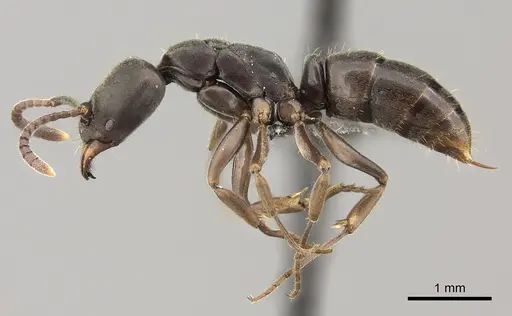
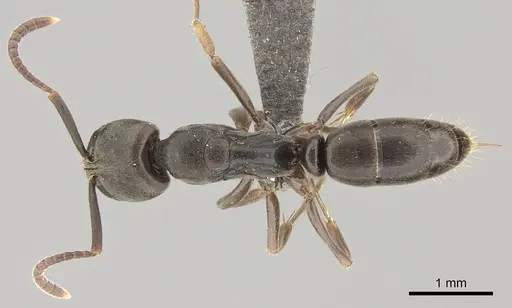
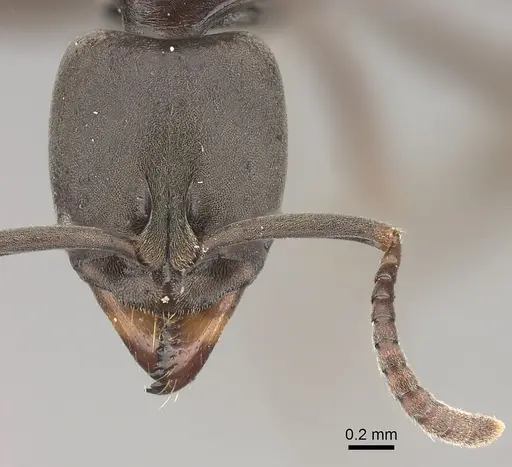
Mesoponera ingesta - "Ingesta Mesoponera Ant"
Mesoponera ingesta is a fascinating ant species belonging to the Ponerinae subfamily, native to various parts of Africa. These medium-sized, slender ants are typically brown to black in color, known for their finely punctate bodies, sparse pilosity, and dense, fine pubescence. While specific detailed studies on M. ingesta are limited, their behavior is often inferred from closely related species like Mesoponera caffraria. They are primarily predatory, hunting insects, but also forage for sugary liquids. Colonies are relatively small and exhibit interesting cooperative foraging behaviors, often utilizing tandem running. They are ground-dwelling ants, frequently found nesting in soil or even abandoned termite mounds.
- Difficulty: Medium
- Origin & Habitat: Africa (Chad, Democratic Republic of Congo, Mali, Sierra Leone, South Sudan, United Republic of Tanzania), part of the Old World tropics extending to Australia and the Solomon Islands. in Forests, grasslands, and other tropical environments. They nest hypogaeically (in the ground) or within active/abandoned termitaries and forage in subterranean and leaf litter strata..
- Colony Type: Monogyne (typically one queen, though orphaned workers can lay eggs), semi-claustral (queen forages during colony founding) founding.
- Size & Growth:
- Queen: 5-10mm
- Worker: 5-10mm
- Colony: Small (typically 60-120 workers). Slow growth.
- Antkeeping:
- Temperature: Ideally, maintain a temperature range between 24-28°C (75-82°F) to mimic their tropical origins. A slight temperature gradient can be beneficial, allowing the ants to choose their preferred spot..
- Humidity: High humidity is crucial for this species, reflecting their subterranean and leaf litter habitats. Aim for 70-90% humidity within the nest. Maintaining a moist substrate is key..
- Diapause: Not required. Not specified at Not specified.
- Nesting: These ants prefer naturalistic setups such as soil nests, naturalistic formicaria, or even Ytong nests with high humidity. Test tubes are suitable for founding, but they'll need a proper nest once the colony grows..
- Behavior: Medium (towards prey, potentially defensive if nest is disturbed) aggressiveness.
- Common Issues: Humidity fluctuations leading to stress, Mold in nest due to excessive humidity without proper ventilation, Colony stalling if dietary needs are not met (protein/sugars), Mites, especially in high humidity setups, Queen stress during founding if foraging is difficult or disturbed.
Mesoponera ingesta, while not as extensively studied as some other species, offers unique insights into ant behavior for dedicated antkeepers. Drawing parallels from its close relative, Mesoponera caffraria, we understand they are adept predators that also enjoy sugary treats, making their feeding interesting to observe. Their semi-claustral founding means the queen will venture out to forage during the initial stages of colony establishment, requiring a secure setup that allows for safe foraging in a small outworld.
One of the most remarkable aspects of Mesoponera species, particularly M. caffraria, is their distinct division of labor among workers. Unlike many ants where tasks change with age, individual Mesoponera workers appear to specialize early in their lives, either focusing on internal nest activities or becoming dedicated foragers. This specialized polyethism is not commonly seen and provides a fascinating subject for observation within your formicarium.
These ants exhibit cooperative foraging, which can be a delight to witness. They are known to use tandem running, a form of communication where one ant leads another to a food source. This intricate social behavior highlights their intelligence and coordinated effort in securing resources, adding another layer of depth to their antkeeping appeal. Providing a well-structured outworld with diverse foraging opportunities can encourage this natural behavior.
Given their natural nesting habits, a suitable formicarium for Mesoponera ingesta should prioritize consistent humidity and provide burrowing opportunities. Nesting in materials like soil, loam, or even rotting wood imitations will allow them to create tunnels and chambers that mimic their natural underground and termitary homes. They are also known to temporarily emigrate entire colonies into new locations, such as attacked termite nests, suggesting they might appreciate the option to move within a larger setup.
An important consideration for this species is the potential for gamergates. While colonies are typically monogyne with a single queen inhibiting worker reproduction, if the queen is lost, orphaned workers have the ability to lay fertile eggs. This means that even without a queen, a colony might persist for some time, albeit without a traditional reproductive queen, making colony management unique.