

Melophorus fieldi
- Scientific Name
- Melophorus fieldi
- Tribe
- Melophorini
- Subfamily
- Formicinae
- Author
- Forel, 1910
- Distribution
- Found in 1 countries
Melophorus fieldi Overview
Melophorus fieldi is an ant species of the genus Melophorus. It is primarily documented in 1 countries , including Australia. Detailed taxonomic data and occurrence records can be further explored via authoritative databases such as AntWeb or the Global Biodiversity Information Facility (GBIF).
Melophorus fieldi
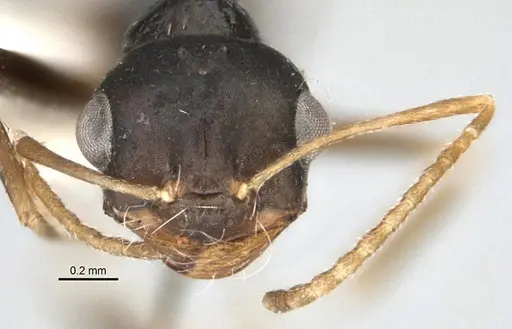
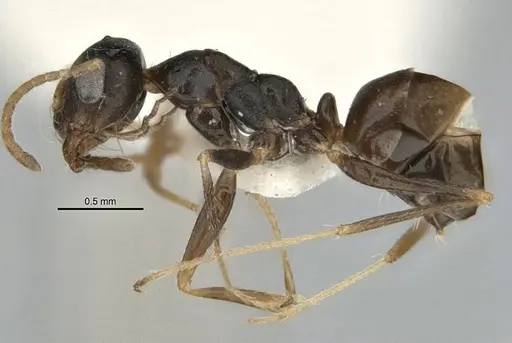
Melophorus fieldi is a small to medium-sized ant native to arid and semi-arid regions of Australia. Workers come in two distinct sizes: minor workers are tiny at 0.56-0.59mm head width and appear blackish-brown with a dull silky sheen, while major workers are larger (up to 1.19mm) and display a brown coloration. This species is part of the Melophorus biroi species group and is distinguished by its relatively large eyes, compact body, and long spindly legs. The clypeal psammophore (a brush of hairs used for carrying particles) is positioned at or above the midpoint of the clypeus. These ants can be tricky to distinguish from close relatives like Melophorus bruneus and Melophorus turneri, with the minor workers showing a characteristic facies with very large bulging eyes and a highly microreticulate mesosoma [1].
This species is a generalist scavenger that forages for both animal and plant materials in semi-arid woodlands throughout its range across NSW, NT, SA, and WA. Like other Melophorus species, they have undergone rapid diversification coinciding with Australia's aridification, and they often display hairy legs and scapes as an adaptation to their environment [1].
Quick Summary
- Difficulty: Medium
- Origin & Habitat: Native to arid and semi-arid Australia, found in NSW, NT, SA, and WA. In natural habitats, these ants nest in red loamy soil in mallee areas, dry sclerophyll woodland, and near creek areas in mallee scrub [2].
- Colony Type: Colony structure is not well-documented in scientific literature. Based on genus patterns, likely monogyne (single queen) colonies, though this requires confirmation for this specific species.
- Size & Growth:
- Queen: Undocumented for this species, Melophorus queens are typically 6-9mm based on genus patterns.
- Worker: Minor workers: 0.56-0.59mm head width, Major workers: up to 1.19mm head width [1].
- Colony: Colony size is unconfirmed for this species. Based on related Melophorus species and arid-environment generalist patterns, colonies likely reach several hundred workers.
- Growth: Moderate, based on typical Melophorus development patterns in semi-arid environments.
- Development: 6-10 weeks estimated based on typical Melophorus genus development at optimal temperatures. (Development time is estimated from related species in the genus. Temperature will significantly impact development speed.)
- Antkeeping:
- Temperature: Keep at 24-28°C for optimal development. As an arid-adapted species, they can tolerate warmer conditions but avoid excessive heat above 35°C. A temperature gradient allows workers to self-regulate.
- Humidity: Low to moderate humidity, think dry to semi-arid conditions. Keep nest substrate moderately dry, allowing some areas to dry out completely. Avoid constant saturation.
- Diapause: Likely requires a winter rest period (diapause) given their Australian temperate to arid distribution. Reduce temperature to 15-18°C for 2-3 months during winter.
- Nesting: Natural nesting occurs in soil, particularly red loamy substrates in mallee areas. In captivity, a dry to semi-dry formicarium or Y-tong nest works well. Avoid overly humid conditions that would cause mold. Provide a nesting chamber scaled to colony size.
- Behavior: These ants are generalist scavengers and foragers. They are likely active foragers that search for food rather than tending aphids. Based on their large eyes, they may use visual cues for navigation. Workers are probably moderately aggressive in defending food sources but not particularly territorial or aggressive toward keepers. Their small to medium size and active foraging behavior means escape prevention should be moderate, they can climb smooth surfaces but are not extreme escape artists like some tiny species. They are likely diurnal, foraging during cooler parts of the day in their natural arid habitat.
- Common Issues: colonies may fail if kept too humid, this is an arid-adapted species that prefers dry conditions, winter dormancy is often required but may be overlooked, causing colony decline in subsequent seasons, small minor workers can get stuck in water reservoirs if test tube setups are used improperly, wild-caught colonies may harbor parasites that can decimate captive colonies, foraging activity may be low if temperatures are too cool, ensure warm conditions during active season
Nest Preferences and Housing
Melophorus fieldi naturally nests in soil environments, particularly red loamy soils in mallee woodland areas of Australia. They prefer dry to semi-arid nesting conditions. In captivity, provide a nest that allows for relatively dry conditions, a Y-tong (acrylic) nest or a plaster formicarium with limited water channels works well. Avoid setups that maintain constant high humidity, as this can lead to mold issues and stress the colony. The nesting chamber should be appropriately sized for the colony size, start small with a founding queen and expand as the colony grows. Because they are from arid environments, ensure good ventilation to prevent moisture buildup while maintaining some humidity in the outworld for foraging comfort. A small water tube can be provided but monitor that it doesn't create excessive humidity in the nest area. [1][2]
Feeding and Diet
As a generalist scavenger, Melophorus fieldi likely accepts a wide variety of foods. In the wild, they forage for both animal materials (insects, dead arthropods) and plant materials (nectar, honeydew, seeds). In captivity, offer a varied diet including: sugar sources like honey water or sugar water (though acceptance may vary), protein sources like small insects (fruit flies, small mealworms, crickets), and possibly seeds or plant matter. Feed small amounts initially and observe what the colony accepts. Remove uneaten food after 24-48 hours to prevent mold. Based on their arid habitat, they may have lower water requirements than tropical species, but always provide access to fresh water. Their large eyes suggest they may be visually oriented foragers, so food placed in visible locations may be discovered more quickly. [2]
Temperature and Seasonal Care
Maintain temperatures in the warm range of 24-28°C for optimal colony activity and brood development. As an Australian arid-adapted species, they can tolerate higher temperatures (up to around 35°C) but should not be exposed to prolonged extreme heat. A temperature gradient in the setup allows workers to regulate their body temperature by moving between warmer and cooler areas. During the Australian winter (roughly June-August in the southern hemisphere), the colony will benefit from a cooler period. Reduce temperatures to 15-18°C for 2-3 months to simulate winter conditions, this helps synchronize the colony's biological rhythms and promotes healthy development. Do not feed heavily during the winter rest period and reduce disturbance. If your room temperature naturally drops during winter, this may be sufficient, but monitor that they are not too active during this period.
Behavior and Colony Dynamics
Melophorus fieldi workers show significant size polymorphism, with minor workers being much smaller than major workers. This polymorphism is typical of the genus and serves different functions within the colony, minor workers typically handle foraging and brood care, while major workers may assist with food processing and colony defense. The species is not known to be particularly aggressive, but they will defend their nest and food sources when threatened. Their large eyes relative to head size suggest they may rely more on visual navigation than some other ant genera. Workers are likely diurnal foragers, avoiding the hottest midday temperatures in their natural habitat. Colony growth is moderate, expect several months from founding to first workers, and a year or more to reach significant numbers. The colony will establish distinct foraging patterns once established. [1]
Handling and Interaction
These ants are not considered dangerous to keepers, they lack the potent sting of some related Formicinae species. However, they may bite if provoked, though their mandibles are relatively small. For observation, a well-lit outworld with a temperature gradient will encourage natural foraging behavior. Avoid handling the ants directly as this can cause stress and damage their delicate appendages. When moving colonies or nests, use gentle tapping or coaxing rather than blowing on them, as air movement can distress small workers. If you need to relocate a colony, do so during the cooler parts of the day when activity is lower. Always use appropriate escape prevention, though these ants are not extreme escape artists like some tiny species.
Frequently Asked Questions
How long does it take for Melophorus fieldi to produce first workers?
Based on typical Melophorus development, expect first workers (nanitics) approximately 6-10 weeks after the queen lays eggs, assuming optimal temperatures around 24-28°C. Development time varies with temperature, cooler conditions will slow development significantly.
Can I keep Melophorus fieldi in a test tube setup?
Yes, test tubes work well for founding colonies. Ensure the water reservoir is not too large to prevent flooding of small minor workers, and keep humidity low, this arid species prefers dry conditions. Once the colony reaches 20-30 workers, consider transitioning to a more spacious formicarium.
What do Melophorus fieldi eat?
They are generalist scavengers. Offer sugar water or honey as an energy source, and protein like small insects (fruit flies, pinhead crickets, small mealworms). They may also accept seeds or plant matter. Vary their diet and remove uneaten food promptly.
Do Melophorus fieldi need hibernation or winter rest?
Yes, likely required. Given their Australian distribution, provide a cooler period (15-18°C) for 2-3 months during winter. This helps maintain natural biological rhythms and promotes healthy colony development. Reduce feeding during this period.
How big do Melophorus fieldi colonies get?
Colony size is not well-documented, but based on related species, colonies likely reach several hundred workers over 1-2 years. Growth is moderate, these are not fast-growing tropical species.
Are Melophorus fieldi good for beginners?
They are moderate difficulty. They require attention to humidity (keeping conditions dry) and temperature, but are not as demanding as some species. Their moderate growth rate and generalist diet make them manageable for intermediate antkeepers.
When should I move my Melophorus fieldi colony to a formicarium?
Move to a formicarium when the test tube becomes crowded or the colony reaches around 30-50 workers. Ensure the new setup maintains the dry conditions this species prefers. A Y-tong or plaster nest with limited water features works well.
Why are my Melophorus fieldi workers dying?
Common causes include: excessive humidity (keep nest dry), temperatures too cool (maintain 24-28°C), poor nutrition, or parasites from wild-caught colonies. Review your setup against their arid habitat requirements and ensure proper feeding.
Can I keep multiple Melophorus fieldi queens together?
This is not recommended. Combining unrelated queens of this species has not been documented and could result in fighting. Start with a single founding queen for best success.
References

This caresheet is licensed under CC BY-SA 4.0 .
ANTWEB1038566
View on AntWeb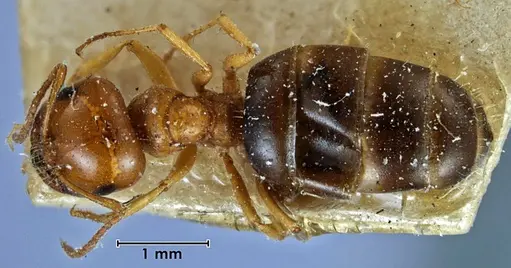
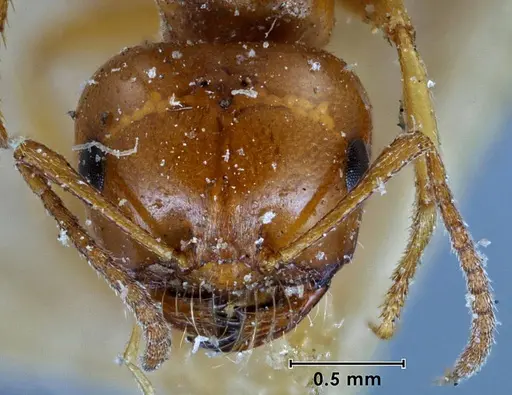
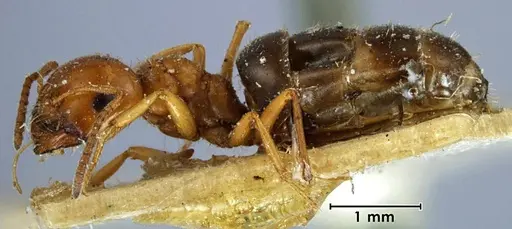
JDM32-001489
View on AntWeb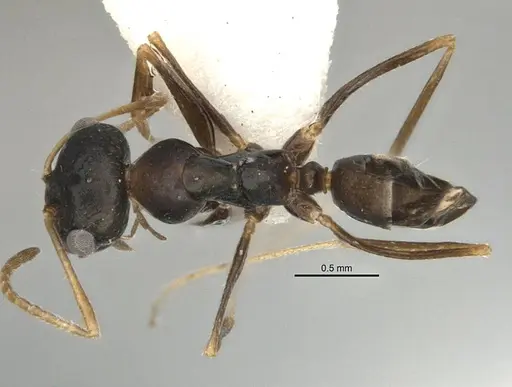
Literature
Loading...Loading products...