

Megalomyrmex miri
- Scientific Name
- Megalomyrmex miri
- Tribe
- Solenopsidini
- Subfamily
- Myrmicinae
- Author
- Brandão, 1990
- Distribution
- Found in 3 countries
Megalomyrmex miri Overview
Megalomyrmex miri is an ant species of the genus Megalomyrmex. It is primarily documented in 3 countries , including Argentina, India, Panama. Detailed taxonomic data and occurrence records can be further explored via authoritative databases such as AntWeb or the Global Biodiversity Information Facility (GBIF).
Megalomyrmex miri
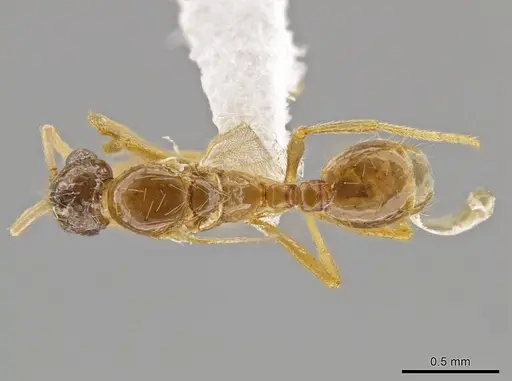
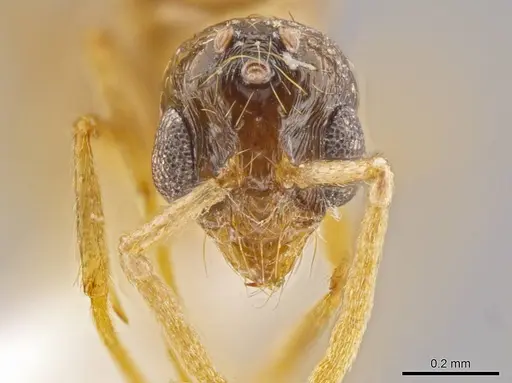
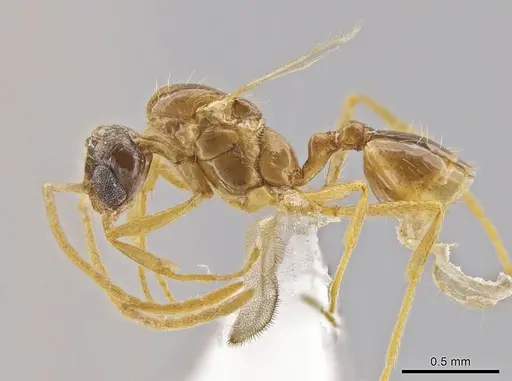
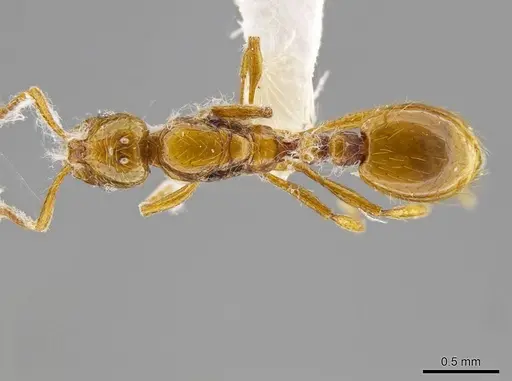
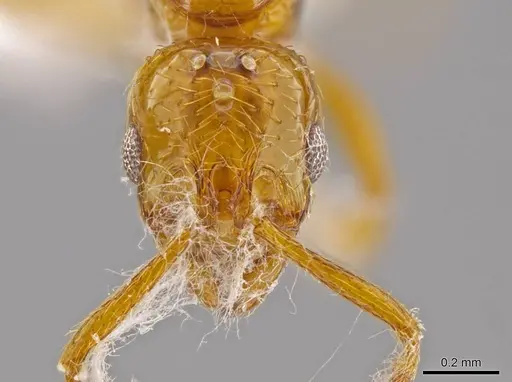
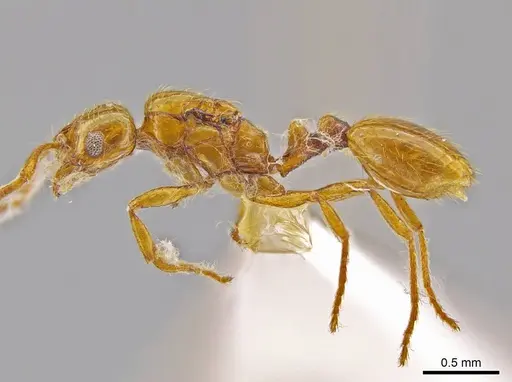
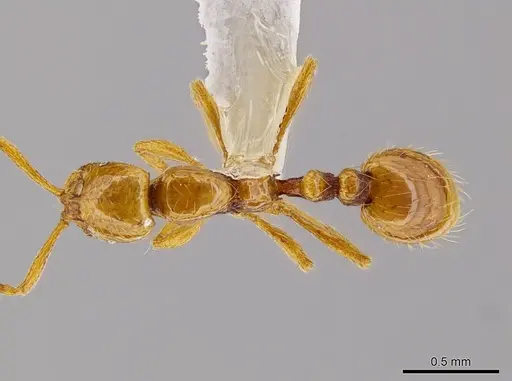
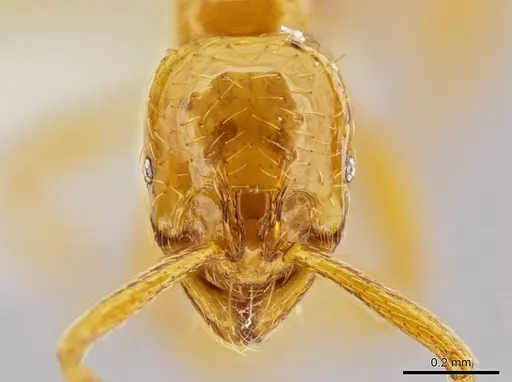
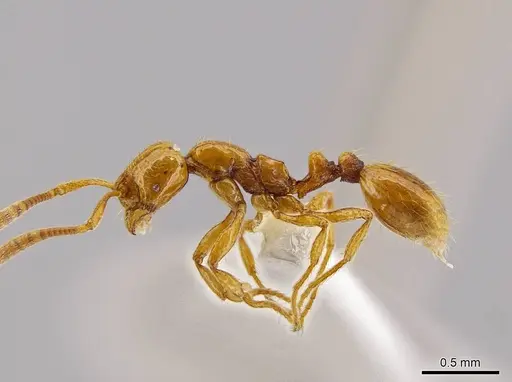
Megalomyrmex miri is a tiny Neotropical ant measuring just 0.43-0.55mm in head width, making it one of the smaller ant species in the genus [1][2]. Workers are a bright light yellow color with a translucent gaster, and they have remarkably tiny eyes with at most four ommatidia at their greatest diameter [2]. This species is found in Costa Rica and Panama, from sea level up to 400m elevation [2]. What makes M. miri truly remarkable is its lifestyle, it is a guest ant and social parasite that lives in the nests of other ant species, specifically Myrmicocrypta [2]. This is the first recorded case of a Megalomyrmex species parasitizing Myrmicocrypta, making it a fascinating species for antkeepers interested in social parasitism.
Quick Summary
- Difficulty: Expert
- Origin & Habitat: Lowland Neotropical forests in Costa Rica and Panama, from sea level to 400m elevation [2]. Found cohabiting with host ant colonies in the leaf litter layer.
- Colony Type: Multi-queen colonies with documented 4 queens,144 workers, and 2 males in a single colony [2]. Functions as a social parasite requiring a host ant colony (Myrmicocrypta ednaella) to survive.
- Colony: Polygyne
- Queen: Socially parasitic
- Size & Growth:
- Antkeeping:
- Temperature: Keep at low-to-mid room temperature (around 22-26°C). No specific thermal studies exist, but this is a lowland tropical species so warmth is beneficial [2].
- Humidity: Maintain moderate to high humidity typical of Neotropical leaf litter environments. Keep substrate consistently moist but not waterlogged.
- Diapause: Unlikely, as a tropical species, they probably remain active year-round. No documented diapause period exists.
- Nesting: This species cannot found its own colony and requires a host ant colony. In captivity, you would need to establish a Myrmicocrypta host colony first, then introduce M. miri. Naturalistic setups with leaf litter and soil work best for the host colony.
- Behavior: M. miri workers are small and relatively docile. They interact amiably with their host colonies, and gaster flagging (raising and waving the abdomen) has been observed as a form of communication [2]. They are not aggressive and rely entirely on the host colony for resources. Escape risk is moderate, their small size means they can slip through small gaps, but they are not active escape artists like some other species.
- Common Issues: establishing a colony is extremely difficult, requires obtaining both the parasite and an appropriate host species, host acceptance is not guaranteed, attempts to introduce M. miri to Cyphomyrmex colonies showed only marginal success [2], the host colony must be maintained alongside the parasite colony, doubling the complexity of care, without a healthy host colony, the parasites will not survive, this species cannot be kept as an independent colony, it will die without a host
Understanding Megalomyrmex miri as a Social Parasite
Megalomyrmex miri is one of the few ant species that cannot survive on its own, it is an obligate social parasite that lives within the nests of other ant species [2]. In the wild, researchers discovered a large colony of M. miri living together with Myrmicocrypta ednaella, with the host colony having about 108 workers and a single queen, while the M. miri colony had 144 workers, four queens, and two males [2]. This cohabitation represents the first documented case of a Megalomyrmex species parasitizing Myrmicocrypta. The interactions between host and parasite were described as amiable, with the parasites apparently integrated into the host colony's social structure [2]. For antkeepers, this means M. miri cannot be kept like a typical ant species, you must also maintain a healthy host colony.
Housing and Host Colony Requirements
Keeping M. miri successfully requires maintaining two colonies: the host colony (Myrmicocrypta ednaella or a related species) and the parasite colony. The host colony should be established first in a naturalistic setup with moist soil and leaf litter, as these are ground-nesting ants from the leaf litter layer of Neotropical forests [2]. Test tube setups can work for the host but may need to be connected to a foraging area with natural substrate. Once the host colony is established and healthy, you can attempt to introduce M. miri workers. However, be warned: attempts to introduce this species to Cyphomyrmex longiscapus colonies (which host the related species M. wettereri) showed only marginal success [2]. The parasites may not be accepted, or may be attacked by the host workers.
Feeding and Nutrition
As a guest ant living within a host colony, M. miri likely relies on the host colony for food resources. In the wild, these ants probably scavenge from the host's food stores or are fed by host workers through trophallaxis (mouth-to-mouth food sharing). In captivity, you would feed the host colony a typical ant diet (sugar water, honey, small insects) and the parasites would likely access these resources indirectly through the host. Do not expect M. miri to forage independently, they are adapted to living off the host's resources. The small size of workers (under 1mm) suggests they may also feed on tiny arthropods or honeydew in the host colony. [2]
Temperature and Seasonal Care
As a lowland tropical species from Costa Rica and Panama (sea level to 400m elevation), M. miri prefers warm, stable temperatures [2]. Aim for room temperature in the low-to-mid 20s Celsius (around 22-26°C). No specific thermal studies exist for this species, but it is unlikely to tolerate cool temperatures. Unlike temperate ant species, they probably do not require a diapause or winter rest period, maintain consistent temperatures year-round. The humidity should be moderate to high, reflecting their natural habitat in Neotropical leaf litter where moisture levels are consistently elevated.
Behavior and Colony Dynamics
The observed M. miri colony had four queens, making this a polygyne (multi-queen) species [2]. This is unusual among social parasites, many are monogyne, but M. miri can apparently support multiple reproductive queens within a single parasitic colony. Workers show gaster flagging behavior, where they raise and wave their abdomen, this is thought to be a communication signal, possibly used to communicate with host workers or other parasites [2]. The interactions between host and parasite were described as amiable, suggesting the parasites have evolved to integrate peacefully into the host colony rather than causing conflict. This peaceful integration is somewhat unusual for social parasites, which often face aggression from host workers.
Frequently Asked Questions
Can I keep Megalomyrmex miri in a test tube like other ants?
No, M. miri is a social parasite that cannot survive without a host ant colony. You would need to keep both the parasite and its host (Myrmicocrypta species) together, which requires a much more complex setup than a simple test tube.
How do I start a Megalomyrmex miri colony?
You cannot start an independent colony. First, you must obtain and establish a healthy Myrmicocrypta host colony. Then, you would need to introduce M. miri workers or queens to that established host colony. Success is not guaranteed, attempts to introduce this species to related host species showed only marginal results.
What do Megalomyrmex miri eat?
M. miri lives as a guest ant within the host colony and likely relies on food shared by host workers through trophallaxis. You would feed the host colony standard ant foods (sugar water, honey, small insects), and the parasites would access these resources through their hosts.
Are Megalomyrmex miri good for beginners?
No, this is an expert-level species that requires advanced antkeeping skills. You must maintain two colonies simultaneously (host and parasite), and establishing the parasitic relationship in captivity is extremely difficult with low success rates.
How long do Megalomyrmex miri live?
The lifespan of this species has not been studied. As a social parasite integrated into a host colony, their longevity would likely be tied to the health and stability of the host colony.
Will Megalomyrmex miri kill their host colony?
Based on field observations, the relationship appears relatively peaceful, researchers described interactions as 'amiable' between host and parasites [2]. However, as a social parasite, they do benefit from the host's resources, which could potentially stress the host colony over time.
Can I keep multiple queens of Megalomyrmex miri together?
Yes, the observed wild colony had four queens living together, confirming this is a polygyne species [2]. Multiple queens can coexist in a parasitic colony.
Where can I find Megalomyrmex miri for sale?
This species is extremely rare in the antkeeping hobby. It is not commonly available because of the difficulty in establishing and maintaining the host-parasite relationship. If available, it would likely be very expensive and only from specialized breeders who work with social parasites.
Do Megalomyrmex miri need hibernation?
No, as a tropical species from Costa Rica and Panama, they do not require hibernation or a winter rest period. Maintain consistent warm temperatures year-round.
What is the best nest type for Megalomyrmex miri?
There is no standard nest type for this species because it cannot be kept independently. The host colony (Myrmicocrypta) would need a naturalistic setup with moist soil and leaf litter material to feel comfortable.
Why are my Megalomyrmex miri dying?
Without a healthy host colony, M. miri cannot survive. The most likely cause of death is rejection by the host colony or starvation if the host colony is not being fed properly. This species is extremely difficult to maintain in captivity and should only be attempted by expert antkeepers with experience in social parasites.
References

This caresheet is licensed under CC BY-SA 4.0 .
Literature
Loading...Loading products...