

Leptanilloides gracilis
- Scientific Name
- Leptanilloides gracilis
- Subfamily
- Dorylinae
- Author
- Borowiec & Longino, 2011
- Distribution
- Found in 5 countries
Leptanilloides gracilis Overview
Leptanilloides gracilis is an ant species of the genus Leptanilloides. It is primarily documented in 5 countries , including Costa Rica, Guatemala, Honduras. Detailed taxonomic data and occurrence records can be further explored via authoritative databases such as AntWeb or the Global Biodiversity Information Facility (GBIF).
Leptanilloides gracilis
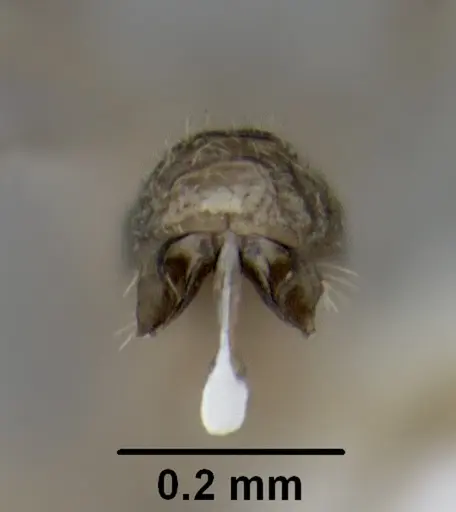
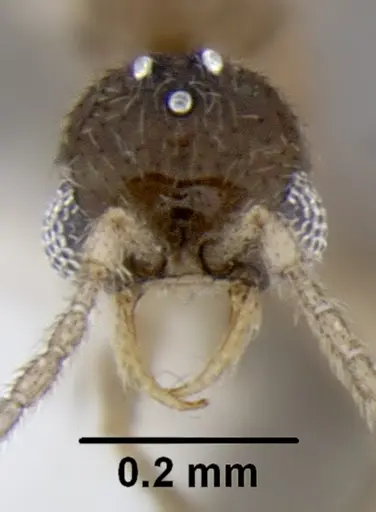
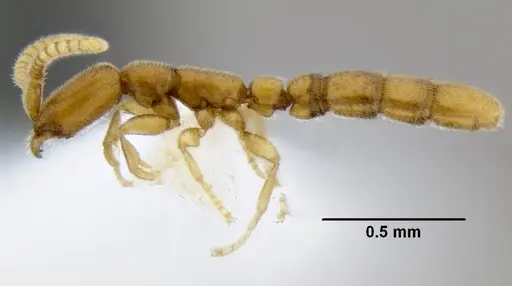
Leptanilloides gracilis is an extremely rare Neotropical ant belonging to the Dorylinae subfamily, which includes army ants and their relatives. Workers are tiny and slender, measuring just 0.23-0.25mm in head width, with a yellowish body and distinctive morphological features including a unique pit-like petiolar spiracle opening and fused maxillary palpus segments [1]. This species was discovered in cloud forest habitats in southern Mexico and Guatemala, where only a few dozen workers have ever been collected in sifted leaf litter samples [1]. The genus Leptanilloides remains one of the rarest and most poorly understood ant groups in the Americas, with most species known from only a handful of specimens.
Quick Summary
- Difficulty: Expert
- Origin & Habitat: Cloud forests in southern Mexico (Chiapas) and Guatemala at elevations around 1330m. Workers are collected by sifting leaf litter from the forest floor in second growth and mature mesophyll cloud forest habitats [1][2].
- Colony Type: Unknown colony structure. Only small worker samples (a few dozen individuals) have been collected, suggesting naturally small colonies. No queen or reproductive caste has been described.
- Size & Growth:
- Queen: Unknown, no queen has been described for this species [1]
- Worker: Workers are extremely small: HW 0.23-0.25mm, HL 0.31-0.33mm [1]
- Colony: Likely small, only a few dozen workers have been collected in the wild [1]
- Growth: Unknown
- Development: Unconfirmed, no breeding in captivity has been documented (Development timeline is completely unknown for this species)
- Antkeeping:
- Temperature: Unclear, based on cloud forest habitat, likely needs cool to moderate temperatures (estimated 18-24°C). No captive data exists.
- Humidity: High humidity required, cloud forest species. Keep substrate consistently moist but not waterlogged.
- Diapause: Unknown, no data on seasonal behavior. Cloud forests have year-round mild temperatures with seasonal rainfall patterns.
- Nesting: Likely nests in soil or rotting wood in forest floor leaf litter. In captivity, very small test tubes or acrylic nests with fine chambers would be appropriate. The extremely small worker size means escape prevention must be excellent.
- Behavior: As a Dorylinae ant, likely predatory on other small arthropods. The flexible promesonotal connection suggests some army-ant-like movement patterns. Workers are very small and likely forage in leaf litter. No aggression or defense observations have been documented. Escape risk is extremely high due to their minute size.
- Common Issues: no captive breeding records exist, this species has never been kept in captivity, extremely small size makes escape prevention critical, standard test tube setups may allow escapes, no established feeding protocols, diet is unknown beyond推测 predatory behavior, wild-caught colonies may not survive transfer due to stress and unknown requirements, high humidity requirements may lead to mold issues if ventilation is poor
Why This Species Is Extremely Challenging
Leptanilloides gracilis is one of the rarest ants in the world to keep. This species has never been documented in captive antkeeping, there are no established care protocols, no breeding records, and virtually no biological information beyond the original species description. Workers are among the smallest ants in the Americas, measuring just 0.25mm in head width. This makes them incredibly difficult to house, feed, and observe. Only a few dozen workers have ever been collected in the wild, all from remote cloud forests in Mexico and Guatemala. Unless you are an experienced myrmecologist with access to field collection equipment and the ability to maintain wild-caught colonies in near-natural conditions, this species is not recommended for captive keeping. Even for experts, success would be uncertain. [1]
Natural History and Distribution
This species is known only from cloud forests in southern Mexico (Chiapas) and Guatemala, with unverified records from Costa Rica, Honduras, and Nicaragua [1][2]. The original description was based on workers collected from leaf litter samples at around 1330m elevation. The type series came from Sierra Morena in Chiapas, Mexico, where workers were found in just 2 of 100 leaf litter samples taken from the forest floor. A separate collection was made in Guatemala under similar conditions. This extremely limited collection data suggests the species is either genuinely rare or very difficult to detect due to its small size and potentially cryptic nesting habits. The genus Leptanilloides represents a relict lineage of Dorylinae that split from army ants early in their evolutionary history.
Identification and Unique Morphology
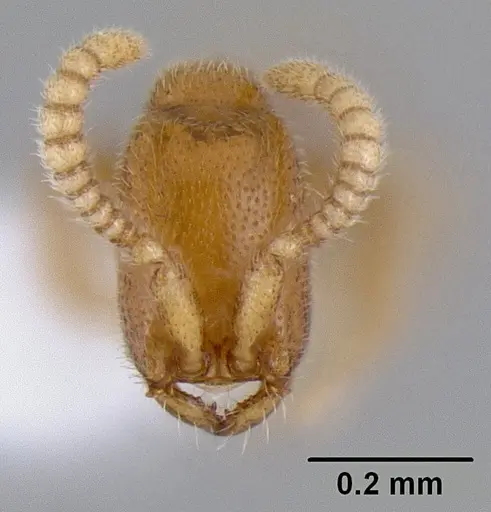
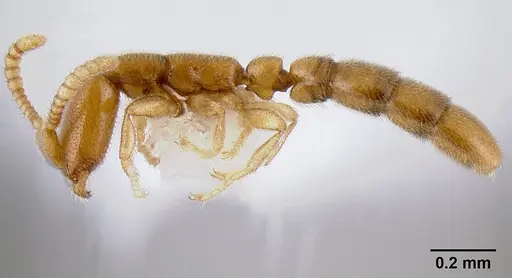
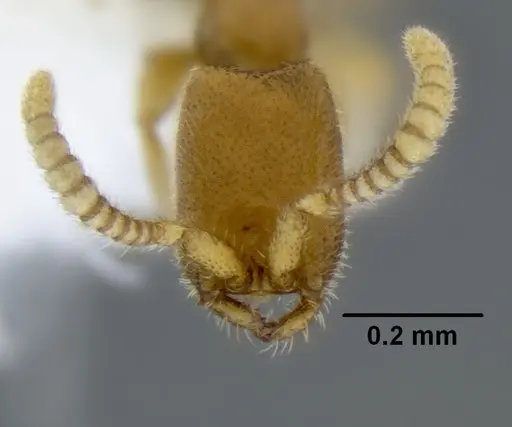
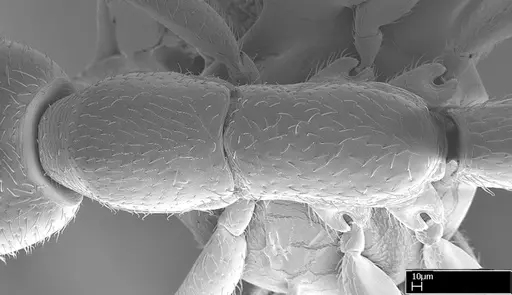
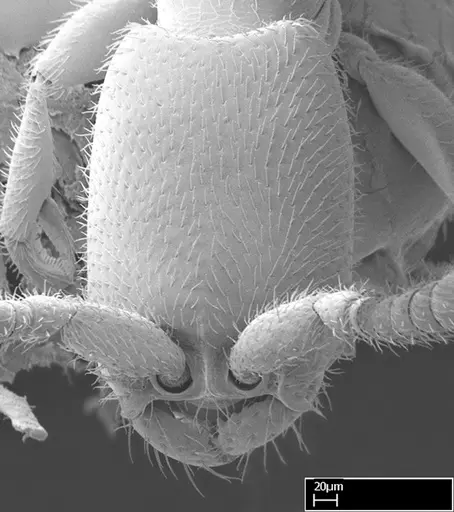
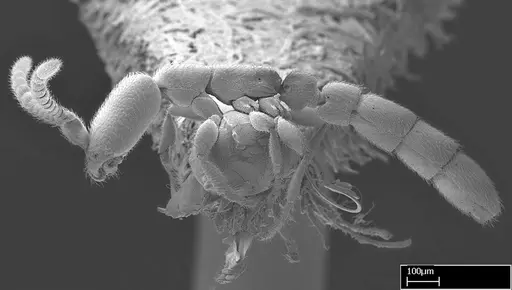
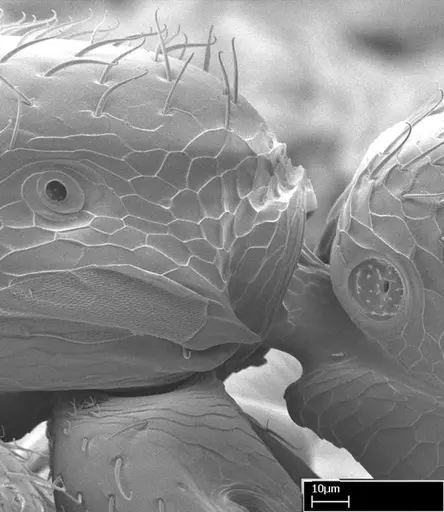
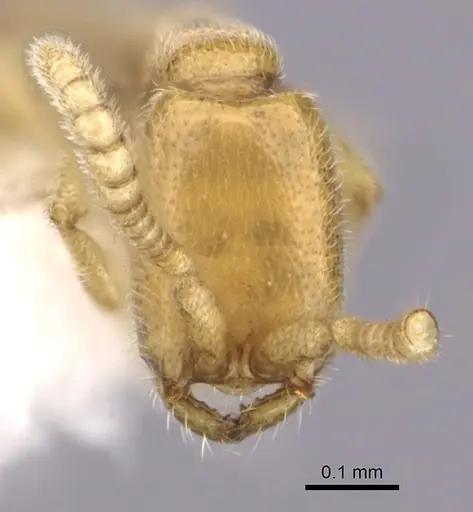
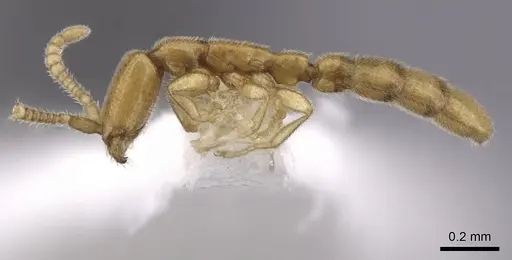
Leptanilloides gracilis can be identified by several unique traits not found in any other species in the genus. The most distinctive feature is the petiolar spiracle opening into a conspicuous pit that is larger than the propodeal spiracle opening, this is unique among all known Leptanilloides species [1]. Workers also have a maxillary palpus that appears to be fused into a single segment (normally two-segmented in the genus), and both mid and hind tibia have two simple spurs (other species have one simple spur on mid tibia and a pectinate spur on hind tibia). The body is yellowish with relatively slender proportions compared to other species in the genus. The promesonotal connection is flexible and articulated, which is unusual among Dorylinae and suggests some army-ant-like movement capabilities.
Taxonomy and Evolutionary Position
Leptanilloides belongs to the subfamily Dorylinae, which includes army ants (Eciton, Dorylus) and their relatives. This genus represents an ancient lineage that split from the main army ant clade early in their evolutionary history [3][4]. The leptanilloidine clade is exclusively Neotropical, meaning these ants are found only in the tropical Americas. Despite being in the same subfamily as famous army ants, Leptanilloides species are much smaller and appear to have different ecological strategies. The genus contains fewer than 10 described species, most of which are known from only a handful of specimens. This makes any Leptanilloides species extremely valuable for scientific study and poorly suited for captive keeping where established protocols do not exist.
If You Attempt to Keep This Species
If you are determined to attempt keeping Leptanilloides gracilis (which requires exceptional expertise and resources), here are speculative recommendations based on related Dorylinae and cloud forest ant biology. Housing would require an extremely small setup, perhaps a small plaster nest or custom acrylic formicarium with chambers scaled to their tiny size. Escape prevention must be absolute, even standard fine mesh would need to be supplemented. Humidity should be kept high (70-85%) to mimic cloud forest conditions. Temperature should be cool to moderate (18-22°C). Feeding would be speculative but likely involves small live prey such as springtails, micro-arthropods, or tiny insects appropriate to their size. However, there is no guarantee that any captive setup would sustain this species, and wild-caught colonies have an extremely low survival rate in captivity. This species should only be attempted by professional researchers, not hobbyists.
Frequently Asked Questions
Can I keep Leptanilloides gracilis as a pet ant?
No. This species has never been kept in captivity and no care protocols exist. It is not recommended for antkeepers at any experience level. The few attempts to keep wild-caught Leptanilloides have not been documented as successful.
How big do Leptanilloides gracilis colonies get?
Unknown in captivity. In the wild, only a few dozen workers have ever been collected in a single sample, suggesting naturally small colonies [1].
What do Leptanilloides gracilis eat?
Unconfirmed. As a Dorylinae ant, they are likely predatory on small arthropods. No direct observations of feeding exist. Related army ants eat insects and other arthropods, but Leptanilloides likely targets much smaller prey due to their tiny size.
What temperature do Leptanilloides gracilis need?
Unclear. Based on cloud forest habitat, they likely prefer cool to moderate temperatures (estimated 18-24°C). No captive temperature data exists.
How long does it take for Leptanilloides gracilis to develop from egg to worker?
Unknown. No breeding in captivity has ever been documented. Development timeline is completely unstudied.
Can I collect Leptanilloides gracilis from the wild?
This would require expert field collection skills and likely permits. The species is known from only a few scattered locations in Mexico and Guatemala. Even if you could collect them, survival in captivity is extremely unlikely.
Are Leptanilloides gracilis good for beginners?
Absolutely not. This is an expert-only species that has never been successfully kept in captivity. Beginners should start with well-documented species like Lasius niger, Camponotus species, or Messor barbarus.
Do Leptanilloides gracilis need hibernation?
Unknown. Cloud forests in their range have mild year-round temperatures with seasonal rainfall. No data exists on overwintering behavior.
What makes Leptanilloides gracilis unique?
They are among the rarest and smallest ants in the Americas, with unique morphological features including a pit-like petiolar spiracle and fused maxillary palpus segments. They represent an ancient evolutionary lineage related to army ants but with completely different ecology.
References

This caresheet is licensed under CC BY-SA 4.0 .
CASENT0106179
View on AntWeb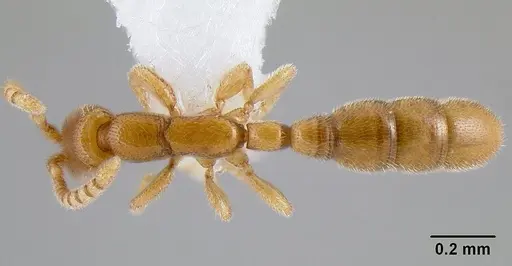
CASENT0234558
View on AntWeb
CASENT0234561
View on AntWeb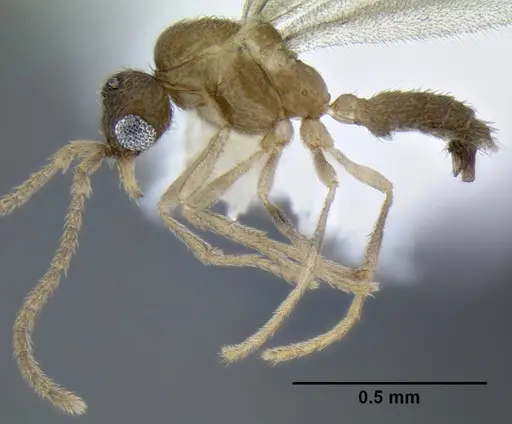
CASENT0234574
View on AntWeb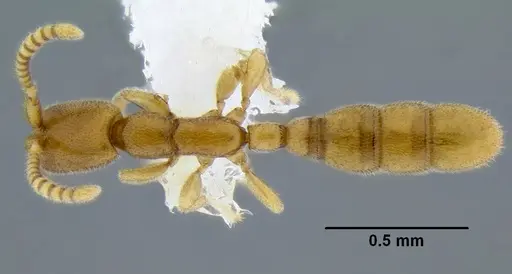
CASENT0234585
View on AntWeb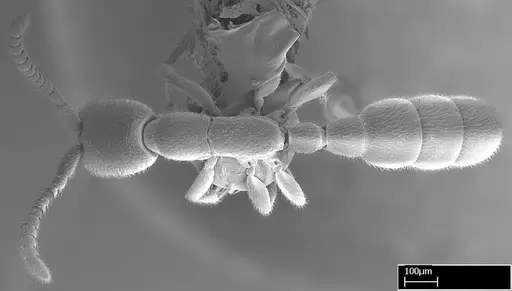
CASENT0249448
View on AntWeb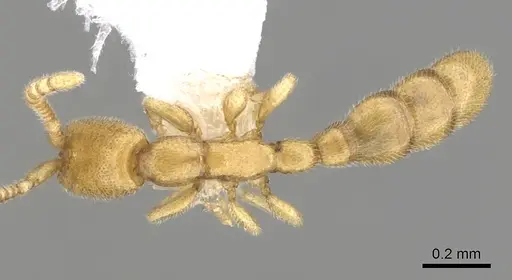
CASENT0612940
View on AntWeb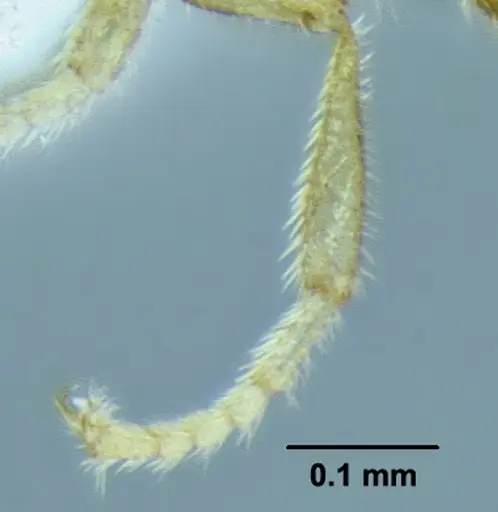
Literature
Loading...Loading products...