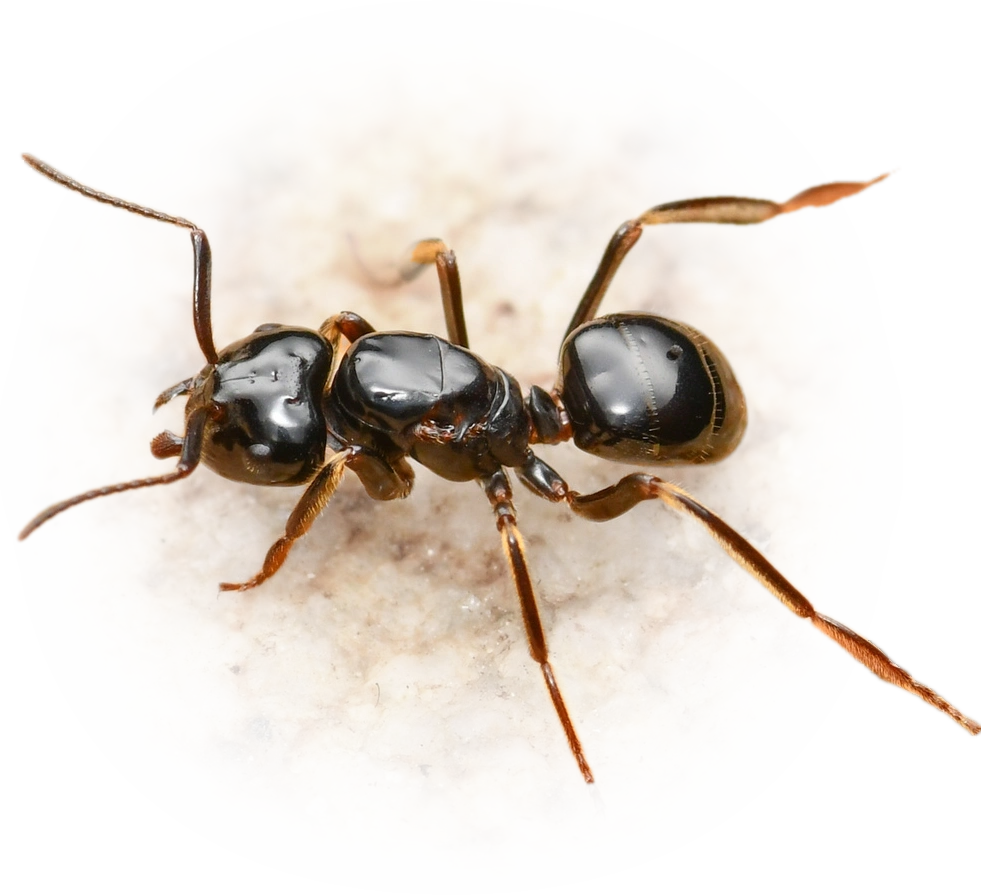

Lasius spathepus
- Scientific Name
- Lasius spathepus
- Tribe
- Lasiini
- Subfamily
- Formicinae
- Author
- Wheeler, 1910
- Distribution
- Found in 3 countries
Lasius spathepus Overview
Lasius spathepus is an ant species of the genus Lasius. It is primarily documented in 3 countries , including China, Japan, Korea. Detailed taxonomic data and occurrence records can be further explored via authoritative databases such as AntWeb or the Global Biodiversity Information Facility (GBIF).
Lasius spathepus
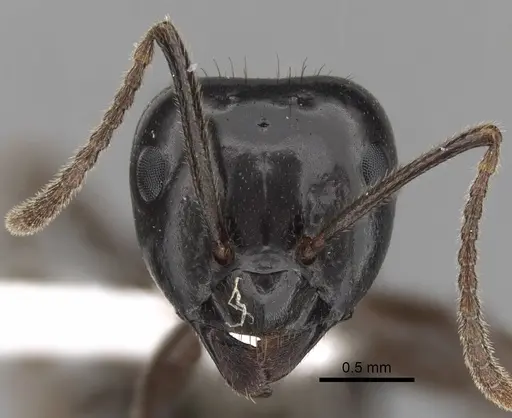
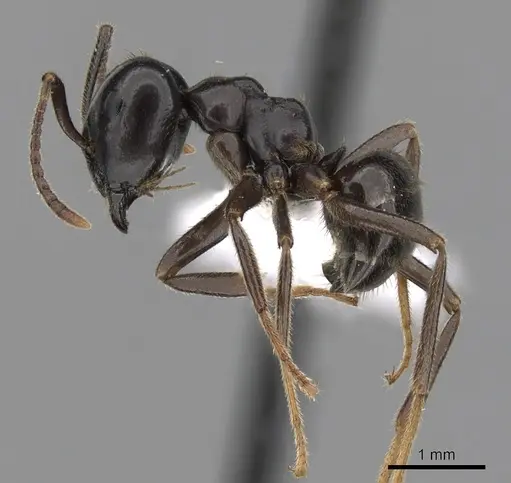
Lasius spathepus is a distinctive jet-black ant belonging to the subgenus Dendrolasius, known for their remarkably flattened antennae scapes and legs. Workers measure 4-5mm and feature a unique inverted V-shaped petiole profile that helps distinguish them from other Lasius species [1]. Queens are significantly larger at 1.96-2.03mm head width, with extremely flattened scapes covered in abundant hairs and an almost completely hairless mesonotal dorsum [1]. This species is a temporary social parasite, founding new colonies by infiltrating established nests of Lasius japonicus, killing the host queen, and using host workers to raise their first brood [2][3].
What makes L. spathepus particularly interesting is their unusual biology as a parasite combined with their rarity in the wild. They are known to practice fungiculture, using fungi to help bind and construct nest walls, a behavior shared with other Dendrolasius species [4]. Their distribution spans the Russian Far East, Korean Peninsula, and throughout Japan's four main islands, where they inhabit forest environments [5][1].
Quick Summary
- Difficulty: Expert
- Origin & Habitat: Southern Russian Far East (Primorsky Region), Korean Peninsula, and Japan (Hokkaido, Honshu, Shikoku, Kyushu). Inhabits forest environments, particularly forest edges and natural areas [6][5].
- Colony Type: Temporary social parasite, colonies are founded when a queen invades an established Lasius japonicus colony, kills the host queen, and uses host workers to raise her brood. Once established, the colony eventually becomes independent as the host workers die out [2][3].
- Colony: Monogyne
- Queen: Temporary parasitic
- Size & Growth:
- Queen: Large queens with head width 1.96-2.03mm (estimated 7-9mm total length)
- Worker: 4-5mm [1], mean 4.08±0.41mm [7]
- Colony: Unknown for established colonies, appears to form smaller colonies typical of Dendrolasius
- Growth: Unknown, likely moderate, but dependent on host colony success
- Development: Unconfirmed, development timeline has not been directly studied. Based on related Lasius species, estimate 6-10 weeks at optimal temperature. (Development is heavily dependent on host colony workers during the founding phase. Once established, development likely follows typical Lasius patterns.)
- Antkeeping:
- Temperature: Keep at room temperature around 20-24°C. Forest-dwelling species prefer stable, moderate temperatures. Avoid overheating [6].
- Humidity: Moderate humidity preferred. Forest species that nest in soil and rotting wood, keep substrate consistently moist but not waterlogged.
- Diapause: Likely requires winter dormancy given their northern distribution. Provide a cool period around 5-10°C for 3-4 months during winter, mimicking temperate climate conditions.
- Nesting: Naturalistic setup with soil or plaster nests works well. In the wild, they nest in forest soil and rotting wood. A Y-tong or plaster formicarium with moderate moisture retention is suitable. The key requirement is access to a host colony during founding.
- Behavior: This species is not aggressive and relies on social parasitism rather than direct confrontation. Workers are modest foragers, likely collecting honeydew and small insects like other Lasius species. Escape prevention should be moderate, workers are a manageable 4-5mm size. The most critical aspect is their temporary parasitic founding, which makes captive establishment extremely challenging. They are rarely collected and considered a rare species in their range [6].
- Common Issues: establishment difficulty, requires successful introduction to host Lasius japonicus colony, which is notoriously difficult, host colony rejection, host workers may attack or kill the parasitic queen, rarity in the wild makes obtaining a colony extremely difficult, slow colony growth once established due to dependence on host workers dying off, inappropriate host species, must use correct L. japonicus as host, other Lasius species will not work
Understanding Temporary Social Parasitism
Lasius spathepus is a temporary social parasite, meaning its queens cannot found colonies independently like most ants. Instead, a newly mated queen must locate and infiltrate an established colony of Lasius japonicus, her specific host species [2]. Upon entering the host nest, she kills the resident queen through direct combat or chemical warfare, then uses the host workers to care for her eggs and larvae. This 'temporary' parasitism means that once her first workers (called nanitics) emerge and the colony becomes established, it functions as an independent colony with only her offspring. The original host workers gradually die off over time.
This founding method is what makes L. spathepus so difficult to keep. Unlike typical ants where you can start a colony from a single queen in a test tube, you must successfully introduce a queen into an existing L. japonicus colony, a process that often fails as host workers may reject or kill the intruder. Even successful introductions face high mortality rates. This is not a species for beginners, and even experienced antkeepers should expect significant challenges during establishment [3].
Housing and Nest Setup
Because this species requires a host colony for establishment, housing is a two-stage process. First, you need a healthy Lasius japonicus colony to serve as the host. Second, you need a suitable setup for the combined colony once the parasitic queen successfully takes over.
For the host colony, use standard Lasius housing, test tubes for founding, then transfer to a formicarium as the colony grows. L. japonicus accepts a wide range of nest types including Y-tong, plaster, and naturalistic setups. The key is having a well-established colony with plenty of workers before attempting introduction.
For the combined colony after successful establishment, use a naturalistic or plaster setup with good moisture retention. Forest-dwelling species prefer moderate humidity and will do well in setups that hold moisture evenly. Ensure the nest has chambers large enough for the colony and provide an outworld for foraging. Temperature should remain stable around 20-24°C, avoid temperatures above 28°C [6].
Feeding and Nutrition
Once established, L. spathepus workers likely have similar dietary needs to other Lasius species. They will readily consume sugar water, honey, or sugar syrup as their primary energy source. For protein, offer small insects such as fruit flies, small crickets, or mealworm pieces. Like most Lasius, they likely also forage for honeydew in the wild, so sweet foods are essential.
Feed sugar water constantly, replace every 2-3 days to prevent fermentation. Offer protein prey 2-3 times per week, removing any uneaten prey after 24 hours. During the establishment phase while still dependent on host workers, ensure the host colony is well-fed to maintain their willingness to care for the parasitic queen's brood.
Note: During the temporary parasitic phase, the host workers do all the foraging and feeding. Your feeding efforts should focus on maintaining the host colony's health until the parasitic queen's workers emerge.
Temperature and Seasonal Care
Lasius spathepus inhabits temperate regions with distinct seasons, from northern Japan through the Korean Peninsula to the Russian Far East. This means they require a winter dormancy period. During winter (roughly November through March in the Northern Hemisphere), reduce temperatures to around 5-10°C by moving the colony to an unheated garage, basement, or refrigerator.
Throughout the active season, maintain stable temperatures in the 20-24°C range. They are a forest-dwelling species and do not tolerate high heat well, avoid placing their setup near heat sources or in direct sunlight. Room temperature is typically suitable.
Nuptial flights occur from June through August in their native range [1][6], so if you maintain a colony long-term, this is when winged reproductives would develop. However, given the extreme difficulty of establishing this species in captivity, reaching this stage is a significant achievement.
The Challenge of Colony Establishment
The single biggest challenge with L. spathepus is actually establishing a colony. Unlike most ant species where you can simply house a mated queen and wait, this species requires you to either: (1) catch a newly mated queen during nuptial flight season and introduce her to an existing L. japonicus colony, or (2) obtain a queen already in the process of taking over a host colony.
Introduction success rates are low even for experienced keepers. Host workers often attack and kill the intruding queen. Some keepers report better success by introducing the queen during nuptial flight season when colony acceptance is higher, or by using queen introduction chambers that allow gradual scent mixing.
Given these challenges, L. spathepus is truly an expert-level species. Most antkeepers should consider this species as a fascinating observation of ant biology rather than a realistic captive project. If you're determined to try, start by establishing a healthy L. japonicus colony first, then attempt introduction during summer months when the host colony is most active. [2]
Frequently Asked Questions
Can I keep Lasius spathepus like other Lasius ants?
No. Unlike typical Lasius species (like L. niger or L. alienus), L. spathepus is a temporary social parasite that cannot found colonies independently. You cannot simply keep a queen in a test tube, you must establish a host Lasius japonicus colony first and then introduce the parasitic queen. This makes them exponentially more difficult than regular Lasius ants.
How do I establish a Lasius spathepus colony?
You need to introduce a newly mated queen into an established Lasius japonicus colony. The queen must kill the host queen and convince host workers to care for her brood. This process has a low success rate even for experienced keepers. Some recommend introducing the queen during nuptial flight season (June-August) when colonies are more accepting, or using introduction chambers for gradual scent mixing.
What happens after the queen takes over the host colony?
Once the parasitic queen successfully kills the host queen, the host workers will care for her eggs and larvae. Her first workers (nanitics) will eventually emerge. Over time, the original host workers die off and the colony becomes composed solely of L. spathepus workers. This transition can take many months.
What do Lasius spathepus eat?
Like other Lasius species, they need constant access to sugar water, honey, or sugar syrup. For protein, they accept small insects like fruit flies, small crickets, or mealworm pieces. Feed sugar water 2-3 times per week and protein prey 2-3 times per week.
Are Lasius spathepus good for beginners?
No. This is an expert-level species due to their temporary parasitic founding requirements. Even experienced antkeepers struggle with establishment. Beginners should start with easier species like Lasius niger, Lasius neoniger, or Formica species. L. spathepus is suitable only for advanced keepers interested in specialized ant biology.
Where can I find Lasius spathepus in the wild?
They are found across Japan (Hokkaido, Honshu, Shikoku, Kyushu), the Korean Peninsula, and the Russian Far East (Primorsky Region). They are rare and prefer forest habitats. Nuptial flights occur from June to August [1]. Finding them requires specialized field work in their limited range.
Do Lasius spathepus need hibernation?
Yes. Given their distribution in temperate East Asia, they require a winter dormancy period. Keep them at 5-10°C for 3-4 months during winter (roughly November-March). This mimics their natural seasonal cycle and is necessary for colony health long-term.
Why is this species called the jet ant?
They belong to the subgenus Dendrolasius, commonly called 'jet ants' due to their distinctive jet-black coloration. The subgenus name references this dark coloring. Workers are described as jet black in color [1].
References

This caresheet is licensed under CC BY-SA 4.0 .
CASENT0010670
View on AntWeb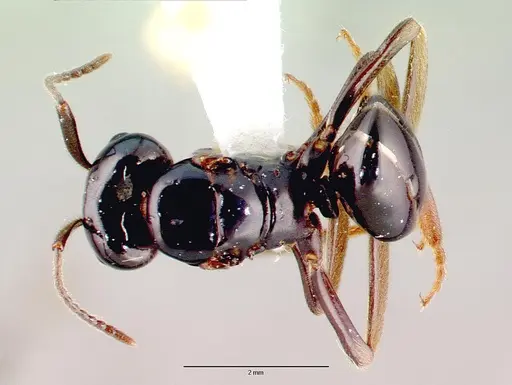
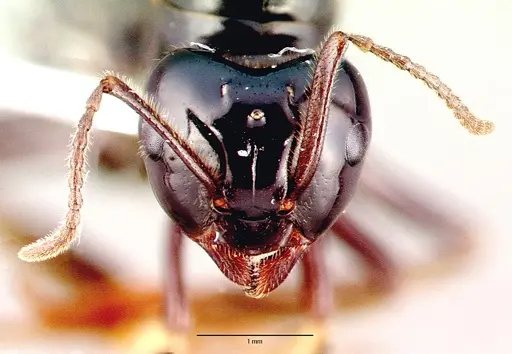
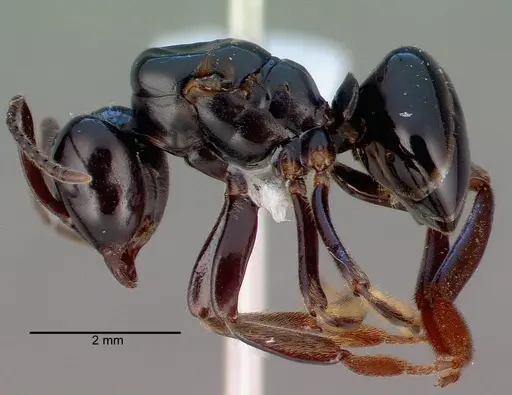
CASENT0280460
View on AntWeb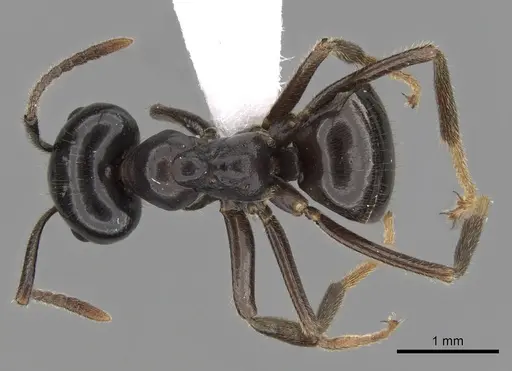
Literature
Loading...Loading products...