

Lasius productus
- Scientific Name
- Lasius productus
- Tribe
- Lasiini
- Subfamily
- Formicinae
- Author
- Wilson, 1955
- Distribution
- Found in 1 countries
Lasius productus Overview
Lasius productus is an ant species of the genus Lasius. It is primarily documented in 1 countries , including Japan. Detailed taxonomic data and occurrence records can be further explored via authoritative databases such as AntWeb or the Global Biodiversity Information Facility (GBIF).
Lasius productus
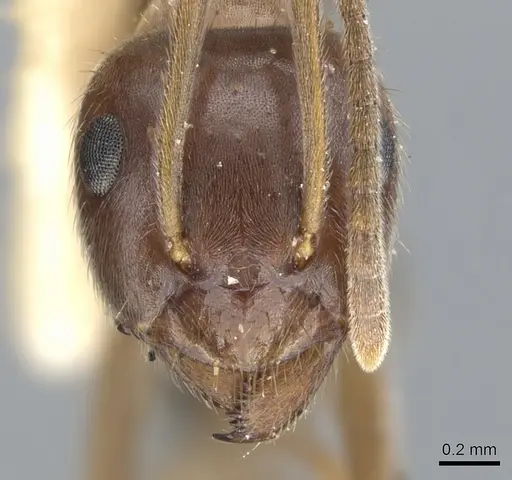
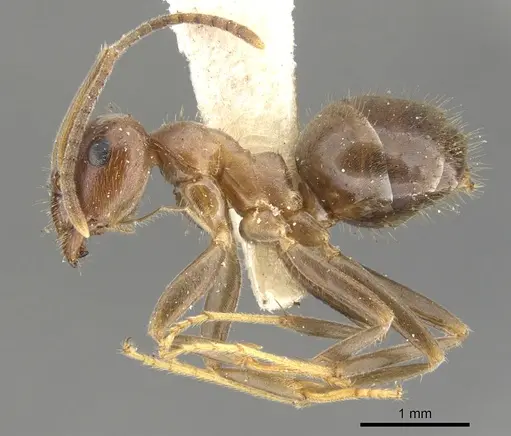
Lasius productus is a Japanese endemic ant species belonging to the Lasius niger clade. Workers measure 3.5-4.5mm with a distinctive appearance defined by extraordinarily long appendages, their scapes and maxillary palps are the longest of any Lasius species across the Holarctic, making them unmistakable [1][2]. The head and gaster are dark brown while the mesosoma ranges from brown to yellowish-reddish. Queens are significantly larger than other Japanese Lasius species, with head widths of 1.79-1.88mm and scapes exceeding 1.5mm [3]. This species is closely related to Lasius emarginatus and represents one of Japan's more specialized Lasius species, adapted to broad-leaved deciduous forest environments.
Quick Summary
- Difficulty: Medium
- Origin & Habitat: Endemic to Japan, found on Honshu, Shikoku, Kyushu, and Tsushima islands in broad-leaved deciduous forests at elevations from 50-1000m [2][3]. Nests in rotting wood, stumps, and dead portions of tree trunks, typically around root systems of living trees or in hollow tree trunks [1][3].
- Colony Type: Single-queen colonies (monogyne) typical of the subgenus Lasius s.str. [3]. Ergatoid replacement reproductives have not been documented for this species.
- Colony: Monogyne
- Founding: Claustral
- Size & Growth:
- Queen: 1.79-1.88mm head width [3]
- Worker: 3.5-4.5mm total length [1], CS 1050 ± 75µm [2]
- Colony: Unknown maximum, but likely several thousand workers given typical Lasius s.str. patterns
- Growth: Moderate, development timeline unconfirmed but likely 6-10 weeks based on related species
- Development: Estimated 6-10 weeks at optimal temperature (inferred from related Lasius species) (Direct development data unavailable, estimate based on genus-level patterns for Lasius s.str.)
- Antkeeping:
- Temperature: Keep at 20-25°C. This range supports typical Lasius s.str. development. A gentle gradient allowing workers to self-regulate is ideal.
- Humidity: Moderate humidity (50-70%). These forest-floor ants prefer consistently moist nest substrate but not waterlogged conditions. The natural habitat is damp deciduous forest litter.
- Diapause: Yes, Japanese species require winter rest. Provide 3-4 months at 5-10°C during winter months, simulating natural seasonal cycle [3].
- Nesting: Y-tong (AAC) or plaster nests work well. Provide narrow chambers and passages scaled to their medium-small size. Natural setups with rotting wood pieces also suitable given their natural nesting in dead wood [1][2].
- Behavior: Generally peaceful and non-aggressive compared to some Lasius species. Workers are active foragers, primarily tending aphids for honeydew and hunting small insects. They are not particularly defensive and rarely sting. Escape risk is moderate, their small-medium size means standard barrier precautions (Fluon, tight-fitting lids) are sufficient but necessary. They are primarily nocturnal or crepuscular in activity patterns, reflecting their forest-floor niche.
- Common Issues: colonies may fail if not given proper winter diapause, Japanese species are adapted to seasonal cooling, escape prevention is necessary but not extreme, standard barriers work well, slow founding phase can frustrate beginners, claustral queens seal themselves in and may take months before first workers appear, humidity management is critical, too dry causes brood loss, too wet promotes mold, wild-caught colonies may carry parasites that can devastate captive populations
Nest Preferences and Housing
Lasius productus naturally nests in rotting wood, stumps, and dead portions of tree trunks within broad-leaved deciduous forests [1][2]. They prefer nesting around root systems of living trees or in hollow tree trunks [3]. For captive care, Y-tong (acrylic) nests or plaster nests with narrow chambers work well. The chambers should be appropriately scaled to their medium-small worker size (3.5-4.5mm). Naturalistic setups with pieces of rotting wood can also replicate their natural conditions effectively. Provide some darkness and privacy, these are not bold, exposed-nesting ants. A test tube setup works for founding colonies, with transfer to a formicarium once the colony reaches 20-30 workers.
Feeding and Diet
Like other Lasius species, L. productus is a generalist that feeds on honeydew from aphids and small insects. They belong to the Formicinae subfamily, which shows maximum associations with aphids (66.84% of all aphid-ant mutualisms) [4]. They are known to tend the aphid Stomaphis hirukawai [4][5]. In captivity, offer sugar water or honey as a constant energy source, and provide protein-rich foods like small insects (fruit flies, small mealworms, crickets) 2-3 times per week. They are not aggressive predators but will readily accept small prey items. Fresh protein is especially important during brood development.
Temperature and Seasonal Care
Maintain nest temperatures between 20-25°C, which aligns with typical Lasius s.str. requirements and their native Japanese forest habitat. Room temperature within this range is usually sufficient. A heating cable on one side of the nest can create a gentle gradient if your room runs cool. As a Japanese species, they require a winter diapause period of 3-4 months at 5-10°C to maintain healthy colony cycles [3]. This simulates their natural seasonal experience in Japan's temperate climate. Reduce feeding during the winter rest period and avoid disturbing the colony. Resume normal care when temperatures rise in spring.
Behavior and Colony Dynamics
Lasius productus workers are characterized by their extraordinarily long scapes and maxillary palps, the longest of any Lasius species, which readily distinguishes them from related species like L. emarginatus [3][2]. They are relatively peaceful ants that focus on foraging and aphid tending rather than territorial aggression. Workers are active primarily during crepuscular and nocturnal hours, reflecting their forest-floor niche. Colonies grow moderately, founding queens seal themselves in claustral chambers and raise their first brood alone. The founding phase can take several months before nanitic workers emerge. Once established, colonies can grow to several thousand workers over several years.
Nuptial Flights and Reproduction
Nuptial flights occur in August and September, making this species the latest-flying Japanese Lasius s.str. species [3][1][2]. This timing is important for those seeking to collect or observe mating swarms. Alates (reproductives) typically emerge in mid-summer and mature through late summer, with flights peaking in late August through September. After mating, newly mated queens seek out suitable nesting sites in rotting wood or dead tree portions to begin their claustral founding cycle. If you wish to propagate this species legally, collecting newly mated queens during flight season is the recommended approach.
Frequently Asked Questions
How long does it take for Lasius productus to go from egg to first worker?
The exact development timeline has not been directly studied, but based on related Lasius s.str. species, expect approximately 6-10 weeks from egg to first nanitic worker at optimal temperatures (20-25°C). The claustral founding phase may take several months before eggs are even laid as the queen establishes her chamber.
What temperature range is best for Lasius productus?
Keep them at 20-25°C. This range supports normal colony activity and brood development. A slight gradient allowing workers to choose their preferred temperature is ideal. Room temperature within this range is usually adequate.
Do Lasius productus need hibernation?
Yes, as a Japanese species they require a winter rest period. Provide 3-4 months at 5-10°C during winter (typically November-February in the Northern Hemisphere). This diapause period is essential for maintaining natural colony cycles and long-term health.
Can I keep multiple Lasius productus queens together?
Lasius productus is monogyne, colonies typically have a single queen. Combining unrelated foundress queens is not recommended as they would likely fight. In the wild, single queens initiate each colony through claustral founding.
What do Lasius productus eat?
They are generalist feeders. Provide constant access to sugar sources (honey water or sugar water) and offer small insects (fruit flies, pinhead crickets, small mealworms) 2-3 times per week. They particularly favor honeydew from aphids and will tend aphid colonies if given access.
Is Lasius productus a good species for beginners?
This is a medium-difficulty species. While not as challenging as some exotic or parasitic species, it does require proper winter diapause and attention to humidity. The long development time during founding can also test patience. Beginners should be prepared for the multi-month founding phase before seeing their first workers.
What is the maximum colony size for Lasius productus?
Maximum colony size is not directly documented, but based on related Lasius s.str. species, colonies likely reach several thousand workers over several years of growth. They are not among the largest Lasius species but can still form substantial colonies.
When do Lasius productus nuptial flights occur?
Nuptial flights take place in August and September, making this the latest-flying Japanese Lasius s.str. species [3][1]. This is later than most other Japanese Lasius species.
References

This caresheet is licensed under CC BY-SA 4.0 .
CASENT0903217
View on AntWeb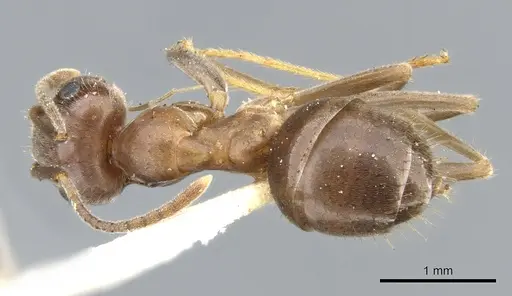
Literature
Loading...Loading products...