

Lasius nitidigaster
- Scientific Name
- Lasius nitidigaster
- Tribe
- Lasiini
- Subfamily
- Formicinae
- Author
- Seifert, 1996
- Distribution
- Found in 5 countries
Lasius nitidigaster Overview
Lasius nitidigaster is an ant species of the genus Lasius. It is primarily documented in 5 countries , including Bulgaria, Greece, Hungary. Detailed taxonomic data and occurrence records can be further explored via authoritative databases such as AntWeb or the Global Biodiversity Information Facility (GBIF).
Lasius nitidigaster
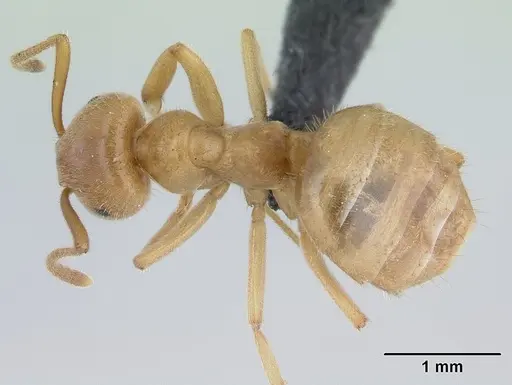
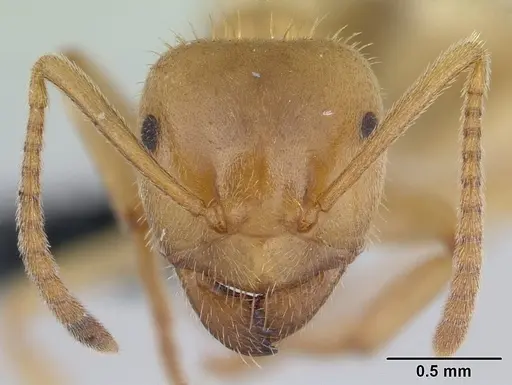
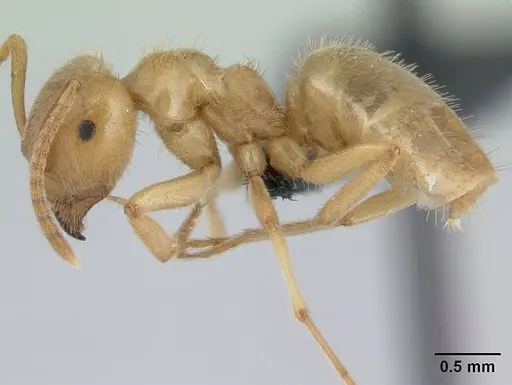
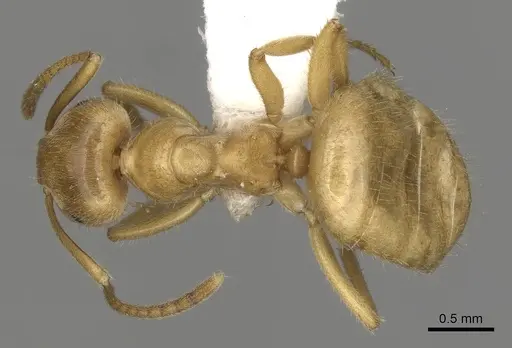
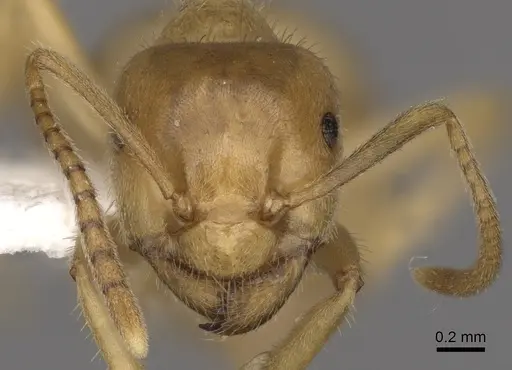
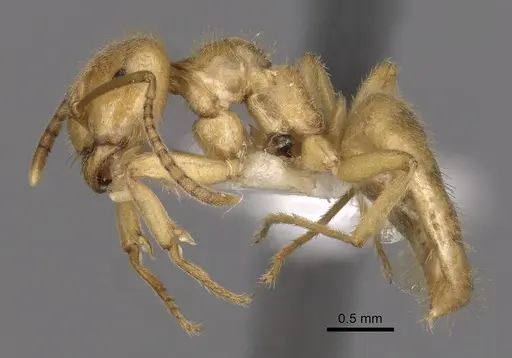
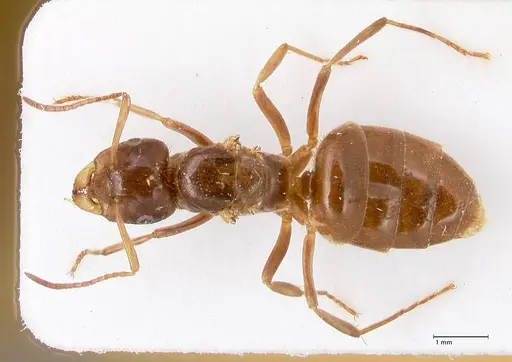
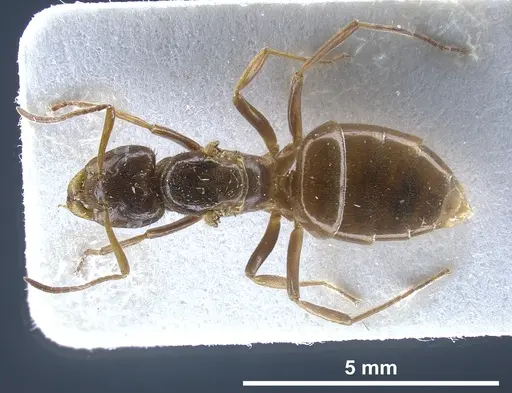
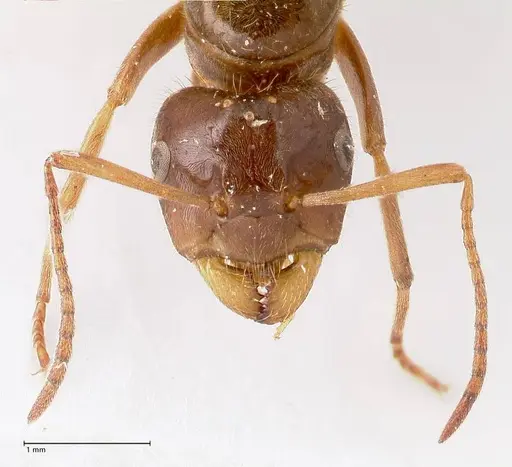
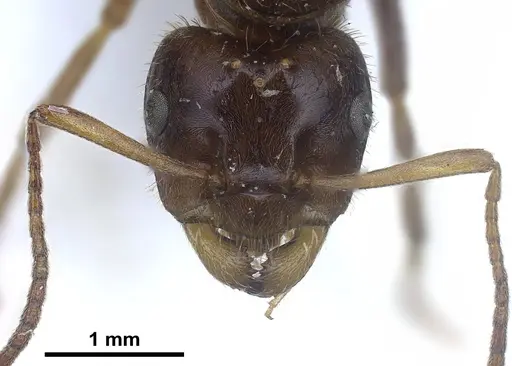
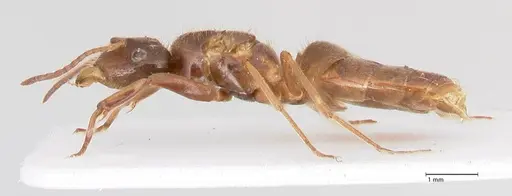
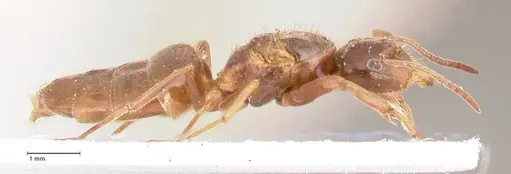
Lasius nitidigaster is a tiny pale-yellow ant belonging to the subgenus Chthonolasius, which are known temporary social parasites. Workers measure just 0.90-1.12mm, making them one of the smaller Lasius species [1]. Queens are slightly larger at 1.31-1.44mm total length [1]. The entire body is pale yellow with dense long erected setae on the first abdominal segment, and they have notably small eyes, the head length is over 7 times the eye diameter [2].
This species was only recognized as distinct in 1996,previously confused with the closely related Lasius rabaudi from the Pyrenees [1]. It inhabits xerothermic grasslands and mountain pastures across Central Europe and the Balkans, preferring warm dry areas with limestone substrate [3][4]. As a temporary social parasite, founding queens must invade colonies of free-living Lasius species (like Lasius niger), kill the host queen, and use the host workers to raise their first brood.
Quick Summary
- Difficulty: Medium
- Origin & Habitat: Central Europe to Balkans (Austria, Bulgaria, Croatia, Czech Republic, Greece, Hungary, Poland, Slovakia, Slovenia, Turkey, Georgia, Montenegro, Serbia). Inhabits xerothermic grasslands, mountain pastures with limestone rocks, and steppe areas at altitudes between 200-1000m [3][4][5].
- Colony Type: Temporary social parasite. Single-queen colonies (monogyne). Founding queens parasitize free-living Lasius species like Lasius niger, killing the host queen and using host workers to raise their first brood [6][7].
- Colony: Monogyne
- Queen: Socially parasitic, Temporary parasitic
- Size & Growth:
- Queen: 1.31-1.44 mm total length [1]
- Worker: 0.90-1.12 mm [1]
- Colony: Likely several hundred workers in mature colonies based on related species
- Growth: Moderate, typical for Lasius species
- Development: Estimated 6-8 weeks at optimal temperature based on related Lasius species (Development time inferred from genus-level data, specific timing for this species not directly studied)
- Antkeeping:
- Temperature: Keep warm, around 22-26°C. This is a xerothermic species from warm grasslands [3]. A heating cable on one side of the nest creates a temperature gradient.
- Humidity: Low to moderate. Prefers dry conditions typical of steppe grasslands. Keep substrate slightly moist but not wet.
- Diapause: Yes, as a temperate species, colonies need a winter rest period. Reduce temperature to around 5-10°C for 3-4 months [5].
- Nesting: Ground-nesting species. In captivity, a test tube setup works well for founding colonies. For established colonies, use a formicarium with soil or a Y-tong nest with chambers scaled to their tiny size. They prefer dry to moderately humid conditions.
- Behavior: Generally non-aggressive and docile. Workers are small and active, foraging for honeydew and small prey. Escape prevention is critical due to their tiny size, use fine mesh barriers. As temporary social parasites, founding queens require a host colony, which makes this species more challenging than typical Lasius. Workers are pale yellow and blend well with substrate, making them easy to overlook.
- Common Issues: founding queens require a host Lasius colony, this is the biggest challenge for keepers, tiny size means escapes are likely without fine mesh barriers, colonies are rare in the hobby and difficult to establish, dry grassland habitat means overwatering can kill colonies, wild-caught colonies may have parasites like Aegeritella fungus [8]
Colony Founding and Social Parasitism
Lasius nitidigaster belongs to the Chthonolasius subgenus, which are temporary social parasites. This means founding queens cannot start colonies on their own like most ants. Instead, a newly mated queen must find and invade an established colony of free-living Lasius species, typically Lasius niger [7]. The host colony's workers initially attack the intruding queen, but she survives through aggressive behavior and eventually kills the host queen. The parasite queen then uses the host workers to raise her own first brood of workers. Once her workers emerge, they gradually replace the host workers until the colony consists entirely of her offspring. This parasitic founding method is why this species is considered more difficult to keep than typical ants, you cannot simply set up a queen in a test tube and wait for workers. Established colonies after the parasitic phase are fully functional and can be kept like normal Lasius. In the wild, alates (reproductives) are produced from mid-June to early September, with the bulk emerging between mid-July and late August [5]. Swarming has been observed in early July [7].
Housing and Nest Setup
Due to their parasitic nature and tiny size, Lasius nitidigaster requires specific housing considerations. For an established colony post-founding, a test tube setup works well for the initial period. The test tube should have a water reservoir at one end with a cotton plug, providing humidity without flooding. Because workers are only about 1mm long, escape prevention must be excellent, use tight-fitting lids and fine mesh on any connections to outworlds. For larger colonies, a formicarium with soil or a Y-tong style nest works well. These ants prefer dry to moderately humid conditions, reflecting their xerothermic grassland habitat [3]. Provide a shallow outworld for foraging with sugar water and protein foods. The nest should be kept warm, around 22-26°C, with a slight gradient if possible.
Feeding and Diet
Like other Lasius species, Lasius nitidigaster workers feed on honeydew from aphids and small insects. In captivity, offer sugar water or honey diluted with water as a constant energy source. For protein, provide small prey items like fruit flies, pinhead crickets, or other tiny insects. Given their minute size, prey should be appropriately sized, much smaller than what you'd feed larger ant species. Feed protein 2-3 times per week, and keep sugar water available at all times. Remove uneaten prey after 24 hours to prevent mold. These ants are not aggressive foragers, so place food near nest entrances where workers will find it.
Temperature and Seasonal Care
As a species from warm xerothermic grasslands, Lasius nitidigaster prefers temperatures in the 22-26°C range. During the active season (spring through fall), maintain warm conditions to support brood development. In winter, colonies require a diapause period typical of temperate ants. Reduce temperatures to around 5-10°C for 3-4 months, typically from late autumn through early spring. During diapause, reduce feeding to minimal or none, and keep the colony in a cool dark location like an unheated garage or basement. Do not feed during hibernation. After the winter rest period, gradually warm the colony to resume normal activity. This species has been recorded as far north as Poland and the Czech Republic, so it handles cold winters well in captivity. [5]
Behavior and Temperament
Lasius nitidigaster workers are small, pale yellow, and generally docile. They are not aggressive and pose no threat to keepers. Workers are active foragers, though their small size makes them easy to overlook. In the wild, colonies form earth mounds up to half a meter high in older established nests [6]. The species is known to coexist with potential host species, in Vienna, both L. nitidigaster and L. niger were found at the same location [7]. Workers are agile and can squeeze through very small gaps, so escape prevention is critical. The main behavioral note is their parasitic founding, once established, colonies behave like typical Lasius with workers tending aphids, foraging for sugar and protein, and caring for brood.
Frequently Asked Questions
How do I start a Lasius nitidigaster colony?
This is the challenging part, Lasius nitidigaster is a temporary social parasite. Unlike most ants, a founding queen cannot raise her first workers alone. She must invade an established colony of a free-living Lasius species (like Lasius niger), kill the host queen, and use the host workers. In captivity, you would need to introduce a newly mated queen to an established Lasius niger colony. This makes the species difficult for beginners. Most keepers obtain established colonies rather than trying to found them from scratch.
Can I keep Lasius nitidigaster in a test tube?
Yes, test tubes work well for established colonies. Use a standard test tube setup with a water reservoir and cotton plug. However, because workers are only about 1mm long, ensure excellent escape prevention, check that lids fit tightly and any connections to outworlds have fine mesh. For larger colonies, transfer to a formicarium with soil or a Y-tong style nest.
What do Lasius nitidigaster ants eat?
Like other Lasius species, they need sugar and protein. Offer sugar water or honey diluted with water as a constant energy source. For protein, provide small prey like fruit flies, tiny crickets, or other appropriately-sized insects. Feed protein 2-3 times per week. Remove uneaten prey after 24 hours.
How long does it take for first workers to appear?
Once established after the parasitic founding phase, development follows typical Lasius timing. Expect 6-8 weeks from egg to worker at optimal temperature (around 24°C). After the host workers are replaced by the parasite queen's offspring, the colony grows at a moderate rate.
Do Lasius nitidigaster need hibernation?
Yes, as a temperate species from Central Europe, they require a winter rest period. Reduce temperatures to 5-10°C for 3-4 months, typically from late autumn through early spring. During this time, minimize or stop feeding entirely. Keep the colony in a cool dark location.
Are Lasius nitidigaster good for beginners?
No, this species is not recommended for beginners. The temporary social parasitic founding method is challenging to replicate in captivity. Additionally, their tiny size requires careful attention to escape prevention. If you're interested in Lasius ants, consider starting with easier species like Lasius niger or Lasius flavus.
How big do Lasius nitidigaster colonies get?
Based on related species, mature colonies likely reach several hundred workers. In the wild, older colonies can form earth mounds up to half a meter high [6]. They are not among the largest Lasius species.
What temperature do they need?
Keep them warm, around 22-26°C. This is a xerothermic species from warm grasslands. A heating cable on one side of the nest can create a temperature gradient. Avoid temperatures below 15°C during the active season.
Why are my Lasius nitidigaster dying?
Common causes include: overwatering (they prefer dry conditions), escape through tiny gaps due to their minute size, stress from incorrect founding setup, or parasite infection (they can host the fungus Aegeritella tuberculata [8]). Ensure proper humidity levels, excellent escape prevention, and appropriate temperatures.
References

This caresheet is licensed under CC BY-SA 4.0 .
Literature
Loading...Loading products...