

Lasius coloradensis
- Scientific Name
- Lasius coloradensis
- Tribe
- Lasiini
- Subfamily
- Formicinae
- Author
- Wheeler, 1917
- Common Name
- Colorado Citronella Ant
- Distribution
- Found in 2 countries
Lasius coloradensis Overview
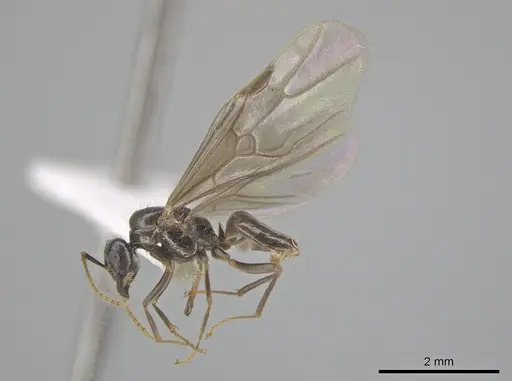
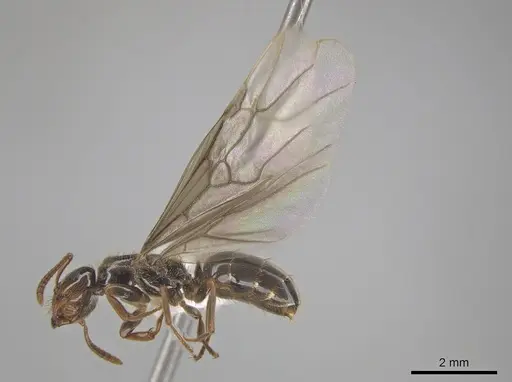
Lasius coloradensis (commonly known as the Colorado Citronella Ant) is an ant species of the genus Lasius. It is primarily documented in 2 countries , including Canada, United States of America. Detailed taxonomic data and occurrence records can be further explored via authoritative databases such as AntWeb or the Global Biodiversity Information Facility (GBIF).
Lasius coloradensis - "Colorado Citronella Ant"
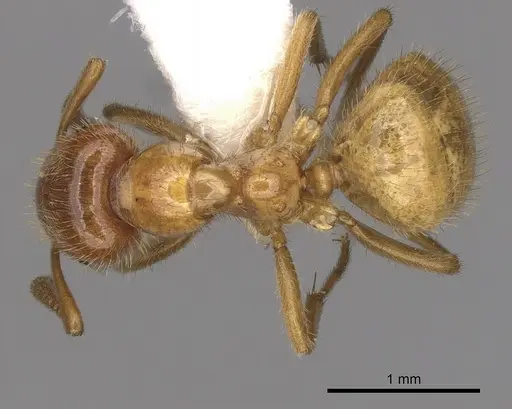
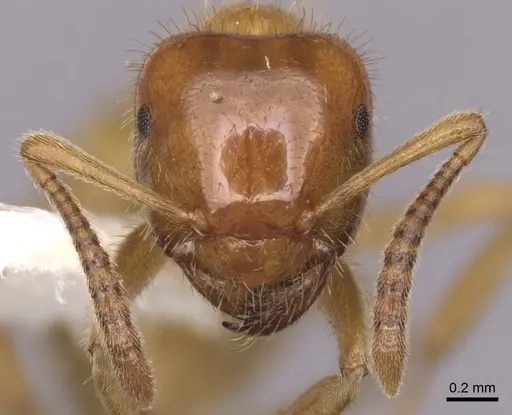
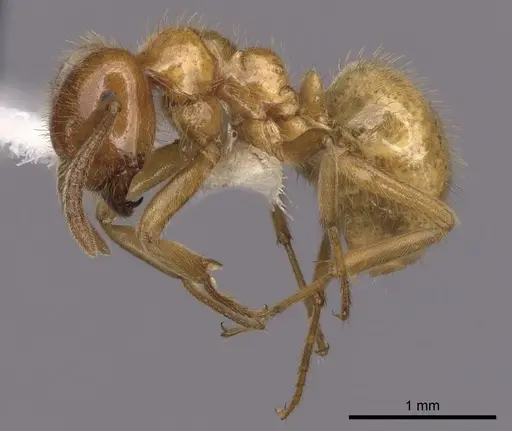
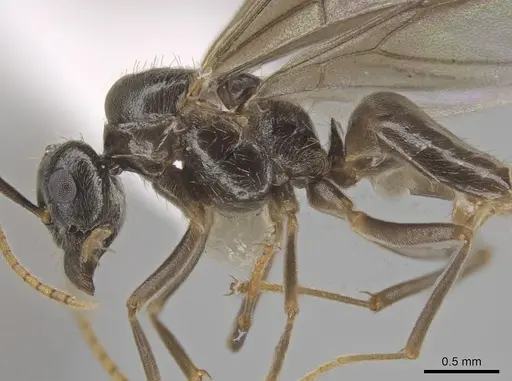
Lasius coloradensis is a small to medium-sized ant native to western North America, ranging from New Mexico and Colorado north to Manitoba and Alberta. Workers are yellowish brown to brown with a distinctive petiole that has a sharp apex when viewed from the side and typically shows a notch when viewed from the front. They nest under stones in rocky or sandy soils, commonly found in prairies, deciduous forests, ponderosa pine habitats, and coniferous forests across elevations from below 2000 to over 7000 feet. This species is closely related to Lasius claviger but averages smaller in size. A notable aspect of this species is that it is likely a temporary social parasite, the queen invades another ant colony, kills the host queen, and uses the host workers to raise her first brood before her own workers take over.
Quick Summary
- Difficulty: Medium
- Origin & Habitat: Western North America, from New Mexico, Colorado, and Utah north to Manitoba and west to Alberta and Oregon. Found in prairies, deciduous forests, ponderosa pine-gamble oak transition zones, and coniferous forests. Nests under stones in rocky or sandy soils on dry grassy slopes [1].
- Colony Type: Likely temporary social parasite, queen invades host colony, kills host queen, and uses host workers temporarily. Single-queen colonies in founding stage. Colony structure unconfirmed for established colonies.
- Colony: Monogyne
- Queen: Temporary parasitic
- Size & Growth:
- Queen: Approximately 6-7mm based on genus typical size (estimated)
- Worker: Approximately 3-5mm based on description as smaller than L. claviger (estimated)
- Colony: Unknown for this specific species, likely several hundred workers based on related Lasius species (estimated)
- Growth: Moderate, estimated based on related species patterns
- Development: 6-10 weeks based on typical Lasius development at optimal temperature (estimated) (Development time estimated from related Lasius species, actual timeline unconfirmed for this species)
- Antkeeping:
- Temperature: Keep at room temperature around 20-24°C. They naturally occur in temperate to cool climates so they do not require high heat. A slight temperature gradient allows workers to regulate their conditions.
- Humidity: Moderate humidity, they nest under stones in soils that range from dry to slightly moist. Keep nest substrate moderately moist but allow some drying between waterings. Avoid waterlogging.
- Diapause: Yes, as a temperate species, they require a winter rest period. Reduce temperature to around 5-10°C for 2-3 months during winter months (roughly November-February depending on your location).
- Nesting: Y-tong (acrylic) nests or test tube setups work well. They prefer nesting in dark, confined spaces. A naturalistic setup with stones over moist substrate can also work. Keep the nest in moderate humidity with some dry areas available.
- Behavior: Workers are relatively docile and not aggressive. They are moderate foragers, typical of Lasius species. Escape risk is moderate, use standard barrier methods. They likely tend aphids for honeydew like other Lasius species. Queens are temporary social parasites so founding behavior involves finding a host colony.
- Common Issues: temporary parasitic founding means finding a host colony can be challenging for captive breeding, colonies may fail if proper host species is not available during queen founding, winter diapause is required, failing to provide this can weaken or kill colonies, wild-caught colonies may have parasites that affect captive survival, small colony size means they are sensitive to disturbance
Species Identification and Range
Lasius coloradensis is a North American ant species that was once considered a subspecies of Lasius claviger before being raised to full species status. Workers are distinguished by their petiole having a sharp apex when viewed from the side and a distinct notch when viewed from front. Their body color ranges from yellowish brown to brown, typically darker than related species. The hairs on the underside of their head are usually less than 0.20mm in length and cover only the posterior portion. This species ranges from New Mexico, Colorado, and Utah north to Manitoba and west to Alberta and Oregon, making it primarily a western North American species. [1]
Natural Habitat and Nesting
In the wild, Lasius coloradensis nests under stones in rocky or sandy soils. Studies show that most nests are found under stones, with some under cow dung. They prefer dry grassy slopes with scattered tree cover, and they occur across a wide elevation range from below 2000 feet to over 7000 feet. Their habitat includes prairies, deciduous forests, ponderosa pine communities, and coniferous forests. This preference for nesting under stones means they naturally inhabit areas where ground cover provides shelter while allowing some sunlight exposure to warm the stones. [1]
Temporary Parasitism and Reproduction
This species is likely a temporary social parasite, meaning the founding queen must invade a host ant colony (likely another Lasius species such as Lasius neoniger). She kills the host queen and uses the host workers to raise her first brood until her own workers emerge. This parasitic founding method is challenging for captive propagation since finding an appropriate host colony is difficult. Nuptial flights occur from late July through mid-September, with one sample from September 16 containing both alates and dealate queens but no workers, suggesting late-season mating flights. One sample collected December 27 contained only dealate queens. [1]
Temperature and Seasonal Care
As a temperate species from higher elevations, Lasius coloradensis requires a winter diapause period. During active season, keep them at typical room temperature around 20-24°C. They do not require heated setups since their natural range includes cool mountainous regions. In winter, reduce temperatures to approximately 5-10°C for 2-3 months, mimicking natural winter conditions. This diapause period is essential for colony health and reproduction. Failure to provide proper hibernation can weaken colonies and prevent reproduction. [1]
Feeding and Diet
Like other Lasius species, Lasius coloradensis likely feeds on honeydew from aphids and scale insects, plus protein from small insects. In captivity, offer sugar water or honey water as a constant energy source, along with small insects like fruit flies, pinhead crickets, or mealworms. They are not aggressive predators but will collect protein from dead insects. Feed protein sources 2-3 times per week and provide sugar water continuously. Remove uneaten food promptly to prevent mold. [1]
Housing and Nest Setup
Y-tong (acrylic) nests work well for this species, providing dark, enclosed chambers that mimic their natural stone-cover nesting preference. Test tube setups are also suitable for founding colonies. Use moderate humidity in the nest, they naturally nest in soils that can dry out between rains. A naturalistic setup with flat stones placed over moist soil can replicate their wild habitat. Provide a foraging area with access to sugar water and protein sources. Standard escape prevention methods are adequate for their medium size. [1]
Frequently Asked Questions
How long does it take for Lasius coloradensis to produce first workers?
The exact timeline is unconfirmed, but based on related Lasius species, expect 6-10 weeks from egg to first worker at optimal temperature around 20-24°C. This may be longer during founding since parasitic queens face additional challenges establishing colonies.
Do Lasius coloradensis queens need a host colony to found a colony?
Yes, this is likely a temporary social parasite. The queen must invade and take over a host Lasius colony (likely Lasius neoniger or similar species), killing the host queen to use the host workers. This makes captive propagation very difficult without an appropriate host.
What temperature should I keep Lasius coloradensis at?
Keep them at room temperature around 20-24°C. They do not need heated setups since they naturally occur in temperate climates. Provide a winter rest period at 5-10°C for 2-3 months.
What do Lasius coloradensis eat?
They likely feed on honeydew from aphids plus small insects for protein. In captivity, offer sugar water or honey water continuously and small insects like fruit flies or mealworms 2-3 times per week.
Do Lasius coloradensis need hibernation?
Yes, as a temperate species from higher elevations, they require a winter diapause. Reduce temperatures to 5-10°C for approximately 2-3 months during winter. This rest period is essential for colony health.
Are Lasius coloradensis good for beginners?
No, this species is not ideal for beginners due to their temporary parasitic founding behavior. Captive propagation requires an appropriate host colony, which is extremely difficult to provide. They are best suited for experienced antkeepers interested in their unique biology.
How big do Lasius coloradensis colonies get?
The exact maximum colony size is unconfirmed, but based on related species, they likely reach several hundred workers. Colonies are not among the largest Lasius species.
When do Lasius coloradensis have nuptial flights?
Nuptial flights occur from late July through mid-September, with the earliest samples containing alates around July 30 and the latest around September 16. This is earlier than the related Lasius claviger.
Can I keep multiple Lasius coloradensis queens together?
This is not recommended. While some Lasius can be polygynous, this species appears to have single-queen colonies. Additionally, since they are temporary parasites, combining unrelated foundress queens has not been documented and would likely result in aggression.
What is the best nest type for Lasius coloradensis?
Y-tong (acrylic) nests or test tube setups work well. They prefer dark, confined spaces that mimic their natural stone-cover nesting sites. Keep nest humidity moderate with some dry areas available.
Why are my Lasius coloradensis dying?
Common causes include: lack of appropriate host colony during founding, failure to provide winter diapause, improper humidity (too wet or too dry), or stress from disturbance. Wild-caught colonies may also carry parasites that affect captive survival.
References

This caresheet is licensed under CC BY-SA 4.0 .





Literature
Loading...Loading products...