

Iridomyrmex reburrus
- Scientific Name
- Iridomyrmex reburrus
- Tribe
- Leptomyrmecini
- Subfamily
- Dolichoderinae
- Author
- Shattuck, 1993
- Common Name
- Bearded Meat Ant
- Distribution
- Found in 1 countries
Iridomyrmex reburrus Overview
Iridomyrmex reburrus (commonly known as the Bearded Meat Ant) is an ant species of the genus Iridomyrmex. It is primarily documented in 1 countries , including Australia. Detailed taxonomic data and occurrence records can be further explored via authoritative databases such as AntWeb or the Global Biodiversity Information Facility (GBIF).
Iridomyrmex reburrus - "Bearded Meat Ant"
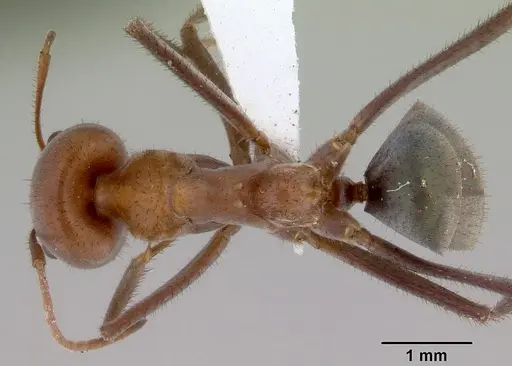
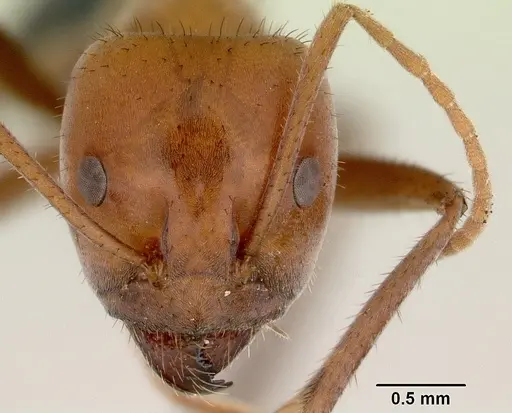
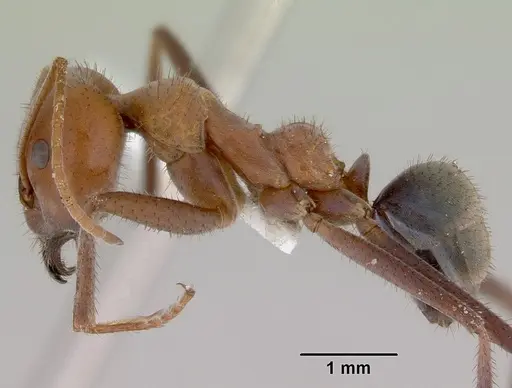
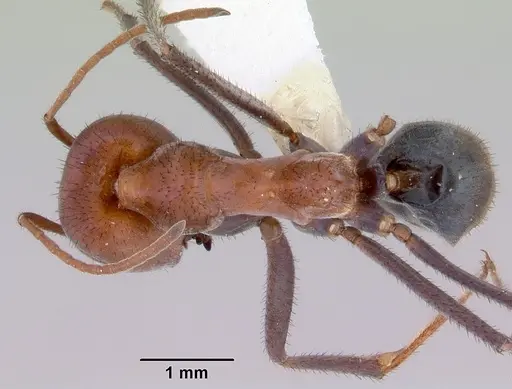
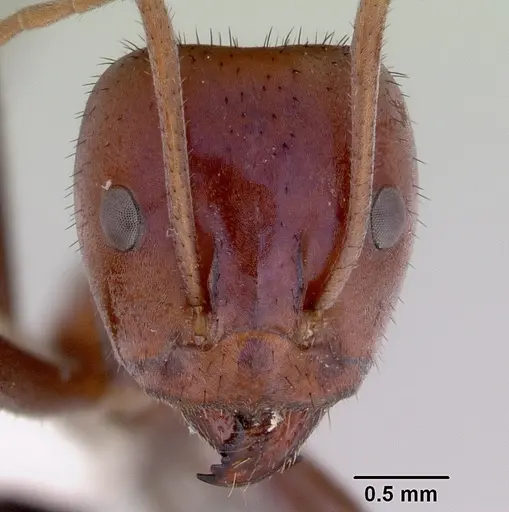
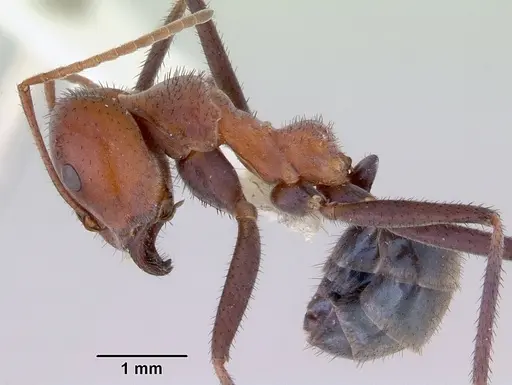
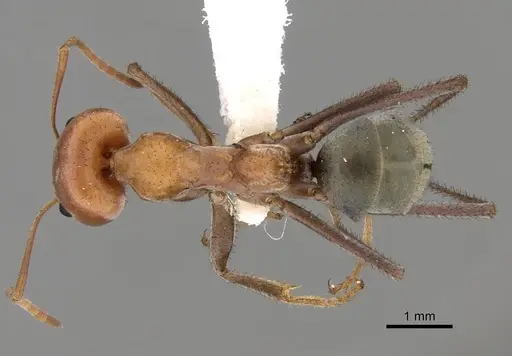
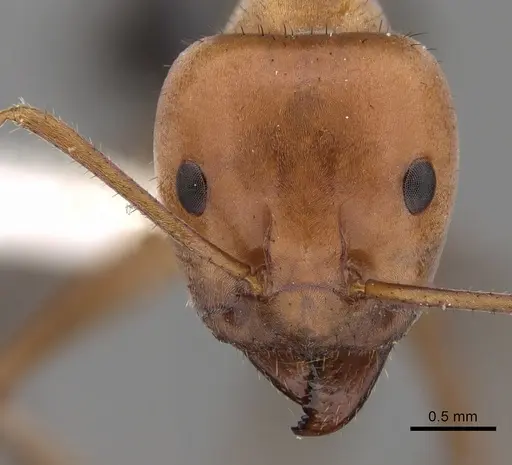
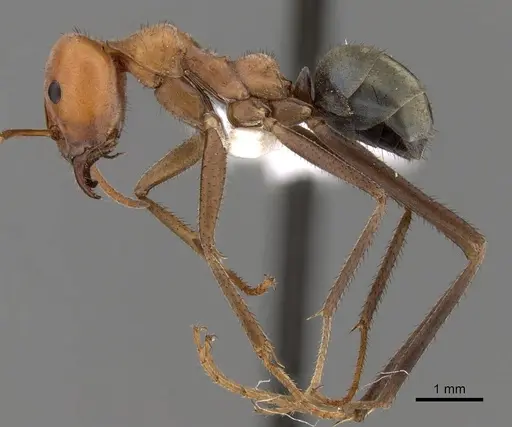
Iridomyrmex reburrus is a medium-sized ant native to northern Australia, belonging to the meat ant group (Iridomyrmex purpureus complex). Workers measure 1.26-1.99mm in head width and 1.46-2.09mm in head length, making them moderately sized among Australian ants [1]. They have a distinctive appearance with orange to reddish foreparts and a dark brown to black gaster, giving them a two-toned look. The most reliable identifying feature is the presence of erect setae (short hairs) on the sides of the head, a trait that separates them from similar species like Iridomyrmex sanguineus [1].
This ant is a dominant species in Australia's tropical savannas, known for its aggressive foraging behavior and highly organized trail systems [2]. What makes I. reburrus particularly interesting is its ecological role as a native predator of invasive cane toads, unlike many vertebrates, these ants are unaffected by cane toad toxins [2]. They thrive in riparian areas near water but have also been found in surprisingly arid mallee habitats in remote Western Australia, showing remarkable habitat flexibility [1].
Quick Summary
- Difficulty: Medium
- Origin & Habitat: Northern Australia, primarily the Darwin region of the Northern Territory, with isolated populations in south-eastern Western Australia. Prefers riparian habitats near water bodies like Rapid Creek, but also found in arid mallee country [1][3].
- Colony Type: Likely single-queen colonies based on typical Iridomyrmex genus patterns, though colony structure has not been directly documented for this species.
- Colony: Monogyne
- Founding: Claustral
- Size & Growth:
- Queen: Not specifically documented, estimated 6-8mm based on genus patterns
- Worker: 1.26-1.99mm head width,1.46-2.09mm head length [1]
- Colony: Colony size not documented, but as a dominant species likely reaches several thousand workers
- Growth: Moderate, inferred from typical Dolichoderinae development
- Development: Estimated 6-8 weeks at optimal tropical temperatures based on related Iridomyrmex species (Development time is estimated, not directly studied for this species. Tropical climate suggests faster development than temperate species.)
- Antkeeping:
- Temperature: Keep at 25-30°C. As a tropical Australian species from the Darwin region, they need warm conditions. A heating cable on one side of the nest creates a suitable gradient.
- Humidity: Moderate to high, their riparian habitat preference indicates they need access to moisture. Keep the nest substrate damp but not waterlogged. Provide a water tube for drinking access.
- Diapause: Likely minimal or no true diapause. As a tropical species from northern Australia, they probably remain active year-round with possible slowdown during dry season. No formal documentation exists.
- Nesting: In nature they nest in soil, often with multiple entrance holes near water sources [2]. In captivity, a standard formicarium with soil or plaster works well. They prefer to establish nests in areas with some moisture access.
- Behavior: These ants are behaviorally dominant and highly active foragers. They form organized trails to transport resources back to their nest and can carry objects many times their own mass [2]. Workers are aggressive defenders of their territory and will readily attack intruders. They are diurnal, actively foraging during the day. Their small to medium size (under 2mm) means escape prevention is important, use tight-fitting lids and consider fluon barriers. They are known to prey on cane toads and other large prey cooperatively [2].
- Common Issues: tropical species needs warm temperatures, cold will slow or stop activity, moderate escape risk due to small size, use fine mesh barriers, colonies may be sensitive to drying out, maintain humidity, limited documentation means care is based on genus inference rather than species-specific studies, cooperative hunting behavior means they may be aggressive toward other insects in their enclosure
Housing and Nest Setup
Iridomyrmex reburrus can be kept in standard formicarium setups. In the wild, they nest in soil with multiple entrance holes, often near water sources [2]. For captivity, a naturalistic setup with soil or a plaster nest works well. Because they prefer riparian habitats, include a water source or damp area in their enclosure. They need enough space for their organized trail systems, these ants are active foragers that establish defined paths between nest and food sources. A formicarium with a foraging area connected to a nest chamber gives them the layout they naturally prefer. Escape prevention is important given their small size, use tight-fitting lids and consider applying fluon to the upper edges of the enclosure.
Feeding and Diet
Like other Iridomyrmex species, I. reburrus is an omnivorous forager. In the wild, they are major predators of cane toads and other invertebrates, using cooperative behavior to take down prey much larger than individual workers [2]. They can carry objects many times their own mass and organize efficient foraging trails [2]. In captivity, offer a varied diet: protein sources like small insects (fruit flies, small crickets, mealworms), and sugar sources like honey water or sugar water. Their predatory nature means protein should make up a significant portion of their diet. Feed them every 2-3 days, removing uneaten prey after 24 hours. Always provide access to fresh water.
Temperature and Heating
As a tropical species from the Darwin region of the Northern Territory, Iridomyrmex reburrus needs warm conditions. Maintain temperatures between 25-30°C for optimal activity and brood development. The Darwin area experiences consistently warm temperatures year-round, so these ants are not adapted to cold. Use a heating cable or heating mat on one side of the nest to create a temperature gradient, allowing ants to regulate their own temperature by moving between warmer and cooler areas. Place the heating element on top of the nest rather than underneath to avoid drying out the substrate. Room temperature alone is likely too cool for this species unless your home is already in the mid-to-high 20s Celsius. [1][3]
Humidity and Water
Iridomyrmex reburrus shows a clear preference for riparian habitats near water [1], indicating they need moderate to high humidity. Keep the nest substrate consistently moist but not waterlogged. The soil or nesting material should feel damp to the touch. Provide a water tube or small water dish for drinking access, this is important given their natural association with water bodies like Rapid Creek [1]. Monitor humidity levels and rehydrate when the substrate surface begins drying. Avoid both excessive drying (which can kill the colony) and waterlogging (which can cause mold problems). A well-draining setup that retains moisture works best.
Behavior and Defense
This species is behaviorally dominant throughout Australia's mesic savannas [4]. They are aggressive defenders of their territory and will form organized foraging trails, a hallmark of their species [2]. Their cooperative behavior is particularly notable: workers can coordinate attacks on large prey like metamorph cane toads, with multiple ants working together to transport prey many times their own mass [2]. They are diurnal foragers, most active during daylight hours. While they lack a stinger (typical for Dolichoderinae), they can deliver a painful bite and will aggressively defend their nest. Their small size means they can escape through tiny gaps, excellent escape prevention is essential. They are not affected by cane toad toxins, making them unusual among predators [2].
Ecological Role and Fire Adaptation
Iridomyrmex reburrus plays an important ecological role in Australian savannas. They are a behaviorally dominant ant species throughout mesic savannas and are actually favored by frequent fire, their populations increase in high-frequency fire areas [4][5]. This is unusual among ant species, as fire typically reduces ant abundance. Studies show they quickly recolonize burnt areas by foraging from nearby unburnt patches [4]. Their dominance and resilience make them a key species in the Australian tropical ecosystem. They also serve as native predators helping to control invasive cane toads, one of the most successful biological control agents for this destructive invasive species [2].
Frequently Asked Questions
How long does it take for Iridomyrmex reburrus to produce first workers?
The exact timeline is not documented for this species, but based on related Iridomyrmex species and their tropical distribution, expect first workers (nanitics) in approximately 6-8 weeks after the queen lays eggs. Warmer temperatures within their 25-30°C range may speed development slightly.
What temperature do Iridomyrmex reburrus ants need?
Keep them at 25-30°C. This tropical Australian species from the Darwin region needs warm conditions year-round. A heating cable on one side of the nest creates a suitable gradient. Room temperature alone is likely too cool unless your home is already warm.
Can I keep multiple Iridomyrmex reburrus queens together?
This has not been documented for this species. Based on typical Iridomyrmex patterns, they likely form single-queen colonies. It is not recommended to combine unrelated foundress queens, as fighting is likely.
Are Iridomyrmex reburrus good for beginners?
This species is rated as medium difficulty. They require warm temperatures and moderate humidity, which may require additional equipment. Their small size also demands good escape prevention. They are fascinating to watch due to their organized foraging trails and cooperative behavior, but they are not the easiest species for complete beginners.
What do Iridomyrmex reburrus eat?
They are omnivorous with a strong predatory drive. Feed small insects (fruit flies, small crickets, mealworms) as protein sources 2-3 times per week. Also provide sugar water or honey water as an energy source. They are known to cooperatively hunt large prey in the wild.
Do Iridomyrmex reburrus need hibernation?
As a tropical species from northern Australia, they likely do not require a true hibernation period. They may show reduced activity during the dry season, but this is not a cold-induced diapause. Keep them warm year-round.
How big do Iridomyrmex reburrus colonies get?
Colony size has not been specifically documented, but as a dominant species in their ecosystem, colonies likely reach several thousand workers. They build nests with multiple entrance holes and maintain extensive foraging trail networks.
Why are my Iridomyrmex reburrus dying?
Common causes include: temperatures below 25°C (they need warmth), dry conditions (they prefer riparian habitats), poor escape prevention allowing escapes, or inadequate protein in their diet. Check that your setup maintains appropriate warmth and humidity before assuming illness.
When should I move Iridomyrmex reburrus to a formicarium?
Start them in a test tube setup for founding. Once the colony reaches 20-30 workers and you see consistent brood development, you can transition them to a formicarium with a proper nest chamber and foraging area. They need space for their characteristic foraging trail systems.
References

This caresheet is licensed under CC BY-SA 4.0 .
Literature
Loading...Loading products...