

Iridomyrmex omalonotus
- Scientific Name
- Iridomyrmex omalonotus
- Tribe
- Leptomyrmecini
- Subfamily
- Dolichoderinae
- Author
- Heterick & Shattuck, 2011
- Distribution
- Found in 1 countries
Iridomyrmex omalonotus Overview
Iridomyrmex omalonotus is an ant species of the genus Iridomyrmex. It is primarily documented in 1 countries , including Australia. Detailed taxonomic data and occurrence records can be further explored via authoritative databases such as AntWeb or the Global Biodiversity Information Facility (GBIF).
Iridomyrmex omalonotus
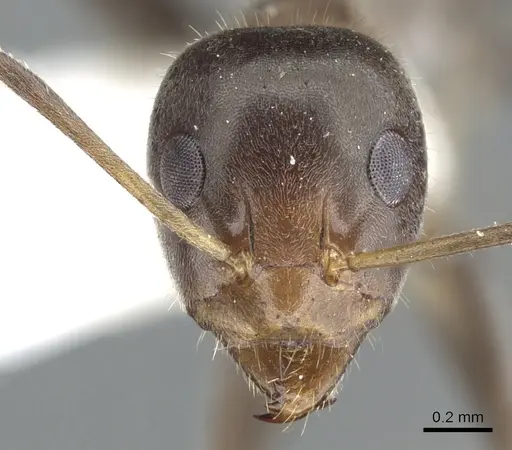
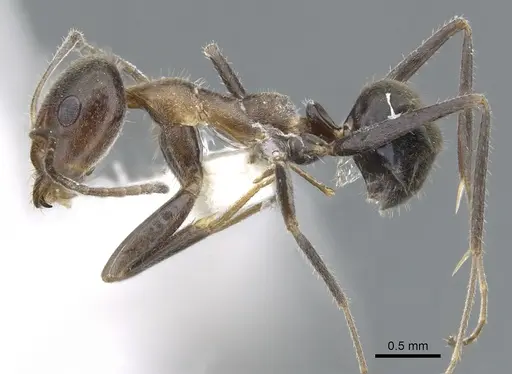
Iridomyrmex omalonotus is a small, common ant species native to Australia, found across Western Australia, Victoria, New South Wales, and South Australia. Workers measure 0.63-0.86mm in head width with long, hairy antennal scapes and distinctive erect setae on their hind tibiae and sides of the head. Many populations show a uniquely flattened propodeum (the middle body section), which gives the species its name, 'omalonotus' comes from Greek 'omalos' (flat) and Latin 'notus' (back). The coloration is shades of brown, with the abdomen often darker than the front parts [1]. This species prefers drier habitats like sandplain heathland, Triodia-covered sand dunes, and mallee scrubland, where it builds small mound nests. Unlike many ants, I. omalonotus frequently climbs trees to forage and is active both day and night [1][2].
Quick Summary
- Difficulty: Medium
- Origin & Habitat: Australia, found in Western Australia, Victoria, NSW, and South Australia. Prefers drier habitats including sandplain heathland, Triodia-covered sand dunes, and mallee scrubland. Nests are terrestrial with small mound entrances [1][2].
- Colony Type: Colony structure is unconfirmed. This species has not been studied for queen number or colony organization.
- Size & Growth:
- Queen: Unconfirmed, queen measurements not available in available literature
- Worker: 0.63-0.86mm head width,0.82-0.96mm head length [1]
- Colony: Unconfirmed, colony size has not been documented
- Growth: Unknown, no development data available
- Development: Unconfirmed, no direct development studies exist for this species (Development timeline is unknown. Related Iridomyrmex species typically develop from egg to worker in 4-8 weeks under warm conditions, but this is an estimate for I. omalonotus.)
- Antkeeping:
- Temperature: Keep warm, around 24-28°C. This species prefers drier habitats and is found in warm Australian regions, so a heated nest area works well. A heating cable on one side creates a suitable gradient.
- Humidity: Keep relatively dry. This species prefers drier habitats like sandplain heathland and mallee scrubland. The nest should have some moisture but avoid damp conditions, think dry to moderately damp substrate, not wet.
- Diapause: Unknown, Australian species may have reduced activity in cooler months but diapause requirements have not been studied. Monitor colony activity and reduce temperatures slightly in winter if they become less active.
- Nesting: Use a dry nest setup. This species prefers drier conditions, so Y-tong or acrylic nests work better than moisture-dependent setups like plaster. Provide a small dirt mound or sandy substrate in the outworld to mimic their natural mound-building behavior. The nest chambers should be appropriately scaled to their small worker size.
- Behavior: Iridomyrmex omalonotus is an active forager that climbs trees to search for food. Workers are active both day and night, showing flexible activity patterns. They are likely attracted to sweet foods like honeydew and may attend lycaenid caterpillars and honeydew-producing insects [2]. Their small size means they can escape through tiny gaps, excellent escape prevention is essential. The species is not particularly aggressive but will defend the colony if threatened.
- Common Issues: escape prevention is critical due to their very small size, use fine mesh barriers and tight-fitting lids, overly humid conditions will stress this species, keep the nest relatively dry, slow or unknown growth rate means colonies may take time to develop, patience is needed, wild-caught colonies may have parasites that affect survival in captivity, limited available care information means you may need to adjust conditions based on colony behavior
Natural History and Identification
Iridomyrmex omalonotus is a very common Australian ant species that was formally described in 2011 by Heterick and Shattuck. It can be identified by its long, hairy antennal scapes, erect setae on the hind tibiae and sides of the head, and relatively small worker size. Many populations have a distinctively flattened propodeum (the section between the thorax and abdomen), which is part of normal variation within the species. It is often confused with related species like Iridomyrmex mayri and Iridomyrmex obscurior, but the flattened propodeum and the specific setae patterns help distinguish it. Another similar species, Iridomyrmex spurcus, shares the same habitat but has unusually long setae on its legs and mesosoma, unlike the short bristly setae of I. omalonotus [1].
Habitat and Foraging Behavior
This species prefers drier Australian habitats including sandplain heathland, Triodia-covered sand dunes, and mallee scrubland. They build terrestrial nests marked by small mounds. Unlike many ground-nesting ants, I. omalonotus frequently ascends trees to forage, which is unusual behavior for this genus. Label data shows specimens collected using methods like malaise traps and honey baits placed on tree trunks, confirming their arboreal foraging. Workers are active both during the day and at night, they have been collected at night in Cocklebiddy, Western Australia, but are also diurnally active. This flexible activity pattern likely helps them avoid peak daytime heat in their dry habitat [1][2].
Diet and Feeding
Based on their foraging behavior and attraction to honey baits, Iridomyrmex omalonotus likely feeds on honeydew from aphids and scale insects, as well as nectar and other sweet substances. They probably attend lycaenid caterpillars and honeydew-producing Hemiptera for sugar sources. In captivity, you should offer sugar water or honey regularly, along with protein sources like small insects. Their tree-climbing behavior suggests they are good foragers, so they should readily accept food in the outworld. Given their small size, prey items should be appropriately sized, small fruit flies, pinhead crickets, or other tiny arthropods work well. [2]
Temperature and Housing
Keep Iridomyrmex omalonotus warm, ideally around 24-28°C. This species comes from warm Australian regions and prefers drier conditions, so avoid humid setups. A Y-tong or acrylic nest works well because it allows you to control moisture levels more easily than plaster or earth nests. Provide a temperature gradient using a heating cable on one side of the nest so workers can choose their preferred temperature. Since they naturally build small mound nests, you could include a small dirt mound in the outworld area. The nest chambers should be appropriately scaled to their tiny worker size, small passages and chambers work better than large open spaces.
Care Considerations
This species is not well-documented in antkeeping literature, so some experimentation may be needed. The most important considerations are: escape prevention (their small size means they can squeeze through tiny gaps), keeping conditions relatively dry (they prefer drier habitats), and providing warm temperatures. Since colony structure and founding behavior are unconfirmed, you may need to observe your colony to understand its specific needs. If your colony seems sluggish, try slightly increasing temperature. If workers are frequently at the water tube, increase humidity slightly. Always use excellent escape prevention, fine mesh, barrier tape, and tight-fitting lids are essential.
Frequently Asked Questions
How long does it take for Iridomyrmex omalonotus to produce first workers?
The development timeline is unconfirmed for this species. Related Iridomyrmex species typically develop from egg to worker in 4-8 weeks under warm conditions, but this is an estimate. You should expect several months for a colony to establish itself.
What do Iridomyrmex omalonotus ants eat?
They likely feed on honeydew, nectar, and small insects. In captivity, offer sugar water or honey regularly, along with small protein sources like fruit flies or tiny crickets.
Are Iridomyrmex omalonotus good for beginners?
This species is rated as Medium difficulty. While they are small and require excellent escape prevention, their preference for drier conditions is relatively easy to maintain. However, limited documented care information means some experimentation may be needed.
What temperature do Iridomyrmex omalonotus need?
Keep them warm at around 24-28°C. A heating cable on one side of the nest creates a gradient. They come from warm Australian regions and prefer drier habitats.
Do Iridomyrmex omalonotus need hibernation?
Diapause requirements are unknown for this species. Australian species may have reduced activity in cooler months. Monitor your colony, if they become less active in winter, you can slightly reduce temperatures rather than providing full hibernation.
Can I keep multiple queens together?
Colony structure is unconfirmed for this species. There is no data on whether they are single-queen or multi-queen colonies. It is best to start with one queen and observe colony behavior.
What size colony do Iridomyrmex omalonotus reach?
Colony size is unconfirmed. As a small, common species in dry habitats, colonies are likely moderate in size, but no specific maximum has been documented.
Why are my Iridomyrmex omalonotus escaping?
Their very small size means they can squeeze through tiny gaps. Use fine mesh (at least 0.5mm or finer), apply barrier tape to edges, and ensure all lids fit tightly. Check for any cracks or gaps in your setup.
When should I move them to a formicarium?
Move them when the test tube setup becomes too crowded or the colony has outgrown the outworld space. For this small species, a properly sized acrylic or Y-tong nest works well.
References

This caresheet is licensed under CC BY-SA 4.0 .
CASENT0903088
View on AntWeb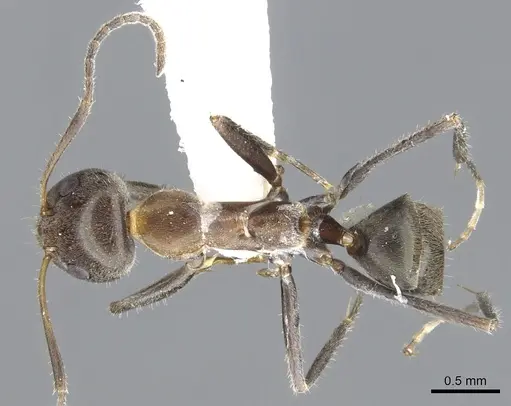
Literature
Loading...Loading products...