

Iridomyrmex mayri
- Scientific Name
- Iridomyrmex mayri
- Tribe
- Leptomyrmecini
- Subfamily
- Dolichoderinae
- Author
- Forel, 1915
- Distribution
- Found in 1 countries
Iridomyrmex mayri Overview
Iridomyrmex mayri is an ant species of the genus Iridomyrmex. It is primarily documented in 1 countries , including Australia. Detailed taxonomic data and occurrence records can be further explored via authoritative databases such as AntWeb or the Global Biodiversity Information Facility (GBIF).
Iridomyrmex mayri
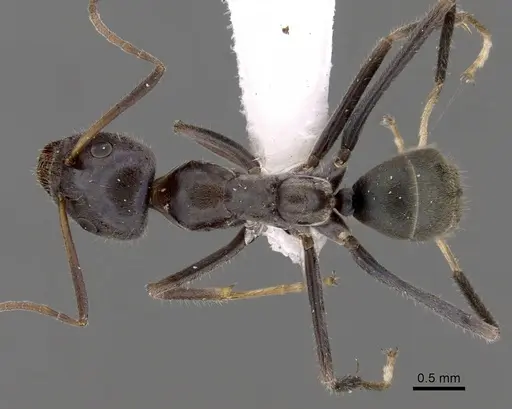
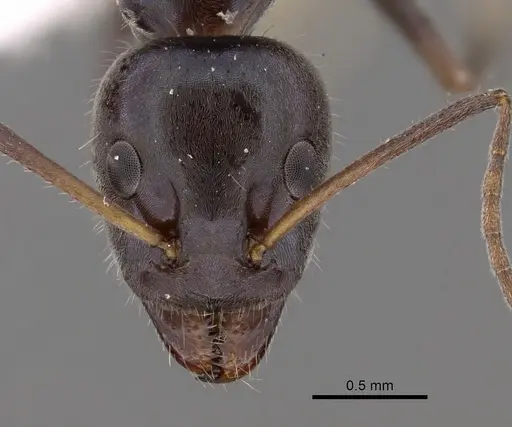
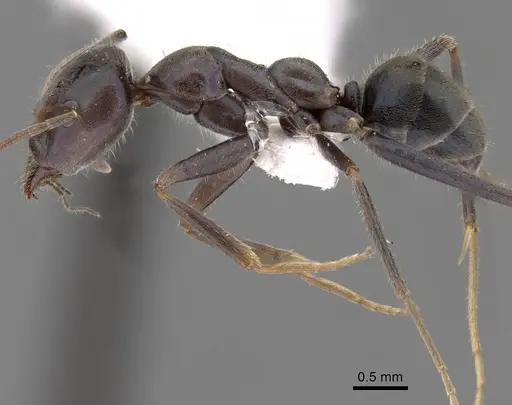
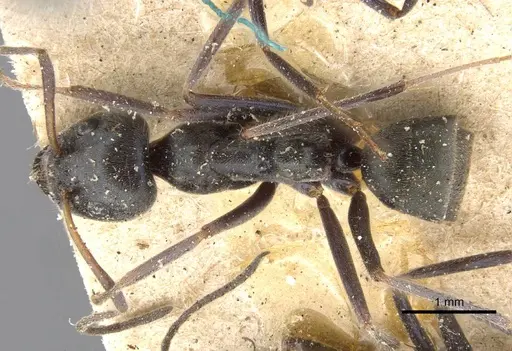
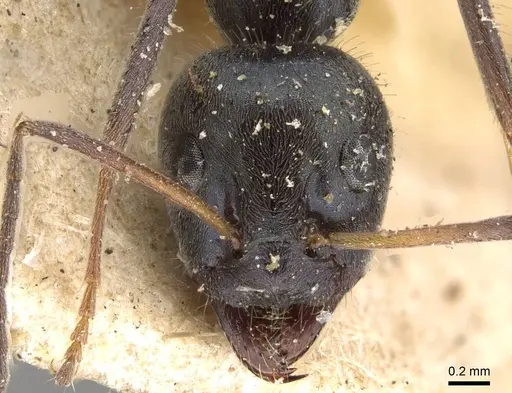
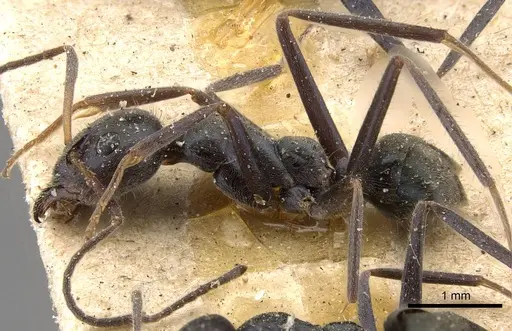
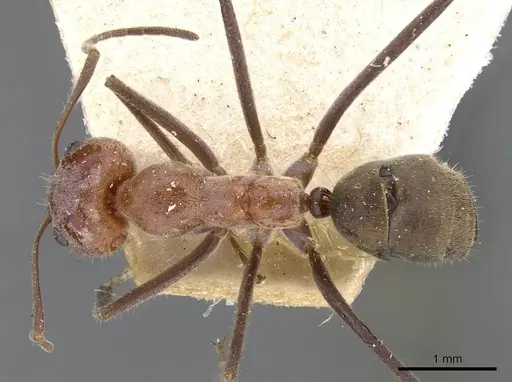
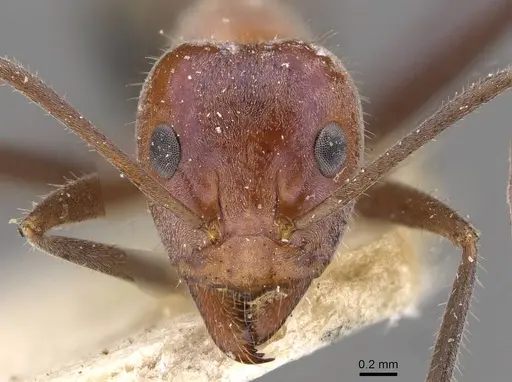
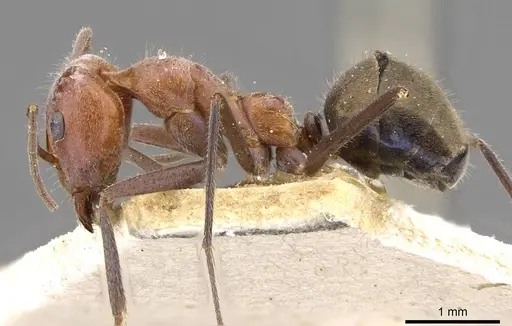
Iridomyrmex mayri is a medium-sized ant native to eastern Australia, commonly found along the coast from Queensland down to southern New South Wales and the ACT. Workers measure 0.88-1.10mm in head width with a distinctive appearance featuring bristly, erect setae on the antennal scape, mesosoma, and hind tibiae. The body is uniformly blackish to reddish-brown with a striking pale to very pale blue or purple iridescence that gives them an almost metallic sheen. Large workers can be mistaken for small meat ants but lack the strong anteromedial clypeal spur that characterizes those species. This species is most easily confused with its close relative Iridomyrmex obscurior, but I. mayri has a longer antennal scape that extends more than one-third of its length beyond the posterior margin of the head [1].
What makes Iridomyrmex mayri particularly interesting is its mutualistic relationship with the lycaenid butterfly Jalmenus evagoras. Workers actively tend the larvae of this butterfly, protecting them from predators and harvesting their honeydew secretions, a common behavior in the Iridomyrmex genus but still fascinating to observe in captivity. They are also known to forage on tree trunks and sweep through low vegetation, making them active and visible foragers that adapt well to various urban green spaces [1][2].
Quick Summary
- Difficulty: Easy
- Origin & Habitat: Eastern Australia, coastal areas from northern Queensland to southern NSW and ACT. Prefers dry sclerophyll forest but also found in urban green spaces. Nests under stones and in rotting logs [1][2].
- Colony Type: Colony structure is not well-documented in scientific literature. Based on typical Iridomyrmex patterns, likely polygynous (multiple queens) with possible claustral founding, but this requires confirmation for this specific species.
- Size & Growth:
- Queen: Not specifically documented, estimated 6-8mm based on genus patterns
- Worker: 0.88-1.10mm head width,1.02-1.24mm head length [1]
- Colony: Likely moderate-sized colonies based on typical Iridomyrmex patterns, estimated several hundred workers
- Growth: Moderate, based on related species development patterns
- Development: Estimated 6-8 weeks at optimal temperature based on genus patterns (Development timeline not specifically studied for this species, estimates based on typical Dolichoderinae development)
- Antkeeping:
- Temperature: Keep at 22-26°C. Being an Australian coastal species, they prefer warm but not extreme conditions. A room-temperature range within this band works well, with a slight heating gradient if your colony is active [1].
- Humidity: Moderate humidity around 50-60%. They naturally nest under stones and in rotting wood, which suggests they prefer somewhat dry conditions. Provide a moisture gradient with a damp section and a dry section so ants can self-regulate.
- Diapause: Unlikely required, being from coastal Australia with mild winters, they probably do not need a true hibernation. However, a slight cool-down period (15-18°C) during winter months may benefit the colony.
- Nesting: They naturally nest under stones and in rotting logs. In captivity, they do well in Y-tong (AAC) nests, plaster nests with some moisture, or naturalistic setups with flat stones over soil. They prefer tight, enclosed spaces that mimic their natural stone-nesting behavior [1].
- Behavior: Iridomyrmex mayri is an active forager with moderate aggression. They will readily tend lycaenid butterfly larvae and are known to forage on tree trunks and low vegetation. Workers have bristly setae covering their body, which gives them a somewhat fuzzy appearance. They are not known to be particularly aggressive toward keepers but will defend their nest if threatened. Escape risk is moderate, they are small but not tiny, so standard escape prevention measures (fluon barriers, tight-fitting lids) should suffice. They show response to carbohydrate targets in laboratory studies [3].
- Common Issues: colonies may fail if kept too cold, maintain warm temperatures year-round, escape prevention is important though not as critical as for tiny species, use standard barriers, wild-caught colonies may have parasites that affect survival in captivity, they may be less common in the antkeeping hobby so fewer established care protocols exist, overheating can be an issue, avoid temperatures above 30°C
Housing and Nest Setup
Iridomyrmex mayri does well in a variety of captive setups. In the wild, they nest under stones and in rotting logs, so a naturalistic setup with a flat stone placed over moist soil works wonderfully, this mimics their natural conditions and allows you to observe their behavior. Alternatively, Y-tong (AAC) nests or plaster nests with a moisture reservoir provide excellent control over humidity levels. They prefer tight, enclosed chambers rather than open spaces, so choose nest setups with appropriately sized tunnels for their worker size. A small outworld for foraging completes the setup. Because they are active foragers, ensure the outworld is spacious enough for them to hunt and explore [1].
Feeding and Diet
Like other Iridomyrmex species, I. mayri is omnivorous with a preference for carbohydrate sources. They will readily accept sugar water, honey, or diluted syrup as a regular food source. For protein, offer small insects like fruit flies, small crickets, or mealworms. Their famous mutualism with lycaenid butterfly larvae suggests they have a taste for honeydew, you could offer a small artificial honeydew substitute or keep them near live aphids in a separate section of the outworld. Laboratory studies show they respond to carbohydrate targets and adjust their foraging based on nutrient needs [3][4]. Feed carbohydrate sources constantly and protein 2-3 times per week.
Temperature and Seasonal Care
Being from coastal eastern Australia, Iridomyrmex mayri prefers warm conditions in the 22-26°C range. They are found in dry sclerophyll forest and coastal areas, suggesting they can tolerate some variation in humidity but prefer conditions on the drier side. During Australian winter, temperatures in their native range drop but rarely become extreme. In captivity, you can simulate a mild seasonal cycle by reducing temperatures to 15-18°C for a few months in winter, but a full hibernation is not necessary or recommended. Avoid temperatures above 30°C as this can stress the colony. Room temperature in most homes should fall within their acceptable range [1].
Behavior and Observation
One of the most fascinating aspects of keeping Iridomyrmex mayri is observing their behavior, they are active foragers that will explore their outworld thoroughly. Workers are medium-sized and have a distinctive bristly appearance due to the erect setae covering their body. They are not particularly aggressive toward keepers but will defend their nest vigorously if disturbed. Their iridescent coloring (pale blue to purple sheen) is particularly striking under good lighting. If you're interested in observing ant-butterfly mutualisms, this species is one of the few that can be kept alongside Jalmenus evagoras caterpillars in a bio-active setup, though this requires research and careful setup. They forage on tree trunks in the wild, so adding vertical structures in the outworld can encourage natural foraging behavior [1].
Colony Establishment
If you acquire a founding queen, she will need a claustral chamber, a small test tube setup with a water reservoir and cotton plug, placed in darkness. Based on typical Iridomyrmex patterns, she will likely seal herself in and raise the first brood alone using stored energy reserves. The first workers (nanitics) will be smaller than normal workers. Once the first workers emerge, you can connect the test tube to an outworld and begin regular feeding. Growth rate is moderate, expect several months before you have a established colony with 20-30 workers. Patience is key during the founding phase. If acquiring an established colony, transfer them gently to their new home and give them time to settle before disturbing them.
Frequently Asked Questions
Is Iridomyrmex mayri a good species for beginners?
Yes, Iridomyrmex mayri is considered a good species for beginners. They are relatively hardy, adapt well to various nest types, and have straightforward feeding requirements. Their moderate size makes them easy to observe, and they are not overly aggressive. The main challenge is that they may be less commonly available in the antkeeping hobby than some other species.
How long does it take for Iridomyrmex mayri to produce first workers?
Based on typical Iridomyrmex development patterns, expect 6-8 weeks from egg to first worker at optimal temperature (around 24°C). The exact timeline for this specific species has not been documented, so this is an estimate. The founding queen will remain in her sealed chamber until the first workers emerge.
What do Iridomyrmex mayri ants eat?
They are omnivorous with a preference for carbohydrates. Offer sugar water, honey, or diluted syrup regularly. For protein, provide small insects like fruit flies, small crickets, or mealworms 2-3 times per week. They are known to tend lycaenid butterfly larvae in the wild, suggesting they readily accept honeydew.
Can I keep multiple Iridomyrmex mayri queens together?
The colony structure of this specific species has not been well-documented. Many Iridomyrmex species can be polygynous (multiple queens), but it is generally safer to start with a single queen colony. If you have multiple foundresses, it is not recommended to house them together unless you have specific documentation that this species accepts multi-queen founding.
Do Iridomyrmex mayri need hibernation?
Probably not. Being from coastal Australia with mild winters, they likely do not require a true hibernation period. However, a slight cool-down to 15-18°C during winter months may be beneficial and mimic natural seasonal changes. Avoid keeping them too cold.
What size colony does Iridomyrmex mayri reach?
Colony size is not specifically documented for this species. Based on typical Iridomyrmex patterns, they likely reach several hundred workers at maturity. They are considered medium-sized ants with workers around 0.88-1.10mm in head width.
What is the best nest type for Iridomyrmex mayri?
They do well in Y-tong (AAC) nests, plaster nests with moisture, or naturalistic setups with flat stones over soil. They naturally nest under stones and in rotting logs, so any setup that provides enclosed, tight spaces will work well. Ensure there is a moisture gradient so they can self-regulate their humidity needs.
Where is Iridomyrmex mayri found in the wild?
They are native to eastern Australia, ranging from northern Queensland down to southern New South Wales and the ACT. They prefer coastal areas and dry sclerophyll forest. They are absent from Victoria, Western Australia, Northern Territory, South Australia, and Tasmania.
Why is my Iridomyrmex mayri colony declining?
Common causes include: temperatures too cold (keep above 20°C), too much humidity causing mold, poor nutrition (ensure regular carbohydrate and protein), or stress from too much disturbance. Check your setup parameters and make adjustments gradually. Wild-caught colonies may also carry parasites that affect them in captivity.
References

This caresheet is licensed under CC BY-SA 4.0 .
Literature
Loading...Loading products...