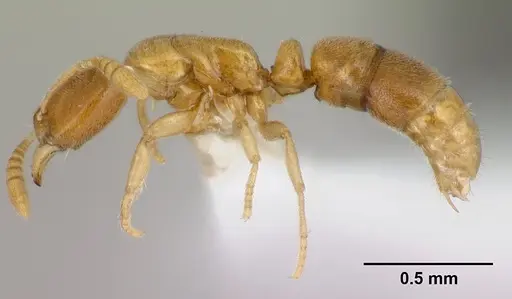
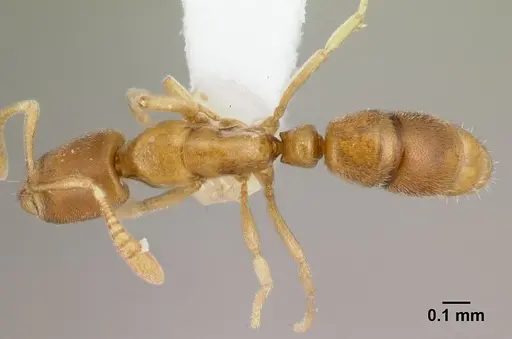
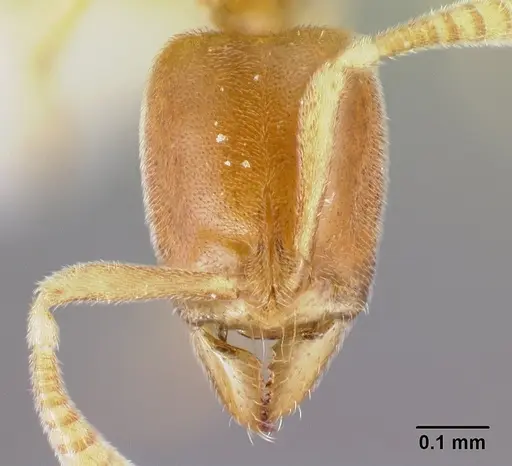
Hypoponera inaudax - "Ghost Ant (unofficial, based on cryptobiotic nature)"
Hypoponera inaudax is a tiny, yellowish ant species belonging to the Ponerinae subfamily. They are characterized by their small size and often cryptic, underground lifestyle. Workers are monomorphic, meaning they don't have distinct size castes. This species is closely related to Hypoponera coeca, and some variations exist that may indicate multiple species are currently grouped under H. inaudax. They are generally found in leaf litter and soil, where they forage for small arthropods.
- Difficulty: Medium
- Origin & Habitat: Afrotropical Region (Cameroun, Democratic Republic of Congo, Gabon, Ghana, Guinea, Ivory Coast, Kenya, Nigeria). in Rainforest leaf-litter, soil, under rocks, rotting wood, and other sheltered microhabitats..
- Colony Type: Monogyne or Polygyne, with potential for ergatoid queens., claustral, but exact details are limited. given their cryptic nature, they likely found underground. founding.
- Size & Growth:
- Queen: Not specified
- Worker: 0.4-0.46mm
- Colony: Small (typically fewer than 100 workers, occasionally more, up to 1500 in the genus).. Slow (due to smaller colony sizes and cryptic habits). growth.
- Antkeeping:
- Temperature: Room temperature to slightly warmer, ideally between 24-28°C. Mimicking their tropical rainforest origin is beneficial. Constant temperatures are important to avoid stress..
- Humidity: High humidity is crucial, ideally 70-90%. These ants thrive in moist environments, often found in damp leaf litter and soil..
- Diapause: Not required. Not specified at Not specified.
- Nesting: Naturalistic setups with ample substrate like soil or coco fiber. They will nest in deep, moist environments. Acrylic or Ytong nests with good humidity control could work, but natural setups are preferred..
- Behavior: Low (towards handler, but will sting if threatened. Stings are generally not medically significant for humans). aggressiveness.
- Common Issues: Humidity fluctuations, Lack of appropriate food sources, Difficulty observing due to cryptic nature, Escape due to small size, Mold in nest (if humidity is too high without proper ventilation).
One fascinating aspect of Hypoponera inaudax (and the Hypoponera genus in general) is their unique larval behavior. These tiny larvae possess sticky tubercles, which they use to attach themselves to the walls and ceilings of their nest chambers. This peculiar adaptation might help them in feeding or provide protection from excessive humidity within their subterranean nests. It could also be a clever way to prevent cannibalism, which has been observed in some Hypoponera species, by keeping the larvae separated.
These ants are largely cryptobiotic, meaning they spend most of their lives hidden away in the soil, under rocks, or within decaying wood and leaf litter. This makes observing their natural foraging behaviors a bit of a challenge for keepers. They are primarily predators of small arthropods, suggesting a diet of tiny insects and other micro-fauna. While generalist predators, some Hypoponera species might have more specialized dietary needs, so offering a variety of small feeder insects is a good approach.
Trophallaxis, the mouth-to-mouth transfer of food, is observed in Hypoponera species, but with some interesting caste-specific behaviors. Workers will solicit food from queens, males, and other workers, but they only receive regurgitated food from other workers. Queens, especially mature ones, don't solicit food from workers, but callow (newly eclosed) queens do. Ergatoid males (worker-like males) are even known to exchange food with queens, which is quite unusual for male ants who are often less involved in colony tasks.
Colony growth for Hypoponera inaudax tends to be on the slower side, and mature colonies typically remain relatively small, often housing fewer than a hundred workers, though some can reach into the hundreds or even a thousand for the genus. This slower growth and smaller size mean they require less space than many common ant species, making them suitable for smaller setups. However, their cryptic nature means patience is key for observing their development and activities.
Unlike many ant species, Hypoponera queens can be quite diverse in their reproductive forms. Some species have winged queens, while others have ergatoid (worker-like, wingless) queens, and some even have both within a single colony. This flexibility in queen morphology highlights the unique reproductive strategies found within this genus. While H. inaudax itself is not explicitly detailed regarding ergatoid queens, the genus is known for it, which could be a factor in colony establishment and growth.
Frequently Asked Questions
What kind of enclosure is best for Hypoponera inaudax?
For these small, elusive ants, a naturalistic setup is often the most rewarding. Think deep layers of coco fiber, moist soil, or a mix of both in an acrylic formicarium or a small terrarium. They absolutely thrive in high humidity and love to burrow, so providing a suitable substrate is key for a flourishing Hypoponera inaudax colony. You'll want an enclosure that helps maintain that crucial moisture level, as they are a cryptobiotic species and nest in damp environments like leaf litter and rotting wood.
What do Hypoponera inaudax eat?
Hypoponera inaudax are primarily predators, and in the wild, they feast on tiny arthropods found in their leaf litter and soil habitats. For your colony, offering a variety of small feeder insects like springtails, small beetle larvae, or even pre-killed fruit flies can be excellent. Experiment with different protein sources to see what your specific colony prefers. Ensuring they have a consistent supply of small prey is vital for their well-being and growth.
Are Hypoponera inaudax queens hard to find?
Finding Hypoponera inaudax queens can be a bit tricky due to their cryptic nature and small size. They aren't the kind of ants you typically spot on a nuptial flight in large numbers. Often, they are collected from sifted leaf litter or soil samples in their native range. If you're looking to start a colony, sourcing from reputable ant suppliers who specialize in less common species is generally the best bet.
Do Hypoponera inaudax sting?
Yes, Hypoponera inaudax workers possess a sting, as is common for many Ponerine ants. However, given their tiny size, their sting is generally considered to be mild and not medically significant to humans. Unless you're directly handling them or they feel seriously threatened, they are unlikely to sting. It's always wise to exercise caution, but they are not known for aggressive stinging behavior towards keepers.
How large do Hypoponera inaudax colonies get?
Hypoponera inaudax colonies tend to be on the smaller side compared to many other ant species. In the wild, Hypoponera colonies typically consist of fewer than 100 workers, though some can grow larger, occasionally reaching up to 1500 workers for the genus. This means you won't need a massive formicarium for a mature colony. Their small colony size is part of their charm for those who prefer more manageable ant setups.
What is diapause, and do Hypoponera inaudax need it?
Diapause is a period of inactivity or hibernation that many ant species enter, usually triggered by colder temperatures or resource scarcity. It helps them survive harsh conditions. For Hypoponera inaudax, which originate from tropical rainforest environments, a diapause period is generally not required. They are accustomed to stable, warm, and humid conditions year-round, so maintaining consistent temperatures and humidity is key to their continuous development.
How fast do Hypoponera inaudax colonies grow?
The growth rate of Hypoponera inaudax colonies is considered slow. They don't explode in numbers like some other common ant species. This slower growth is typical for many predatory and cryptic ant species. Patience is a virtue when keeping H. inaudax; you'll observe steady, gradual development rather than rapid expansion of their worker force. This can be a benefit for keepers who prefer a less overwhelming colony to manage.
Are Hypoponera inaudax good for beginner antkeepers?
Hypoponera inaudax are not typically recommended for absolute beginners. While they are fascinating, their specific needs for high humidity, a predatory diet, and their cryptic nature can make them a bit more challenging to observe and maintain successfully. They require a keeper who is comfortable with providing a specialized environment and understands the nuances of caring for a less visible species. However, an intermediate keeper with some experience could certainly enjoy them.
What are 'ergatoid queens' and do Hypoponera inaudax have them?
Ergatoid queens are wingless, worker-like reproductive females that can be found in some ant species. While Hypoponera inaudax specifically is not detailed as having them, the genus Hypoponera is known for its diverse reproductive strategies, including the presence of ergatoid queens in some species. This is a really interesting adaptation that allows for different ways a colony can reproduce and expand, even without the typical winged nuptial flights. It's a hallmark of the unique biology within the Ponerinae subfamily.
Why are my Hypoponera inaudax not visible?
If you're finding your Hypoponera inaudax colony isn't very visible, it's likely due to their naturally cryptobiotic behavior. These ants spend most of their lives hidden away, nesting and foraging within the substrate, such as soil or leaf litter. They are not surface foragers like many other ant species. To get glimpses of them, you might need to use a formicarium with good visibility into their tunnels, or gently check under any decor in their outworld. Patience and understanding their natural habits are key to appreciating this shy species.