

Formica tianshanica
- Scientific Name
- Formica tianshanica
- Tribe
- Formicini
- Subfamily
- Formicinae
- Author
- Seifert & Schultz, 2009
- Distribution
- Found in 2 countries
Formica tianshanica Overview
Formica tianshanica is an ant species of the genus Formica. It is primarily documented in 2 countries , including China, Kyrgyzstan. Detailed taxonomic data and occurrence records can be further explored via authoritative databases such as AntWeb or the Global Biodiversity Information Facility (GBIF).
Formica tianshanica
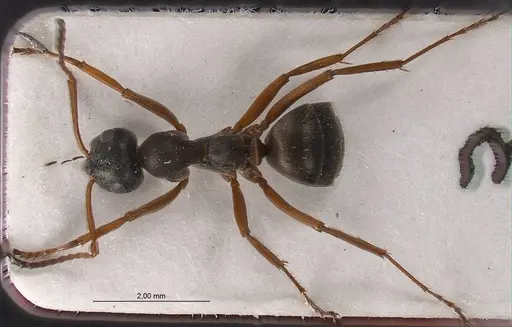
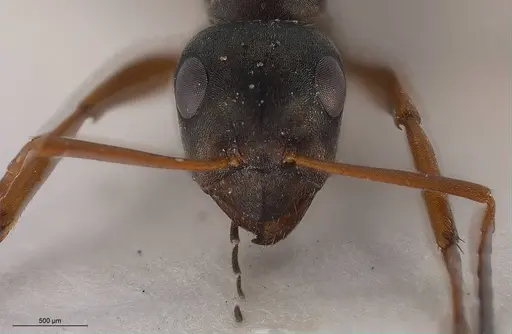
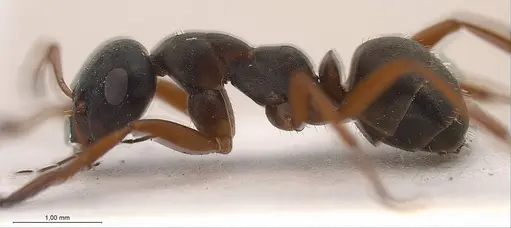
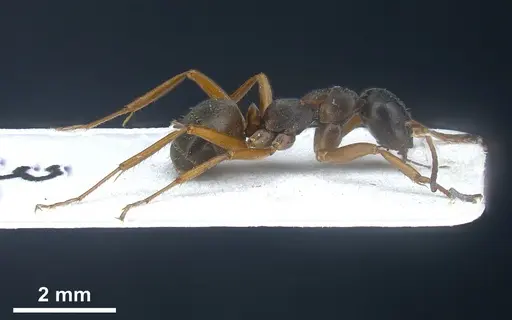
Formica tianshanica is a small Serviformica species native to the mountain ranges of Central Asia, including the Tian Shan, Tarbagatay-Saur, and Bogda Shan mountains in Kyrgyzstan and China [1]. Workers measure around 1.2mm in body length, making them one of the smaller Formica species. They have an elongated head, relatively large eyes, and a narrow petiole. The body coloration is variable, the head and mesosoma are reddish to yellowish-brown while the gaster is always dark brown, covered with dense silvery pubescence that gives them a mildly shining appearance [1][2]. This species is closely related to Formica cunicularia and Formica persica, but can be distinguished by subtle morphological differences and genetic analysis [1]. What makes F. tianshanica particularly interesting is its ecological flexibility, it thrives in the Bogda Shan mountains where competing Serviformica species are absent, occupying an enormous altitudinal range from 1380 to over 3000 meters [1].
Quick Summary
- Difficulty: Medium
- Origin & Habitat: Mountain ranges of Central Asia (Tian Shan, Tarbagatay-Saur, Bogda Shan) in Kyrgyzstan and China, at altitudes between 1380-3010 meters [1][2]. Found in diverse habitats including pastures, open rural areas, clear-cuttings of former Picea forest, and light Picea forests with grassland and Juniperus [1].
- Colony Type: Single-queen colonies (monogyne), this follows the typical pattern for Serviformica species in the F. rufibarbis group. No documented polygyny or ergatoid replacement reproductives in available research.
- Colony: Monogyne
- Founding: Claustral
- Size & Growth:
- Queen: Estimated 5-6mm based on genus patterns for small Serviformica species
- Worker: 1.2mm (CS 1.220mm) [1][2]
- Colony: Likely moderate, typical for Serviformica, probably several thousand workers at maturity based on related species
- Growth: Moderate, typical for Formica species with multi-stage development
- Development: Estimated 6-8 weeks at optimal temperature based on typical Formica development patterns (Development time is estimated from related Formica species, direct measurements for F. tianshanica are not available. Higher altitudes and cooler native conditions may result in slower development.)
- Antkeeping:
- Temperature: Keep at 20-24°C. This species comes from high-altitude mountain environments (1000-3000m) where temperatures are cool, so they prefer cooler conditions than many tropical ants. A temperature gradient allowing them to choose their preferred zone is ideal. They can tolerate temperatures down to 15°C and may benefit from a cool period simulating their natural mountain habitat [1].
- Humidity: Moderate humidity (50-60%). These ants inhabit montane to subalpine zones with variable moisture, they are not dependent on high humidity like tropical species. Provide a moist nest area but allow some drying between waterings. The substrate should have some moisture but not be waterlogged.
- Diapause: Yes, as a species from temperate mountain regions, they require a winter dormancy period. Provide 2-3 months at 5-10°C during winter, simulating the harsh winters at high altitude in their native range [1].
- Nesting: Y-tong (AAC) nests or plaster nests work well. These ants prefer enclosed nests with narrow chambers. In the wild they nest in soil and under stones in mountain pastures. Provide a nest with multiple chambers for brood storage and a water reservoir for humidity control. A formicarium with a foraging area completes the setup.
- Behavior: Temperament: Generally calm and not aggressive, typical of Serviformica species. They are not major stingers but may bite if threatened. Foraging: Workers are active foragers, scavenging for honeydew, small insects, and nectar. They are day-active and can be observed foraging in sunlight. Escape risk: Moderate, workers are small (1.2mm) but not tiny enough to require extreme escape prevention. Standard barriers work well. They are not known for supercolony formation.
- Common Issues: cold tolerance confusion, keepers may keep them too warm, not providing the cool conditions they need, hibernation failure, not providing proper winter dormancy can weaken colonies over time, overheating, being from high altitudes, they do poorly in hot conditions above 28°C, small prey acceptance, being small ants, they may struggle with large prey items, humidity sensitivity, too much moisture can be problematic, they prefer moderate conditions
Natural History and Distribution
Formica tianshanica is endemic to the mountain ranges of Central Asia, specifically the Tian Shan, Tarbagatay-Saur, and Bogda Shan mountains in Kyrgyzstan and China [1]. The species was formally described in 2009 by Seifert and Schultz, distinguishing it from closely related species like F. cunicularia and F. persica [1]. The altitudinal range is remarkable, in the Bogda Shan mountains they occur from 1380 meters up to 3010 meters, making them one of the most altitude-tolerant Formica species [1]. A disjunct population was discovered in northern Yunnan, China at 2950m elevation, over 2100km southeast of the main population [2]. This species shows considerable morphological variation across its range, with gyne (queen) populations from different regions showing differences in size and coloration, though worker populations remain consistent [1]. In areas with competing montane Serviformica species like the Tian Shan and Tarbagatay, F. tianshanica is apparently rare. However, in the Bogda Shan where competitors are absent, it becomes very abundant, demonstrating its ecological flexibility [1].
Nest Preferences and Housing
In captivity, Formica tianshanica does well in Y-tong (acrylic) nests or plaster nests with multiple chambers. These ants prefer enclosed, dark spaces that mimic their natural nesting sites under stones in mountain soil [1]. The nest should have a water reservoir to maintain moderate humidity, these are not high-humidity ants, but they do need access to moisture. A foraging area (outworld) should be attached for feeding. Because workers are small (1.2mm), ensure that connections between nest and outworld are not too large, though escape prevention is less critical than for tiny species like Pheidole. The recommended setup is a formicarium with a test tube water feeder for humidity, connected to a foraging arena. Keep the nest area at stable temperatures in the 20-24°C range, avoiding heat sources that could cause overheating.
Feeding and Diet
Formica tianshanica is an omnivorous scavenger like other Serviformica species. In captivity, they readily accept sugar sources (honey water, sugar water) and protein foods. For protein, offer small insects like fruit flies, small crickets, mealworms, and other appropriately-sized prey. Being small ants, the prey items should be appropriately sized, avoid large crickets that may overwhelm workers. They also collect honeydew in the wild, so sugar water should be available at all times. Feed protein 2-3 times per week, and ensure sugar water is always accessible. Fresh water should also be available at all times. These ants are daytime foragers, so offer food during daylight hours for best acceptance.
Temperature and Seasonal Care
This is a cool-adapted species requiring specific temperature management. Keep colony temperatures between 20-24°C, they do not tolerate heat well and should be kept away from direct sunlight or heat sources above 28°C [1]. Their native high-altitude habitat (1000-3000m) means they are adapted to cooler conditions. A temperature gradient within the setup allows workers to choose their preferred temperature. During winter, provide a diapause period of 2-3 months at 5-10°C. This can be accomplished by moving the colony to a cool basement, garage, or refrigerator during winter months. Failure to provide proper hibernation can weaken colonies and reduce longevity. The diapause mimics the harsh winters at high altitude in their native mountain habitat.
Behavior and Colony Dynamics
Formica tianshanica colonies are monogyne, containing a single queen that lays eggs. Workers are relatively calm and not particularly aggressive, they will flee rather than fight when disturbed, though they may bite if handled. Workers are active during the day, foraging for food on the ground and low vegetation. They communicate through chemical signals and can recruit nestmates to food sources. The colony grows moderately, founding colonies start slowly but accelerate once the first workers (nanitics) emerge. A mature colony may contain several thousand workers. The species is not known for forming supercolonies or exhibiting unusual aggressive behaviors toward humans. They are not significant stingers, though the ability to sting exists in Formicinae.
Frequently Asked Questions
How long does it take for Formica tianshanica to produce first workers?
Based on typical Formica development patterns, expect 6-8 weeks from egg to first worker at optimal temperature (around 22°C). The queen is claustral, she seals herself in and raises the first brood alone without foraging. Development may be slower due to their cool mountain origin.
What temperature do Formica tianshanica ants need?
Keep them at 20-24°C. This is a cool-adapted species from high-altitude mountains, so they do not tolerate heat well. Avoid temperatures above 28°C. A temperature gradient is ideal so workers can choose their preferred zone.
Do Formica tianshanica ants need hibernation?
Yes, they require a winter dormancy period. Provide 2-3 months at 5-10°C during winter. This mimics their natural habitat in mountain regions where winters are harsh. Failure to hibernate can weaken the colony over time.
Are Formica tianshanica good for beginners?
They are rated as medium difficulty. They are smaller than many beginner Formica species and require cooler temperatures and proper hibernation. If you can provide the cool conditions and winter dormancy they need, they can be rewarding to keep.
How big do Formica tianshanica colonies get?
Based on related Serviformica species, colonies likely reach several thousand workers at maturity. They are not among the largest Formica species but can still form substantial colonies over several years.
What do Formica tianshanica ants eat?
They are omnivorous. Offer sugar water or honey water continuously, and protein (small insects like fruit flies, small crickets, mealworms) 2-3 times per week. Appropriately size prey to their small worker size of about 1.2mm.
Can I keep multiple Formica tianshanica queens together?
No, this is a monogyne (single-queen) species. Multiple unrelated queens will fight. Only keep one queen per colony. If you acquire a wild colony, it will have only one reproductive queen.
What is the best nest type for Formica tianshanica?
Y-tong (AAC) nests or plaster nests work well. They prefer enclosed, dark spaces with multiple chambers. Ensure moderate humidity is maintained. A formicarium with a connected foraging arena is the standard setup.
Where is Formica tianshanica native to?
They are native to Central Asian mountain ranges, specifically the Tian Shan, Tarbagatay-Saur, and Bogda Shan mountains in Kyrgyzstan and China. They live at high altitudes between 1380-3010 meters [1][2].
References

This caresheet is licensed under CC BY-SA 4.0 .
ANTWEB1008424
View on AntWeb

Literature
Loading...Loading products...