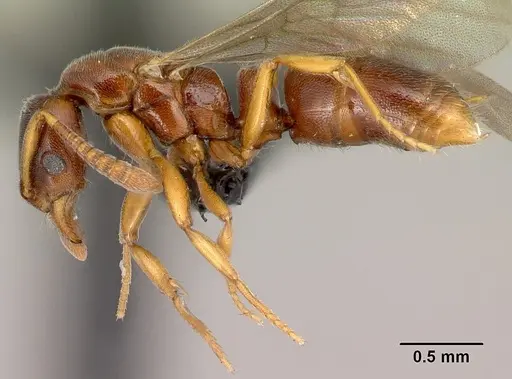
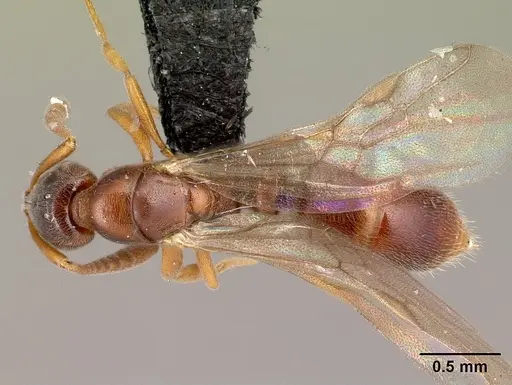
Hypoponera occidentalis - "Western Cryptic Ant"
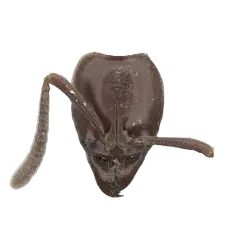
Hypoponera occidentalis is a small, cryptic ant species belonging to the Ponerinae subfamily, known for its dull reddish-brown color, though the head can be lighter and shinier. Their bodies are covered in a dense, recumbent white pilosity, giving them a matte appearance. Workers typically measure between 3.0-3.3 mm in total length. A distinctive feature is their head, which is slightly elongated with convex sides, widest at the midpoint, and has a sharply reticulate-punctate dorsum. Their eyes are variably developed, sometimes absent, or present as vague spots or small ommatidia. The mandibles are puncturated and have 7-8 denticles followed by 4 sharp teeth. The petiole node is notably voluminous, rounded, and relatively tall in profile. These ants are generally found at or just under the ground surface, often in leaf litter or rotten wood, and are primarily predators of small arthropods.
- Difficulty: Medium
- Origin & Habitat: Afrotropical region (Africa), specifically reported from Uganda, Guinea, Ivory Coast, Ghana, Cameroon, Gabon, Equatorial Guinea, Central African Republic, Kenya, Tanzania, and Zimbabwe. in Forests, ground litter, under objects on the ground, and rotten wood. They are cryptobiotic, nesting in soil, under rocks, or in rotting wood, and foraging in leaf litter and other sheltered microhabitats..
- Colony Type: Monogyne, with suspected ergatoid queens., claustral founding.
- Size & Growth:
- Queen: Not specified
- Worker: 3.0-3.3mm
- Colony: Small (typically fewer than 100 workers, occasionally more).. Slow growth.
- Antkeeping:
- Temperature: Aim for a temperature range of 21-26°C. While some sources suggest higher temperatures for related species, maintaining stable warmth will support healthy brood development..
- Humidity: High humidity is crucial, ideally in the range of 80-95%. This species naturally inhabits moist environments like leaf litter and rotten wood, making consistent humidity vital for their well-being and preventing desiccation of the brood..
- Diapause: Not required. Not specified at Not specified.
- Nesting: Prefer nests that mimic their natural subterranean and wood-dwelling habitats. Suitable setups include naturalistic soil nests, Ytong nests with good humidity retention, or even specialized acrylic setups with a hydration system. They will often nest in rotting wood or leaf litter..
- Behavior: Low (towards handler, medium towards prey) aggressiveness.
- Common Issues: Humidity fluctuations, Mold in nest (due to high humidity), Colony stalling (due to diet or humidity issues), Desiccation of brood.
Hypoponera occidentalis, like many Ponerine ants, are primarily predators. They are reported to be generalist predators of small arthropods or scavengers, though some species might have stricter diets. Providing a varied diet of small feeder insects like fruit flies, small roaches, or springtails will be beneficial. It's essential to offer prey that is appropriately sized for these small workers. Keeping them well-fed with protein is key to fostering colony growth and overall health.
Humidity is paramount for this species. Given their natural habitat in ground litter and rotten wood, they thrive in consistently moist conditions. Ensure your formicarium design allows for a strong humidity gradient and retains moisture effectively. Without adequate humidity, their delicate brood is highly susceptible to drying out, which can severely stall or even decimate a developing colony. Monitoring humidity levels closely is not just a recommendation, it's a necessity for successful keeping.
While specific details on colony growth rates for Hypoponera occidentalis are scarce, other Hypoponera species typically have smaller colonies, often fewer than 100 workers, and grow slowly. Patience is a virtue when keeping these ants, as rapid expansion is not their characteristic. Focus on providing consistent care rather than expecting explosive growth. This slower pace allows keepers to truly observe and appreciate the intricate behaviors of this cryptic species.
Hypoponera species are known to possess a sting, which is present and can deliver a noticeable, albeit typically mild, sting if disturbed. While generally not aggressive towards handlers, direct disturbance of the nest or careless handling can provoke a defensive reaction. Always exercise caution and use appropriate tools when interacting with your colony to minimize the risk of being stung. Understanding their defensive capabilities helps maintain a respectful and safe antkeeping environment.
Frequently Asked Questions
What kind of nest is best for Hypoponera occidentalis?
For Hypoponera occidentalis, a naturalistic setup like a deep soil or dirt-based formicarium, or a specialized acrylic nest with a reliable hydration system, is ideal. They thrive in environments that mimic their natural habitat of leaf litter, rotten wood, and subterranean spaces, requiring high humidity and good substrate.
What do Hypoponera occidentalis eat?
These ants are predators and scavengers. Their diet should consist mainly of small live feeder insects such as fruit flies, springtails, or small roaches. You can also offer tiny pieces of other protein sources. Always ensure the prey is small enough for them to handle.
Do Hypoponera occidentalis sting?
Yes, Hypoponera occidentalis workers possess a sting. While generally not aggressive towards keepers, they can sting if they feel threatened or if their nest is disturbed. The sting is typically mild but can be noticeable.
How large do Hypoponera occidentalis colonies get?
Colonies of Hypoponera species, including Hypoponera occidentalis, are generally on the smaller side. They usually consist of fewer than 100 workers, though some can occasionally reach slightly larger numbers. They are not known for forming supercolonies.
Is diapause required for Hypoponera occidentalis?
Based on their natural distribution in the Afrotropical region, Hypoponera occidentalis are unlikely to require a diapause period in captivity. Maintaining stable temperatures and humidity year-round should be suitable for their continuous development.
What temperature and humidity do Hypoponera occidentalis need?
They prefer stable temperatures between 21-26°C (70-79°F). High humidity is critical, with levels ideally maintained in the 80-95% range, to prevent desiccation of their delicate brood and ensure colony health.
Are Hypoponera occidentalis good for beginner antkeepers?
While not considered 'expert' level, their specific humidity requirements and smaller colony sizes can make them a bit more challenging than common beginner species. They are best suited for antkeepers with some prior experience who can consistently maintain high humidity. They are a 'Medium' difficulty species.
How fast do Hypoponera occidentalis colonies grow?
Hypoponera occidentalis colonies are known for their slow growth rate. Patience is essential when keeping them, as they will not expand rapidly like some more common ant species. Consistent care and a stable environment will contribute to their steady, albeit slow, development.
Can Hypoponera occidentalis have multiple queens?
Hypoponera occidentalis is typically monogyne, meaning they have a single queen. However, there is a suspicion that ergatoid (worker-like) queens may also occur in this species, which could potentially lead to variations in colony structure.
How do Hypoponera occidentalis queens found new colonies?
Hypoponera occidentalis queens are believed to be claustral founders. This means the queen seals herself off in a founding chamber and raises her first generation of workers using her stored energy reserves, without needing to forage for food during this initial period.