

Formica rubicunda
- Scientific Name
- Formica rubicunda
- Tribe
- Formicini
- Subfamily
- Formicinae
- Author
- Emery, 1893
- Common Name
- Ruddy Slave-making Ant
- Distribution
- Found in 2 countries
Formica rubicunda Overview
Formica rubicunda (commonly known as the Ruddy Slave-making Ant) is an ant species of the genus Formica. It is primarily documented in 2 countries , including Canada, United States of America. Detailed taxonomic data and occurrence records can be further explored via authoritative databases such as AntWeb or the Global Biodiversity Information Facility (GBIF).
Formica rubicunda - "Ruddy Slave-making Ant"
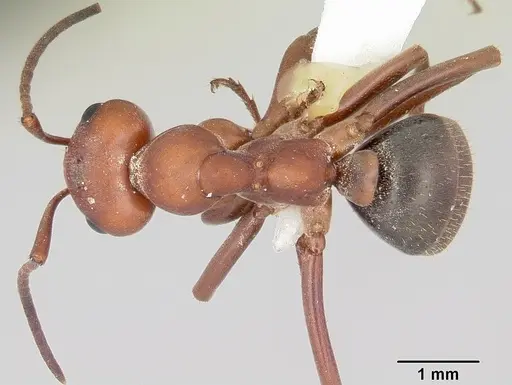
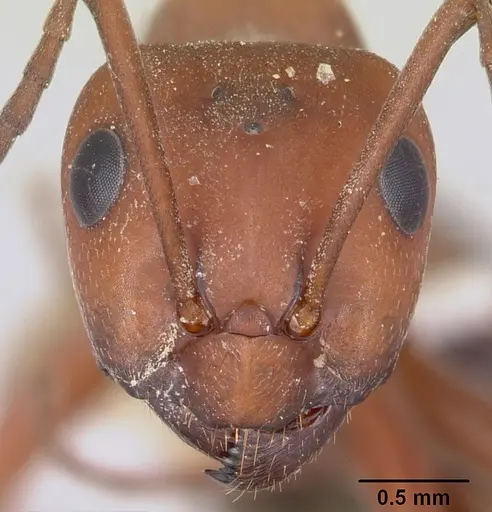
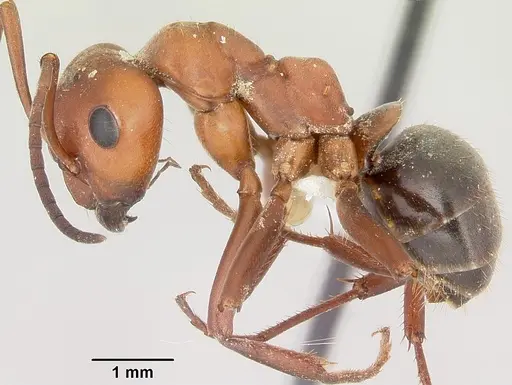
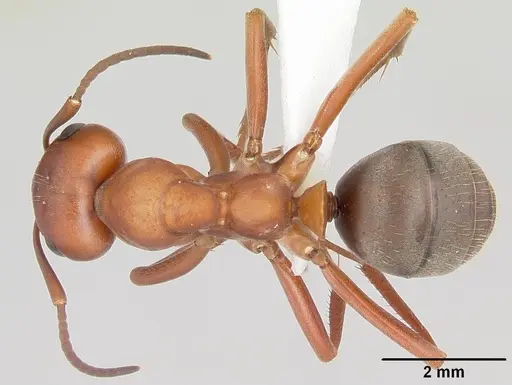
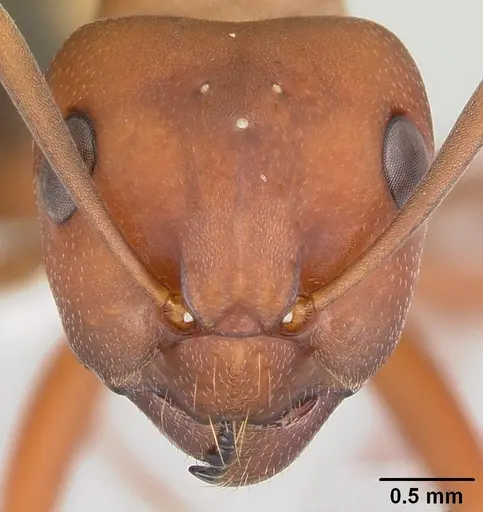
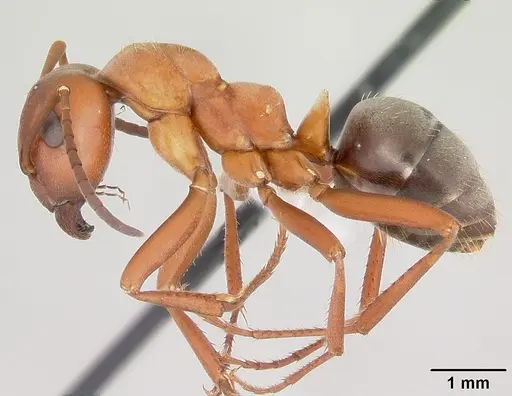
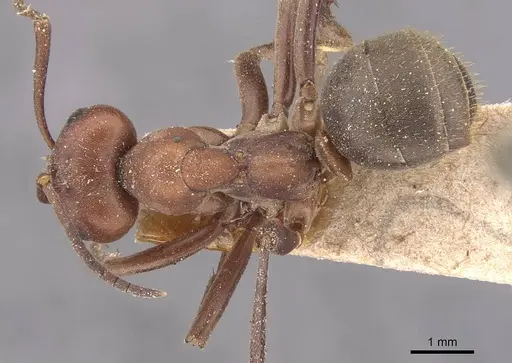
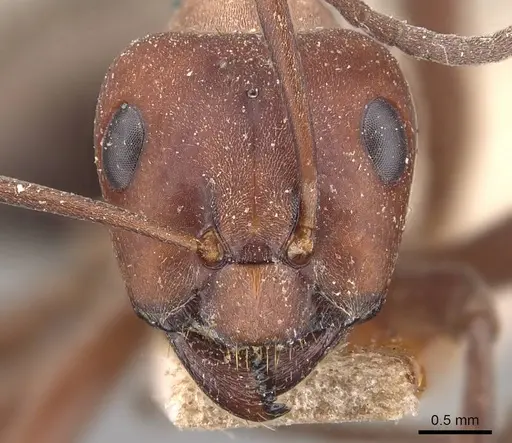
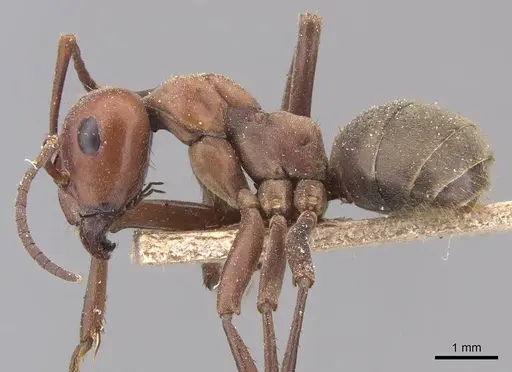
Formica rubicunda is a medium-sized reddish-brown to dark brown ant native to eastern and central North America. Workers measure 4.5-7.0mm and belong to the Raptiformica group, characterized by their sharp petiole apex and coarse hairs on the gaster. This species ranges from New York south to Florida, west to Michigan, Illinois, Missouri, and Texas, with additional records in Canada and Mexico [1]. They nest under stones and logs in prairies, open woodlands, and pinyon-juniper to ponderosa pine and aspen forests [2].
What makes F. rubicunda fascinating is their slave-making behavior, they are facultative slavemakers that raid colonies of other Formica species to steal brood, which then emerge as enslaved workers. Queens establish colonies by temporarily parasitizing host colonies, killing the host queen, and using the existing workers to raise their first brood [3][4]. Unlike some slave-makers that always need slaves, these ants can survive without them but thrive with enslaved workers conducting raids throughout summer.
Quick Summary
- Difficulty: Medium
- Origin & Habitat: Eastern and central North America, found in prairies, open woodlands, and forests from pinyon-juniper to ponderosa pine and aspen [2][1]
- Colony Type: Facultative slave-maker, colonies can function with or without enslaved workers. Single queen colonies with temporary parasitic founding.
- Colony: Monogyne
- Queen: Temporary parasitic
- Special: Slave-making
- Size & Growth:
- Queen: Estimated 7-9mm (typical for Formica slave-makers)
- Worker: 4.5-7.0mm [1]
- Colony: Estimated several thousand workers at maturity
- Growth: Moderate, development takes one season to produce first workers, raids begin once colony is established
- Development: Estimated 6-8 weeks at optimal temperature (based on typical Formica development) (Development occurs during summer months. First workers (nanitics) typically appear within weeks of colony establishment.)
- Antkeeping:
- Temperature: Keep at room temperature, roughly 20-24°C. As a temperate species, they do not require constant heat but benefit from a warm summer period for brood development.
- Humidity: Moderate humidity is acceptable. They nest under stones and logs in various habitats from prairies to forests, so standard ant-keeping humidity levels work well.
- Diapause: Yes, as a temperate North American species, they require a winter hibernation period. Reduce temperature to 5-10°C for 3-4 months during winter.
- Nesting: Test tubes work well for founding colonies. Established colonies can be kept in formicariums with chambers scaled to their medium size. They do well with a naturalistic setup that includes soil and hiding spots like stones or logs.
- Behavior: Workers are moderately aggressive and highly active during summer raids. They organize well-coordinated raids on other Formica colonies to capture brood [5]. Unlike some aggressive ants, they are not particularly defensive toward keepers and rarely sting. They are good climbers and can escape if given the opportunity, use standard barrier methods. Workers are active foragers and will scout for food widely.
- Common Issues: host species requirement, you MUST obtain and maintain enslaved Formica host species (like F. subsericea, F. pallidefulva, or F. neogagates group species) for the colony to thrive, raiding aggression, established colonies will raid nearby ant colonies, so keep them isolated from other ant setups, slow founding, queen takes time to establish and may fail without proper host colony, winter mortality, colonies often fail if not given proper hibernation conditions, escape risk, medium-sized ants that can squeeze through small gaps, use proper barriers
Understanding Slave-Making Behavior
Formica rubicunda belongs to a group of ants called facultative slavemakers. This means they can live without slaves but strongly prefer having them. In the wild, they raid colonies of other Formica species (particularly those in the neogagates, fusca, and pallidefulva groups) and steal pupae and larvae. The stolen brood, once emerged, become enslaved workers that treat the slave-making queen as their own mother [2].
For antkeepers, this means you have two options: keep F. rubicunda as a 'solo' colony without hosts (they will survive but may be slower-growing), or maintain both the slave-maker and a host species. If you choose to maintain hosts, you'll need to set up a separate colony of a compatible Formica species (like Formica subsericea, Formica pallidefulva, or Formica neogagates) and periodically allow raids to obtain new enslaved workers. This is more complex but results in more active, natural colonies.
The raids are impressive to watch, workers organize into raiding columns and can overwhelm host colonies. Research shows raids occur from June through September, with most activity in June and July [6].
Colony Founding and Queen Behavior
F. rubicunda queens use a temporary parasitic founding strategy. Unlike some ants that seal themselves in and raise workers alone, these queens must invade an existing host colony to establish their nest. The queen enters a host Formica colony, somehow gets rid of the host queen and workers, and then takes over the nest [2].
The existing host workers then raise the invading queen's first brood. When these workers emerge, they accept the new queen as their own. Once the colony has enough workers, they begin conducting raids to capture more enslaved workers from additional colonies.
For keepers, this means founding queens are challenging to establish. You cannot simply give a queen a test tube and expect her to raise first workers alone. The best approach is either: (1) obtaining an already-established colony with enslaved workers, or (2) attempting to introduce a queen to a small host colony (though success is not guaranteed). Wheeler's research showed these colonies are 'raiding colonies from the start' rather than typical primary adoption colonies [4].
Feeding and Nutrition
Like other Formica species, F. rubicunda workers are omnivorous. They tend aphids for honeydew and collect protein from insects. In captivity, they readily accept sugar water, honey, or diluted syrup as an energy source. For protein, offer small insects like fruit flies, small crickets, mealworms, or other appropriately-sized prey [7].
The genus Formica is known for having maximum associations with aphid species, and F. rubicunda specifically has been documented as mutualistic with the aphid Rhopalosiphum nymphaeae [7]. In captivity, you can simulate this by offering sugar sources regularly.
Feed adult colonies 2-3 times per week with a mix of sugar and protein. Remove uneaten prey after 24 hours to prevent mold. Established colonies with enslaved workers tend to be more active foragers and may consume more food.
Temperature and Seasonal Care
As a temperate North American species, F. rubicunda experiences distinct seasons in the wild. They are active during warm months (roughly May through October in their range) and enter hibernation for winter. Keep colonies at room temperature (20-24°C) during the active season, this is warm enough for brood development without being excessive.
During winter, you must provide a hibernation period. Reduce temperatures to roughly 5-10°C and keep them there for 3-4 months (typically November through February, depending on your location). This mimics their natural cycle and is essential for colony health. Research from Michigan shows alates (reproductives) emerge in summer, with flights occurring July through August, this gives you a good indicator of their seasonal timing [6].
Do not attempt to keep them active year-round without hibernation, this will weaken and eventually kill the colony.
Housing and Nest Setup
For founding colonies, use a standard test tube setup with a water reservoir. The queen will need a small, dark chamber to establish her initial brood. Once workers emerge and the colony grows to 20-30+ workers, you can consider moving them to a formicarium.
F. rubicunda does well in acrylic nests, plaster nests, or naturalistic setups. Because they sometimes build thatched nests or earthen mounds in the wild, they appreciate having some soil or substrate they can manipulate. A naturalistic setup with a soil area and hiding spots (small stones, pieces of bark) works well.
These are medium-sized ants (4.5-7.0mm workers) that can squeeze through surprisingly small gaps. Use appropriate barrier methods like fluon on smooth surfaces or talcum powder barriers. They are good climbers, so ensure your setup has no rough surfaces leading to open tops. [2]
Frequently Asked Questions
Do I need to keep host ants for Formica rubicunda?
They are facultative slavemakers, meaning they CAN survive without host ants but perform much better with them. For the most natural and active colony, you should maintain a host Formica species (like F. subsericea, F. pallidefulva, or F. neogagates group species) in a separate enclosure and allow periodic raids.
How do I start a Formica rubicunda colony?
The easiest way is to obtain an already-established colony with workers. Founding new colonies is difficult because queens use temporary parasitic founding, they must invade a host colony. If you start with a queen alone, she will likely not survive. Purchase an established colony from a reputable seller who specializes in slave-maker ants.
What do Formica rubicunda eat?
They are omnivorous. Offer sugar water, honey, or diluted syrup regularly. For protein, provide small insects like fruit flies, small crickets, or mealworms. They will also tend aphids if given the opportunity.
How long does it take for Formica rubicunda to produce first workers?
If starting with an established colony, they will produce new workers continuously during the active season. Development from egg to worker takes approximately 6-8 weeks at optimal summer temperatures, based on typical Formica development patterns.
Do Formica rubicunda need hibernation?
Yes. As a temperate North American species, they require a winter rest period. Reduce temperatures to 5-10°C for 3-4 months during winter (typically November-February). This is essential for colony health.
Are Formica rubicunda good for beginners?
Not ideal for beginners. Their slave-making behavior requires understanding of ant biology, and they need more complex care than typical ants. If you're interested in slave-makers, start with more common species first. However, established colonies are relatively straightforward to maintain once you understand their needs.
How big do Formica rubicunda colonies get?
At maturity, colonies likely reach several thousand workers, similar to other Formica species. This is estimated based on related slave-making Formica species, as specific colony size data for F. rubicunda is limited.
Can I keep multiple Formica rubicunda queens together?
This is not recommended and has not been documented. They are functionally monogyne (single queen per colony). Combining unrelated queens would likely result in fighting.
When do Formica rubicunda have nuptial flights?
Based on Michigan research, alates (reproductives) develop from June through August, with flights occurring primarily July 12 to August 4 [6]. This is typical timing for temperate Formica species in northern regions.
References

This caresheet is licensed under CC BY-SA 4.0 .
Literature
Loading...Loading products...