

Dorymyrmex wheeleri
- Scientific Name
- Dorymyrmex wheeleri
- Tribe
- Leptomyrmecini
- Subfamily
- Dolichoderinae
- Author
- Kusnezov, 1952
- Distribution
- Found in 1 countries
Dorymyrmex wheeleri Overview
Dorymyrmex wheeleri is an ant species of the genus Dorymyrmex. It is primarily documented in 1 countries , including United States of America. Detailed taxonomic data and occurrence records can be further explored via authoritative databases such as AntWeb or the Global Biodiversity Information Facility (GBIF).
Dorymyrmex wheeleri
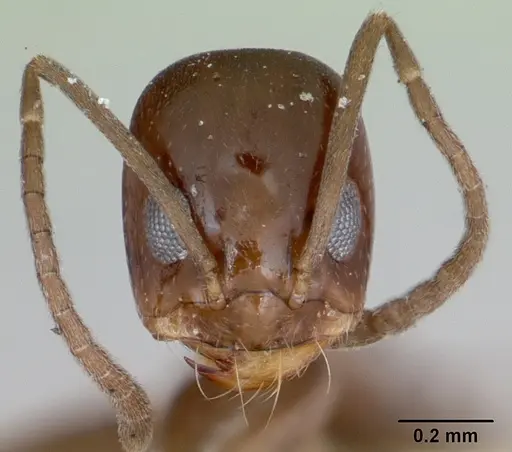
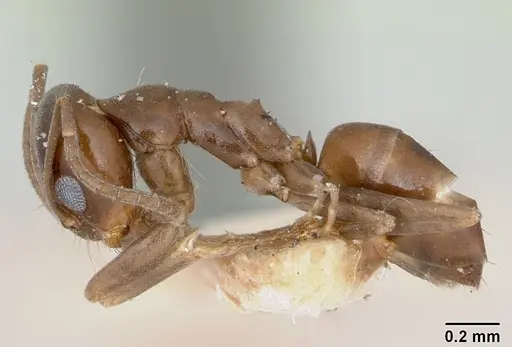
Dorymyrmex wheeleri is one of the rarest and most poorly documented ant species in North America, known only from two workers collected in Tucson, Arizona in 1933. These tiny ants measure just 2.2-2.5mm in total length, with distinctive features including a sparsely haired frons and a cone-shaped propodeum. The genus Dorymyrmex is commonly called 'cone ants' due to their characteristic head shape, and they're known for producing a foul odor when disturbed. This species was originally described in 1952,briefly synonymized with D. insanus, and revived as a valid species by Snelling in 1995. The two known specimens may actually be nanitics (abnormally small workers), adding to the mystery surrounding this species. [1][2]
Quick Summary
- Difficulty: Unknown, extremely rare species with no captive husbandry data
- Origin & Habitat: Nearctic region, only known from Tucson, Arizona, USA. Based on genus patterns, likely inhabits arid to semi-arid areas with sandy or loose soil, common for Dorymyrmex species in the American Southwest. [1][2]
- Colony Type: Unknown, colony structure has never been documented. Most Dorymyrmex species are monogyne (single queen colonies), but this has not been confirmed for D. wheeleri. [2]
- Size & Growth:
- Queen: Unknown, no queen specimens have ever been collected or described [2]
- Worker: 2.2-2.5mm total length (lectotype 2.5mm, paralectotype 2.2mm). Head length 0.62-0.73mm, head width 0.51-0.60mm [2]
- Colony: Unknown, only two workers have ever been documented [2]
- Growth: Unknown, no colony development data exists
- Development: Unknown, no development data exists for this species. Based on related Dorymyrmex species, estimate 6-8 weeks at optimal temperature, but this is highly speculative. (This is a ghost species, we have essentially no biological data. Any timeline would be a guess based on genus-level patterns.)
- Antkeeping:
- Temperature: Based on genus patterns for southwestern Dorymyrmex species: aim for 22-28°C with a gradient. They likely tolerate higher temperatures given their Arizona origin. [2]
- Humidity: Likely low to moderate, Dorymyrmex species typically prefer drier conditions. Keep nest substrate moderately dry with a small moist area for brood. Avoid constant saturation. [2]
- Diapause: Likely yes, most temperate Dorymyrmex species enter winter dormancy. Based on Tucson climate (cold winters), expect a diapause period of 2-3 months at 10-15°C. [2]
- Nesting: Natural nesting is undocumented. Most Dorymyrmex species nest in soil, often under stones or in open ground. For captivity: test tubes work for founding colonies, Y-tong or plaster nests for established colonies. Provide a dry to moderately moist substrate. [2]
- Behavior: Behavior is completely undocumented for this species. Based on genus patterns: Dorymyrmex ants are typically ground-nesting, moderately active foragers, and known to produce a defensive odor when threatened. They are not aggressive but will defend their nest. Escape risk is low given their small but not tiny size, standard escape prevention measures should suffice. [2]
- Common Issues: This species has never been kept in captivity, there are no established husbandry protocols, Only two workers have ever been documented, suggesting this may be an extremely rare species or potentially a variant of another species, No queen specimens exist, so captive breeding would require finding a wild queen (extremely unlikely given rarity), The two known specimens may be nanitics, suggesting the species may have small colony sizes or the specimens were runts, Without any captive data, keepers would be essentially experimenting with no guidance
Why This Species Is Exceptional
Dorymyrmex wheeleri represents one of the most poorly known ant species in North America. Since its discovery in 1933,only two workers have ever been documented, both collected on the same day in Tucson, Arizona. This makes it essentially a 'ghost species' in the antkeeping world. The original specimens were so unusual that researchers initially thought they might be nanitics (abnormally small workers), and the species was actually synonymized with D. insanus for over two decades before being revived as a valid species in 1995. For antkeepers, this means there is zero captive husbandry data, no described queens, and no colony-level observations. Any keeping recommendations would be entirely speculative guesses based on genus-level patterns from better-known relatives. [1][2]
What We Know About Identification
The two known workers have distinctive features that separate D. wheeleri from other North American Dorymyrmex species. The most notable characteristic is the sparsely pubescent frons, the hairs on the face are separated from each other by several times their own widths, whereas other species have much denser hair coverage. The head shape is similar to D. insanus, with weakly convex lateral margins and an almost flat vertex margin. The mesonotum (middle body section) is flat with a distinctly sloping posterior face, and the propodeum (rear body section) has an abrupt transverse crease forming a small acute tubercle. These are subtle identification features that require microscopy, so casual field identification would be extremely difficult. [2]
Tentative Care Guidelines (Highly Speculative)
Since no captive data exists, any care recommendations must be treated as educated guesses based on genus patterns. Dorymyrmex species are typically found in arid to semi-arid regions and prefer drier nest conditions than many ants. For D. wheeleri specifically, you would want to aim for temperatures in the 22-28°C range with a thermal gradient, as this matches southwestern US conditions. Humidity should be kept low to moderate, think desert-edge conditions rather than rainforest. Nest materials should allow for drainage and not retain constant moisture. For feeding, Dorymyrmex species typically consume honeydew and small insects, so sugar water and small prey items would be appropriate offerings. However, none of this has been confirmed for this specific species. [2]
The Challenge of Acquisition
Perhaps the biggest challenge for anyone interested in keeping Dorymyrmex wheeleri is actually obtaining a colony. The species has never been documented in captivity, and with only two known museum specimens collected in 1933,wild colonies (if they still exist) are extremely difficult to find. Unlike common species like Lasius niger or Tapinoma sessile, you cannot simply catch a queen during nuptial flights, no one has ever documented when or where these ants mate. The Tucson, Arizona locality would be the only place to look, and even there, the species appears to be either very rare or possibly extinct. This makes D. wheeleri a species that exists primarily in museum collections and taxonomic literature rather than in antkeeping hobbyist setups. [1][2]
Frequently Asked Questions
Can I keep Dorymyrmex wheeleri ants in captivity?
There is no documented case of this species being kept in captivity. With only two workers ever collected and no queen specimens known, there are no established husbandry protocols. Any attempt to keep this species would be entirely experimental with no guidance available. [2]
Where does Dorymyrmex wheeleri live?
This species is known only from Tucson, Arizona, USA. The two known specimens were collected in 1933 from what was likely an arid or semi-arid area near Tucson. The exact habitat details were not recorded. [1][2]
How big are Dorymyrmex wheeleri workers?
Workers are extremely small, only 2.2-2.5mm in total length. For comparison, a typical Lasius worker is 4-5mm. The two known specimens may actually be nanitics (abnormally small workers), suggesting normal workers might be slightly larger if they exist. [2]
What do Dorymyrmex wheeleri ants eat?
This has never been documented. Based on genus patterns, they likely consume honeydew from aphids and small insects like other Dorymyrmex species. In captivity, you could offer sugar water and small live prey, but acceptance is completely unconfirmed. [2]
How many queens does Dorymyrmex wheeleri have?
This is completely unknown. No queen specimens have ever been collected or described. Most Dorymyrmex species are monogyne (single queen), but this has not been confirmed for D. wheeleri. [2]
How long does it take for Dorymyrmex wheeleri to develop from egg to worker?
This has never been documented. Based on related Dorymyrmex species, development likely takes 6-8 weeks at optimal temperature, but this is a pure guess with no supporting data. [2]
Does Dorymyrmex wheeleri need hibernation?
Likely yes, based on the Tucson, Arizona climate which experiences cold winters. Most temperate Dorymyrmex species enter diapause. You would probably need to provide 2-3 months of cold storage at 10-15°C, but this is inferred from genus patterns, not confirmed for this species. [2]
Are Dorymyrmex wheeleri good for antkeeping beginners?
No. This species is completely unsuitable for beginners (or anyone) because no captive husbandry data exists, specimens are essentially impossible to obtain, and keeping them would be pure experimentation with no guidance. Even experienced antkeepers would have no framework for success. [2]
Can I find Dorymyrmex wheeleri queens during nuptial flights?
Nuptial flight timing is completely unknown, no one has ever documented reproduction in this species. Even finding workers in the wild would be extremely difficult given only two specimens have been collected in nearly a century. The species appears to be either very rare, locally extinct, or possibly a variant of another species. [2]
References

This caresheet is licensed under CC BY-SA 4.0 .
CASENT0173018
View on AntWeb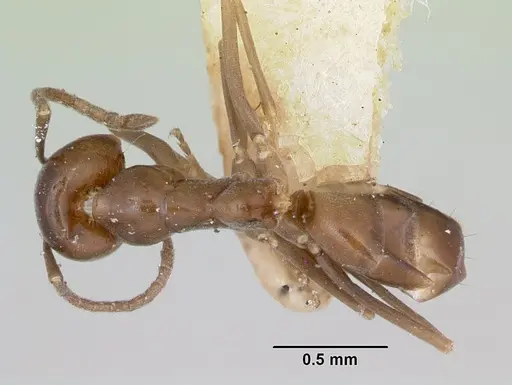
Literature
Loading...Loading products...