

Dorymyrmex flavopectus
- Scientific Name
- Dorymyrmex flavopectus
- Tribe
- Leptomyrmecini
- Subfamily
- Dolichoderinae
- Author
- Smith, 1944
- Common Name
- Yellow-chested Pyramid Ant
- Distribution
- Found in 2 countries
Dorymyrmex flavopectus Overview
Dorymyrmex flavopectus (commonly known as the Yellow-chested Pyramid Ant) is an ant species of the genus Dorymyrmex. It is primarily documented in 2 countries , including Mexico, United States of America. Detailed taxonomic data and occurrence records can be further explored via authoritative databases such as AntWeb or the Global Biodiversity Information Facility (GBIF).
Dorymyrmex flavopectus - "Yellow-chested Pyramid Ant"
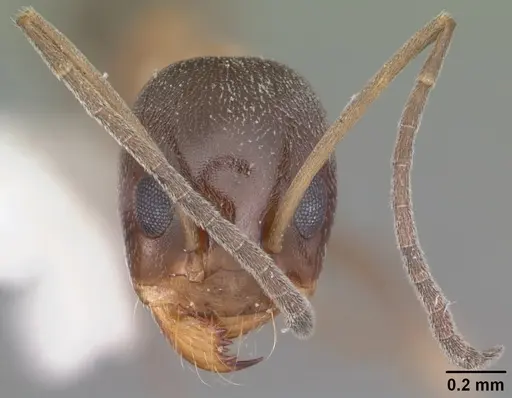
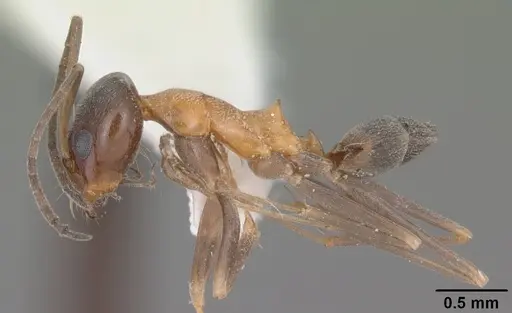
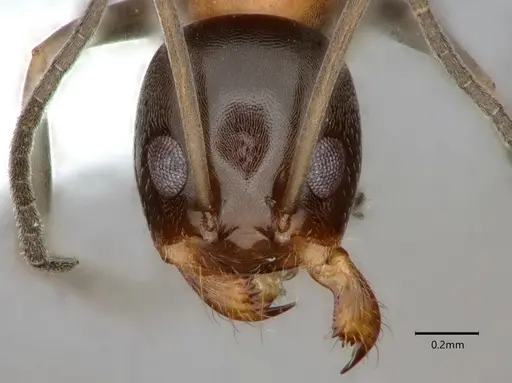
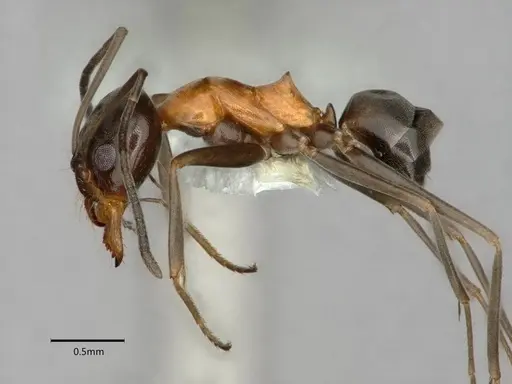
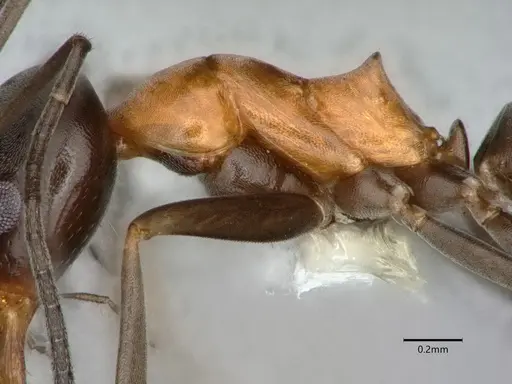
Dorymyrmex flavopectus is a small, striking ant native to the southeastern United States and northeastern Mexico. Workers measure 0.78-1.00mm in head length with a distinctive color pattern: the head and gaster are dark brown to black, while the thorax is a bright orange-yellow, giving them the common name 'flavopectus' meaning 'yellow chest' in Latin. They are slenderer than similar species like Dorymyrmex bureni, with noticeably longer legs and antennae. This species is a small-range endemic, found primarily in Florida's unique rosemary scrub habitats [1].
What makes Dorymyrmex flavopectus unusual is their colony structure, they form polycalic colonies, meaning each colony occupies multiple nests connected by well-traveled worker trails. These ants nest in shallow, many-branched tunnels in fine, crumbly 'sugar sand' soil. Critically, queens have never been collected in the wild, making captive breeding from wild colonies essentially impossible [2].
Quick Summary
- Difficulty: Expert
- Origin & Habitat: Florida rosemary scrub and open sand pine woodlands in central peninsular Florida, specifically in highly drained, sterile white 'sugar sands' associated with Florida rosemary (Ceratiola ericoides). Also found in Mexico (Baja California, Sonora, Tamaulipas) in Pine-Oak-Juniperus forest [3][4].
- Colony Type: Polycalic colonies, multiple nests interconnected by worker trails. Queens have never been collected, suggesting reproduction may occur through other means (possibly budding or temporary social structures). Colony structure is not fully understood due to the absence of documented queens [2].
- Size & Growth:
- Queen: Unknown, queens have never been collected or described [2]
- Worker: Workers: HL 0.78-1.00mm, HW 0.63-0.90mm, SL 0.88-1.14mm, HTL 1.78-2.43mm [2]
- Colony: Unknown, no colony size data available
- Growth: Unknown
- Development: Unknown, no development data available due to absence of documented queens (Cannot be bred in captivity without wild queen collection, which has never been successful)
- Antkeeping:
- Temperature: Keep at room temperature (20-24°C). This is a warm-climate species from Florida and Mexico, but specific temperature requirements are unconfirmed.
- Humidity: Low to moderate, these ants inhabit extremely well-drained sandy soils in arid scrub habitats. Keep substrate dry to slightly moist, never waterlogged.
- Diapause: Likely no true diapause, being a Florida species, they may reduce activity in cooler months but probably do not require hibernation. This is unconfirmed.
- Nesting: Natural nesting occurs in shallow, many-branched tunnels in fine, crumbly sand. In captivity, a dry, sandy substrate in a naturalistic setup would be most appropriate. They likely do well in formicariums with sandy soil substrate.
- Behavior: Workers are active foragers that travel in conspicuous trails between multiple nest sites. They are not aggressive and lack a painful sting. Their small size (under 1mm) means escape prevention is important, they can slip through tiny gaps. The polycalic colony structure means they naturally maintain multiple interconnected nest sites, which keepers should accommodate if possible. They are primarily seed-eaters (harvesting ambrosia fungus) based on related species behavior [5].
- Common Issues: queen absence makes captive breeding impossible, wild colonies cannot be founded in captivity, polycalic colony structure requires space for multiple nest sites, very small workers require fine mesh barriers to prevent escapes, specific habitat requirements (dry, sandy, rosemary scrub) are difficult to replicate, no documented captive care information exists for this species
Why This Species Is Challenging to Keep
Dorymyrmex flavopectus presents a unique challenge that most other ant species do not: queens have never been collected or described in the scientific literature [2]. This means no one has documented how this species reproduces in the wild, and captive breeding from wild colonies is essentially impossible. Without documented queens, we cannot determine colony founding behavior, development timelines, or even basic reproductive biology. This makes Dorymyrmex flavopectus fundamentally different from virtually every other ant kept in captivity, you cannot start a colony from a single queen. The only way to keep this species would be to locate and transplant an entire wild colony, which is difficult given their polycalic structure (multiple interconnected nests) and shallow, fragile nests in crumbly sand [2].
Natural Habitat and Distribution
This species is restricted to one of North America's most unique habitats: the Florida rosemary scrub. These areas feature highly drained, infertile white 'sugar sands' and are dominated by Florida rosemary (Ceratiola ericoides), a native evergreen shrub. The habitat is hot, dry, and nutrient-poor, quite different from the moist, rich soils where many ant species thrive. In Mexico, populations exist in Pine-Oak-Juniperus forest and Euphorbia habitats in Baja California, Sonora, and Tamaulipas [3]. The species is considered a small-range endemic in Florida, meaning its global distribution is extremely limited [1]. This specialized habitat requirement is one reason why captive keeping is so challenging, replicating the dry, sandy, nutrient-poor conditions of Florida rosemary scrub is difficult.
Identification and Distinguishing Features
Dorymyrmex flavopectus workers are unmistakable when seen in their natural habitat. The most striking feature is their color pattern: the head and gaster (abdomen) are dark brown to black, while the thorax (middle body section) is a bright, uninfuscated orange-yellow. This 'yellow chest' is where the species name comes from (flavus = yellow, pectus = chest in Latin). They are slenderer than the similar Dorymyrmex bureni, with noticeably longer legs and antennae (scapes). Northern specimens (from Ocala National Forest) are notably larger than southern specimens (Highlands County), with hind tibia lengths of 1.90-2.25mm versus 1.70-2.00mm respectively [2]. The only similar species is Dorymyrmex bossutus, which is smaller, shinier, and has a browner thorax.
Colony Structure and Behavior
Dorymyrmex flavopectus forms polycalic colonies, each colony occupies multiple nest sites connected by well-traveled worker trails. This is unusual among ants and means a single colony can span considerable distance through the landscape. Nests are difficult to excavate because they are shallow and many-branched in the fine, crumbly sand [2]. Workers are active foragers that travel in conspicuous trails. Based on related species in the genus and limited feeding data showing ambrosia consumption [5], they likely harvest seeds and tend to sap-sucking insects for honeydew, though detailed foraging behavior has not been documented. They are not aggressive and their small size means they pose no threat to keepers.
Frequently Asked Questions
Can I keep Dorymyrmex flavopectus in captivity?
This species is essentially impossible to keep in captivity because queens have never been collected or documented. Without queens, colony founding is impossible. Even if you could locate a wild colony, their polycalic structure (multiple interconnected nests) and shallow sandy nests make transplantation extremely difficult and likely fatal to the colony.
How do I start a Dorymyrmex flavopectus colony?
You cannot start a colony. Queens have never been found or described in scientific literature, meaning no one knows how this species reproduces or where to find their queens. This makes Dorymyrmex flavopectus fundamentally different from all commonly kept ant species.
What do Dorymyrmex flavopectus ants eat?
Based on limited feeding data from related species, they likely consume seeds and ambrosia fungus. They probably also tend sap-sucking insects for honeydew, similar to other Dolichoderine ants. Specific captive feeding has not been documented.
Are Dorymyrmex flavopectus ants dangerous?
No, they are not dangerous. They are very small ants (under 1mm) that lack a painful sting. They are not aggressive toward humans and pose no threat to keepers.
Where does Dorymyrmex flavopectus live?
They are endemic to the Florida rosemary scrub of central peninsular Florida, with isolated populations in Mexico (Baja California, Sonora, Tamaulipas). Their entire global range is extremely limited, making them a small-range endemic [1].
Do Dorymyrmex flavopectus ants need hibernation?
Likely no. As a Florida species adapted to a warm climate, they probably do not require a true diapause or hibernation period. They may reduce activity in cooler months, but this is unconfirmed.
What makes Dorymyrmex flavopectus different from other ants?
Their most unusual feature is the complete absence of documented queens in over 80 years of study. Additionally, their polycalic colony structure and extremely specialized habitat (Florida rosemary scrub) make them unique. Their striking yellow-and-brown coloration also helps identify them.
References

This caresheet is licensed under CC BY-SA 4.0 .
CASENT0103887
View on AntWeb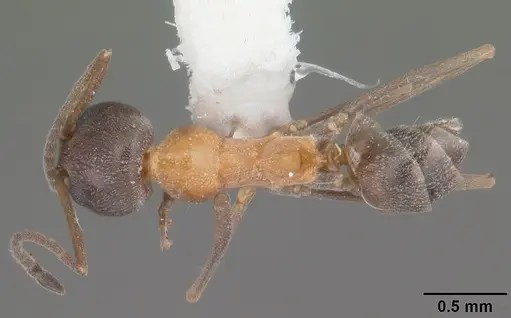
CASENT0883200
View on AntWeb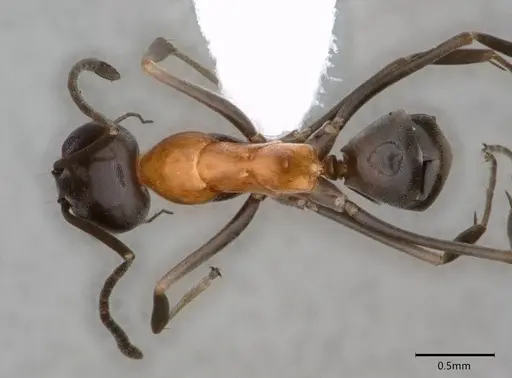
Literature
Loading...Loading products...