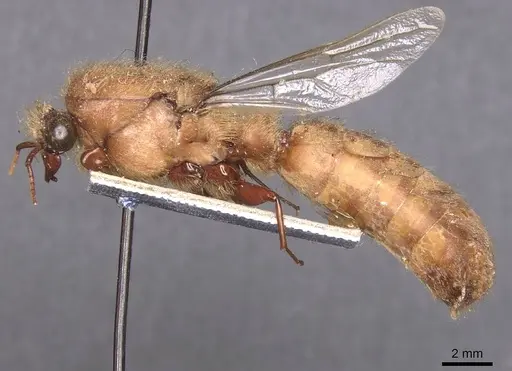
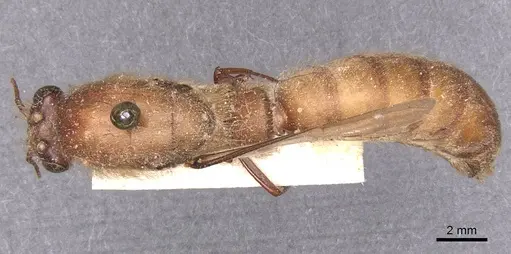
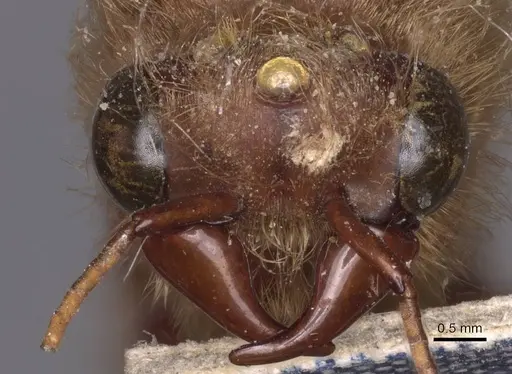
Dorylus sudanicus - "Sudanic Driver Ant"
Dorylus sudanicus is a species of 'driver ant' or 'safari ant', known for forming immense colonies that can number in the millions. These ants are blind and primarily forage underground, although some species within the genus are known for their spectacular surface raids. Workers exhibit a high degree of polymorphism, meaning there's a significant size variation among them, with larger workers often acting as soldiers. While members of the Dorylus genus are capable of stinging, they rarely do, preferring to use their powerful, scissor-like mandibles for defense and subduing prey.
- Difficulty: Expert
- Origin & Habitat: Chad, Congo, Gambia, Mali (Afrotropical Region) in Subterranean nests, often found among tree root systems or in pre-existing cavities..
- Colony Type: Monogyne (single queen), colony fission (old queen leaves with a portion of the workers to found a new colony) founding.
- Size & Growth:
- Queen: 40-63mm
- Worker: 2.5-10mm
- Colony: Supercolony (millions to over 20 million individuals). Fast, with queens capable of laying millions of eggs per month. growth.
- Antkeeping:
- Temperature: Specific temperature requirements for Dorylus sudanicus are not widely documented for antkeeping, but general Dorylus care suggests a consistent tropical environment, likely in the range of 24-30°C to simulate their natural African habitat. Maintaining stable temperatures is crucial for brood development and overall colony health..
- Humidity: High humidity is essential, especially given their largely subterranean lifestyle and the formation of living bivouacs to protect brood. Likely 70-90% humidity within their nesting environment..
- Diapause: Not required. Not specified at Not specified.
- Nesting: Dorylus ants, including D. sudanicus, primarily live in subterranean nests, excavating large amounts of soil or utilizing pre-existing cavities. They do not form fixed nests like many other ant species but create temporary underground bivouacs. In captivity, a highly specialized setup simulating deep soil and allowing for significant excavation and movement would be required..
- Behavior: High (towards prey and anything perceived as a threat) aggressiveness.
- Common Issues: Containment breaches due to nomadic behavior, Inability to provide adequate prey for colony size, Maintaining stable, high humidity and temperature in a large setup, Stress from inadequate space or environment, Lack of specific information on captive care for this species.
Keeping Dorylus sudanicus, or any Dorylus species, is an undertaking best suited for expert antkeepers or researchers due to their complex behaviors and massive colony sizes. Unlike many common pet ants, driver ants are nomadic and do not build permanent structures. Instead, they form 'bivouacs' – living nests made entirely of their own bodies, which they dismantle and rebuild as they move to new foraging grounds. This migratory lifestyle makes containment incredibly challenging in a typical formicarium and requires specialized setups that can accommodate their constant movement and large numbers.
These ants are obligate group predators, meaning they hunt collectively and consume a wide range of prey, from other arthropods to small vertebrates and even earthworms. Their foraging columns can consist of millions of individuals, sweeping through an area and overwhelming prey with sheer numbers. In an antkeeping setup, providing sufficient live food to meet the demands of such a massive, carnivorous colony would be a significant logistical and financial challenge, requiring a consistent and varied supply of appropriate prey items.
Dorylus queens are the largest ants known, capable of laying millions of eggs each month, leading to incredibly rapid colony growth. This prolific egg-laying capacity means a colony can quickly outgrow even the most expansive conventional ant setups. Furthermore, driver ant queens are permanently wingless and do not participate in nuptial flights; instead, new colonies are formed through colony fission, where a portion of the workers departs with the old queen to establish a new nest.
Driver ants are blind, relying entirely on pheromones for communication and navigation. This unique adaptation influences their foraging patterns and how they interact within their environment. Their potent mandibles, designed for shearing and defense, can deliver a painful bite, and due to their sheer numbers, they can be dangerous to small, immobilized animals. While they rarely sting, their bite alone is formidable.
Frequently Asked Questions