

Discothyrea sringerensis
- Scientific Name
- Discothyrea sringerensis
- Tribe
- Proceratiini
- Subfamily
- Proceratiinae
- Author
- Zacharias & Rajan, 2004
- Distribution
- Found in 1 countries
Discothyrea sringerensis Overview
Discothyrea sringerensis is an ant species of the genus Discothyrea. It is primarily documented in 1 countries , including India. Detailed taxonomic data and occurrence records can be further explored via authoritative databases such as AntWeb or the Global Biodiversity Information Facility (GBIF).
Discothyrea sringerensis
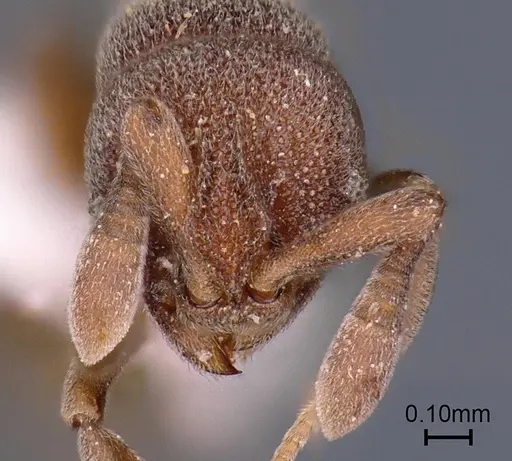
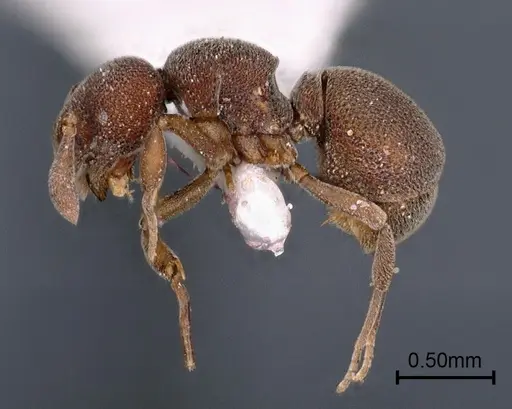
Discothyrea sringerensis is a tiny ant species from the Western Ghats of India, measuring just 3.05mm in total length [1]. Workers have a reddish-brown body with yellowish-brown mandibles, antennae, legs, and tip of the gaster. They possess 10-segmented antennae with a massively clavate scape, and distinctive propodeal teeth on the mesosoma [1]. This species was described in 2004 and represents the first record of the genus Discothyrea from South India [1]. The most striking aspect of this species is its specialized ecology, it is thought to be a specialist predator on arthropod eggs, a rare and unusual dietary specialization among ants [1]. These ants are extremely cryptic, exhibiting death-feigning behavior (thanatosis) and spending most of their time hidden in leaf litter, which explains why they are rarely collected [1].
Quick Summary
- Difficulty: Hard
- Origin & Habitat: Western Ghats of India (Karnataka and Kerala). Found in evergreen forest leaf litter at elevations around 13°29′N latitude [1][2]. This is a cryptobiotic litter-dwelling species that lives in damp, shaded forest floor microhabitats.
- Colony Type: Unconfirmed colony structure. Based on related Discothyrea species, likely single-queen colonies with relatively small colony sizes.
- Size & Growth:
- Queen: Unknown, queen has not been described [1]
- Worker: 3.05mm total length, head 0.80mm × 0.54mm [1]
- Colony: Unknown, likely small colonies typical of litter-dwelling Discothyrea species
- Growth: Unknown, likely slow to moderate given small colony sizes
- Development: Unconfirmed, no development data exists for this species. Based on typical Proceratiinae patterns, estimate 6-10 weeks at optimal temperature. (No direct development data available. Estimates based on genus-level patterns.)
- Antkeeping:
- Temperature: Unconfirmed, likely requires warm, stable conditions typical of tropical litter ants. Based on Western Ghats habitat, aim for roughly 24-28°C with a gentle gradient. Start in this range and observe colony activity.
- Humidity: Likely requires high humidity, think damp forest floor conditions. Keep the nest substrate consistently moist but not waterlogged. Provide a gradient from damp to slightly drier areas for the ants to choose.
- Diapause: Unknown, as a tropical species from the Western Ghats, may not require formal hibernation but may have reduced activity during cooler months.
- Nesting: Natural nesting: leaf litter and soil in evergreen forests. In captivity, a naturalistic setup with moist substrate (soil/peat mix) works well, or a Y-tong/plaster nest with small chambers scaled to their tiny size. Provide plenty of hiding spaces and keep humidity high.
- Behavior: These ants are extremely cryptic and shy. They exhibit death-feigning (thanatosis) when disturbed, this is a defense mechanism where they play dead to avoid predators [1]. They are likely slow-moving and not aggressive. Their small size (3mm) means escape prevention is critical, use fine mesh and tight-fitting barriers. As specialist egg predators, they will need appropriately sized live prey.
- Common Issues: specialized diet makes feeding challenging, they need tiny live prey like springtails or micro-arthropods, not standard ant food, cryptic behavior means colonies may appear to do nothing, don't assume they're dying if they're just hiding, small size requires excellent escape prevention, they can squeeze through tiny gaps, slow growth and small colony sizes mean patience is essential, wild-caught colonies may be difficult to establish due to their cryptic, stress-sensitive nature
Discovery and Identification
Discothyrea sringerensis was described in 2004 by Zacharias and Rajan from specimens collected in the Kumbarakodu Reserve Forest of Sringeri in Karnataka, India [1]. This was the first record of the genus Discothyrea from South India, expanding the known range of this genus significantly [1]. The species name 'sringerensis' directly refers to its type locality near Sringeri. The original description was based on seven worker specimens collected from evergreen forest leaf litter using pitfall traps [1]. The species can be identified by its 10-segmented antennae, distinct propodeal teeth, and the characteristic compressed translucent tooth on the ventral surface of the petiole [1]. It is most similar to the Malaysian species Discothyrea bryanti and the Australian species Discothyrea velutina [1].
Specialized Biology and Diet
One of the most fascinating aspects of Discothyrea sringerensis is its suspected diet specialization. This species is thought to be a specialist predator on arthropod eggs [1]. This is relatively rare among ants, most ants are generalist scavengers or predators on a wide range of invertebrates. The specialized diet likely explains several of this species' characteristics: their small size allows them to access tiny eggs, their cryptic behavior helps them hunt quietly in leaf litter, and their rare collection may reflect both their low population density and their specialized microhabitat preferences [1]. In captivity, this means you cannot rely on standard ant foods. They will need live prey appropriately sized for their tiny mouths, springtails and other micro-arthropods are likely essential [1].
Habitat and Distribution
Discothyrea sringerensis is known from the Western Ghats mountain range in India, specifically recorded from Karnataka and Kerala states [2]. The type locality is the Kumbarakodu Reserve Forest of Sringeri in Karnataka, collected from evergreen forest leaf litter [1]. The Western Ghats is a biodiversity hotspot with high humidity and dense tropical evergreen forests, this gives us clues about the ant's environmental needs. As a litter-dwelling species, they live in the humid, shaded microclimate of the forest floor among decomposing leaves and organic matter [1]. They are considered cryptobiotic, meaning they spend much of their time hidden and are rarely seen at the surface [1]. This habitat preference means captive colonies will need high humidity and dark, quiet conditions.
Keeping Tiny Specialist Predators
Keeping Discothyrea sringerensis presents significant challenges due to their specialized biology. Their tiny size (3mm) means they require very small prey items, standard ant feeders like mealworms are far too large. Your primary food should be live springtails, and you may need to culture other micro-arthropods like tiny soil mites or springtail nymphs [1]. They are unlikely to accept sugar water or honey as they are specialized predators. The colony will likely remain small, so don't expect the large worker numbers seen in species like Camponotus or Lasius. Provide a naturalistic setup with plenty of substrate depth for foraging. Keep humidity high and avoid disturbing the colony frequently, these are shy, stress-sensitive ants that may resort to death-feigning when threatened [1]. Escape prevention is critical due to their tiny size.
Understanding Their Behavior
Discothyrea sringerensis exhibits several behaviors that make it unique among ants kept in captivity. The most notable is thanatosis, or death-feigning, when threatened, the ants simply stop moving and appear dead [1]. This is an anti-predator defense that helps them avoid detection. Combined with their small size, cryptic coloration, and preference for staying hidden in leaf litter, this makes them extremely difficult to observe. They are not aggressive and will not defend their nest aggressively. Their cryptobiotic tendencies mean they may remain hidden for extended periods, leading keepers to worry unnecessarily about colony health. In reality, a quiet, hidden colony is a healthy one. These ants prefer to go unnoticed, providing them with a naturalistic, low-stress environment will yield the best results.
Frequently Asked Questions
What do Discothyrea sringerensis ants eat?
They are thought to be specialist predators on arthropod eggs. In captivity, you should feed them live springtails and other tiny micro-arthropods. Standard ant foods like mealworms or sugar water are likely too large or inappropriate for this specialized predator [1].
How big do Discothyrea sringerensis colonies get?
Colony size is unknown but likely small, probably under 100 workers based on typical Discothyrea species. They are not large colony builders [1].
Are Discothyrea sringerensis good for beginners?
No, this is an expert-level species due to their specialized diet, cryptic behavior, and specific humidity requirements. They are extremely difficult to keep and rarely available in the antkeeping hobby.
What temperature do Discothyrea sringerensis need?
Temperature requirements are unconfirmed. Based on their Western Ghats habitat, aim for roughly 24-28°C. Start in this range and adjust based on colony activity.
Do Discothyrea sringerensis need hibernation?
Unknown, as a tropical species from the Western Ghats, they likely do not require formal hibernation but may have reduced activity during cooler periods.
How long does it take for Discothyrea sringerensis to develop from egg to worker?
Development time is unconfirmed. Based on typical Proceratiinae patterns, estimate 6-10 weeks at optimal temperature, but this is an educated guess rather than confirmed data.
Can I keep multiple Discothyrea sringerensis queens together?
Not documented. The colony structure of this species has not been studied, so combining unrelated queens is not recommended.
Do Discothyrea sringerensis ants sting?
Unknown, given their tiny size (3mm), any sting would likely be imperceptible to humans. They are not considered dangerous.
What type of nest should I use for Discothyrea sringerensis?
A naturalistic setup with moist substrate (soil/peat mix) works well for these litter-dwelling ants. A Y-tong or plaster nest with small chambers scaled to their tiny size is also appropriate. Keep humidity high.
Why is my Discothyrea sringerensis colony not visible?
This is normal behavior, they are extremely cryptic ants that prefer to stay hidden in leaf litter or substrate. Don't assume the colony is dead if you don't see them. Their death-feigning behavior means they may hide even more when disturbed [1].
References

This caresheet is licensed under CC BY-SA 4.0 .
ANTWEB1041584
View on AntWeb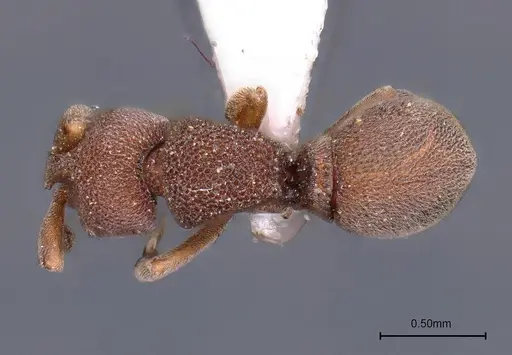
Literature
Loading...Loading products...