

Discothyrea velutina
- Scientific Name
- Discothyrea velutina
- Tribe
- Proceratiini
- Subfamily
- Proceratiinae
- Author
- Wheeler, 1916
- Distribution
- Found in 1 countries
Discothyrea velutina Overview
Discothyrea velutina is an ant species of the genus Discothyrea. It is primarily documented in 1 countries , including Australia. Detailed taxonomic data and occurrence records can be further explored via authoritative databases such as AntWeb or the Global Biodiversity Information Facility (GBIF).
Discothyrea velutina
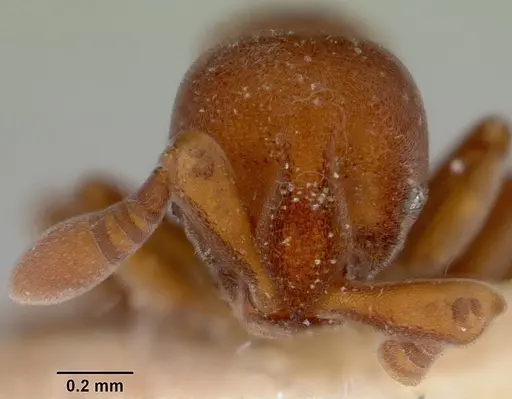
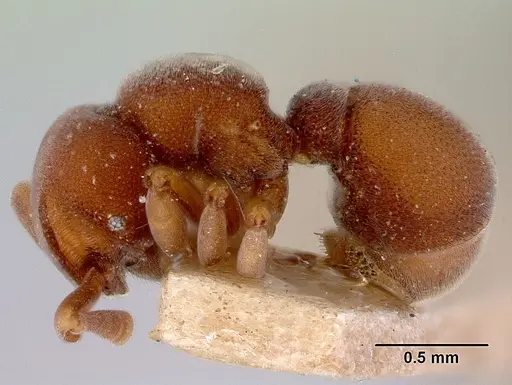
Discothyrea velutina is a tiny ant species native to northern Queensland, Australia. Workers are among the smallest ants you'll encounter, measuring just 2-3mm. They have a distinctive appearance with 10-segmented antennae and the characteristic Proceratiinae body shape, a relatively large head compared to their small mesosoma, with a smooth and shiny body surface. The genus name Discothyrea comes from their flattened, disc-like body form. These ants are found in the Kuranda region of North Queensland, living in leaf litter and rotting wood in rainforest environments. As predators, they hunt small arthropods using their venom, making them fascinating but challenging to keep. Their tiny size and specialized predatory diet means they're best suited for experienced antkeepers who can provide the small live prey they need to survive.
Quick Summary
- Difficulty: Expert
- Origin & Habitat: Native to northern Queensland, Australia, specifically the Kuranda region. They live in rainforest leaf litter and rotting wood, preferring damp, shaded microhabitats [1][2].
- Colony Type: Likely monogyne (single queen colonies) based on typical Discothyrea patterns. Colony size is small, likely under 100 workers given their tiny size and predatory lifestyle.
- Colony: Monogyne
- Founding: Claustral
- Size & Growth:
- Queen: Approximately 3-4mm based on genus estimates, the single syntype queen was described by Wheeler in 1916 [2].
- Worker: 2-3mm [1].
- Colony: Likely small colonies of 50-100 workers based on genus patterns for these tiny predators.
- Growth: Slow, small colonies grow gradually, especially since they require live prey for each brood.
- Development: Estimated 8-12 weeks based on typical Proceratiinae development, but this species has not been directly studied. (Development is likely temperature-dependent, with warmer conditions speeding growth. First workers (nanitics) will be very small.)
- Antkeeping:
- Temperature: Keep around 22-26°C. These are tropical rainforest ants that need warmth but also humidity. A heating cable on one side of the nest creates a gentle gradient [2].
- Humidity: High humidity is essential, think damp forest floor. Keep the nest substrate consistently moist but not waterlogged. Provide a water tube for drinking water as well.
- Diapause: Unknown for this species. As a tropical ant from Queensland, they likely do not require hibernation, but may slow down during cooler periods.
- Nesting: In captivity, they do well in Y-tong (AAC) nests or test tube setups with small chambers. The nest material should retain moisture well, plaster or soil-filled setups work. Keep nesting area dark and undisturbed.
- Behavior: These ants are predatory and relatively docile toward keepers, but their tiny size makes them challenging to handle. They are not aggressive and rarely sting. Their main defense is escape, they will quickly retreat when disturbed. Escape prevention is critical because of their very small size, they can squeeze through the tiniest gaps. They are slow-moving but efficient hunters of small prey. Workers forage individually rather than in groups.
- Common Issues: tiny size makes escape prevention difficult, use fine mesh and tight-fitting barriers, requiring live prey means colonies can starve if not fed regularly, slow growth tests keeper patience and may lead to overfeeding, wild-caught colonies may have parasites that are difficult to detect, they are sensitive to drying out and need consistent humidity
Housing and Nest Setup
Discothyrea velutina requires careful housing due to their tiny size. A Y-tong (AAC) nest with small chambers works well, or you can use a test tube setup with a small container for feeding. The key is ensuring the chambers are appropriately scaled, these are very small ants, so wide tunnels and chambers will make them feel insecure. Keep the nest material consistently moist but not flooded. Plaster nests or soil-filled containers work better than acrylic for maintaining humidity. Cover the nest with a dark cloth to simulate the dark, hidden spaces they naturally inhabit in leaf litter. The outworld (foraging area) should be small and easy to maintain, with a water tube always available. [2]
Feeding and Diet
These are obligate predators that require live small arthropods. In captivity, their primary food should be live springtails, tiny mites, or fruit fly larvae. They are too small to tackle larger prey, so stick to micro-prey that fits in their tiny mandibles. You can offer small pieces of insects occasionally, but they prefer hunting live prey. Sugar sources are generally not accepted, these are pure predators, not sugar-seekers. Feed every 2-3 days, offering only what they can consume in a day. Remove uneaten prey to prevent mold. A well-fed colony will have workers with plump abdomens, this is a good sign of health. [2]
Temperature and Humidity
As tropical rainforest ants from Queensland, they need warm and humid conditions. Keep the nest at 22-26°C, with a slight gradient if possible. A heating cable placed on top of the nest (never underneath where it can dry out the substrate) can maintain warmth. Humidity is critical, aim for 70-80% relative humidity in the nest. The substrate should feel consistently damp but never waterlogged. You can achieve this with a water tube attached to the nest or by misting the substrate occasionally. Avoid temperature swings and dry air, as these can stress the colony. [2]
Behavior and Colony Life
Discothyrea velutina workers are solitary foragers, they don't recruit others to food sources like many ants do. Each worker hunts independently, using venom to subdue small prey. The colony will likely have a single queen who stays hidden in the nest, laying eggs throughout the year in warm conditions. Workers are not aggressive and rarely sting, but they will bite if handled roughly. The colony grows slowly because each worker represents significant investment in prey capture. You'll notice workers patrolling the nest perimeter and foraging in the outworld, always searching for small arthropods. Their small size means they are vulnerable to predation and drying out, keep the setup secure and humid. [2]
Acquiring and Starting a Colony
Finding Discothyrea velutina in the wild is difficult due to their tiny size and hidden lifestyle. If you locate a colony in rotting wood or leaf litter in the Kuranda region of Queensland, carefully collect the queen and a portion of workers. When introducing a new queen to captivity, place her in a small test tube with moist cotton. She will likely seal herself into a chamber if given appropriate nesting material. Do not disturb her during the founding period, claustral queens can be stressed by observation. Once workers emerge, you can slowly introduce small live prey. Expect slow growth initially as the colony establishes itself. [1]
Frequently Asked Questions
Can I keep Discothyrea velutina in a test tube?
Yes, test tubes work well for starting colonies. Use a small test tube with a water reservoir and keep it humid. Make sure the cotton is packed firmly so the queen can't escape. Once the colony grows beyond 20-30 workers, consider moving to a small Y-tong nest or naturalistic setup.
What do Discothyrea velutina eat?
They eat live small arthropods, springtails, tiny mites, and fruit fly larvae are ideal. They are obligate predators and do not accept sugar or dead insect pieces. Feed live prey every 2-3 days, only offering what they can consume.
How long until first workers appear?
Estimated 8-12 weeks from egg to worker at optimal temperature (24-26°C). This is based on typical Proceratiinae development, the actual timeline for D. velutina has not been directly studied. Growth is slow, so be patient.
Are Discothyrea velutina good for beginners?
No, they are not recommended for beginners. Their tiny size makes housing and escape prevention challenging, and their requirement for live prey means they need dedicated feeding schedules. They are best suited for experienced antkeepers who can provide the specific conditions they need.
Do Discothyrea velutina ants sting?
They have venom and could theoretically sting, but their tiny size makes this practically irrelevant. They are not aggressive and will flee rather than fight. The sting would be imperceptible to humans.
How big do Discothyrea velutina colonies get?
Likely 50-100 workers at maturity based on genus patterns. These are small colonies compared to many common ant species. The slow growth rate means reaching maturity takes over a year.
Do they need hibernation?
As tropical ants from Queensland, they likely do not require hibernation. However, they may slow down during cooler periods. If you keep them at room temperature (around 20-22°C), they will remain active year-round.
Why are my Discothyrea velutina dying?
Common causes include: drying out (they need high humidity), starvation (not enough live prey), escape (they squeeze through tiny gaps), and stress from disturbance. Check your humidity levels first, then verify they are eating the live prey you provide.
When should I move them to a formicarium?
Move to a proper nest (Y-tong or naturalistic) when the test tube becomes crowded or the water reservoir needs frequent refilling. This is typically when the colony reaches 20-30 workers. They prefer small, tight-fitting chambers.
Can I keep multiple queens together?
This has not been studied for this species. Based on typical Discothyrea patterns, they are likely single-queen colonies. Keeping multiple unrelated queens together is not recommended.
References

This caresheet is licensed under CC BY-SA 4.0 .
CASENT0172089
View on AntWeb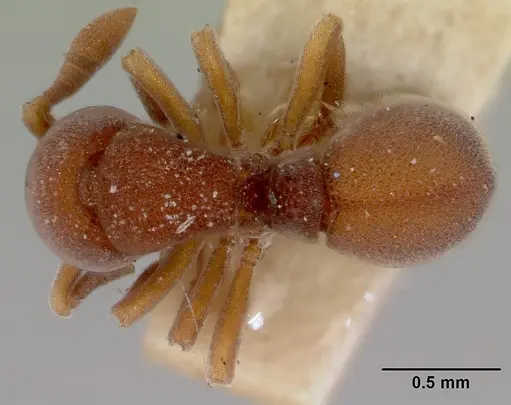
Literature
Loading...Loading products...