

Discothyrea gaia
- Scientific Name
- Discothyrea gaia
- Tribe
- Proceratiini
- Subfamily
- Proceratiinae
- Author
- Hita-Garcia & Lieberman, 2019
- Distribution
- Found in 1 countries
Discothyrea gaia Overview
Discothyrea gaia is an ant species of the genus Discothyrea. It is primarily documented in 1 countries , including Zimbabwe. Detailed taxonomic data and occurrence records can be further explored via authoritative databases such as AntWeb or the Global Biodiversity Information Facility (GBIF).
Discothyrea gaia
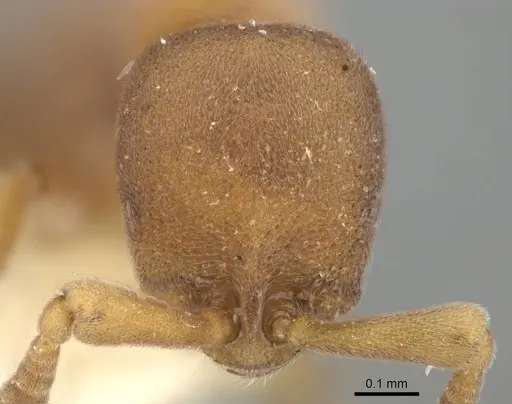
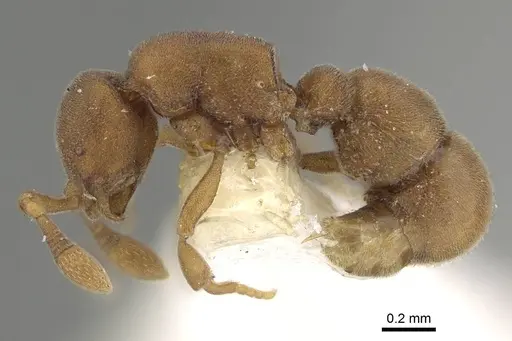
Discothyrea gaia is a tiny ant species recently described in 2019 from eastern Zimbabwe. Workers measure just 0.60-0.74 mm in body length, making them among the smaller ant species you'll encounter. They have a distinctive appearance with a moderately thick petiole, relatively short legs, and abundant short appressed pubescence covering their body. Their coloration ranges from testaceous orange to matte brownish, sometimes with darker infuscation on the head. The most distinguishing feature is the presence of a distinct apicoventral spur on the mesotibia, which separates them from most other Discothyrea species. This species is known only from the type locality in Manicaland, Zimbabwe at 1700m elevation, where it was collected in savannah or woodland habitat [1].
As a member of the genus Discothyrea, these ants are specialized micro-predators that likely hunt small soil-dwelling invertebrates like springtails. Their extremely small size and cryptic lifestyle in leaf litter and humus make them a challenging but fascinating species to keep. The genus name reflects their earth-dwelling habits, in Greek mythology, Gaia was the primordial goddess of the Earth [2].
Quick Summary
- Difficulty: Expert
- Origin & Habitat: Eastern Zimbabwe, specifically Manicaland region near Mutare (formerly Umtali) at 1700m elevation. Collected from savannah or woodland habitat [1].
- Colony Type: Unknown, colony structure has not been documented for this newly described species. Based on genus patterns, likely single-queen colonies.
- Size & Growth:
- Queen: Unknown, queen caste has not been described [1]
- Worker: 0.60-0.74 mm body length (WL), head width 0.43-0.51 mm [1]
- Colony: Unknown, no colony size data available
- Growth: Unknown, no development data exists
- Development: Unconfirmed, no direct observations. Based on typical Discothyrea patterns and their tiny size, development may take 4-8 weeks at optimal temperature, but this is entirely estimated. (No published data on development timeline exists. Related Discothyrea species typically develop relatively quickly as small micro-predators.)
- Antkeeping:
- Temperature: Likely prefers moderate temperatures, based on the temperate to subtropical highland location in Zimbabwe (1700m elevation), aim for roughly 20-24°C. Provide a gentle gradient and adjust based on colony activity.
- Humidity: High humidity is essential, these are leaf-litter dwelling ants from a moist habitat. Keep the nest substrate consistently damp but not waterlogged. Provide a humidity gradient with a moist chamber and a slightly drier area for the outworld.
- Diapause: Unknown, no data on overwintering requirements. The highland Zimbabwe location suggests they may experience cooler seasonal temperatures. Monitor colony behavior for signs of reduced activity.
- Nesting: Based on their natural habitat in leaf litter and humus, they likely prefer naturalistic setups with moist substrate. Tight chambers scaled to their tiny size would work well, these ants are extremely small and can escape through standard test tube barriers. A Y-tong or plaster nest with very fine mesh barriers is recommended.
- Behavior: Very limited behavioral data exists. Discothyrea species are typically docile and non-aggressive, relying on camouflage and cryptic habits rather than confrontation. They are specialized micro-predators, likely hunting springtails and other tiny soil arthropods. Their extremely small size means escape prevention is critical, they can squeeze through gaps invisible to the naked eye. Expect shy, reclusive behavior with most activity confined to the nest and immediate foraging areas.
- Common Issues: escape prevention is critical due to their tiny size, standard test tube barriers are insufficient, no colony size data means you won't know what to expect as your colony matures, founding queens may be extremely difficult to locate and acquire, high humidity requirements can lead to mold if ventilation is inadequate, as a newly described species, no established husbandry protocols exist
Discovery and Taxonomy
Discothyrea gaia was only described in 2019 by Hita-Garcia and Lieberman as part of a comprehensive revision of Afrotropical Discothyrea species. The holotype and six paratype workers were collected in February 1969 by R. Mussard from the type locality in Manicaland, eastern Zimbabwe. The species name honors Gaia, the primordial Earth goddess in Greek mythology, referencing this ant's cryptic nesting habits in humus and leaf litter. The type specimens are deposited in various museums including the Natural History Museum in London (BMNH) and the California Academy of Sciences (CASC). A cyber-type with 3D scans is available online for researchers and enthusiasts [1].
Identification and Distinguishing Features
This species is relatively easy to identify within the Afrotropical Discothyrea fauna thanks to several distinctive features. The presence of a conspicuous apicoventral spur on the mesotibia sets it apart from most other group members, only Discothyrea poweri and Discothyrea traegaordhi share this trait. However, D. gaia has standing pilosity (bristles) on the dorsal body surfaces, while D. poweri and D. traegaordhi lack any standing hairs. The petiole is moderately thick (DPeI 192-255), and the legs are comparatively short (HFI 54-58). The body is covered in abundant, short, fine appressed pubescence giving them a somewhat velvety appearance. Coloration varies from testaceous orange to matte brownish, with the head sometimes darker than the rest of the body [1].
Natural History and Habitat
Discothyrea gaia is known only from a single location in eastern Zimbabwe at an elevation of 1700 meters. The area around Mutare (formerly Umtali) in Manicaland province features savannah and woodland habitats. As a leaf-litter dwelling species, they likely nest in moist soil, rotting wood, or under stones in these environments. The genus Discothyrea is known for cryptic habits, they forage in the leaf litter layer and hunt small invertebrates like springtails and mites. Their small size and cryptic coloration help them remain hidden from both predators and potential prey. The highland location suggests they experience seasonal temperature variations, though the exact overwintering behavior is unknown [1].
Housing and Captive Care
Keeping Discothyrea gaia presents significant challenges due to their extremely small size and the lack of established husbandry protocols. You will need to use excellent escape prevention, these ants are so tiny they can slip through standard mesh barriers. Fine mesh (at least 0.5mm) or specialized barrier techniques are essential. A naturalistic setup with moist substrate works well given their leaf-litter origins. Keep the nest area consistently humid but ensure adequate ventilation to prevent mold. Temperature should be moderate, around 20-24°C based on their highland African habitat. As micro-predators, they will need a constant supply of tiny live prey such as springtails, but acceptance of alternative foods is entirely unknown. Given how recently this species was described, you may be establishing husbandry protocols from scratch [1].
Feeding and Nutrition
Based on typical Discothyrea biology, these ants are specialized predators of tiny soil invertebrates, particularly springtails (Collembola). Their small size means they cannot tackle larger prey items. In captivity, you should provide a constant supply of live springtails or other micro-arthropods of appropriate size. Whether they will accept alternative protein sources like fruit flies or pre-killed prey is entirely unknown, you may need to experiment. Sugar sources are likely not important for this genus, as they are carnivorous micro-predators rather than honeydew collectors. Feed small amounts frequently and remove uneaten prey to maintain water quality [2].
Frequently Asked Questions
How long does it take for Discothyrea gaia to develop from egg to worker?
The development timeline has not been documented for this species. Based on typical Discothyrea patterns and their very small size, development may take 4-8 weeks at optimal temperature, but this is entirely an estimate with no direct evidence.
What do Discothyrea gaia ants eat?
Based on genus patterns, they are micro-predators that likely hunt tiny soil invertebrates like springtails. In captivity, you should provide live springtails or other appropriately-sized live prey. Acceptance of alternative foods is unknown and will require experimentation.
Are Discothyrea gaia good for beginners?
No, this is an expert-level species due to their extremely tiny size, lack of established husbandry protocols, and critical escape prevention requirements. They are also extremely rare in the antkeeping hobby since they were only described in 2019.
Do Discothyrea gaia ants sting?
Given their extremely small size, any sting would likely be imperceptible to humans. The genus is not known for having painful stings, and their primary defense is cryptic behavior rather than aggression.
What temperature should I keep Discothyrea gaia at?
Based on their highland Zimbabwe habitat (1700m elevation), aim for moderate temperatures around 20-24°C. Provide a gentle gradient and adjust based on colony activity. Avoid overheating.
How big do Discothyrea gaia colonies get?
The maximum colony size is unknown, no colony data has been published. Based on typical Discothyrea patterns, colonies are likely small, possibly under 100 workers given their micro-predatory lifestyle.
Can I keep multiple Discothyrea gaia queens together?
The colony structure is unconfirmed for this species. The safe approach is to keep only one queen per colony until more data becomes available.
What is the best nest type for Discothyrea gaia?
A naturalistic setup with moist substrate works best given their leaf-litter origins. Tight chambers scaled to their tiny size are essential. A Y-tong or plaster nest with very fine mesh barriers is recommended to prevent escapes.
Do Discothyrea gaia need hibernation?
Diapause requirements are unknown. The highland Zimbabwe location suggests they may experience seasonal temperature variations, but whether they require a winter rest period has not been studied.
Why are my Discothyrea gaia escaping?
Their extremely small size (under 1mm) means they can slip through gaps invisible to the naked eye. Standard test tube barriers and formicarium gaps are insufficient. You must use fine mesh (0.5mm or smaller) and examine all connections carefully.
References

This caresheet is licensed under CC BY-SA 4.0 .
CASENT0247040
View on AntWeb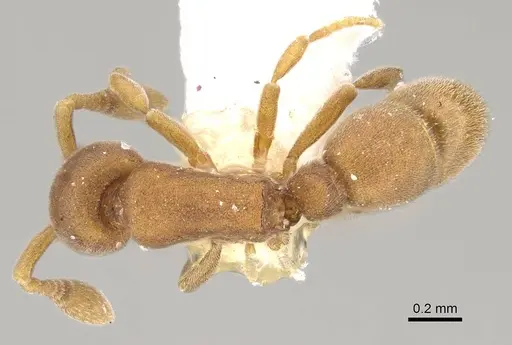
Literature
Loading...Loading products...