

Crematogaster nigriceps
- Scientific Name
- Crematogaster nigriceps
- Tribe
- Crematogastrini
- Subfamily
- Myrmicinae
- Author
- Emery, 1897
- Distribution
- Found in 3 countries
Crematogaster nigriceps Overview
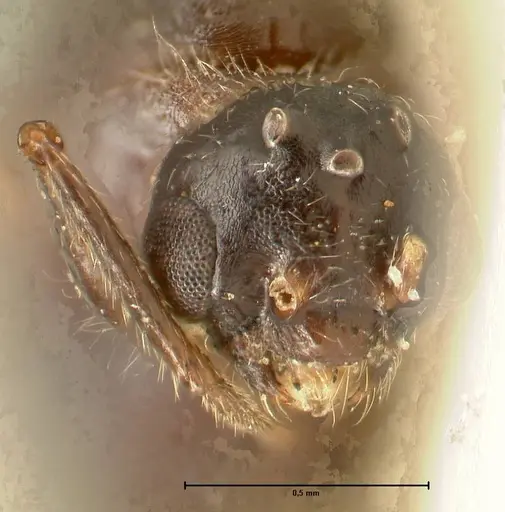
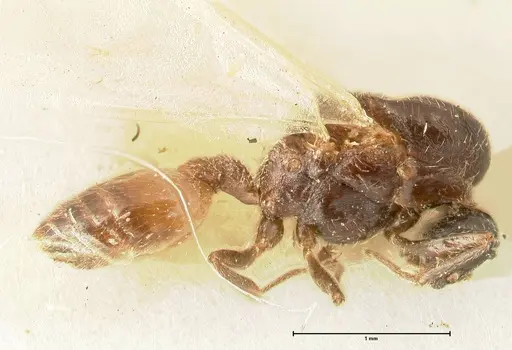
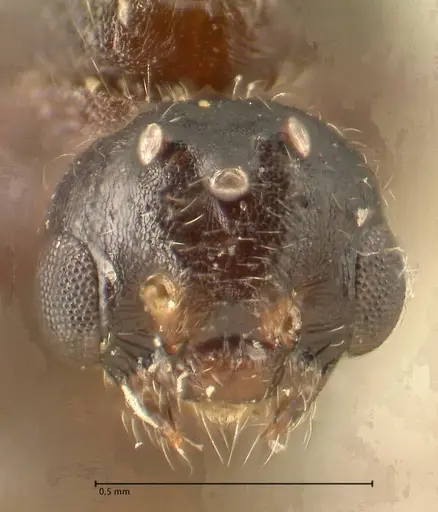
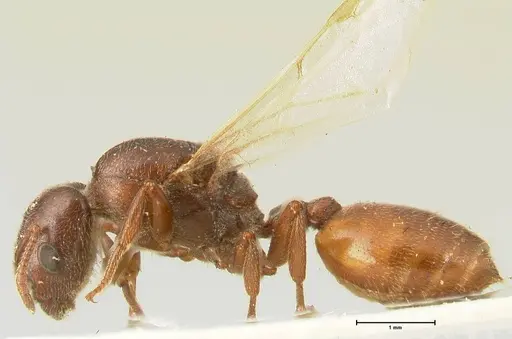
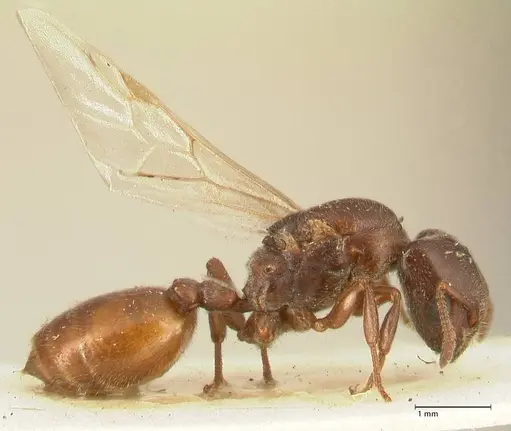
Crematogaster nigriceps is an ant species of the genus Crematogaster. It is primarily documented in 3 countries , including Kenya, Sudan, Tanzania. Detailed taxonomic data and occurrence records can be further explored via authoritative databases such as AntWeb or the Global Biodiversity Information Facility (GBIF).
Crematogaster nigriceps
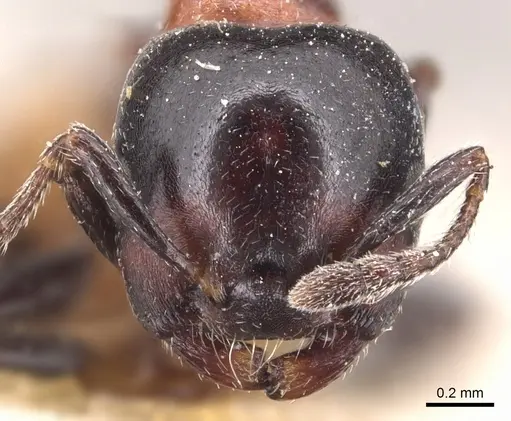
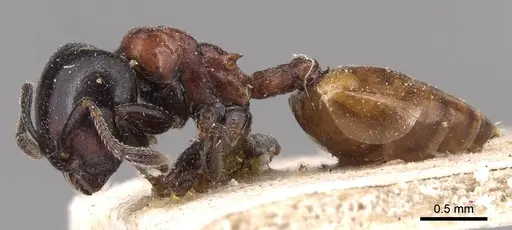
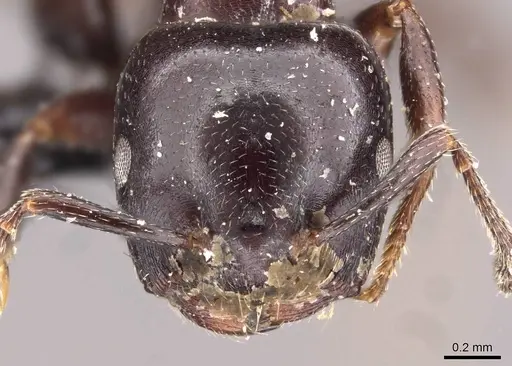
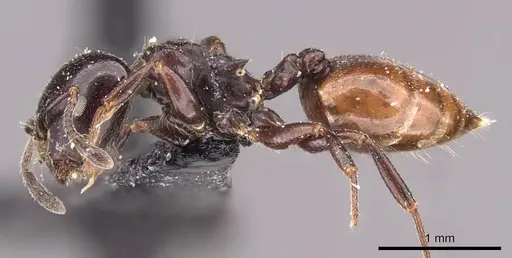
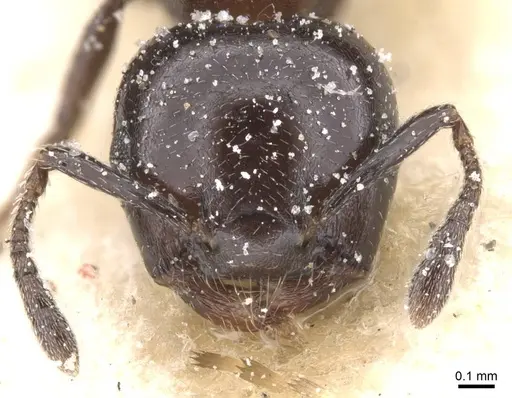
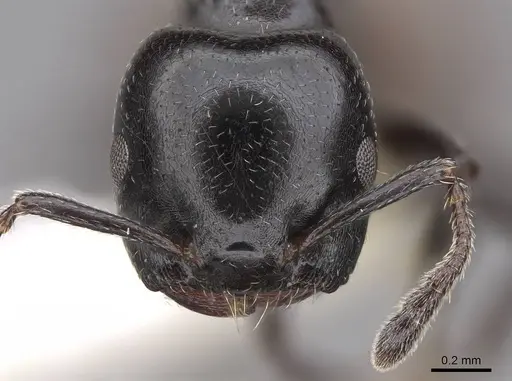
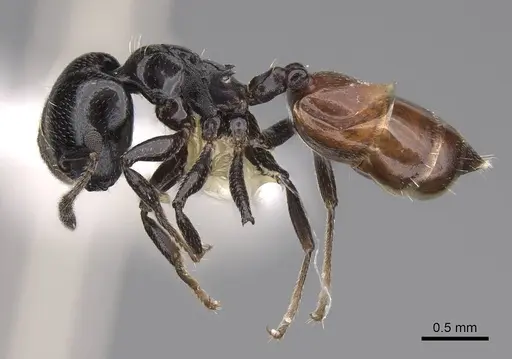
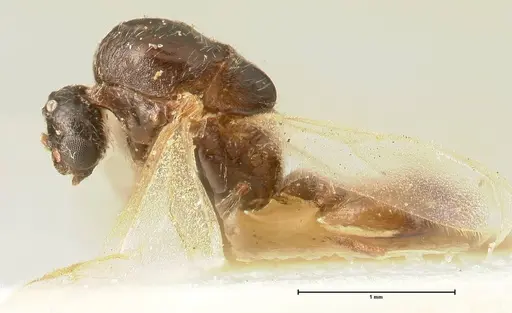
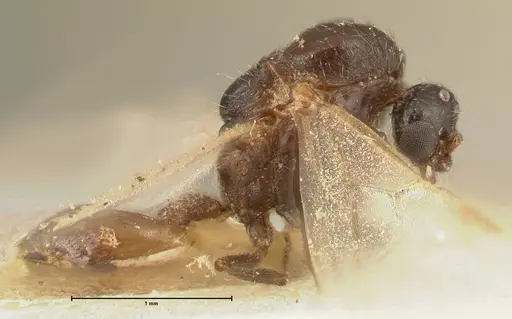
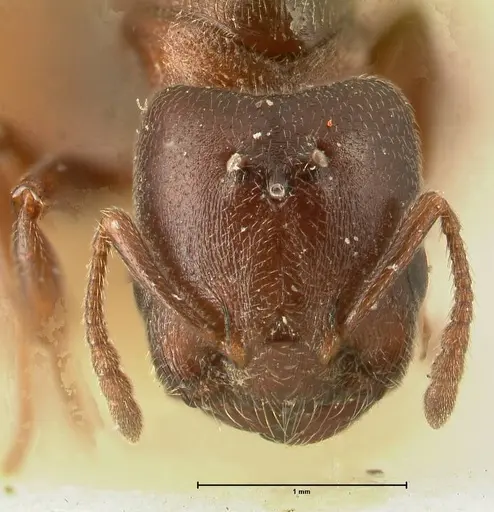
Crematogaster nigriceps is a small arboreal ant native to East African savannas, recognizable by its black and yellow coloring and its distinctive habit of raising its abdomen when disturbed. Workers measure 3-3.5mm and form colonies of 4,000-9,000 workers that span multiple trees [1][2]. This species is one of four obligate plant-ants that live exclusively in the swollen thorns of Vachellia drepanolobium, the whistling thorn acacia, and has been extensively studied as part of a famous mutualism in Kenya [3][4].
What makes C. nigriceps particularly fascinating is its dual role as both defender and parasite. While it aggressively protects its host tree from herbivores including elephants, it also sterilizes the tree by destroying the floral buds that would produce flowers and seeds [5][6]. Workers systematically prune axillary buds, creating a dense, compact canopy that reduces the chance of contact with neighboring trees occupied by rival ant colonies [7]. This sterilization might seem harmful, but it actually benefits young trees by channeling energy into growth and thorn production rather than reproduction, and the ant provides crucial protection during the tree's most vulnerable early growth phase [3][8].
Quick Summary
- Difficulty: Expert
- Origin & Habitat: East African savannas (Kenya, Somalia, Ethiopia, Sudan) and adjacent regions (Israel, Libya). Inhabits Vachellia drepanolobium (whistling thorn acacia) trees, nesting exclusively inside the hollow swollen thorns [4][1].
- Colony Type: Monogynous (single queen) colonies that span multiple trees (polycalic). Colonies average 2.5 trees per colony and contain 4,000-9,000 workers [9][2]. Strictly monogynous, foundress queens always establish alone [10].
- Colony: Monogyne
- Founding: Claustral
- Size & Growth:
- Queen: Estimated 5-6mm based on genus patterns
- Worker: 3-3.5mm [1]
- Colony: 4,000-9,000 workers [2]
- Growth: Fast
- Development: 9-10 weeks (Generation time approximately 60 days in the wild. First nanitic workers emerge around 68 days after queen colonization. Queens lay eggs approximately 12 days after sealing themselves in a thorn [11].)
- Antkeeping:
- Temperature: Native to East African savanna, keep warm, around 24-28°C. No direct studies on captive temperature requirements, but related Crematogaster species thrive in this range.
- Humidity: Moderate humidity (50-70%). As an arboreal species, they prefer drier conditions than ground-nesting ants but need access to moisture through their host plant.
- Diapause: No, native to tropical/subtropical climate with year-round activity. No documented diapause requirement [2].
- Nesting: Obligate domatia-nester. In captivity, this is the primary challenge, they require enclosed spaces mimicking swollen thorns. Y-tong (AAC) nests with narrow chambers may work, but they are highly specialized and difficult to maintain without their natural host plant. Test tubes are not ideal for this species.
- Behavior: Highly aggressive defenders that rapidly recruit workers to disturbance. They swarm up thorn tips and attack anything that threatens their host tree [2]. Despite being aggressive, they rank third in the competitive hierarchy among the four acacia ants, subordinate to C. sjostedti and C. mimosae [12]. Workers rarely leave the tree canopy, they are obligate plant-ants that depend entirely on extrafloral nectar [13]. They raise their abdomen (gaster) when disturbed, giving them the 'cocktail ant' name. Escape risk is moderate due to their small size, use fine mesh barriers. They are not known to sting but will bite aggressively.
- Common Issues: This species is extremely difficult to keep in captivity due to its obligate dependence on living Vachellia drepanolobium trees for nesting and feeding, Without access to extrafloral nectar, colonies will likely starve, they do not tend phloem-feeding insects and rely heavily on tree-provided carbohydrates [2], They are aggressively displaced by C. mimosae and C. sjostedti in competitive interactions, so housing with other ant species is problematic [12], Colony takeovers by competing ant species are common in the wild, making stable colony establishment challenging [2], Parasitic wasps (Trigastrotheca laikipiensis) attack foundress queens in the wild, wild-caught colonies may carry this parasite [14]
Why This Species Is Expert-Only
Crematogaster nigriceps presents extraordinary challenges that make it unsuitable for most antkeepers. This is not a species you can keep in a standard formicarium, it is an obligate plant-ant that depends entirely on living Vachellia drepanolobium (whistling thorn acacia) trees for both nesting space and food [4]. In the wild, colonies live inside the hollow swollen thorns that the tree produces specifically for ant habitation. Workers never leave the tree canopy to forage on the ground [13]. They survive almost entirely on extrafloral nectar produced by the tree, with stable isotope studies confirming they incorporate tree-derived carbon into their bodies [2]. Without this specific host plant, colonies cannot access their primary food source or suitable nesting sites. Additionally, they are competitively subordinate to two other acacia ant species (C. sjostedti and C. mimosae) and are frequently displaced from their host trees [12]. For all these reasons, this species is best appreciated through the extensive ecological literature rather than attempted in captivity.
The Acacia Ant Mutualism
Crematogaster nigriceps is one of four ant species that have evolved an exclusive relationship with Vachellia drepanolobium, the whistling thorn acacia [3]. This mutualism is one of the most famous in ecology. The tree provides hollow swollen thorns (domatia) for ants to nest in, plus extrafloral nectar, a sugar-rich secretion from specialized glands on the leaves and petioles. In return, the ants defend the tree aggressively against herbivores including elephants, giraffes, and insects [14]. The four ant species compete for exclusive access to trees: C. sjostedti is most dominant, followed by C. mimosae, then C. nigriceps (rank 3), with Tetraponera penzigi being most subordinate [12]. Each species modifies the tree architecture in different ways, and trees occupied by different ant species have distinct growth patterns. C. nigriceps tends to occupy younger trees early in their ontogeny, before being displaced by more dominant species as the tree grows [3][15].
The Sterilization Paradox
One of the most remarkable aspects of C. nigriceps biology is that it sterilizes its host tree while simultaneously protecting it. Workers systematically destroy the axillary buds (where flowers would normally develop) and kill the apical meristems (growing tips) of branches [5][7]. This pruning behavior has several effects: it redirects the tree's energy from reproduction to producing more thorns and extrafloral nectar, it creates a denser canopy that provides better concealment, and it reduces the likelihood of branch contact with neighboring trees occupied by rival ant colonies [7]. Trees continuously occupied by C. nigriceps virtually never flower or produce fruit [6]. However, this 'parasitism' is temporary, as trees age, they are often taken over by non-sterilizing ant species, and the early-life protection benefits outweigh the lost reproduction. When C. nigriceps was experimentally removed from trees,42% of those trees reproduced during the experiment, compared to 0% of control trees with the ants still present [14]. The ants essentially 'rent' protection during the tree's vulnerable youth.
Defense Behavior and Chemical Warfare
When threatened, C. nigriceps workers rapidly swarm to the source of disturbance and attack aggressively. Studies show they recruit an average of 15 workers in response to simulated disturbance, among the highest of the four acacia ant species [3]. They are particularly effective at deterring elephants, with only 13% of trees occupied by C. nigriceps experiencing elephant damage (the lowest of all four species) [14]. Their mandibular glands contain unique chemical compounds not found in the other acacia ants, including 3-methyl-2-pentanone,3-methyl-2-pentanol, and 2-phenylethanol [16]. These species-specific compounds make up about 30% of their mandibular gland volatiles and likely serve in both alarm and defense communication. When disturbed, they exhibit the characteristic 'cocktail' behavior, raising their abdomen forward over their head, which signals alarm to nearby workers and may help deliver venom [16].
Competition and Colonization
Despite their aggressive defense, C. nigriceps ranks third in the competitive hierarchy and loses approximately 71% of its host trees to the more dominant C. sjostedti and C. mimosae in experimental conflicts [12]. However, they compensate through excellent colonization abilities. They are strong colonizers of vacant trees and saplings, with the highest colonization rate among the four species [15]. Foundress queens are overrepresented on small saplings and large empty trees, suggesting they target the best colonization opportunities [11]. They also have a unique defense against competitive displacement: by pruning axillary buds, they reduce the likelihood of canopy contact with neighboring trees occupied by rival colonies, effectively creating a 'moat' that prevents invading ants from crossing [7][1]. This architectural modification is so effective that it significantly reduces lateral canopy spread compared to trees occupied by other ant species.
If You Still Want to Try
We strongly recommend against attempting to keep this species. However, for the sake of completeness: you would need access to live Vachellia drepanolobium saplings (which are not commonly available and would require appropriate permits for import). You would need to provide a constant supply of 20% sucrose solution mimicking extrafloral nectar, as they depend heavily on this carbohydrate source [2]. You would need to provide artificial domatia (enclosed spaces) for nesting. Temperature should be maintained at 24-28°C with moderate humidity. Even with all this, the specialized relationship with the host plant may not be replicable in captivity. Most importantly, you should never release this species outside its native range, it is not established anywhere outside East Africa and could become invasive. If you're interested in plant-ants, consider more commonly kept species like Crematogaster species that don't require living host plants.
Frequently Asked Questions
Can I keep Crematogaster nigriceps in a test tube?
No. This species is an obligate plant-ant that cannot survive without living Vachellia drepanolobium trees. Test tubes do not provide the swollen thorn domatia they require for nesting, nor the extrafloral nectar they depend on for food. This species is not suitable for captive keeping.
What do Crematogaster nigriceps eat?
They depend almost entirely on extrafloral nectar from their host Vachellia drepanolobium trees. This nectar is carbohydrate-rich but nitrogen-poor. They also scavenge for small prey off-tree when necessary, but they do not tend phloem-feeding insects like some ants do. In captivity, providing adequate nutrition would be extremely difficult without the host plant [2].
How long does it take for first workers to appear?
In the wild, first nanitic workers emerge approximately 68 days after the queen colonizes a thorn [11]. The queen lays eggs about 12 days after sealing herself inside the thorn, and development from egg to worker takes roughly 60 days total at natural temperatures [11][2].
Are Crematogaster nigriceps good for beginners?
No. This species is strictly expert-level due to its obligate dependence on living Vachellia drepanolobium trees for nesting and feeding. They cannot be kept in standard ant setups. If you're interested in Crematogaster ants, consider more commonly available species like Crematogaster scutellaris or other genus members that don't require living host plants.
Do Crematogaster nigriceps ants sting?
They do not have a painful sting like some ants, but they will bite aggressively when defending their host tree. Their main defense is swarming and biting, combined with raising their abdomen in the characteristic 'cocktail' posture [16].
How big do Crematogaster nigriceps colonies get?
Mature colonies reach 4,000-9,000 workers and typically span 2-3 trees [2][9]. They are polycalic, meaning colonies occupy multiple trees connected together, but they rarely share territory within a single tree canopy [2].
Can I keep multiple Crematogaster nigriceps queens together?
No. This species is strictly monogynous, colonies have only a single egg-laying queen. Foundress queens always establish alone, and dissections of mature colonies have confirmed only one reproductive queen per colony [9][10].
Do Crematogaster nigriceps need hibernation?
No. They are native to East African savannas with year-round warm temperatures and do not require diapause. Colonies remain active throughout the year, with stable isotope evidence showing all developmental stages are present in nests at all times (homodynamous development) [2].
References

This caresheet is licensed under CC BY-SA 4.0 .
CASENT0904510
View on AntWeb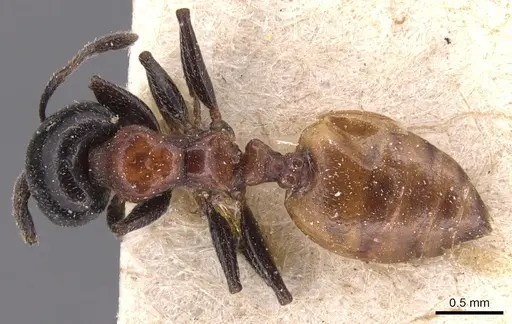
CASENT0908545
View on AntWeb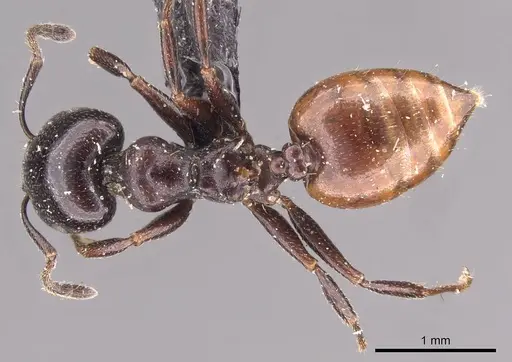
CASENT0912706
View on AntWeb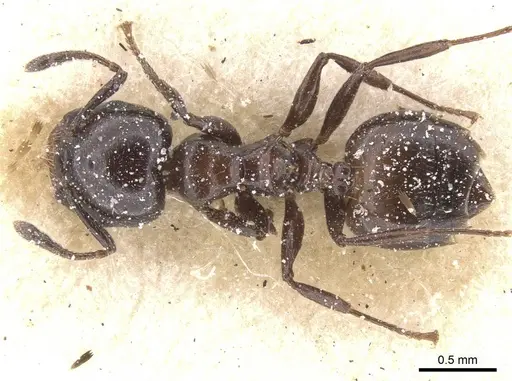
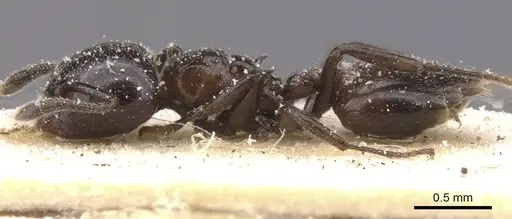
CASENT0914299
View on AntWeb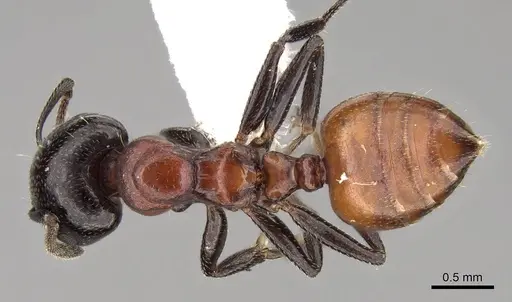
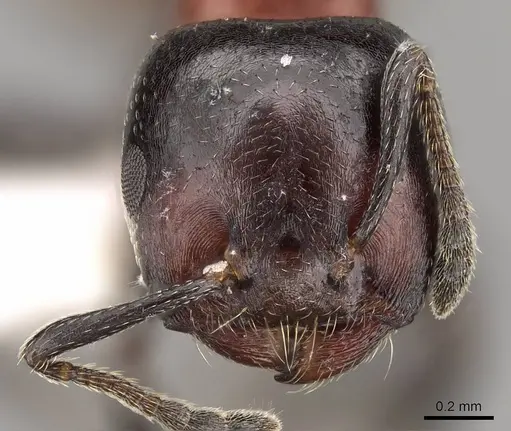
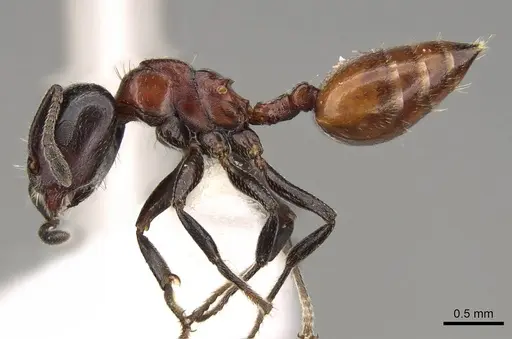
CASENT0922653
View on AntWeb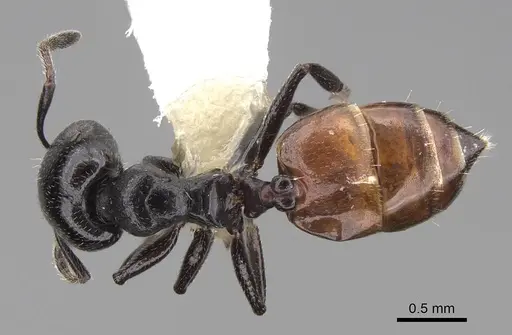
FOCOL1463
View on AntWeb
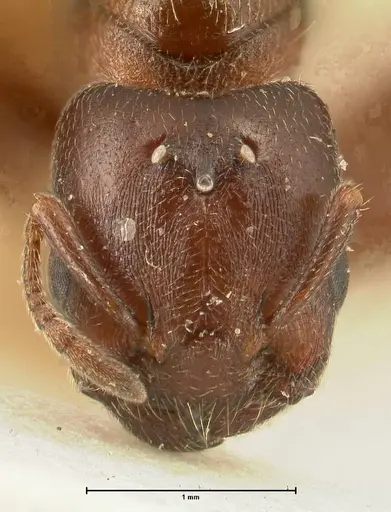
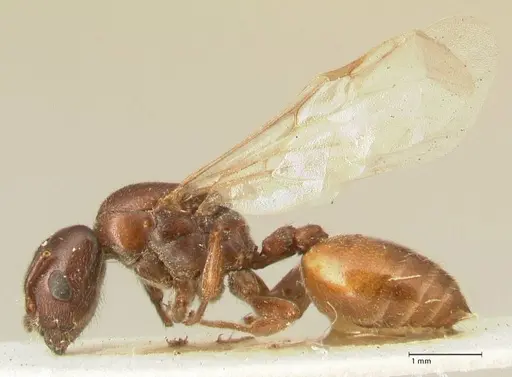
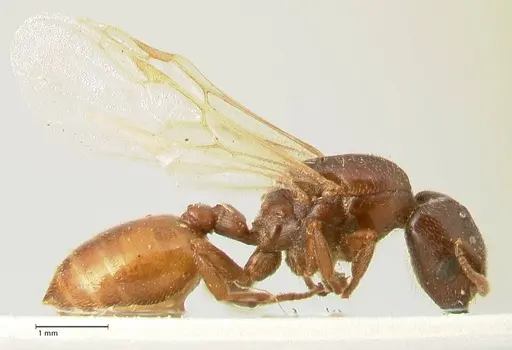
FOCOL1464
View on AntWeb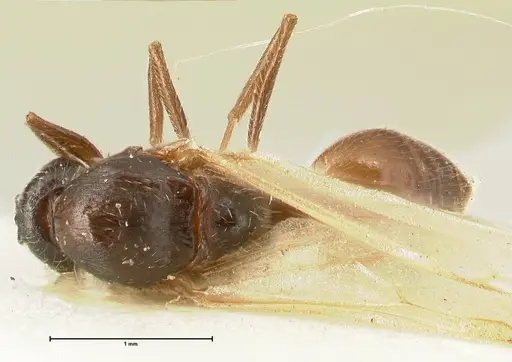
FOCOL1465
View on AntWeb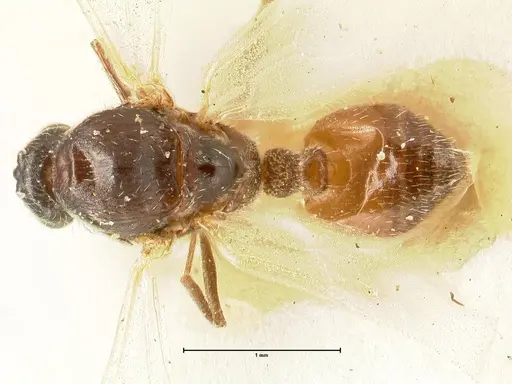
FOCOL1466
View on AntWeb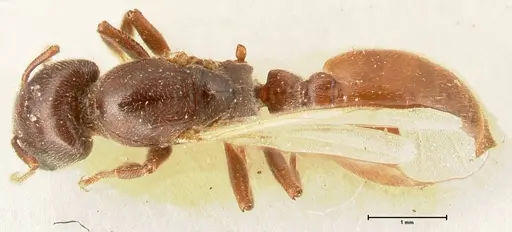
Literature
Loading...Loading products...