
Crematogaster scutellaris has a tightly defined flight window centered on October. Most nuptial flights occur within just 2 months, making this a highly predictable species for collectors. The concentrated timeframe makes peak months critical for sightings.
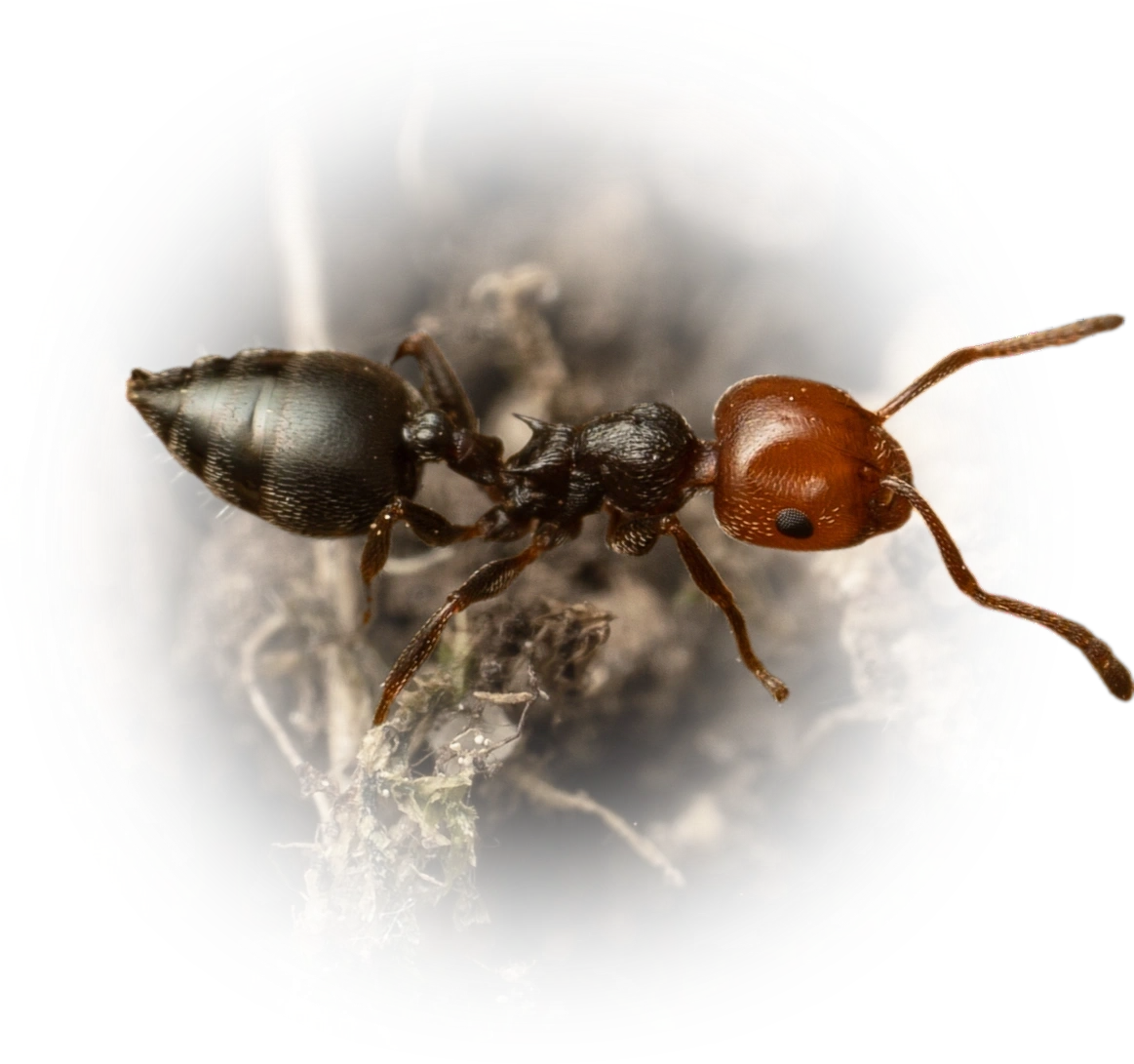
Crematogaster scutellaris
- Scientific Name
- Crematogaster scutellaris
- Tribe
- Crematogastrini
- Subfamily
- Myrmicinae
- Author
- Olivier, 1792
- Common Name
- Fourmi Du Liège
- Distribution
- Found in 7 countries
- Nuptial Flight
- from September to October, peaking in October
AI Identifiable
try →
Crematogaster scutellaris Overview
Crematogaster scutellaris (commonly known as the Fourmi Du Liège) is an ant species of the genus Crematogaster. It is primarily documented in 7 countries , including Switzerland, Algeria, Spain. Detailed taxonomic data and occurrence records can be further explored via authoritative databases such as AntWeb or the Global Biodiversity Information Facility (GBIF).
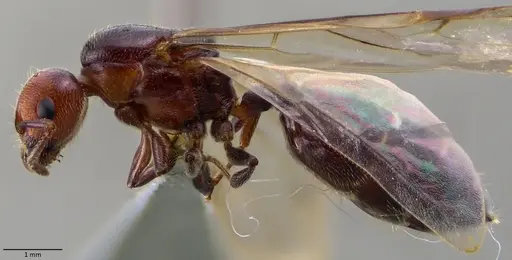
The nuptial flight of Crematogaster scutellaris is a significant biological event, typically occurring from September to October, peaking in October. During this time, winged queens and males leave the nest to mate and establish new colonies.
Crematogaster scutellaris - "Fourmi Du Liège"
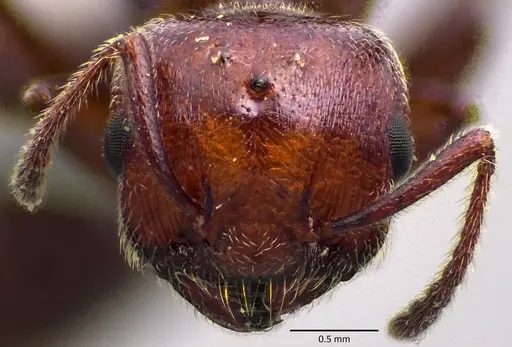
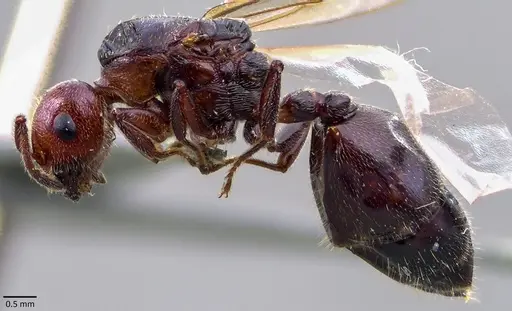
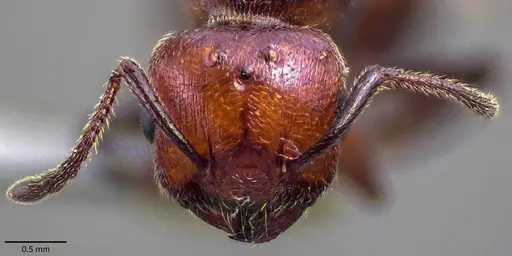
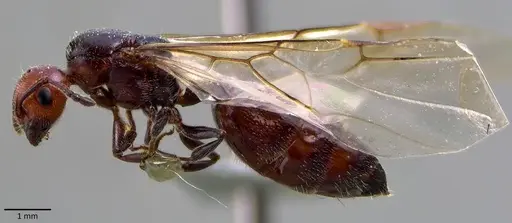
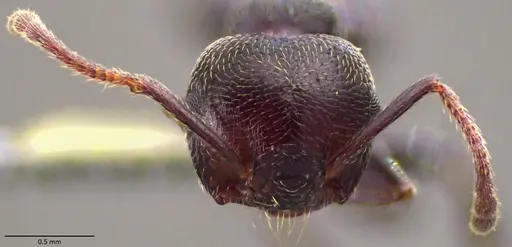
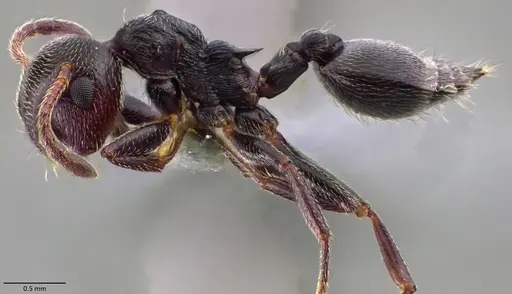
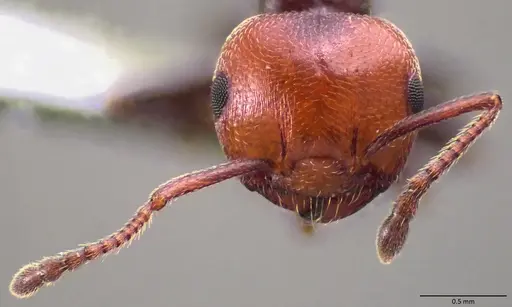
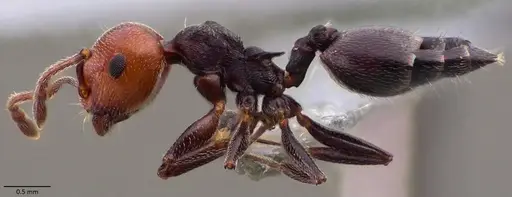
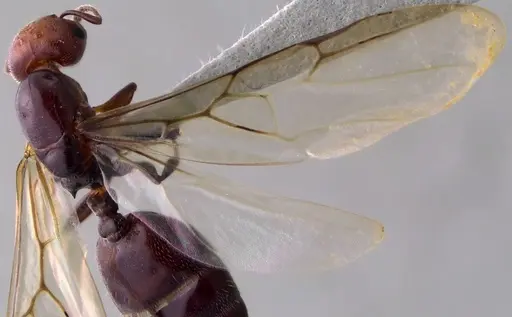
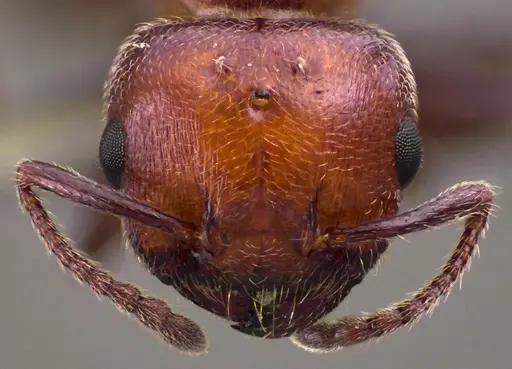
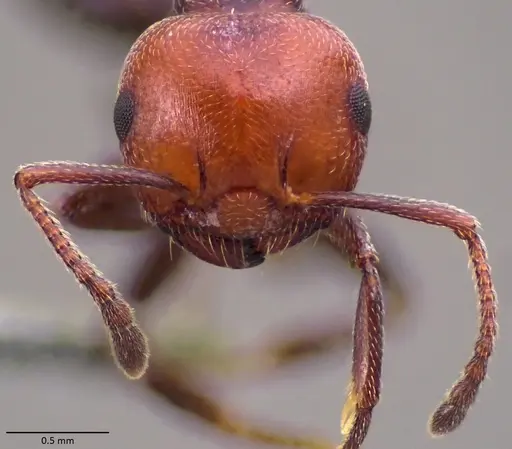
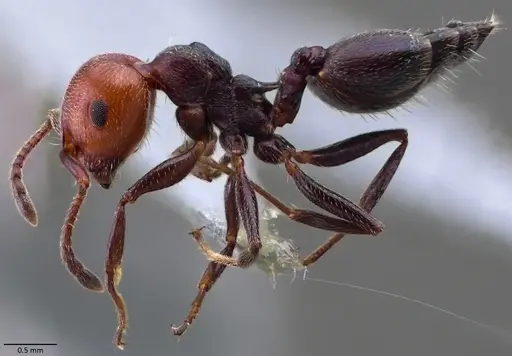
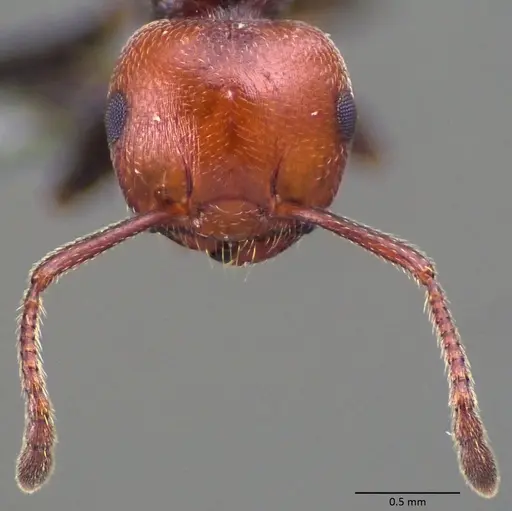
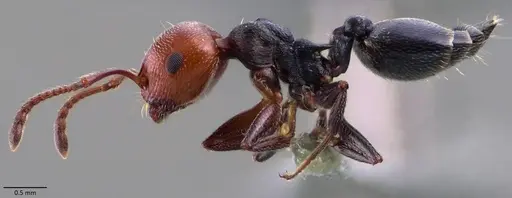
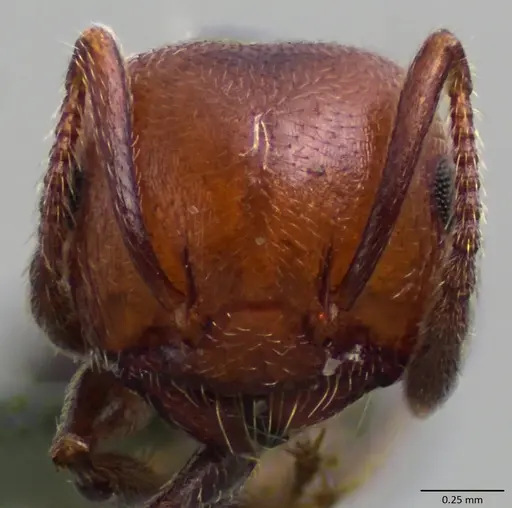
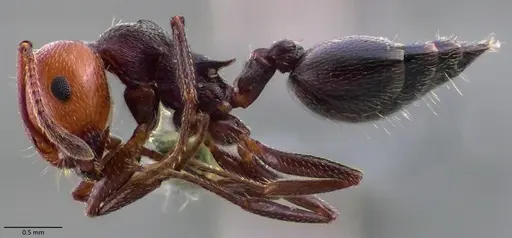
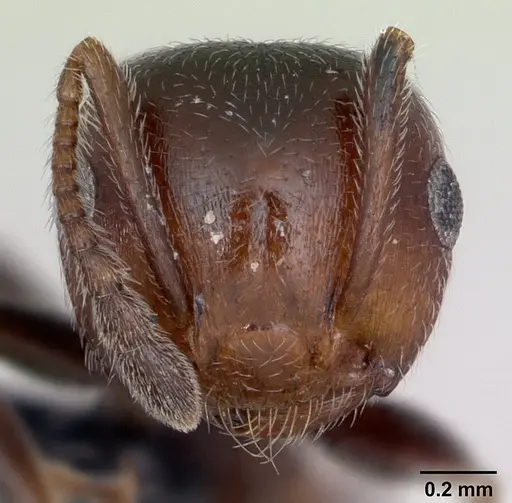
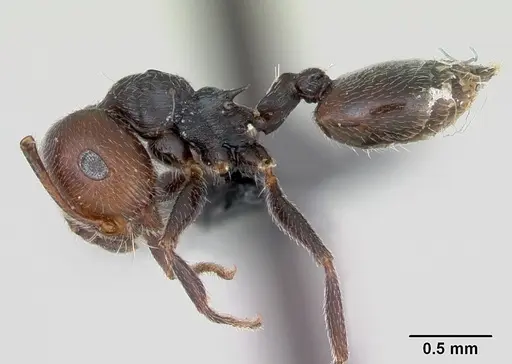
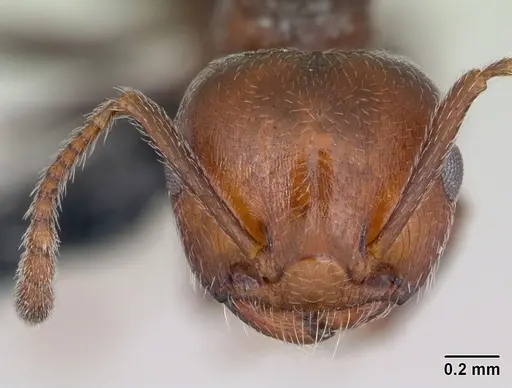
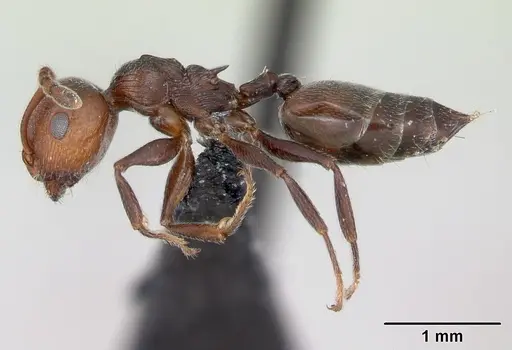
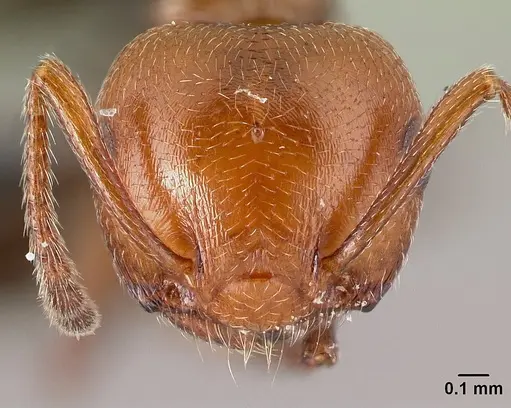
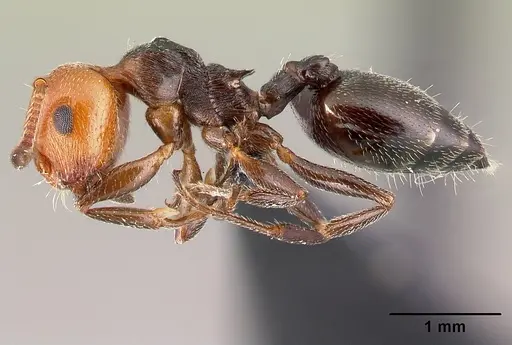
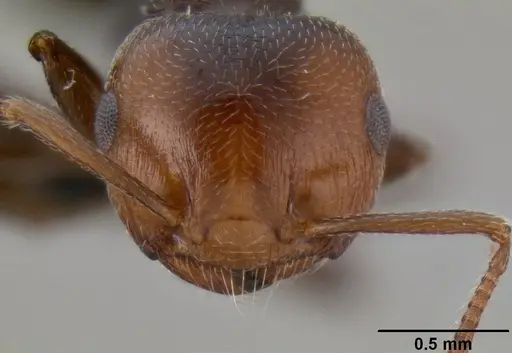
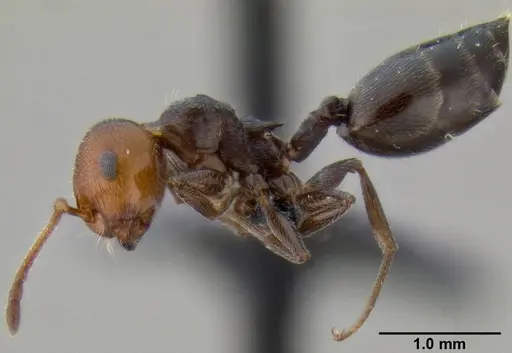
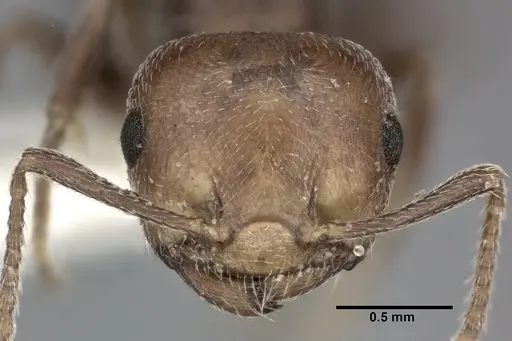
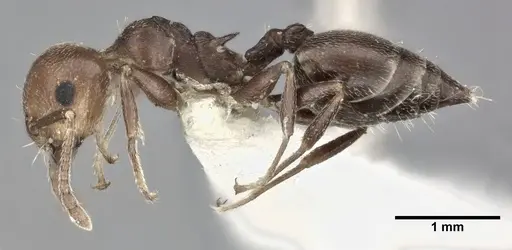
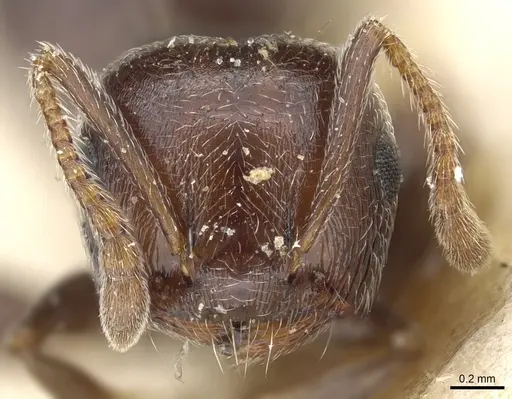
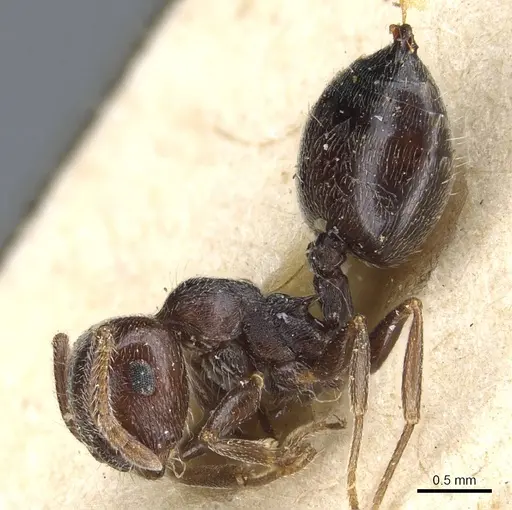
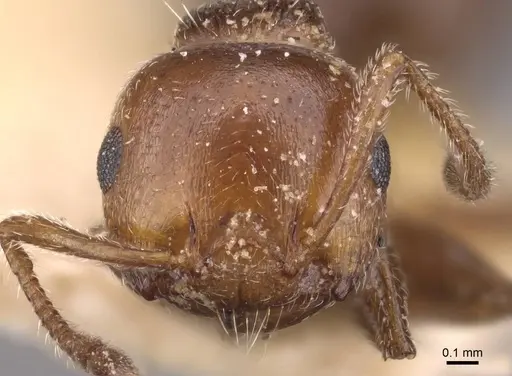
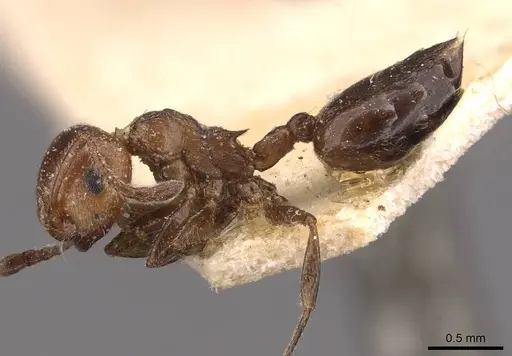
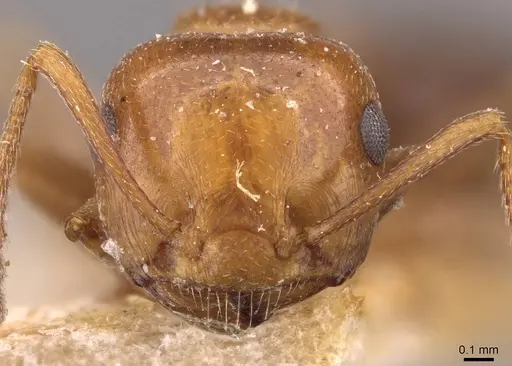
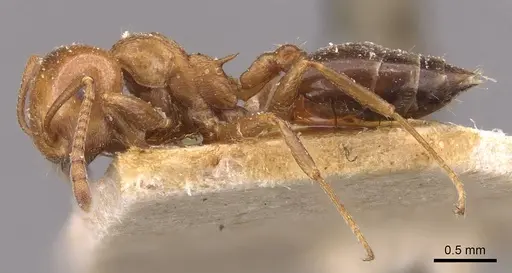
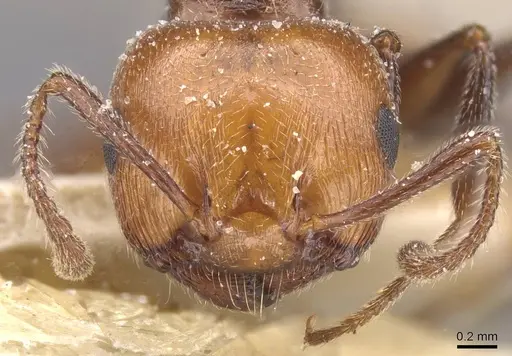
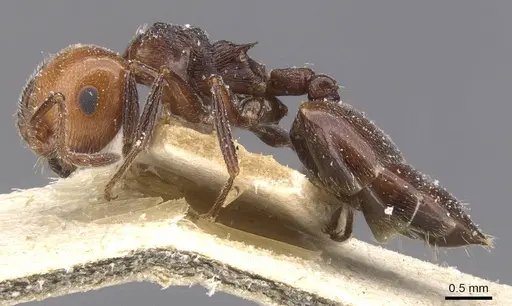
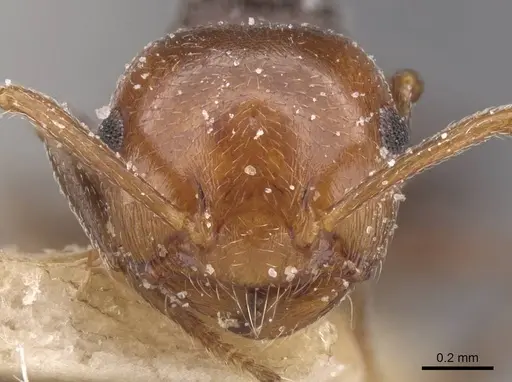
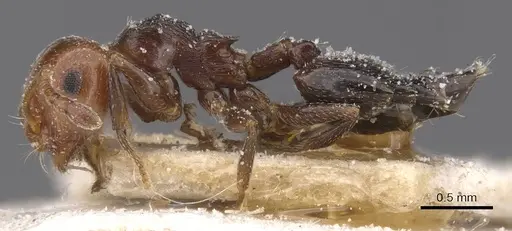
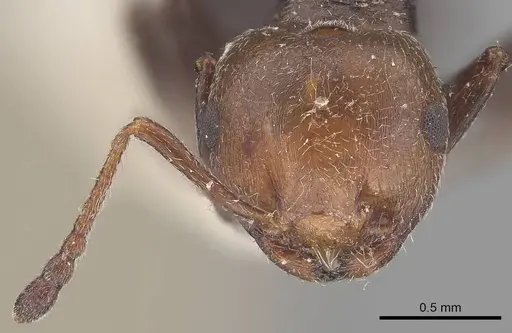
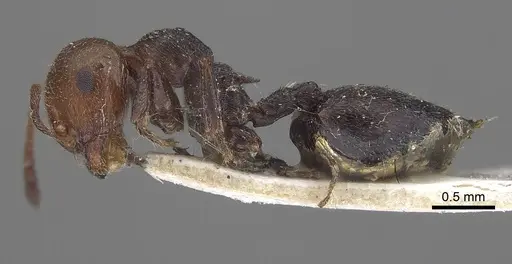
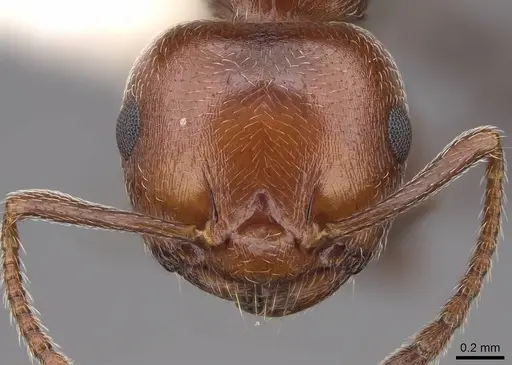
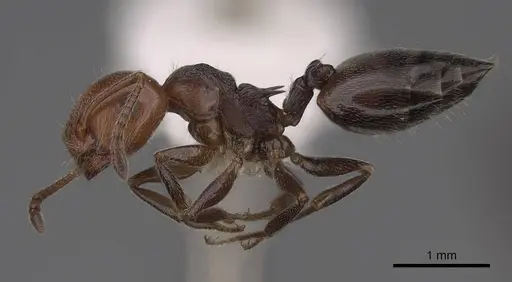
Crematogaster scutellaris is a medium-sized arboreal ant native to the western Mediterranean region. Workers measure 3.5-5 mm and are easily recognized by their striking red head that contrasts with their dark brown to black mesosoma and black heart-shaped abdomen [1]. The abdomen can be raised vertically above the head in a defensive posture, giving them their common name 'scorpion ant.' This species forms large colonies of several thousand workers and nests in dead wood within trees, wooden structures, or walls [2]. They are a dominant species in Mediterranean ant communities, known for their aggressive behavior and effective venom defenses.
Quick Summary
- Difficulty: Medium
- Origin & Habitat: Western Mediterranean region including France, Italy, Spain, Portugal, Morocco, Algeria, Tunisia, Croatia, and Greece. Found in arboreal habitats including cork oak forests, olive groves, and orchards. Nests in dead or decaying wood in trees, wooden structures, and sometimes walls [1][2].
- Colony Type: Monogyne (single queen) colonies with polydomous structure, one main nest with satellite nests connected by trails. Genetic analysis confirms single queen per colony, though multiple queens can temporarily coexist before one is eliminated [3][4].
- Colony: Monogyne
- Founding: Claustral, Pleometrosis
- Size & Growth:
- Queen: 6-7 mm (estimated based on genus)
- Worker: 3.5-5.0 mm [1]
- Colony: Up to several thousand workers [2]
- Growth: Moderate
- Development: Approximately 11 weeks (77 days): 3 weeks egg to larva,3 weeks larva to pupa,5 weeks pupa to first worker [4] (Development occurs faster in larger nests. Single queens in large nests produce more eggs than in small nests.)
- Antkeeping:
- Temperature: Keep at 20-26°C. Mediterranean species that thrives in warm conditions. Activity peaks between 9AM-4PM. Can tolerate higher temperatures but will shift foraging to shaded areas during peak heat [5].
- Humidity: Moderate humidity preferred. As an arboreal species, they need access to moisture but not saturation. Provide water via test tube setup.
- Diapause: Yes, reduced activity from November to February in natural range. In captivity, provide a cool period (10-15°C) during winter months [5].
- Nesting: Arboreal nesting, requires access to wood or cork material. Y-tong nests with cork inserts, wooden formicaria, or naturalistic setups with dead branches work well. They also build carton-like structures from chewed wood and plant material [5].
- Behavior: Aggressive and territorial. Uses Dufour's gland venom as contact defensive secretion, emits strong acetic acid smell when disturbed [6]. Forms well-defined foraging trails and recruits nestmates to food sources. Raises abdomen vertically as threat display. Dominant species that competes aggressively for food resources. Generally diurnal but can shift activity based on temperature. Not a particularly strong escaper compared to tiny ants, but standard barriers recommended.
- Common Issues: colonies can become aggressive and may bite if threatened, use caution during feeding and nest maintenance, polydomous colonies may expand into multiple areas of the setup, monitor for satellite nest formation, requires arboreal setup with wood/cork, standard dirt nests are not appropriate, queen replacement is not possible, when queen dies, colony will eventually die out as no worker replacement reproductives exist, can be outcompeted by more aggressive species if housed in community setups
Nuptial Flight Activity Analysis 788 observations
Flight Activity by Hour 788 observations
Crematogaster scutellaris nuptial flight activity peaks around 18:00 during the evening. Activity is spread across a 14-hour window (10:00–23:00). Times may be influenced by human observation patterns.
Housing and Nest Setup
Crematogaster scutellaris is an arboreal species that requires nesting opportunities mimicking their natural tree-hole habitat. Y-tong (AAC) nests with cork inserts work exceptionally well, as do wooden formicaria or naturalistic setups featuring dead branches, cork oak bark, or similar wood materials. The nest chamber should be dark and provide protection from light. These ants are skilled at building carton-like structures from chewed wood fibers and salivary secretions, so providing soft wood materials allows them to create their own galleries. Outworld setup should include climbing structures (branches, cork pieces) to facilitate their natural arboreal behavior. A water test tube with cotton plug should be provided as a humidity source. [5][2]
Feeding and Diet
This species is omnivorous with a strong preference for sugary substances. In nature, they primarily feed on honeydew from aphids and coccids, often tending these sap-sucking insects on trees. They also hunt small insects and arthropods. In captivity, offer sugar water, honey, or diluted maple syrup as a constant carbohydrate source. For protein, provide small insects like fruit flies, small crickets, or mealworm pieces. They are efficient foragers that form trails to food sources, so place protein foods in a consistent location to encourage trail formation. Remove uneaten protein within 24-48 hours to prevent mold. Their predatory behavior also makes them useful for controlling small pest insects in vivariums. [2][5][8]
Temperature and Seasonal Care
As a Mediterranean species, Crematogaster scutellaris prefers temperatures in the range of 20-26°C. They are most active during the warmer months (March through October) when foraging trails are clearly visible on trees. During this period, they exhibit peak activity between 9AM and 4PM, though they adjust their activity patterns based on temperature, shifting to dawn and dusk during hot summer months. In winter (November through February), they enter a period of reduced activity or diapause. During this time, temperatures should be lowered to 10-15°C to simulate natural conditions. Do not feed during the deep winter rest period. Activity resumes in March with solitary workers appearing on tree trunks, followed by trail formation in April. [5][9]
Behavior and Defense
Crematogaster scutellaris is one of the most aggressive and territorial ant species in the Mediterranean. When threatened, they raise their distinctive heart-shaped abdomen vertically above their head in a scorpion-like threat display. Their Dufour's gland produces a venom containing long-chain acetates that, when released, creates a strong smell of acetic acid. This venom is applied topically through their spatulate stinger during fights with other ants. Workers are highly aggressive toward conspecifics from distant colonies and show a 'nasty neighbor' effect, aggression increases with proximity until a threshold, then decreases at very short distances (likely due to polydomous colony structure). They form extensive foraging trails and can recruit large numbers of workers to food sources. Their dominance in Mediterranean ecosystems makes them excellent competitors but challenging to house with other ant species. [6]
Colony Development and Reproduction
Colonies are monogyne, founded by a single claustral queen who seals herself in a chamber and raises the first brood alone. Development from egg to worker takes approximately 77 days under optimal conditions. The queen can live up to 20 years, making this a long-lived species in captivity. Colonies grow gradually, small colonies after one year may have only 20-30 workers, while mature colonies can reach several thousand individuals. Polydomous colony structure means that as colonies grow, they may establish satellite nests connected by trails, particularly during spring and summer. In autumn, these satellite nests are typically abandoned and all ants return to the main nest for winter. Multiple queens can temporarily coexist during colony founding (pleometrosis), but eventually only one survives, the lighter queen dies first in about 77% of paired queen situations. [4][10][11]
Unique Biological Traits
This species exhibits several remarkable traits. They possess a well-developed stridulatory organ, workers, queens, and males all produce vibrations by rubbing a scraper on their abdomen against a file on the first gastral segment. These signals differ between castes and contexts, workers produce different signals when restrained versus when feeding. They also demonstrate trans-generational immunization: queens exposed to non-lethal doses of pathogens pass increased resistance to their offspring. Additionally, they are known to store live aphids in protected locations like oak galls during winter, effectively 'farming' their honeydew source. Their cuticular hydrocarbons vary significantly between colonies, which helps in nestmate recognition and contributes to their aggressive inter-colony behavior. [11]
Frequently Asked Questions
How long does it take for Crematogaster scutellaris to produce first workers?
First workers (nanitics) appear approximately 11 weeks (77 days) after the queen lays eggs. This includes roughly 3 weeks from egg to larva,3 weeks from larva to pupa, and 5 weeks from pupa to adult worker [4].
Can I keep multiple Crematogaster scutellaris queens together?
While pleometrosis (multiple queens founding a colony together) occurs naturally in this species, it is not recommended in captivity. Studies show that when multiple queens are paired,85% experience death of at least one queen, with the lighter queen dying first in 55% of cases. The surviving queen ultimately kills or drives off the others. It is best to start with a single mated queen [4].
Do Crematogaster scutellaris ants sting?
They have a stinger but primarily use contact venom rather than stinging. When threatened, they raise their abdomen and apply venom topically using their spatulate stinger. The venom has a strong acetic acid smell. While they can bite, their primary defense is chemical rather than mechanical. There is one documented case of anaphylaxis from a sting in Italy, showing their venom can cause allergic reactions in sensitive individuals [7].
What do Crematogaster scutellaris eat?
They are omnivorous with a preference for sugary foods. Offer constant access to sugar water, honey, or maple syrup. For protein, provide small insects like fruit flies, small crickets, or mealworm pieces. In nature, they primarily feed on honeydew from aphids and coccids, plus small arthropods they capture [2][8].
Are Crematogaster scutellaris good for beginners?
This species is rated as medium difficulty. While not as challenging as some exotic species, they have specific requirements, primarily arboreal nesting needs and a preference for warm conditions. They are also quite aggressive, which can make colony transfers tricky. They are better suited for keepers with some antkeeping experience who can provide appropriate arboreal housing [2].
Do Crematogaster scutellaris need hibernation?
Yes, they benefit from a winter rest period. In their natural Mediterranean habitat, activity drops significantly from November to February. In captivity, provide a cool period at 10-15°C during winter months. Reduce feeding during this time and allow the colony to slow down. Activity resumes naturally in spring [9][5].
How big do Crematogaster scutellaris colonies get?
Mature colonies can reach several thousand workers. The queen can live up to 20 years, allowing colonies to grow very large over time. Growth is gradual, expect a few dozen workers after the first year, several hundred after 2-3 years, and thousands at maturity [2][10].
Why is my Crematogaster scutellaris colony dying?
Common causes include: incorrect temperature (too cold or too hot), improper humidity (too dry), lack of appropriate nesting material (they need wood/cork), queen death (no replacement is possible in this species), or stress from excessive disturbance. Check that your setup matches their arboreal nature and that the queen is still present and laying eggs [11].
What type of nest is best for Crematogaster scutellaris?
Y-tong (AAC) nests with cork inserts, wooden formicaria, or naturalistic setups with dead branches and cork oak bark are ideal. They are arboreal ants that naturally nest in dead wood and create carton galleries. Avoid dirt or soil-based nests. The nest should be dark and provide chambers for the queen, brood, and food storage [5][2].
References

This caresheet is licensed under CC BY-SA 4.0 .
ANTWEB1041353
View on AntWeb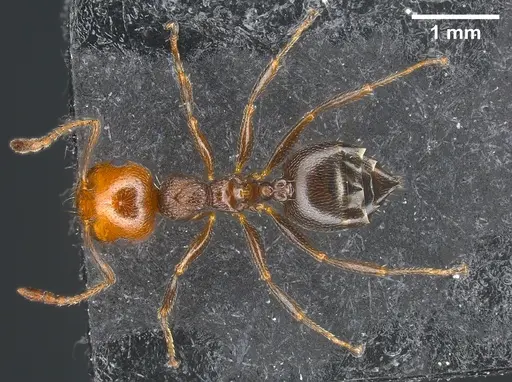
ANTWEB1041853
View on AntWeb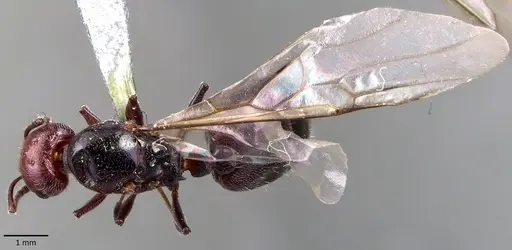
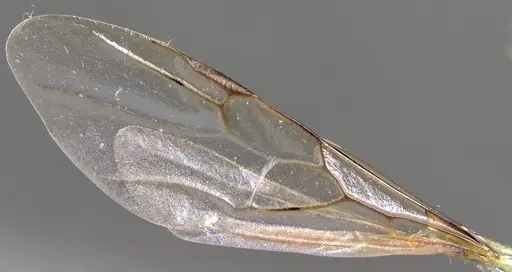
ANTWEB1041871
View on AntWeb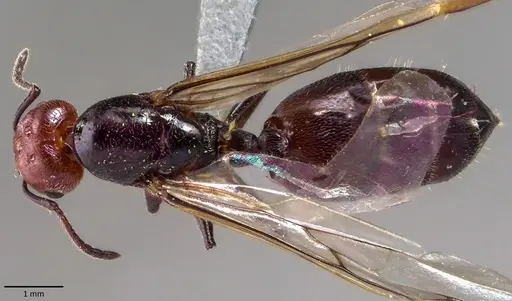
ANTWEB1060020
View on AntWeb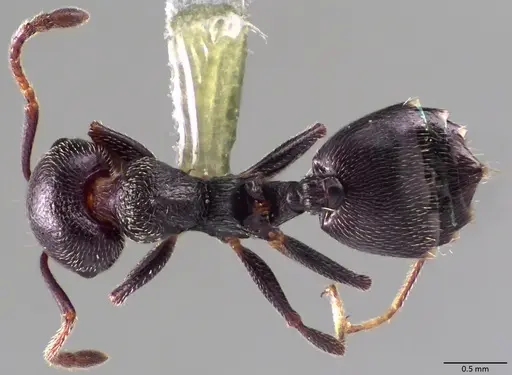
ANTWEB1060021
View on AntWeb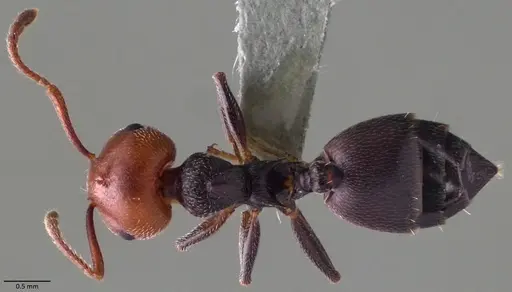
ANTWEB1060022
View on AntWeb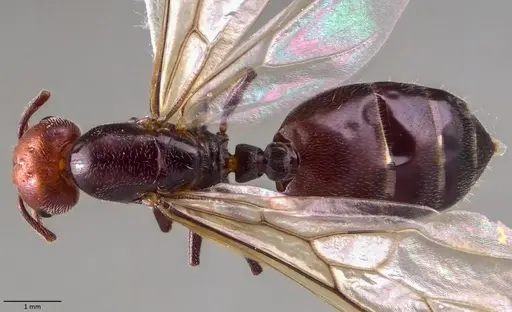
ANTWEB1060023
View on AntWeb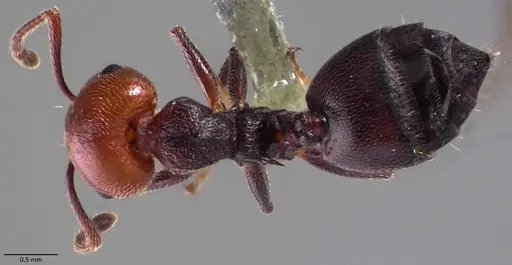
ANTWEB1060024
View on AntWeb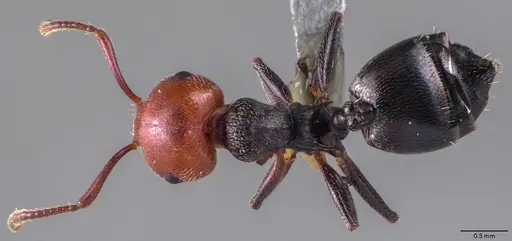
ANTWEB1060025
View on AntWeb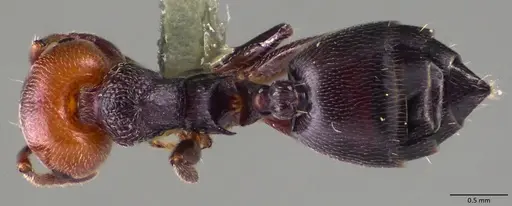
ANTWEB1060026
View on AntWeb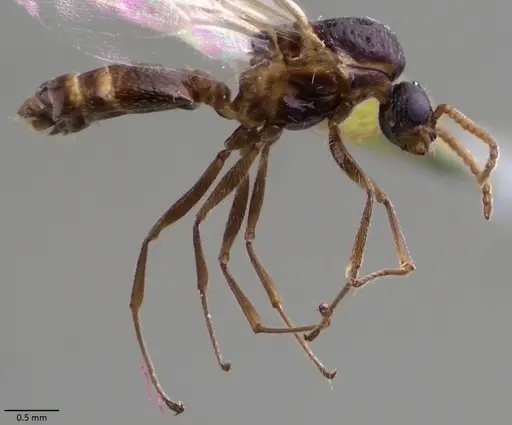
CASENT0173120
View on AntWeb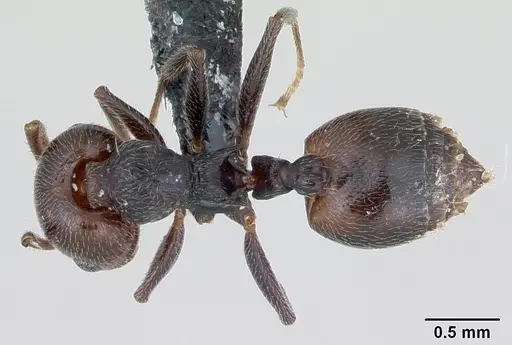
CASENT0173180
View on AntWeb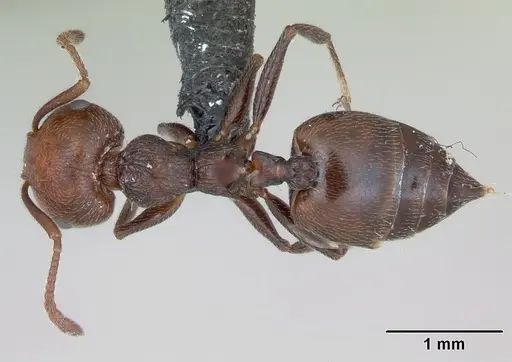
CASENT0179890
View on AntWeb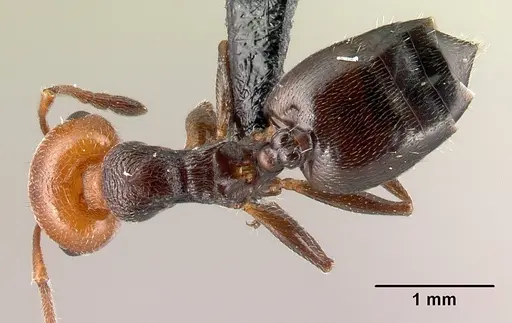
CASENT0193796
View on AntWeb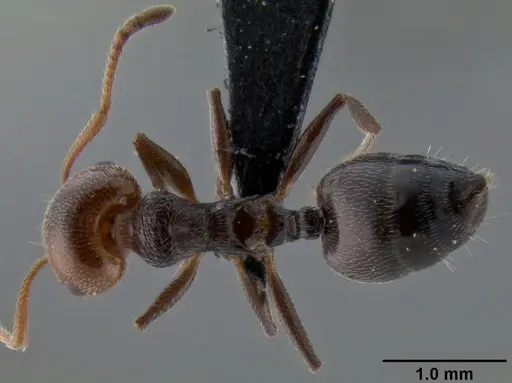
CASENT0246027
View on AntWeb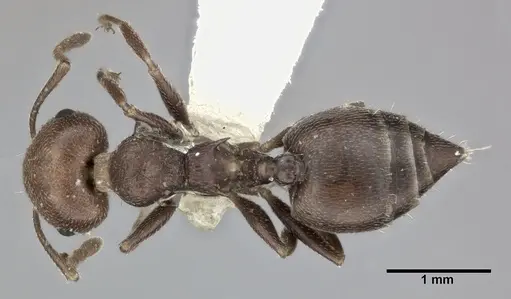
CASENT0904470
View on AntWeb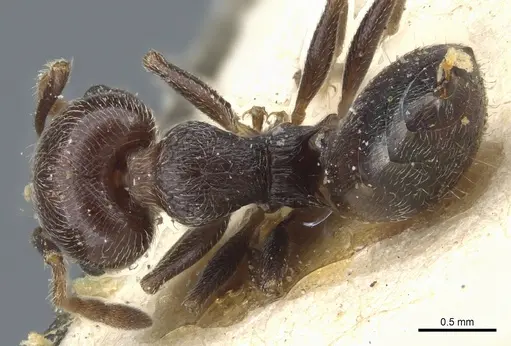
CASENT0908489
View on AntWeb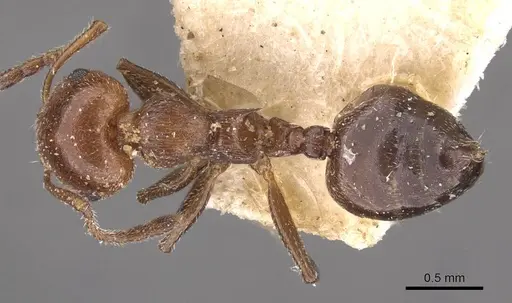
CASENT0908492
View on AntWeb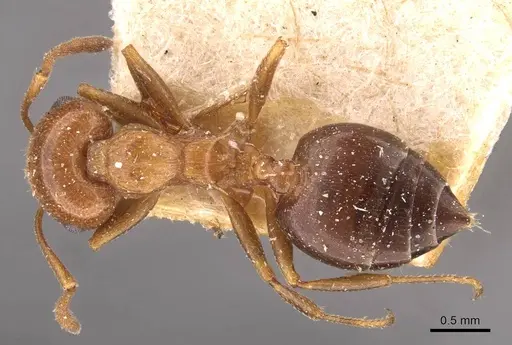
CASENT0912720
View on AntWeb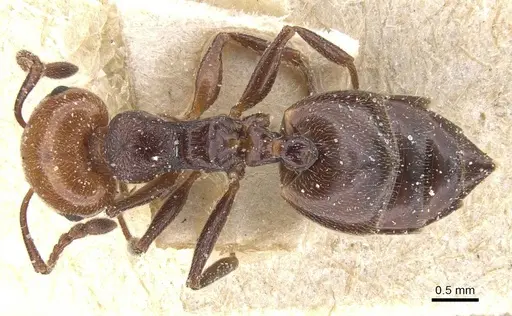
CASENT0912721
View on AntWeb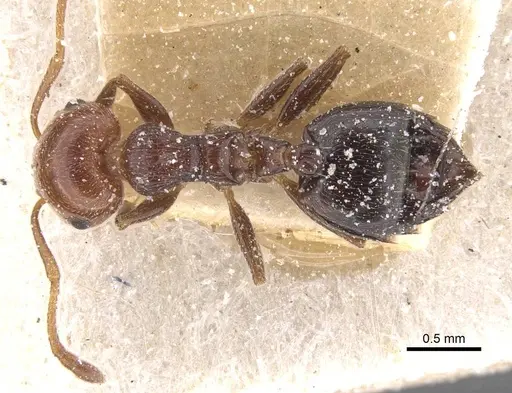
CASENT0919656
View on AntWeb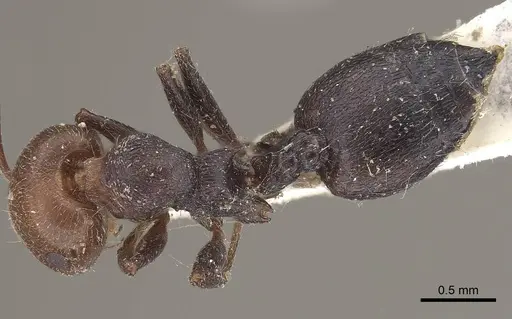
CASENT0922683
View on AntWeb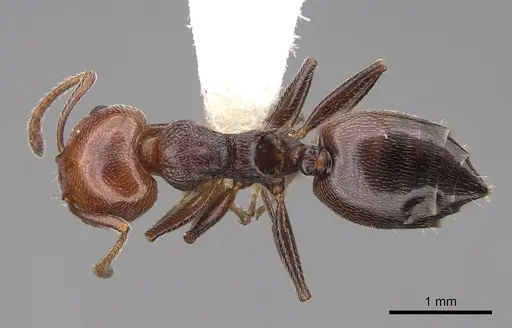
Literature
Loading...Loading products...