

Crematogaster chodati
- Scientific Name
- Crematogaster chodati
- Subgenus
- Orthocrema
- Tribe
- Crematogastrini
- Subfamily
- Myrmicinae
- Author
- Forel, 1921
- Distribution
- Found in 3 countries
Crematogaster chodati Overview
Crematogaster chodati is an ant species of the genus Crematogaster. It is primarily documented in 3 countries , including Argentina, Brazil, Paraguay. Detailed taxonomic data and occurrence records can be further explored via authoritative databases such as AntWeb or the Global Biodiversity Information Facility (GBIF).
Crematogaster chodati
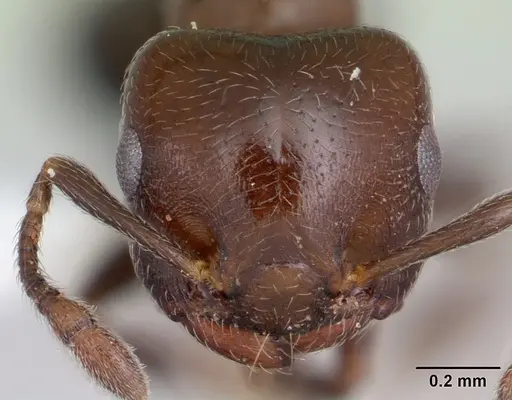
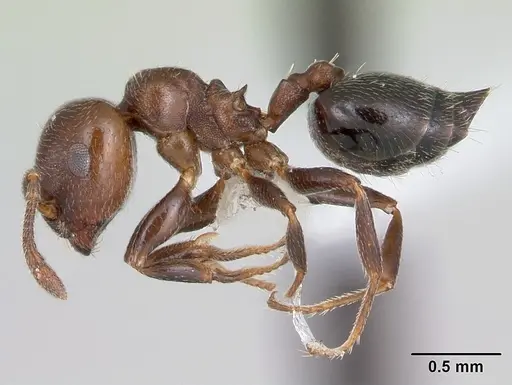
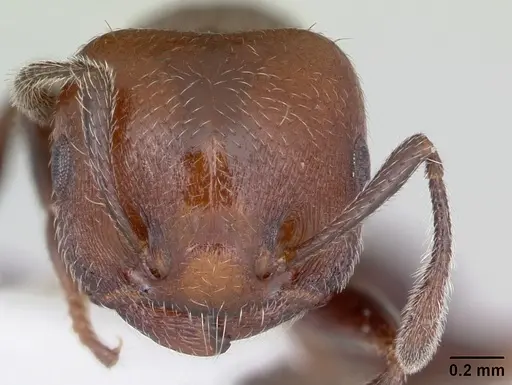
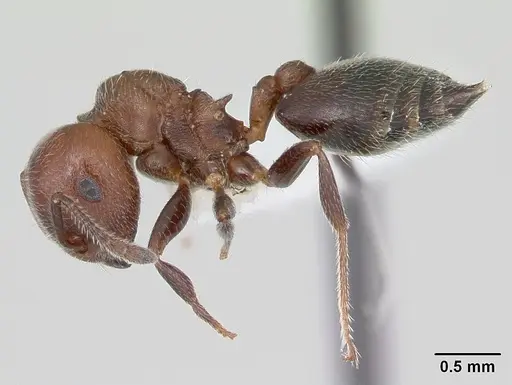
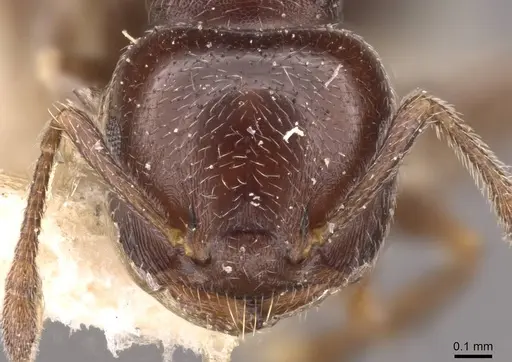
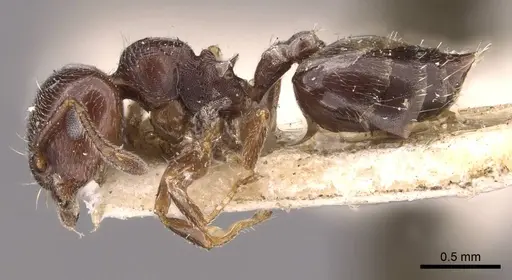
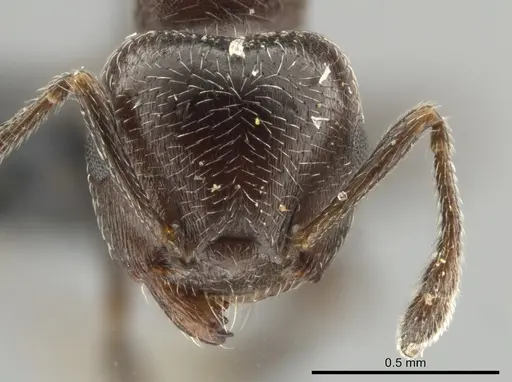
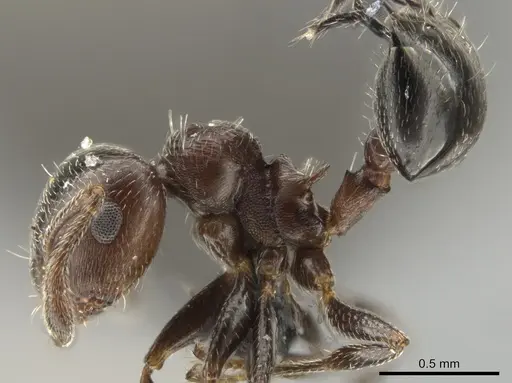
Crematogaster chodati is a small myrmicine ant belonging to the Crematogaster crinosa species complex. Workers are uniform red brown in color, with a deeply invaginated propodeal suture and an elevated, compressed dorsal face of the propodeum, distinctive features that set them apart from related species. The body is covered in relatively long, flattened setae, particularly on the mesosoma and the fourth abdominal tergite. This species is native to the southern Neotropics, specifically Paraguay and northern Argentina, where it inhabits tropical and subtropical forest environments [1].
This ant is part of a taxonomically complex group that requires further study. Longino (2003) noted that C. chodati and several similar forms (C. goeldii, C. stigmatica, C. unciata) may eventually be recognized as synonyms of other species, multiple distinct species, or a single variable species. What makes this species particularly interesting is its ecological flexibility, it has been recorded across numerous departments in Paraguay and is one of the 50 most frequently recorded ant species there, suggesting it thrives in varied habitats [1].
Quick Summary
- Difficulty: Medium
- Origin & Habitat: Native to Paraguay and northern Argentina in the Neotropical Region. Found in tropical and subtropical forest habitats, with type specimens collected from a trunk of Agonandra trees [1][2].
- Colony Type: Colony structure is unconfirmed. As a Crematogaster species, they likely form monogyne (single-queen) colonies, though this has not been directly documented for this specific species.
- Colony: Monogyne
- Founding: Claustral
- Size & Growth:
- Queen: Estimated 5-7mm based on genus patterns for small Crematogaster species
- Worker: Estimated 2.5-4mm based on genus patterns
- Colony: Estimated moderate colony size, likely several hundred workers based on typical Crematogaster patterns
- Growth: Moderate, inferred from genus patterns
- Development: Estimated 6-8 weeks at optimal tropical temperatures (25-28°C) based on genus patterns for small Myrmicinae (Development time is estimated from related species, specific data for C. chodati is not available)
- Antkeeping:
- Temperature: Keep at 24-28°C. As a Neotropical species from Paraguay, they prefer warm conditions. A gentle gradient allowing workers to self-regulate is ideal [3].
- Humidity: Moderate to high humidity (60-80%). These are forest ants that likely benefit from moisture. Keep the nest substrate consistently damp but not waterlogged.
- Diapause: Unconfirmed, Neotropical species may not require strong diapause, but a slight winter slowdown at room temperature (18-20°C) may be beneficial.
- Nesting: Arboreal nesting habits, in nature they nest in wood (type specimen from tree trunk). Y-tong (AAC) nests or plaster nests with vertical orientation work well. Provide some vertical space and climbing structures.
- Behavior: Crematogaster ants are known for their characteristic heart-shaped gaster that they raise when alarmed, and they can emit a defensive secretion. Workers are active foragers and will defend their nest vigorously. They are not particularly large ants but can be aggressive when threatened. Escape prevention should be moderate, they are small but not among the tiniest ants, standard barrier methods should suffice.
- Common Issues: limited biological data makes precise care recommendations uncertain, be prepared to adjust based on colony behavior, arboreal nature means they need vertical space and climbing structures, defensive secretions may irritate, avoid handling and use caution when cleaning near nest, taxonomic uncertainty means wild-caught specimens may not be true C. chodati
Nest Preferences and Housing
Crematogaster chodati is an arboreal species, in the wild, they nest in wood, including tree trunks as evidenced by the type specimen collected from an Agonandra trunk. For captive care, Y-tong (AAC) nests work well because they provide a dark, enclosed space that mimics tree hollows. Plaster nests are another good option, as they allow you to maintain humidity while providing solid walls. Avoid fully naturalistic setups initially since this species is not well-studied and you want to be able to monitor them easily.
Because they are arboreal, they appreciate some vertical space and climbing structures. You can include small branches or cork bark in their outworld. They are small ants (estimated 2.5-4mm workers), so ensure your formicarium has appropriately sized chambers and tubes. Escape prevention should be moderate, they are not the smallest ants, but standard barriers like fluon on test tube rims and fine mesh on outworld lids are still recommended. [1][2]
Feeding and Diet
Crematogaster species are generalist omnivores that readily accept both sugar sources and protein. In captivity, you should provide a constant sugar source (sugar water, honey, or diluted honey water) and regular protein offerings. Protein can include small insects like fruit flies, pinhead crickets, mealworms, or other appropriately sized arthropods.
Based on their arboreal habits and the fact they were found with Cephalotes eduarduli (another ant species) in a tree trunk, they likely forage in canopy environments where they may tend aphids or collect honeydew. Offering a variety of foods will help you determine their preferences. Feed protein 2-3 times per week, and keep sugar water available at all times. Remove uneaten prey after 24-48 hours to prevent mold. [1]
Temperature and Seasonal Care
As a Neotropical species from Paraguay and northern Argentina, Crematogaster chodati prefers warm conditions. Keep the nest area at 24-28°C. You can use a heating cable on one side of the nest to create a gentle gradient, but ensure they can move to cooler areas if needed. Place the heating element on top of the nest, not underneath, to avoid excessive drying.
Regarding diapause (winter rest), Neotropical species often have less dramatic seasonal changes than temperate ants. However, since Paraguay has distinct seasons with cooler winters, a slight reduction in temperature during winter months may be natural. You can reduce temperatures to around 18-20°C for 2-3 months in winter, but this is optional and should be based on your colony's behavior. Do not feed them less during this period, simply reduce temperatures and they will naturally become less active. [3][1]
Behavior and Colony Dynamics
Crematogaster ants have a distinctive defensive behavior, when threatened, they raise their heart-shaped gaster over their head and can emit a defensive secretion from their anal gland. This secretion can be irritating, so avoid blowing on them or disturbing the nest unnecessarily. They are not aggressive toward humans but will defend their colony vigorously if the nest is threatened.
Workers are active foragers and will readily explore their outworld for food. They communicate through chemical trails and can recruit nestmates to food sources efficiently. The colony will likely grow gradually, reaching several hundred workers over time. Queens are estimated to be 5-7mm, chunky ants with substantial fat reserves for claustral founding.
Taxonomic Notes and Identification
Crematogaster chodati was originally described as a variety of C. goeldii by Forel in 1921,then treated as a subspecies of C. torosa by Kempf in 1972,and finally raised to full species status by Longino in 2003. This taxonomic history reflects the difficulty in distinguishing species within the C. crinosa complex, which features several very similar species.
The key identifying features of C. chodati include: uniform red-brown coloration (unlike bicolored relatives with black gasters), deeply invaginated propodeal suture, elevated and compressed dorsal face of propodeum, and relatively long setae on the mesosoma and fourth abdominal tergite. If you obtain wild-caught specimens, be aware that identification to species level may require expert examination, and you may actually have a related species. [2]
Frequently Asked Questions
How long does it take for Crematogaster chodati to produce first workers?
Based on typical Crematogaster development patterns, expect 6-8 weeks from egg to worker at optimal temperatures (25-28°C). This is an estimate since specific development data for this species is not available.
What temperature do Crematogaster chodati ants need?
Keep them at 24-28°C. As a Neotropical species from Paraguay, they prefer warm conditions. Use a heating cable on one side of the nest to create a gentle gradient if your room temperature is below this range.
Do Crematogaster chodati ants sting?
Crematogaster ants do not have a painful sting like some other ants. However, they can emit a defensive secretion from their anal gland when threatened that may irritate skin. They raise their characteristic heart-shaped gaster as a warning display.
Can I keep Crematogaster chodati in a test tube?
Test tubes can work for founding colonies, but because they are an arboreal species that naturally nests in wood, a Y-tong or plaster nest is more appropriate for established colonies. Test tubes are fine for the founding claustral phase.
How big do Crematogaster chodati colonies get?
Based on genus patterns, colonies likely reach several hundred workers. They are not among the largest Crematogaster species but should still form moderately sized colonies over 1-2 years.
What do Crematogaster chodati ants eat?
They are generalist omnivores. Offer a constant sugar source (sugar water or honey water) and regular protein (small insects like fruit flies, mealworms, or pinhead crickets). They will likely accept both readily.
Do Crematogaster chodati need hibernation?
Strong hibernation is likely not required. As a Neotropical species, they experience milder winters than temperate ants. You may provide a slight cool period (18-20°C) for 2-3 months in winter, but this is optional based on colony behavior.
Is Crematogaster chodati good for beginners?
This species is rated as Medium difficulty. While they are relatively hardy once established, the limited biological data available and potential taxonomic confusion with wild-caught specimens make them better suited for keepers who already have some experience with Crematogaster or Myrmicinae ants.
Why is my Crematogaster chodati colony declining?
Common causes include: temperature too low (below 24°C), humidity issues (too dry or too wet), insufficient protein in diet, or stress from excessive disturbance. Review these parameters and adjust gradually. Also verify you have true C. chodati, wild-caught specimens may be misidentified related species.
When should I move my colony to a formicarium?
Move from a test tube setup to a formicarium once the colony reaches 30-50 workers and the test tube setup becomes crowded. Y-tong or plaster nests work well for this arboreal species.
References

This caresheet is licensed under CC BY-SA 4.0 .
CASENT0173932
View on AntWeb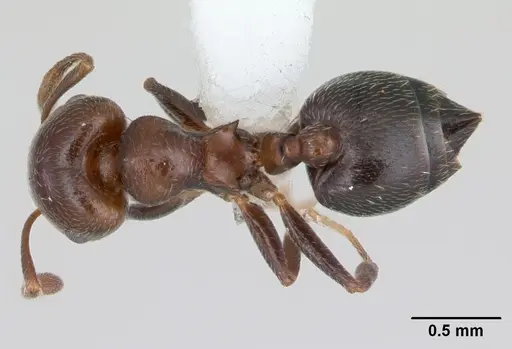
CASENT0173933
View on AntWeb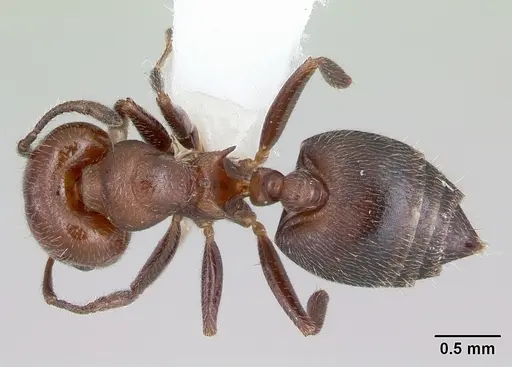
CASENT0908418
View on AntWeb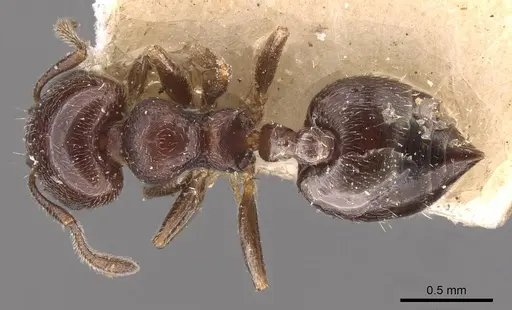
UFV-LABECOL-005281
View on AntWeb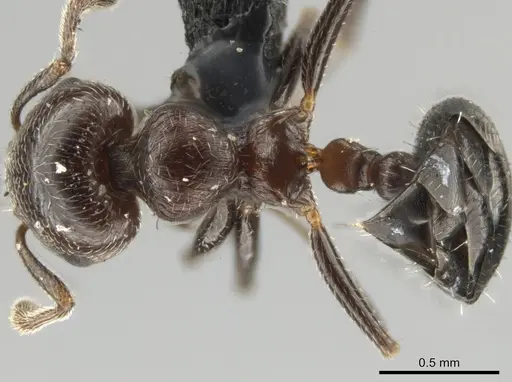
Literature
Loading...Loading products...