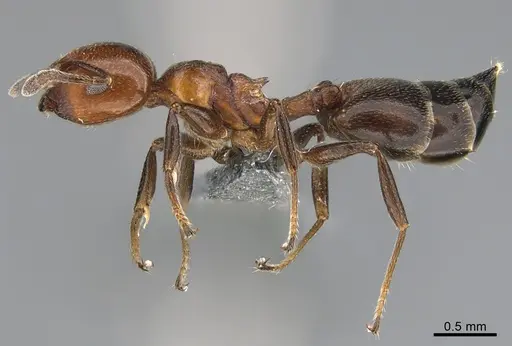
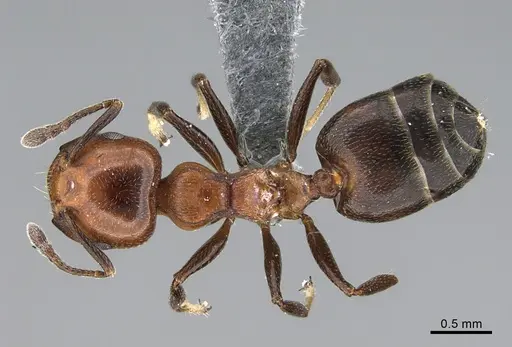
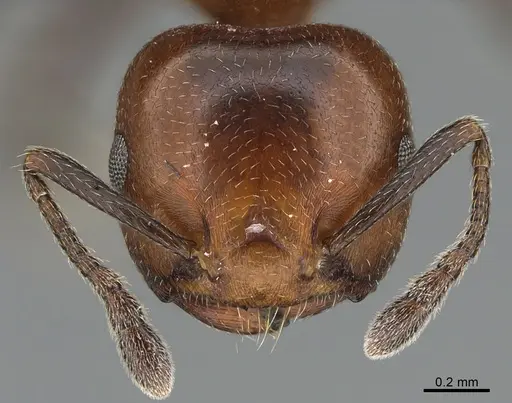
Crematogaster menilekii - "Menilek's Cocktail Ant"
Crematogaster menilekii is a fascinating ant species belonging to the widespread Crematogaster genus, often referred to as 'cocktail ants' or 'acrobat ants' due to their distinctive habit of raising their heart-shaped gaster (abdomen) over their heads when alarmed or defending their colony. These ants are generally small, with workers exhibiting some size variation. They are characterized by their unique postpetiole attachment to the gaster and the absence of a dorsal petiolar node, allowing for this acrobatic posture. Their color typically ranges from dark brown to black, with a shiny appearance.
- Difficulty: Medium
- Origin & Habitat: Afrotropical Region (Benin, Ethiopia, Guinea, Zimbabwe)., in Forests, woodlands, and shrubby habitats. Most tropical Crematogaster species, including likely C. menilekii, are arboreal (tree-dwelling), often nesting in dead wood. Some species also nest in the ground..
- Colony Type: Polygyne (multiple queens) is common in many Crematogaster species, especially those with large, polydomous colonies., claustral (queen seals herself in) is the typical founding type for many ant species, including crematogaster after nuptial flights. founding.
- Size & Growth:
- Queen: Not specified
- Worker: 2.8-4.0mm
- Colony: Large (tens of thousands). Some Crematogaster colonies can be very large, blanketing forest canopies.,. Fast, especially once established and with consistent food supply. growth.
- Antkeeping:
- Temperature: Aim for a nest temperature between 24-28°C for optimal development. A heated outworld is not strictly necessary but can encourage foraging..
- Humidity: Keep the nest relatively dry, around 50-70% humidity. Provide a consistent water source in the outworld..
- Diapause: Not required. Not specified at Not specified.
- Nesting: These ants are primarily arboreal in their natural habitat, often nesting in dead wood or tree cavities. Therefore, a cork, ytong, or natural wood formicarium with multiple chambers mimicking their natural nesting sites is ideal. They can also adapt to other low-humidity artificial nests..
- Behavior: Medium (towards handler, food or other ants) aggressiveness.
- Common Issues: Mold in nest, Humidity fluctuations, Colony stalling, Mites, Escape artists.
Crematogaster menilekii, like other members of its genus, exhibits a fascinating defensive behavior: when threatened, they raise their distinctive heart-shaped gaster over their body, as if performing an acrobatic feat. This posture allows them to spray a defensive venom, which contains phenols and carboxylic acids, in almost any direction. While not typically injected, this venom is applied topically and can be quite effective at repelling other ants or small insects, making them formidable defenders of their territory.
These ants are highly adept at foraging and are largely omnivorous, with a diet that includes a wide range of insects and sugary liquids. In the wild, they are known to predate on various insects like wasps, grasshoppers, and termites. When kept in a formicarium, a varied diet of feeder insects and sugar water or honey solutions will ensure a healthy and thriving colony. Observe their foraging patterns, as they are known to recruit nestmates to large food sources.
Colony growth can be impressive with Crematogaster species. While specific data for Crematogaster menilekii may be limited, many Crematogaster colonies can reach significant sizes, sometimes numbering in the tens of thousands of workers. This rapid expansion means you’ll need to plan for adequate nesting space and ensure a consistent food supply to support a burgeoning population. Early detection of colony growth helps prevent overcrowding and stress within the formicarium.
One interesting aspect of Crematogaster biology is the potential for large female workers, often referred to as gamergates, to lay unfertilized eggs that can develop into males, particularly in queenless colonies. While not a typical occurrence in healthy queen-right colonies, this demonstrates a remarkable reproductive flexibility within the species. In a captive setting, maintaining a healthy queen and stable conditions will ensure the colony focuses its efforts on producing more workers.
Their arboreal nesting preference means careful consideration of your formicarium choice. Nests that mimic natural wood cavities or allow for expansion into multiple interconnected setups will be most suitable. Humidity is crucial, but these ants prefer a drier environment within the main nest chambers, with a readily available water source in their outworld. Maintaining proper ventilation is also key to preventing mold growth, a common issue in humid ant setups.
Frequently Asked Questions
What is the most striking feature of Crematogaster menilekii?
These 'cocktail ants' are instantly recognizable by their unique defensive posture: they raise their heart-shaped gaster (abdomen) high over their bodies when disturbed or threatened, almost like an acrobat.
Are Crematogaster menilekii difficult to keep for a beginner ant keeper?
While not considered expert-level, they are rated 'Medium' in difficulty. This means they require a bit more attention and specific habitat conditions compared to 'Easy' species, but are manageable for someone with a basic understanding of ant care. Providing the right setup and consistent care is key to their success.
What kind of nest is best for Crematogaster menilekii colonies?
Given their arboreal nature, formicariums that mimic natural wood cavities, like cork or ytong nests with a good number of chambers, are ideal. They can also adapt to other low-humidity setups, but providing climbing opportunities in the outworld is always appreciated.,
What do Crematogaster menilekii eat?
These ants are omnivores with a strong preference for sugary liquids, such as sugar water or honey-based solutions, and a variety of protein sources like small feeder insects. Offering a diverse diet helps ensure all their nutritional needs are met.
Do Crematogaster menilekii sting, and are they aggressive?
Yes, they do sting, though their sting is designed more for topical application of venom rather than deep injection., They are generally considered to have 'Medium' aggressiveness, especially when defending their nest or a food source. It's wise to handle them with care to avoid being sprayed with their defensive chemicals.
How large can a Crematogaster menilekii colony get?
Crematogaster colonies can grow quite large, potentially reaching tens of thousands of workers., This means you'll need to consider future expansion when setting up their initial formicarium.
Do these ants need a diapause (hibernation period)?
Based on their African origin and tropical habitat, Crematogaster menilekii typically do not require a diapause period. Maintaining stable warm temperatures year-round is generally sufficient.,
What are the ideal temperature and humidity levels for Crematogaster menilekii?
They thrive in warmer temperatures, ideally between 24-28°C in their nest. For humidity, aim for 50-70% within the nest, ensuring good ventilation to prevent mold, and always providing a fresh water source in the outworld.
Can I keep multiple queens of Crematogaster menilekii together?
Yes, Crematogaster menilekii are often polygyne, meaning colonies can naturally have multiple queens. This can lead to faster colony growth and a more robust population.
What are common issues when keeping Crematogaster menilekii?
Common issues include mold in the nest due to excess humidity, mites, colony stalling (often due to improper conditions or lack of food), and of course, their remarkable ability to escape if any gaps are present in their setup. Careful monitoring and appropriate environmental control are crucial.
How fast do Crematogaster menilekii colonies grow?
With proper care and consistent feeding, these colonies generally exhibit a fast growth rate, quickly adding new workers to their ranks.
Are there different types or subspecies of Crematogaster menilekii?
Yes, there are several recognized subspecies, including Crematogaster menilekii completa, occidentalis, proserpina, satan, spuria, suddensis, and viehmeyeri.,,,,
What is the worker size range for Crematogaster menilekii?
Workers typically range from 2.8 mm to 4.0 mm in length.
Do they produce specialized workers like soldiers or majors?
While the genus Crematogaster shows some variation in worker size, leading to 'large workers' or majors, specific soldier castes are not always distinctly defined in the same way as some other ant genera. They are generally categorized as having Minor and Major workers.
How do Crematogaster menilekii workers hunt for food?
These ants are effective predators and scavengers. Individual foragers will scout for resources, and upon finding something substantial, they will recruit nestmates using pheromone trails to help retrieve the food back to the nest.