

Cataulacus praetextus
- Scientific Name
- Cataulacus praetextus
- Tribe
- Crematogastrini
- Subfamily
- Myrmicinae
- Author
- Smith, 1867
- Distribution
- Found in 1 countries
Cataulacus praetextus Overview
Cataulacus praetextus is an ant species of the genus Cataulacus. It is primarily documented in 1 countries , including Malaysia. Detailed taxonomic data and occurrence records can be further explored via authoritative databases such as AntWeb or the Global Biodiversity Information Facility (GBIF).
Cataulacus praetextus
Cataulacus praetextus is a small arboreal ant species from the Myrmicinae subfamily, found across Southeast Asia including Borneo, Sumatra, Malaysia, Singapore, and Thailand. Workers measure 5.2-6.0mm with a distinctive appearance featuring a complete occipital crest (a ridge on the back of the head), reduced body hairs, and a laterally marginated first gastral segment. The species belongs to the taprobane group and is closely related to Cataulacus reticulatus and Cataulacus catuvolcus. This is an arboreal nester, with specimens collected from tree canopy fogging and from within tree branches. Notably, these ants have been found living inside Nepenthes (pitcher plant) cups, making them one of the few ant species that can exploit these carnivorous plants as nesting sites [1][2].
Quick Summary
- Difficulty: Expert
- Origin & Habitat: Tropical Southeast Asia, found in Borneo, Sumatra, Malaysia (Peninsula, Sarawak), Singapore, and Thailand. Inhabits rainforest canopies and has been collected from tree branches and pitcher plants [3].
- Colony Type: Colony structure is unconfirmed. Based on related Cataulacus species, likely single-queen (monogyne) colonies, though this needs confirmation.
- Size & Growth:
- Queen: 5.2-6.0mm (putative queen described) [3]
- Worker: 5.2-6.0mm [3]
- Colony: Unknown, no colony size data available
- Growth: Unknown, no development data available for this species
- Development: Unknown, no direct development data exists for this species. Based on related tropical Myrmicinae, estimate 6-10 weeks at optimal temperature, but this is a rough guess. (Development timeline has not been studied. Estimates based on genus-level patterns for tropical arboreal Myrmicinae.)
- Antkeeping:
- Temperature: Keep at 24-28°C, these are tropical arboreal ants from Southeast Asian rainforests. A gentle temperature gradient allows workers to regulate their conditions.
- Humidity: High humidity required, aim for 70-85%. Their natural habitat is tropical rainforest canopy with high moisture. Provide moist nest materials but ensure adequate ventilation to prevent mold.
- Diapause: No, this is a tropical species from consistent warm climates. They do not require hibernation or winter rest.
- Nesting: Arboreal setup is essential. These ants naturally nest in tree branches and hollow twigs. In captivity, use vertical or倾斜 setups like bamboo sections, cork bark setups, or acrylic arboreal nests. They prefer tight, enclosed spaces that mimic tree hollows. Do not use horizontal soil nests, they will not thrive in substrate-based setups.
- Behavior: These ants are arboreal and relatively calm in temperament. Workers are medium-sized and can climb well. They are not aggressive defenders and lack a potent sting. Escape risk is moderate, they can climb smooth surfaces but are not particularly small (5-6mm). Standard escape prevention works well. They are foragers that likely collect honeydew and small prey in the canopy. The most notable behavior is their association with Nepenthes pitcher plants, where they can establish nests [1][2].
- Common Issues: arboreal setup is non-negotiable, these ants will fail in standard soil formicariums, high humidity needs can lead to mold problems if ventilation is inadequate, lack of available biology data means keepers are essentially pioneering captive care, wild-caught colonies may be stressed from canopy collection and difficult to establish, temperature must remain consistently warm, drops below 22°C can cause problems
Natural History and Distribution
Cataulacus praetextus is native to the Indomalaya region, specifically found across Borneo, Sumatra, Malaysia (both Peninsula and Sarawak on Borneo), Singapore, and Thailand. This species is arboreal, meaning it lives in trees rather than on the ground. The few known specimens have been collected through canopy fogging, a method that involves spraying insecticide into tree tops to knock down insects. This suggests they are canopy-dwelling ants that rarely come to ground level. Their known associates include Tetramorium obtusidens and Technomyrmex albipes, with whom they share tree branch habitats. Perhaps most interestingly, they have been documented living in Nepenthes (pitcher plant) cups, one of the few ant species known to exploit these carnivorous plants as nesting sites [1][2][3].
Identification and Morphology
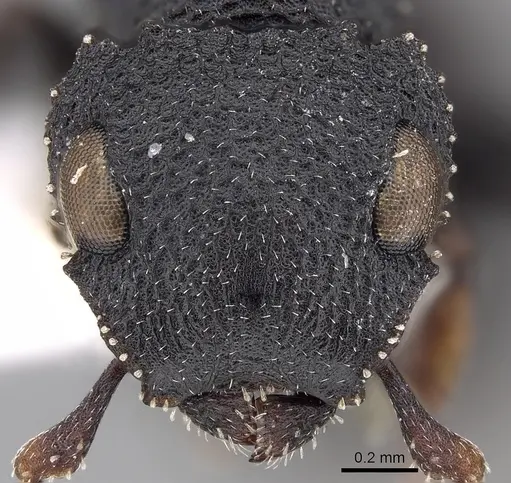
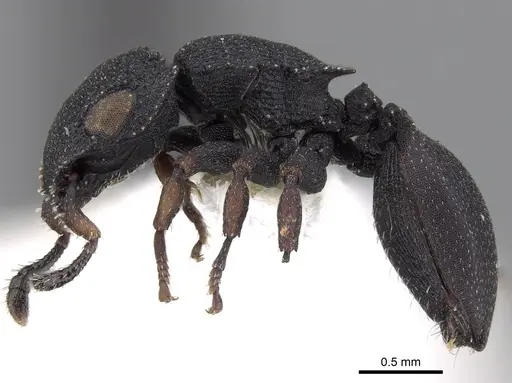
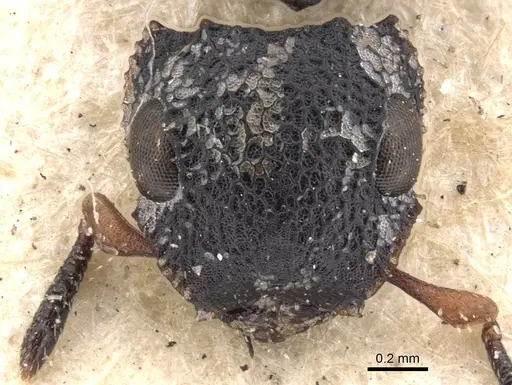
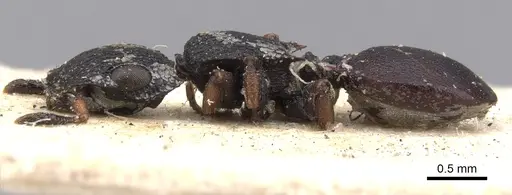
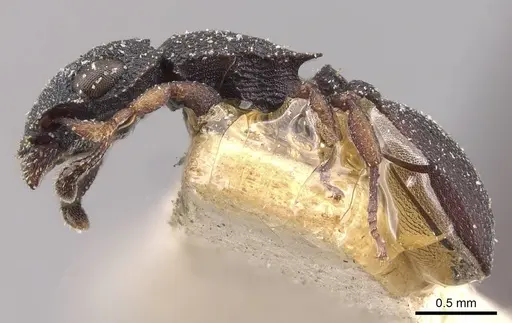
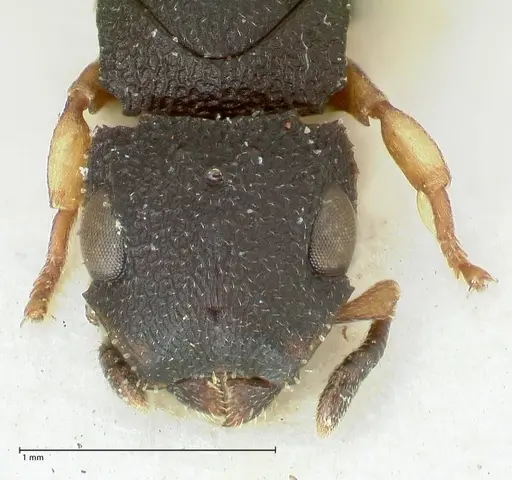
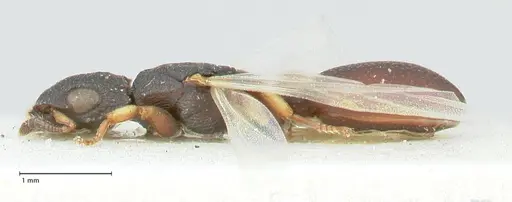
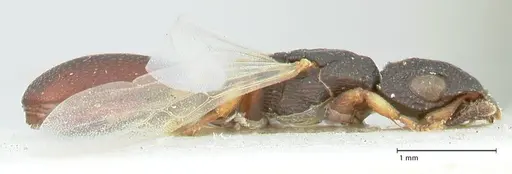
Workers of Cataulacus praetextus measure 5.2-6.0mm in total length, making them medium-sized Myrmicinae ants. They have a distinctive appearance within the genus: a complete occipital crest (ridge on the back of the head) with the median portion raised into a low projecting ridge, sides of the head behind the eyes are denticulate (toothed), and the first gastral segment is laterally marginated throughout its length. The body has very reduced pilosity (hair), notably lacking hairs on the dorsal surfaces of the head, alitrunk, and first gastral tergite. The legs are also nearly hairless. Queens are similar but slightly larger at 5.2-6.0mm, with reduced pronotal expansions and non-marginated first gastral segment. Males are smaller at 4.8-5.2mm and possess distinctive bands of long thick hairs on each visible gastral tergite behind the first [3].
Housing and Nest Setup
This is the most critical aspect of keeping Cataulacus praetextus, they absolutely require an arboreal setup. In the wild, they nest in tree branches, hollow twigs, and similar elevated locations. In captivity, avoid standard horizontal soil formicariums entirely. Instead, use setups that mimic their natural tree-nesting preferences: bamboo sections with pith removed, cork bark setups (either as horizontal logs or vertical arrangements), acrylic arboreal nests with narrow chambers, or custom vertical setups with multiple connected chambers. The nest should be positioned above ground level in the enclosure. Provide climbing surfaces and branches so workers can forage in a more natural vertical space. The outworld should also allow for climbing behavior, these ants are adapted to vertical surfaces and will explore upward.
Temperature and Humidity
As tropical arboreal ants from Southeast Asian rainforests, Cataulacus praetextus requires warm and humid conditions. Maintain temperatures between 24-28°C, with a slight gradient allowing workers to self-regulate. Avoid temperatures below 22°C for extended periods. Humidity should be kept high at 70-85%. This can be achieved by moistening the nest material (if using a substrate-based arboreal setup) and providing a water source. However, balance humidity with adequate ventilation to prevent mold growth, which can quickly kill ant colonies. A well-ventilated arboreal setup with moisture-retaining materials works best. Room temperature in most homes may be too cool, consider using a gentle heat source like a heating cable on one side of the enclosure if needed.
Feeding and Diet
Based on related Cataulacus species and their arboreal lifestyle, these ants are likely omnivorous with a preference for carbohydrate sources. In nature, arboreal ants commonly feed on honeydew from sap-sucking insects (aphids, scale insects, mealybugs) in the canopy, and also hunt small prey. In captivity, offer sugar water or honey as a constant carbohydrate source. For protein, provide small insects like fruit flies, pinhead crickets, or mealworm pieces. Given their small size, prey items should be appropriately sized. Observe feeding behavior, they may take longer to accept new foods than ground-nesting species. The association with Nepenthes plants in the wild suggests they can exploit unusual food sources found in pitcher plant fluid, but this should not be replicated in captivity.
Challenges and Pioneering Care
Cataulacus praetextus represents a significant challenge for antkeepers because almost nothing is known about their captive care requirements. The scientific literature provides only basic morphological descriptions and distribution records, there are no studies on their colony structure, founding behavior, development timeline, or specific care needs. Every aspect of keeping this species successfully will require experimentation and observation. Start with conditions that work for related arboreal Myrmicinae from tropical regions: high humidity, warm temperatures, and arboreal nesting. Be prepared to adjust based on colony behavior. If workers cluster in one area, that area may be too hot or too cold. If they avoid the nest area, humidity may be wrong. Document your observations carefully, successful keepers of this species will need to share their findings to build husbandry knowledge.
Frequently Asked Questions
Can I keep Cataulacus praetextus in a test tube setup?
A standard test tube setup is not recommended. This is an arboreal species that naturally nests in tree branches and elevated locations. They need vertical space and climbing surfaces. A test tube laid horizontally does not mimic their natural environment. Use an arboreal setup like bamboo, cork bark, or an acrylic vertical nest instead.
What is the best nest type for Cataulacus praetextus?
Use an arboreal nest setup, vertical acrylic nests, cork bark arrangements, or bamboo sections work best. The key is that the nest should be elevated and enclosed, mimicking tree hollows they naturally use. Avoid horizontal soil formicariums.
How long does it take for Cataulacus praetextus to develop from egg to worker?
This is unknown, no development data exists for this species. Based on related tropical Myrmicinae, estimate roughly 6-10 weeks at optimal temperature (24-28°C), but this is a rough guess. Successful keepers will need to document their observations.
Do Cataulacus praetextus ants need hibernation?
No. This is a tropical species from Southeast Asian rainforests with consistent year-round warmth. They do not require hibernation or diapause. Keep them warm year-round at 24-28°C.
What do Cataulacus praetextus eat?
Based on related species, they likely accept sugar sources (honey, sugar water) and small protein prey (fruit flies, small insects). Offer a constant carbohydrate source and protein 2-3 times per week. They may be slower to accept new foods than ground-nesting species.
Are Cataulacus praetextus good for beginners?
No. This is an expert-level species. Almost no biological data exists for this ant, everything about their care must be learned through experimentation. They also require a specialized arboreal setup rather than standard ant keeping equipment. Only experienced antkeepers should attempt this species.
Do Cataulacus praetextus ants sting?
They have a stinger but are not considered aggressive. As medium-sized Myrmicinae, they could sting if threatened, but they are not defensive and rarely encounter humans in their arboreal habitat. The sting is not medically significant.
How big do Cataulacus praetextus colonies get?
Unknown, no colony size data is available for this species. Related Cataulacus species typically form moderate-sized colonies. Expect a few hundred workers at most, but this is an estimate.
Can I keep multiple Cataulacus praetextus queens together?
Not enough is known about their colony structure to answer this. The few documented specimens are single individuals, and no study has examined their queen number. Based on related species, they are likely single-queen colonies. Do not attempt combining unrelated foundress queens without evidence they tolerate this.
Why are my Cataulacus praetextus dying?
The most common causes are: wrong nest type (using horizontal soil setups instead of arboreal), temperatures too low (below 22°C), humidity too low (below 70%), or stress from collection. Ensure you have an appropriate arboreal setup with warm, humid conditions. Wild-caught colonies may arrive stressed and be difficult to establish.
References

This caresheet is licensed under CC BY-SA 4.0 .
CASENT0280798
View on AntWeb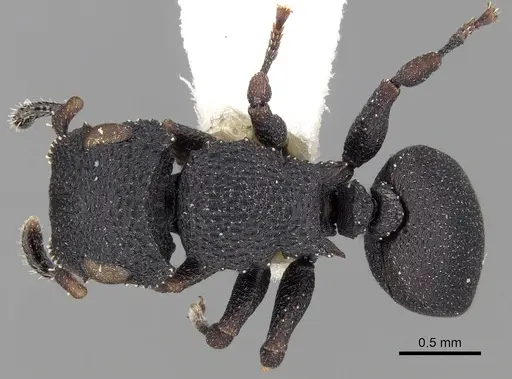
CASENT0901451
View on AntWeb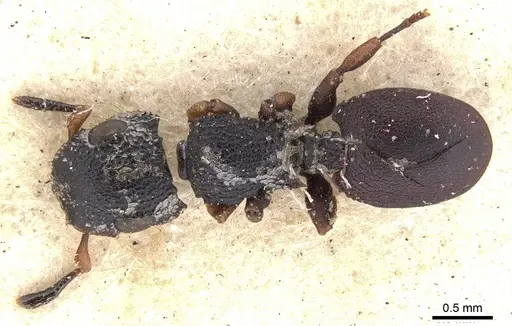
CASENT0909241
View on AntWeb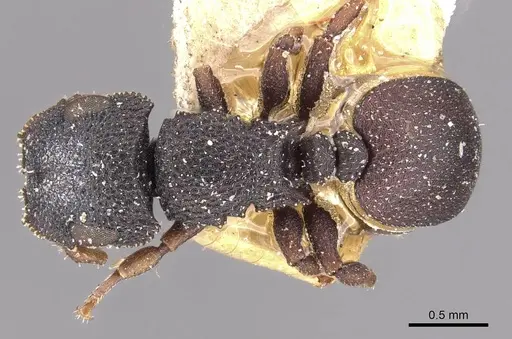
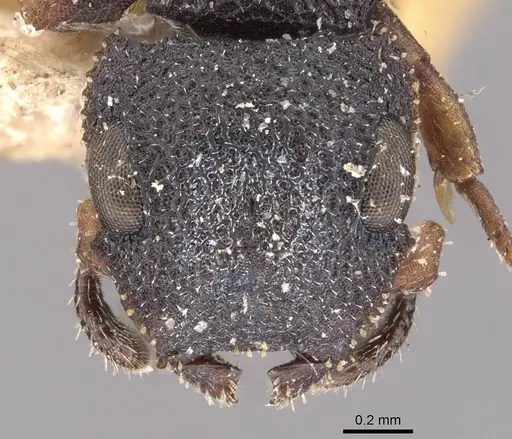
FOCOL2122
View on AntWeb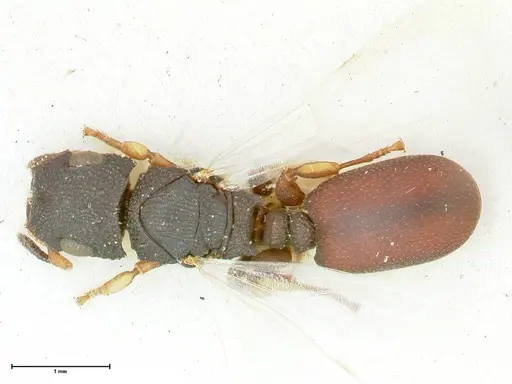
Literature
Loading...Loading products...