

Camponotus universitatis
- Scientific Name
- Camponotus universitatis
- Subgenus
- Tanaemyrmex
- Tribe
- Camponotini
- Subfamily
- Formicinae
- Author
- Forel, 1890
- Distribution
- Found in 4 countries
Camponotus universitatis Overview
Camponotus universitatis is an ant species of the genus Camponotus. It is primarily documented in 4 countries , including Switzerland, Spain, France. Detailed taxonomic data and occurrence records can be further explored via authoritative databases such as AntWeb or the Global Biodiversity Information Facility (GBIF).
Camponotus universitatis
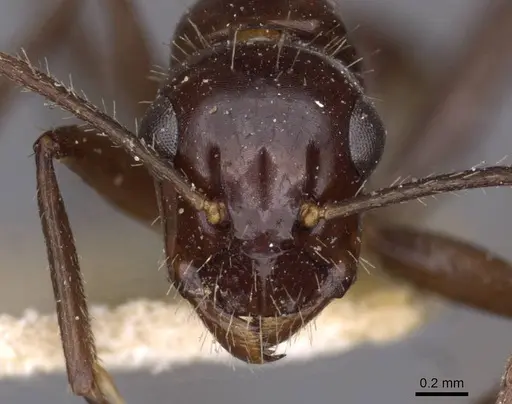
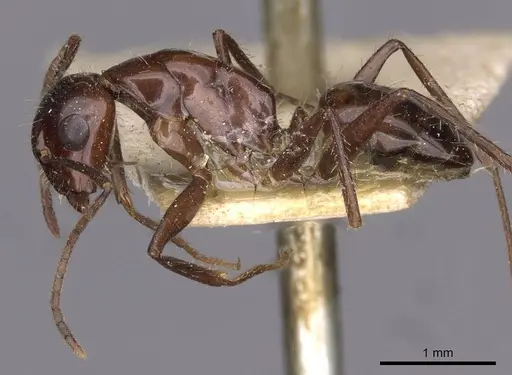
Camponotus universitatis is a tiny parasitic ant measuring just 1.1-1.2mm in head length, making it one of the smallest Camponotus species [1]. It is a permanent social parasite (inquiline) that lives exclusively in the nests of two host species: Camponotus aethiops and Camponotus pilicornis [2]. The parasite has evolved remarkable chemical mimicry, its cuticular hydrocarbon profile is indistinguishable from its host, allowing it to live peacefully within the host colony and be treated as a nestmate [3]. This is one of only two known parasitic Camponotus species worldwide, despite the genus containing around 1,500 species [4]. Workers are slightly smaller than host workers and have a subtle brown tint compared to the entirely black C. aethiops workers [5]. The species is considered rare and is listed as Vulnerable (VU D2) on the IUCN Red List [2].
Quick Summary
- Difficulty: Expert
- Origin & Habitat: Southern Europe and Anatolia, found in Mediterranean regions of France, Spain, Italy, Switzerland, Albania, Bulgaria, and Turkey. It lives in dry, stony, open slopes with sparse Mediterranean vegetation, typically at elevations between 127-1,382 meters [5][6]. The distribution follows that of its host species C. aethiops [1].
- Colony Type: Permanent social parasite (inquiline), lives permanently in host colony without killing the host queen. The host queen remains present in parasitized nests, and C. universitatis workers coexist with host workers [7]. Two host species are known: Camponotus aethiops and Camponotus pilicornis [2].
- Colony: Monogyne
- Queen: Socially parasitic
- Size & Growth:
- Queen: Approximately 1.34mm in head length (from Turkish specimen) [7]. Signal: estimated based on limited specimen data.
- Worker: 1.1-1.2mm head length [1].
- Colony: Unknown, only a few workers per parasitized colony have been observed. Signal: estimated based on limited field data.
- Growth: Unknown, cannot be raised independently as it requires a host colony. Signal: unconfirmed.
- Development: Unknown, this species cannot be raised in isolation. It relies entirely on the host colony for reproduction and brood care. Signal: unconfirmed. (As a permanent social parasite, C. universitatis does not found its own colonies. Instead, a newly mated queen invades a host colony and lives alongside the host queen, laying her own eggs that are raised by host workers.)
- Antkeeping:
- Temperature: Keep at temperatures suitable for the host species (C. aethiops). Aim for a warm setup around 24-26°C with a slight gradient, mimicking Mediterranean conditions [1]. Signal: inferred from host species preferences.
- Humidity: Maintain moderate humidity similar to C. aethiops preferences, dry to moderate moisture levels typical of Mediterranean ant housing. Signal: inferred from host species.
- Diapause: Likely requires a winter rest period matching the host species. C. aethiops is a Mediterranean species that likely reduces activity in winter months. Signal: inferred from host species.
- Nesting: This species cannot be kept independently, it must be housed with a host colony. Use a setup appropriate for C. aethiops, such as a Y-tong (AAC) nest or test tube setup with chambers scaled to the small size of both species. The nest should allow integration of both parasite and host [5].
- Behavior: Extremely peaceful, the parasite is chemically camouflaged and accepted as a nestmate by host workers [3]. Workers move slowly and may immobilize when the nest is disturbed [5]. The species has no defensive adaptations and cannot survive without its host. Escape risk is low given the small colony sizes, but excellent escape prevention is still recommended given the tiny size of workers.
- Common Issues: This species cannot be kept without a host colony, it is a permanent social parasite that requires Camponotus aethiops or C. pilicornis to survive, Introducing the parasite to a host colony is extremely difficult due to host acceptance issues, The species is rare in the wild and even rarer in the antkeeping hobby, obtaining both parasite and compatible host is a major challenge, The parasite may be attacked or rejected if chemical mimicry is not perfect, As a vulnerable species, ethical considerations apply to collecting from the wild
Understanding Camponotus universitatis
Camponotus universitatis is one of the rarest ants in Europe, it is a permanent social parasite (called an inquiline) that lives exclusively in the nests of two other ant species: Camponotus aethiops and Camponotus pilicornis [2]. Unlike some parasites that kill the host queen and take over the colony, C. universitatis lives peacefully alongside the host queen, laying its own eggs that are raised by host workers [7]. This is remarkable because the host workers care for the parasite's brood as if it were their own.
What makes this possible is chemical mimicry, the parasite has evolved to produce the same cuticular hydrocarbons (chemical signatures on the outside of the ant's body) as its host [3]. Research has shown that C. universitatis workers have CHC profiles that are indistinguishable from their host, even matching the subtle colony-specific variations [3]. This chemical deception develops within hours of the parasite entering the host nest [3]. This is one of only two known parasitic species in the entire genus Camponotus, which contains approximately 1,500 species worldwide [4].
The species was first described from France in 1890,with queens and males first described from Spain in 1992 [2]. It is listed as Vulnerable (VU D2) on the IUCN Red List due to its rarity and specialized habitat requirements [2].
Housing and Keeping This Species
Keeping Camponotus universitatis is an extreme challenge and only suitable for the most experienced antkeepers. This species cannot be kept independently, you must maintain a colony of its host species (Camponotus aethiops or C. pilicornis) and then introduce the parasite [5]. The parasite relies entirely on host workers for food, brood care, and colony maintenance.
To attempt this, you would need to establish a healthy C. aethiops colony first. Use a standard setup for this Mediterranean species, a Y-tong (AAC) nest or test tube setup works well. C. aethiops workers are entirely black, while C. universitatis workers have a slight brown tint and are smaller [5]. The two species can be distinguished when together: the parasite workers appear more brilliant and move more slowly [5].
The critical challenge is introducing the parasite to the host colony. Even though C. universitatis has chemical mimicry, introduction success is uncertain. Some research suggests parasites carry their original colony odor when attempting to invade, which can trigger aggression [3]. The parasite needs time to adjust its chemical profile to match the specific host colony. Given these challenges, this species is not recommended for beginners and should only be attempted by expert antkeepers with specific research goals.
Host Species Requirements
If you are attempting to keep C. universitatis, you must first master keeping its host species: Camponotus aethiops. This is a Mediterranean species found throughout Southern Europe and Anatolia. Workers are 4-8mm and entirely black. They prefer warm, dry conditions typical of the Mediterranean region.
Keep C. aethiops at temperatures around 24-26°C with a gentle gradient. They prefer dry to moderately humid conditions, avoid excessive moisture. A diapause (winter rest) period of 2-3 months at around 10-15°C is recommended to match their natural seasonal cycle. Feed them standard ant foods: sugar water or honey for energy, and protein sources like mealworms or crickets.
C. aethiops colonies can reach several thousand workers in the wild. They nest in soil under stones or in rotting wood in dry, sunny locations. In captivity, they adapt well to various nest types including Y-tong, acrylic, or plaster nests. Once you have a thriving C. aethiops colony, you can attempt to introduce C. universitatis, but expect significant challenges. [1][5]
Legal and Ethical Considerations
Camponotus universitatis is listed as Vulnerable (VU D2) on the IUCN Red List due to its rarity and restricted distribution [2][8]. The species is known from only scattered localities across Southern Europe and Anatolia, and its distribution is tied entirely to its host species.
If you encounter this species in the wild, extreme caution should be exercised. Collecting should only be done with appropriate permits and for legitimate conservation or research purposes. The species plays no known role in ecosystems beyond its parasitic relationship with hosts, and removing individuals could harm already-small populations.
In most European countries, this species would be protected under national wildlife legislation. Always check local regulations before attempting to collect any ant species, and consider whether observed colonies might be better left in their natural habitat. For antkeepers interested in this species, the best approach is to connect with researchers or conservation organizations who may be studying the species.
Frequently Asked Questions
Can I keep Camponotus universitatis in a formicarium?
No, this species cannot be kept independently. It is a permanent social parasite that requires a host colony of Camponotus aethiops or C. pilicornis to survive. You would need to establish a host colony first and then introduce the parasite, which is extremely difficult and rarely successful.
How do I get Camponotus universitatis?
This species is extremely rare in the antkeeping hobby. Your best option would be to connect with researchers studying the species in Southern Europe, or to find established antkeepers who have successfully integrated the parasite with a host colony. Wild collection is not recommended given the species' vulnerable status and legal protections in many countries.
How long do Camponotus universitatis live?
The lifespan of this species has not been studied. As a parasite within a host colony, its queen likely lives as long as she can remain accepted by the host colony, potentially many years. Workers likely have similar lifespans to other small Camponotus workers, typically several months to a few years.
Are Camponotus universitatis good for beginners?
No, this species is absolutely not suitable for beginners. It is one of the most difficult ants to keep because it cannot survive without a host colony. Even expert antkeepers struggle with this species. If you are interested in parasitic ants, consider starting with easier species or focus on mastering Camponotus aethiops first.
What do Camponotus universitatis eat?
C. universitatis does not forage for itself, it relies entirely on host workers for food. Host workers feed the parasite colony through trophallaxis (mouth-to-mouth food sharing). In a successful integrated colony, you would feed the host species (C. aethiops) and the host workers would share food with the parasites.
Do I need to hibernate Camponotus universitatis?
Likely yes, the host species C. aethiops is a Mediterranean species that experiences winter dormancy. You should provide a winter rest period of 2-3 months at reduced temperatures (around 10-15°C) to match natural seasonal cycles. This would apply to the entire integrated colony.
Why is Camponotus universitatis so rare?
This species is rare because it is a specialized permanent social parasite that can only survive in colonies of two specific host species. Its entire distribution is tied to the distribution of its hosts. Additionally, the species has specific habitat requirements (dry, stony Mediterranean slopes) and appears to have naturally low population densities.
References

This caresheet is licensed under CC BY-SA 4.0 .
CASENT0910200
View on AntWeb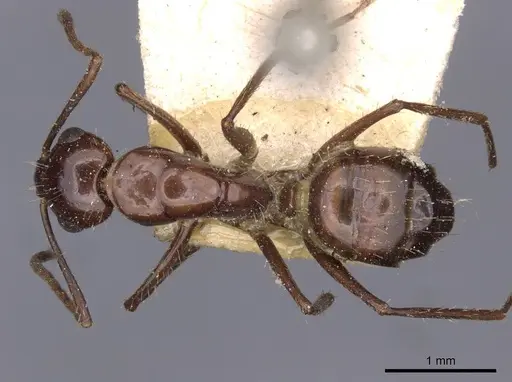
Literature
Loading...Loading products...