

Camponotus tsimelahy
- Scientific Name
- Camponotus tsimelahy
- Subgenus
- Mayria
- Tribe
- Camponotini
- Subfamily
- Formicinae
- Author
- Rasoamanana & Fisher, 2022
- Distribution
- Found in 1 countries
Camponotus tsimelahy Overview
Camponotus tsimelahy is an ant species of the genus Camponotus. It is primarily documented in 1 countries , including Madagascar. Detailed taxonomic data and occurrence records can be further explored via authoritative databases such as AntWeb or the Global Biodiversity Information Facility (GBIF).
Camponotus tsimelahy
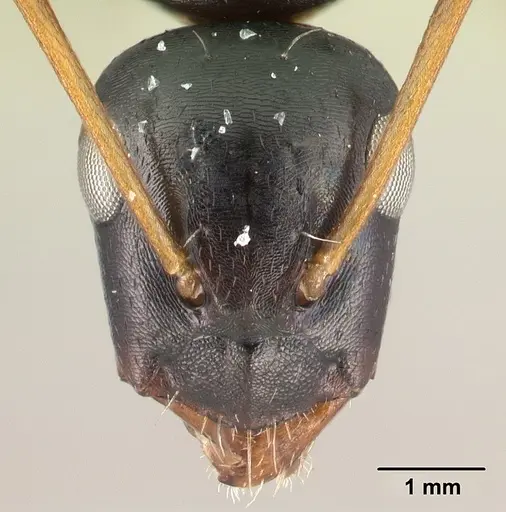
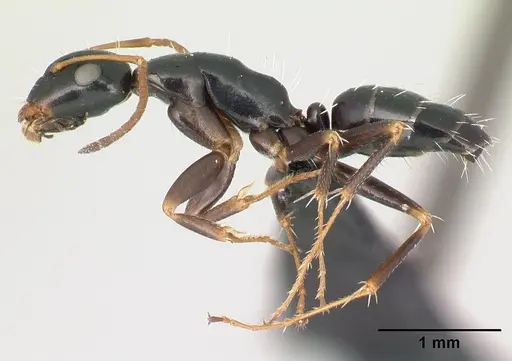
Camponotus tsimelahy is a medium-sized ant species from Madagascar, recently described in 2022. Workers measure around 0.77-0.81mm in head length (CS), making them relatively small for a Camponotus species. They have a distinctive appearance with a shiny black integument, reddish-brown head and mesosoma, and a gaster that is longer than the mesosoma. The petiole is cuneate (wedge-shaped) with a convex anterior face. This species belongs to the Camponotus repens species group within the subgenus Mayria, which is endemic to Madagascar [1].
In the wild, C. tsimelahy inhabits deciduous forest environments including tropical dry forest, gallery forest, spiny forest, and transitional forest at elevations between 1300 and 1987 meters. They are found in high-altitude, relatively dry habitats and are much rarer in humid lowland areas. Workers forage on the ground and nest in soil, under stones, and in sifted litter [1][2]. This species was discovered at the type locality near Tsimelahy in southern Madagascar.
Quick Summary
- Difficulty: Unknown, this is a newly described species with limited available husbandry data
- Origin & Habitat: Madagascar, specifically Parc National d'Andohahela and surrounding areas in southern Madagascar. They inhabit deciduous forests including tropical dry forest, gallery forest, spiny forest/thicket, and transitional forest at elevations of 1300-1987m [1][2].
- Colony Type: Colony structure is unconfirmed. Based on typical Camponotus patterns, likely monogyne (single queen) colonies. Further research is needed to confirm queen number and colony organization.
- Colony: Monogyne
- Founding: Claustral
- Size & Growth:
- Queen: Estimated 12-15mm based on typical Camponotus genus patterns for medium-sized species with 0.8mm minor workers
- Worker: Minor workers: 0.77-0.81mm head length (CS) [1]
- Colony: Estimated several hundred to a few thousand workers based on related Camponotus species
- Growth: Moderate, based on typical Camponotus development patterns
- Development: Estimated 8-12 weeks at optimal temperature based on typical Camponotus genus development (Development time is estimated from related species, direct observations for this specific species are not available)
- Antkeeping:
- Temperature: Based on their high-altitude dry forest habitat, aim for warm conditions around 22-26°C. Avoid temperatures below 18°C. Provide a gentle temperature gradient so ants can self-regulate.
- Humidity: Moderate humidity around 50-70%. These ants come from drier highland forests, so avoid overly humid conditions. Allow the nest to dry out partially between water additions.
- Diapause: Unlikely to require true hibernation given their tropical Madagascar origin. However, they may experience reduced activity during cooler months and benefit from a slight temperature reduction (around 18-20°C) for 2-3 months in winter.
- Nesting: In captivity, they do well in Y-tong (AAC) nests, plaster nests, or naturalistic setups with soil. Provide narrow chambers scaled to their small worker size. They will nest under stones in naturalistic setups. Avoid overly damp substrates.
- Behavior: Workers are ground foragers, collecting food from the substrate surface. Based on related species, they are likely moderately active and not particularly aggressive. Their small worker size (under 1mm) means escape prevention is critical, use fine mesh barriers and tight-fitting lids. They likely accept sugar sources and small protein prey like most Camponotus.
- Common Issues: escape prevention is critical due to their very small worker size, they can squeeze through standard gaps, newly described species means husbandry information is limited and based on inference from related species, wild-caught colonies may carry parasites or pathogens not yet understood by keepers, overheating risk is significant given their origin in warm Madagascar habitats, avoid temperatures above 30°C, too much humidity can be harmful, these are dry forest ants
Housing and Nest Setup
Camponotus tsimelahy is a small ant species, so provide appropriately scaled housing. Y-tong (AAC) nests work well because they allow you to control humidity precisely. Plaster nests are another good option, just keep them on the drier side since these ants come from dry forest habitats. Naturalistic setups with a soil layer and flat stones on top also mimic their natural environment where they nest under stones and in soil. The key is providing chambers and passages sized for their tiny workers, avoid large, open spaces that can make them feel exposed. A small outworld connected to the nest works fine for feeding. [1][2]
Feeding and Diet
Like most Camponotus species, C. tsimelahy likely accepts a varied diet. Offer sugar water or honey as a constant energy source, these ants will readily take sweet liquids. For protein, provide small prey items like fruit flies, small mealworms, or other tiny insects. In the wild, they forage on the ground, so place food items in the outworld where workers can find them. Feed protein 2-3 times per week, and keep sugar water available at all times. Remove uneaten prey after 24-48 hours to prevent mold.
Temperature and Seasonal Care
Maintain temperatures in the 22-26°C range for optimal colony health and development. These ants come from high-altitude Madagascar forests where conditions are warm but not extreme. A heating cable on one side of the nest can create a temperature gradient, but be careful not to overheat any area above 30°C. During winter months, a slight reduction to around 18-20°C for 2-3 months may simulate their natural seasonal cycle, though true hibernation is unlikely. Monitor colony activity, if workers become sluggish and cluster together, they may be too cool. [1]
Humidity Management
Keep humidity in the moderate range of 50-70%. These ants inhabit dry deciduous forests in Madagascar, so they are adapted to drier conditions than many tropical ants. In Y-tong nests, allow the water reservoir to run dry before refilling, and watch for excessive condensation. In plaster nests, the substrate should feel damp but never waterlogged. Providing a gradient with some drier areas allows the ants to self-regulate. Too much humidity can lead to mold problems and stress the colony. [1][2]
Handling and Observation
Observing C. tsimelahy requires good magnification since minor workers are under 1mm in size. A magnifying glass or macro lens on your camera will help you appreciate their fine details, the shiny black integument, reddish mesosoma, and the distinctive cuneate petiole. When cleaning the outworld or moving the nest, use gentle handling as with any ant species. Their small size makes them fragile, and disturbing the nest too aggressively can cause the queen stress or damage brood. [1]
Growth Expectations
As a newly described species, exact growth rates are not documented. Based on typical Camponotus patterns, expect the first workers (nanitics) to emerge 8-12 weeks after the queen lays eggs, depending on temperature. Initial colony growth is slow, the queen raises the first brood alone. Once workers emerge, growth accelerates but remains moderate compared to faster species. A mature colony may reach several hundred to a few thousand workers over several years. Patience is key with this species.
Frequently Asked Questions
How long does it take for Camponotus tsimelahy to produce first workers?
Based on typical Camponotus development, expect 8-12 weeks from egg to first worker at optimal temperature (22-26°C). This is an estimate since this newly described species has no documented development timeline. The queen will raise her first brood alone in the founding chamber.
What do Camponotus tsimelahy ants eat?
Like most Camponotus, they accept sugar water or honey as a constant energy source and small protein prey like fruit flies, pinhead crickets, or small mealworms. Place food in the outworld where ground-foraging workers can find it. Remove uneaten prey after 24-48 hours.
Do Camponotus tsimelahy ants need hibernation?
True hibernation is unlikely since they come from tropical Madagascar. However, a slight temperature reduction to 18-20°C for 2-3 months during winter months may benefit the colony by simulating their natural seasonal cycle. Monitor activity levels, if workers become less active, a cool period is appropriate.
What temperature should I keep Camponotus tsimelahy at?
Aim for 22-26°C. These ants come from warm highland forests in Madagascar. Provide a temperature gradient so ants can move between warmer and cooler areas. Avoid temperatures above 30°C or below 18°C.
How big do Camponotus tsimelahy colonies get?
Colony size is estimated at several hundred to a few thousand workers based on related Camponotus species. This is a newly described species with limited data, so exact maximums are unknown. Growth is moderate and takes several years to reach maturity.
Are Camponotus tsimelahy good for beginners?
This species is not recommended for beginners. It was only described in 2022,meaning husbandry information is extremely limited. Additionally, their very small size requires excellent escape prevention. Consider starting with more established species like Camponotus floridanus or Camponotus novaeboracensis before trying this species.
Can I keep multiple Camponotus tsimelahy queens together?
Colony structure is unconfirmed for this species. Most Camponotus are monogyne (single queen). Combining unrelated queens is not recommended since aggressive interactions would likely result. If you obtain a colony, assume single-queen setup unless you observe multiple functional queens peacefully coexisting.
Why are my Camponotus tsimelahy escaping?
Escape prevention is critical with this species due to their very tiny worker size (under 1mm). They can squeeze through gaps that seem impossible. Use fine mesh barriers, tight-fitting lids, and fluon or petroleum jelly on container edges. Check all connections between the nest and outworld for gaps.
When should I move Camponotus tsimelahy to a formicarium?
Keep newly caught or purchased colonies in their founding setup (test tube or small container) until the colony reaches at least 20-30 workers and the test tube becomes crowded. Moving too early can stress the queen. Once established, they can be moved to a Y-tong or plaster nest if needed.
References

This caresheet is licensed under CC BY-SA 4.0 .
CASENT0446651
View on AntWeb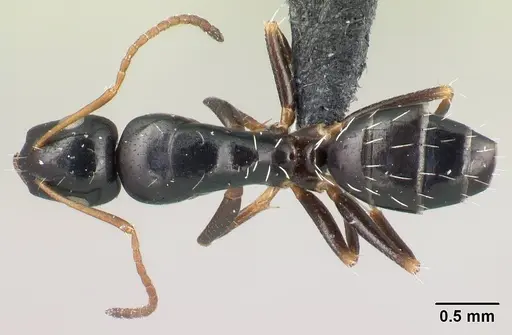
Literature
Loading...Loading products...