

Camponotus tratra
- Scientific Name
- Camponotus tratra
- Subgenus
- Mayria
- Tribe
- Camponotini
- Subfamily
- Formicinae
- Author
- Rakotonirina <i>et al.</i>, 2016
- Distribution
- Found in 1 countries
Camponotus tratra Overview
Camponotus tratra is an ant species of the genus Camponotus. It is primarily documented in 1 countries , including Madagascar. Detailed taxonomic data and occurrence records can be further explored via authoritative databases such as AntWeb or the Global Biodiversity Information Facility (GBIF).
Camponotus tratra
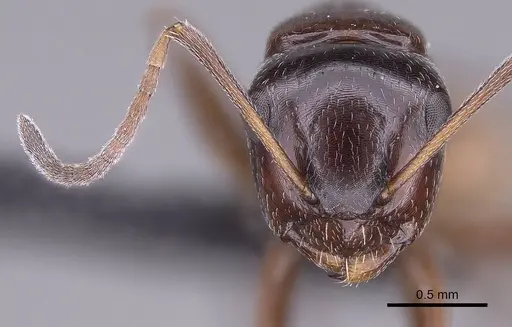
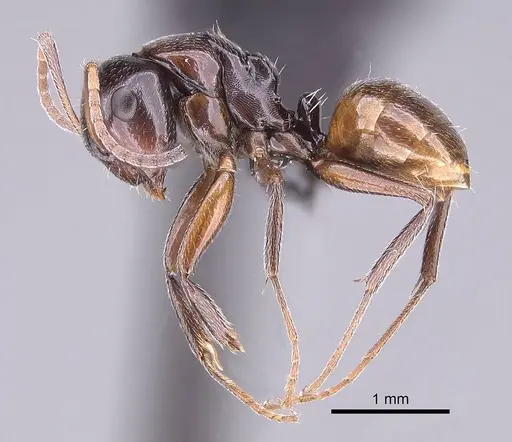
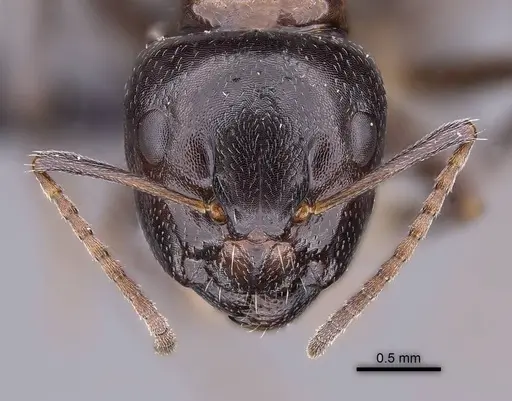
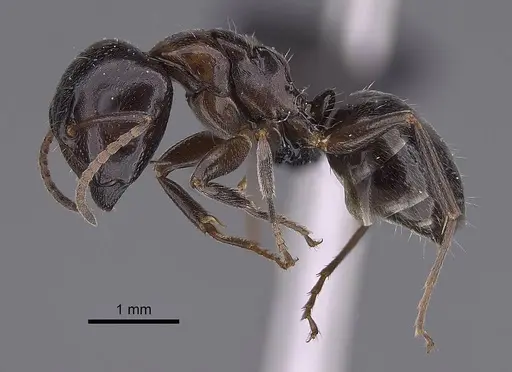
Camponotus tratra is a carpenter ant species endemic to Madagascar, belonging to the Camponotus edmondi species group. Workers are brown with a notably darker head, mesonotum, propodeum, and petiolar node. The body has a smooth, shiny appearance with fine imbrication and small punctures from which erect hairs arise. Minor workers have a relatively long head (roughly as long as broad), while major workers develop a significantly larger head. This species is arboreal, nesting in dead branches above ground and being most commonly collected from low vegetation. It has a wide but sparse distribution across Madagascar's protected areas, from Montagne d'Ambre in the north to Zahamena in the central east and Andohahela in the southeast.
Quick Summary
- Difficulty: Medium
- Origin & Habitat: Endemic to Madagascar, found in multiple protected areas including Parc National Montagne d'Ambre, Makirovana Forest, Réserve Spéciale Manongarivo, Parc National Zahamena, and Parc National Andohahela. Inhabits rainforest environments with arboreal nesting in dead branches above ground [1].
- Colony Type: Colony structure is unconfirmed. Based on typical Camponotus patterns, likely single-queen (monogyne) colonies with claustral founding. Further research needed to confirm queen number and colony organization.
- Size & Growth:
- Queen: Unconfirmed for this species. Based on related Camponotus species, queens likely 12-18mm.
- Worker: Minor workers: head width to length ratio 0.91-0.97. Major workers: 1.58mm cephaloid size [1].
- Colony: Unknown for this species. Based on typical Camponotus, likely reaches several hundred to a few thousand workers.
- Growth: Moderate, Camponotus species typically take 6-10 weeks from egg to first worker at optimal temperature.
- Development: 6-10 weeks at optimal temperature (estimated based on typical Camponotus development). (Development time is estimated from related species, direct observations for C. tratra are unavailable.)
- Antkeeping:
- Temperature: Keep at 24-28°C. Being a tropical Madagascar species, they prefer warm conditions. A heating cable on one side of the nest creates a suitable gradient.
- Humidity: High humidity required, rainforest species. Keep nest substrate consistently moist but not waterlogged. Provide a water tube for drinking water. Mist occasionally and maintain 60-80% relative humidity.
- Diapause: Unknown, tropical species from Madagascar may not require true hibernation but may have reduced activity during cooler months. Monitor colony behavior and reduce feeding if workers become less active.
- Nesting: Arboreal nester, prefers nests in dead wood or cork-style formicarium. Y-tong (AAC) nests or plaster nests with wood sections work well. Avoid fully soil-based nests as they prefer elevated nesting sites. Provide narrow chambers scaled to worker size [1].
- Behavior: Generally calm and non-aggressive for a Camponotus species. Workers forage on low vegetation and can be active during both day and night. Major workers defend the colony with their powerful mandibles but rarely sting. Escape risk is moderate, use standard Camponotus escape prevention (fluon on test tube rims, fine mesh on outworlds). Workers are moderately fast-moving and will explore their outworld thoroughly for food.
- Common Issues: tropical species may struggle in cool rooms below 22°C, monitor temperature closely, arboreal nesting means they prefer elevated nest sites, avoid buried test tubes, limited availability as a species, may be difficult to acquire, wild-caught colonies may harbor parasites specific to Malagasy ants, high humidity needs can lead to mold if ventilation is poor
Housing and Nest Preferences
Camponotus tratra is an arboreal species, meaning they naturally nest in elevated locations like dead branches and tree cavities. In captivity, they do well in Y-tong (AAC) nests or plaster nests with wooden sections. Avoid fully soil-based setups as these don't match their natural preferences. The nest should have chambers scaled to their size, not too large, as ants feel safer in snugger spaces. Provide a water tube connected to the nest for humidity control. Since they're collected from low vegetation in the wild, they don't need extreme vertical space but do appreciate some climbing structures in their outworld. [1]
Temperature and Heating
Being endemic to Madagascar's tropical rainforests, C. tratra requires warm conditions to thrive. Keep the nest area between 24-28°C. Below 22°C, you may see reduced activity and slower brood development. Use a heating cable placed on top of the nest (never underneath, as this causes excessive drying) to create a gentle temperature gradient. This allows workers to thermoregulate by moving between warmer and cooler areas. Room temperature may suffice in warm climates, but most keepers need supplemental heating. Monitor with a digital thermometer placed at nest level.
Feeding and Diet
Like other Camponotus species, C. tratra is omnivorous with a preference for protein-rich foods. Offer protein sources like mealworms, small crickets, and other insects 2-3 times per week. They also accept sugar water, honey, or maple syrup as an energy source for workers. Fresh fruit occasionally is also appreciated. Remove uneaten prey after 24-48 hours to prevent mold. A constant sugar source is recommended once workers are established. In the wild, they forage on low vegetation, so they may prefer prey that's accessible on surfaces rather than buried in substrate.
Humidity Management
As a rainforest species from Madagascar, C. tratra requires higher humidity than typical temperate ants. Keep the nest substrate consistently moist but never waterlogged. The substrate should feel damp to the touch. Connect a water tube to the nest to provide constant humidity through a cotton bridge. Mist the outworld occasionally, especially if you notice workers clustering near moisture. However, balance humidity with adequate ventilation to prevent mold growth. Poor ventilation combined with high humidity creates mold problems that can devastate colonies.
Colony Development and Growth
Camponotus colonies grow progressively, the first workers (nanitics) are typically smaller than subsequent generations. After the claustral founding period (likely 4-8 weeks), the queen produces nanitic workers that immediately take over foraging and brood care. Growth rate is moderate, expect several months before you have a robust colony. Major workers develop as the colony matures, characterized by significantly larger heads. A healthy colony will eventually reach several hundred workers. Patience is key with Camponotus species, they don't grow as fast as some tropical ants but can live for many years once established.
Seasonal Care and Activity Cycles
As a tropical species from Madagascar, C. tratra may not require true hibernation. However, they may show reduced activity during cooler months or dry seasons in their natural habitat. Monitor your colony, if workers become less active and congregate in cooler areas, you can slightly reduce feeding and allow a cool period (not below 18°C). Unlike temperate species that need full diapause, this species likely prefers consistent year-round warmth. Maintain normal temperatures and feeding unless you observe clear signs of seasonal slowing.
Frequently Asked Questions
How long does it take for Camponotus tratra to produce first workers?
Based on typical Camponotus development, expect 6-10 weeks from egg to first worker at optimal temperature (24-28°C). The exact timeline for this species is unconfirmed, so monitor your colony and maintain warm, stable conditions.
What is the best nest type for Camponotus tratra?
Y-tong (AAC) nests or plaster nests with wood sections work best. This is an arboreal species that naturally nests in dead wood and elevated locations. Avoid fully soil-based formicaria. Provide chambers scaled to worker size with access to moisture via water tube. [1]
What temperature do Camponotus tratra ants need?
Keep them at 24-28°C. This tropical Madagascar species requires warm conditions. Below 22°C can cause reduced activity and slower development. Use a heating cable on top of the nest to maintain warmth if your room temperature is below this range.
Are Camponotus tratra ants good for beginners?
This species is rated as Medium difficulty. While not the most challenging species, they have specific needs (warm temperatures, high humidity, arboreal nesting) that require some experience. Beginners should master easier species first like Lasius niger before attempting C. tratra.
How big do Camponotus tratra colonies get?
Colony size is unconfirmed for this species, but based on typical Camponotus patterns, they likely reach several hundred to a few thousand workers over several years. They are a long-lived species with queens potentially living 10-15 years or more.
What do Camponotus tratra ants eat?
They are omnivorous like other Camponotus species. Offer protein (insects like mealworms, small crickets) 2-3 times per week and maintain a constant sugar source (honey, sugar water). They may also accept occasional fruit. Remove uneaten prey after 24-48 hours to prevent mold.
Do Camponotus tratra queens need to forage during founding?
Based on typical Camponotus behavior, C. tratra is likely claustral, the queen seals herself in a chamber and raises her first workers entirely on stored fat reserves. She will not leave to forage during the founding period. Provide a dark, quiet location and do not disturb the founding chamber until workers emerge.
Can I keep multiple Camponotus tratra queens together?
Colony structure is unconfirmed for this species. Most Camponotus are monogyne (single queen). Unless you have specific documentation showing this species can be polygyne, it is not recommended to keep multiple unrelated queens together. They may fight or stress each other.
Does Camponotus tratra need hibernation?
True hibernation is likely not required, this is a tropical species from Madagascar. However, they may have reduced activity during cooler periods. Maintain warm conditions year-round (24-28°C) for optimal colony health. If you notice natural slowing, a slight temperature reduction is acceptable but not necessary.
Why is my Camponotus tratra colony declining?
Common causes include: temperatures below 22°C, low humidity, mold from excessive moisture, poor ventilation, or insufficient protein. Check all parameters and ensure the queen is still present and laying eggs. Wild-caught colonies may also carry parasites specific to Malagasy ants. Review your care conditions and adjust accordingly.
Where can I get Camponotus tratra ants?
This is a rare species endemic to Madagascar and may be difficult to acquire. Check specialized ant breeders, European ant shops, or ant-keeping forums. It is not commonly available in the general ant trade. Be cautious about purchasing wild-caught colonies as they may have parasites.
References

This caresheet is licensed under CC BY-SA 4.0 .
CASENT0153055
View on AntWeb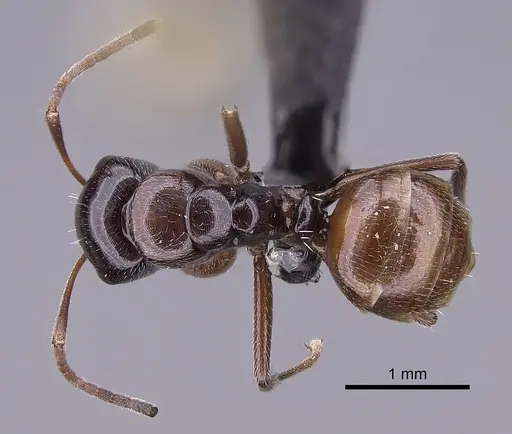
CASENT0763612
View on AntWeb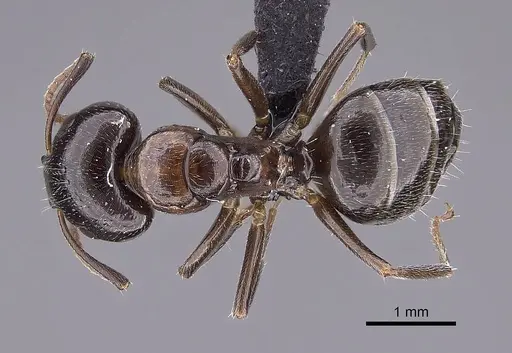
Literature
Loading...Loading products...