

Camponotus helleri
- Scientific Name
- Camponotus helleri
- Subgenus
- Myrmaphaenus
- Tribe
- Camponotini
- Subfamily
- Formicinae
- Author
- Emery, 1903
- Distribution
- Found in 4 countries
Camponotus helleri Overview
Camponotus helleri is an ant species of the genus Camponotus. It is primarily documented in 4 countries , including Bolivia, Plurinational State of, Brazil. Detailed taxonomic data and occurrence records can be further explored via authoritative databases such as AntWeb or the Global Biodiversity Information Facility (GBIF).
Camponotus helleri
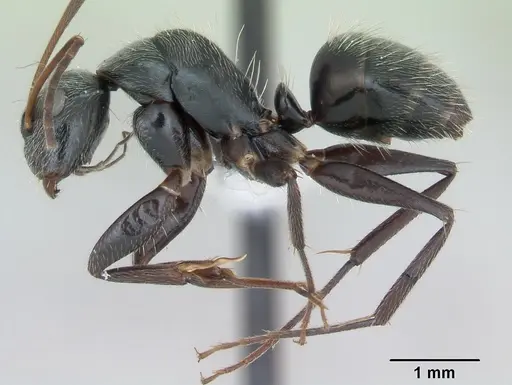
Camponotus helleri is a medium-sized Neotropical carpenter ant found across northern South America, from Colombia and Ecuador down through Peru, Bolivia, Brazil, and into Paraguay and Argentina. Workers are entirely black, with majors measuring 5-6mm and minors at 3-5mm. The species belongs to the cressoni species complex within the subgenus Myrmaphaenus, and is notable for nesting in small hollow twigs and stems both on the forest floor and hanging in the canopy. These ants are part of a group of nearly identical species that can be difficult to distinguish from C. integellus, though C. helleri has a partially smooth and shiny gaster rather than being completely opaque. As a tropical species, they require warm, stable conditions and are sensitive to cold temperatures.
Quick Summary
- Difficulty: Medium
- Origin & Habitat: Tropical forests of northern South America, including seasonally flooded areas, riparian zones, and savannahs. Found in Brazil, Colombia, Ecuador, Peru, Bolivia, Paraguay, and Argentina. Nests in hollow twigs approximately 1cm in diameter on the soil surface or hanging in the canopy, also in dead parts of small trees, dead bamboo, and under bark of dead rotten trees [1][2].
- Colony Type: Single-queen (monogyne) colonies. Colony size reaches up to several hundred workers based on typical Camponotus patterns.
- Colony: Monogyne
- Founding: Claustral
- Size & Growth:
- Queen: Estimated 12-15mm based on genus patterns for medium-sized Camponotus species
- Worker: Major workers 5-6mm, minor workers 3-5mm [2]
- Colony: Likely several hundred workers based on typical Camponotus colony development
- Growth: Moderate, typical for tropical Camponotus species
- Development: 6-10 weeks at optimal temperature based on genus-level Camponotus data (Development time estimated from related Camponotus species. Brood has been observed in nests during July in Peru [2].)
- Antkeeping:
- Temperature: Keep at 24-28°C. These are tropical ants requiring warm, stable conditions. A heating cable on one side of the nest creates a suitable gradient. Avoid temperatures below 20°C for extended periods.
- Humidity: Moderate to high humidity (60-80%). Keep the nest substrate slightly moist but not waterlogged. Provide a water tube as a humidity source. Mist occasionally, but allow periods of drying to prevent mold.
- Diapause: No, as a tropical species, they do not require hibernation. Maintain stable warm temperatures year-round.
- Nesting: Y-tong (AAC) nests work well, or plaster nests with narrow chambers. These ants naturally nest in small hollow twigs and stems, so provide appropriately scaled chambers. Avoid very large, open spaces, they prefer cozy, tight-fitting chambers.
- Behavior: Generally calm and non-aggressive for a Camponotus species. Workers are moderate foragers and will scout for food. Major workers have the characteristic square head of the subgenus Myrmaphaenus. They are not particularly defensive and rarely sting. Escape risk is moderate, use standard Fluon barriers and ensure lids fit tightly.
- Common Issues: tropical temperature sensitivity, prolonged cold exposure can kill colonies, overwatering risk, too much moisture leads to mold and fungal problems, small colony fragility, founding colonies are slow to grow and vulnerable to stress, confusion with similar species, C. helleri is nearly identical to C. integellus and may be misidentified, potential pathogen susceptibility, infected by Ophiocordyceps fungus in the wild, maintain clean conditions
Housing and Nest Setup
Camponotus helleri naturally nests in small hollow twigs approximately 1cm in diameter, found both on the forest floor and hanging in the canopy [2]. For captive care, a Y-tong (AAC) nest or plaster formicarium works well. The chambers should be appropriately sized, not too large or open, as these ants prefer tighter, more confined spaces that mimic their natural twig nests. A test tube setup can work for founding colonies, but be prepared to move them to a proper formicarium once the colony reaches 20-30 workers. Use a water tube attached to the nest for humidity. Escape prevention is important, while not the smallest ants, they can still squeeze through small gaps, so ensure all connections are secure and apply Fluon to barrier edges.
Feeding and Diet
Like most Camponotus species, C. helleri is omnivorous. They accept sugar sources readily, offer sugar water, honey, or diluted maple syrup. For protein, provide small insects like fruit flies, small crickets, mealworms, or waxworms. In the wild, they forage in tropical forest environments and likely supplement with honeydew from aphids and scale insects. Feed protein 2-3 times per week for growing colonies, and always have a sugar source available. Remove uneaten prey after 24-48 hours to prevent mold. These ants are moderate foragers, workers will scout and recruit nestmates to larger food sources.
Temperature and Seasonal Care
As a Neotropical species from tropical forests, C. helleri requires warm conditions year-round. Maintain temperatures between 24-28°C, with a slight gradient allowing workers to choose their preferred zone. A heating cable placed on top of the nest (never underneath to avoid drying) can help maintain warmth. These ants are sensitive to cold, avoid temperatures below 20°C for extended periods, as this can weaken or kill colonies. There is no diapause requirement for this species. Room temperature may be too cool in many homes, so monitor closely and provide supplemental heating if needed. The natural habitat includes seasonally flooded areas and riparian zones, indicating they can handle variable humidity but prefer consistent warmth. [2]
Colony Development and Growth
Colony growth follows typical Camponotus patterns. The claustral queen seals herself in a chamber and raises the first brood alone, living off her stored fat reserves. First workers (nanitics) are typically smaller than mature workers and emerge after 6-10 weeks at optimal temperature. Growth is moderate, don't expect rapid expansion like some faster-growing genera. Major workers develop as the colony matures, with the characteristic square head appearing in larger workers. Colonies likely reach several hundred workers over time. Be patient with founding colonies, they are vulnerable during the first few months and stress easily. Avoid disturbing the nest during the founding stage.
Behavior and Temperament
Camponotus helleri is a relatively calm species compared to some more aggressive carpenter ants. Workers are not particularly defensive and rarely attempt to sting. They go about their foraging activities methodically and are interesting to observe. The species shows typical Camponotus foraging behavior, workers scout individually and will recruit nestmates to larger food discoveries. Major workers, with their distinctive square heads, are impressive for their size. These ants are primarily nocturnal or crepuscular in the wild, so you may see more activity during evening hours. They adapt reasonably well to captive conditions once established. [2]
Field Identification and Similar Species
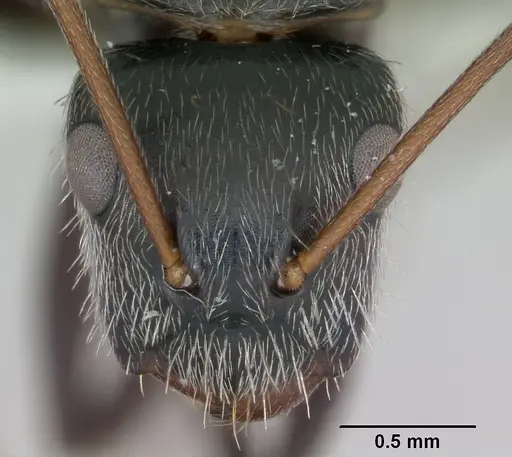
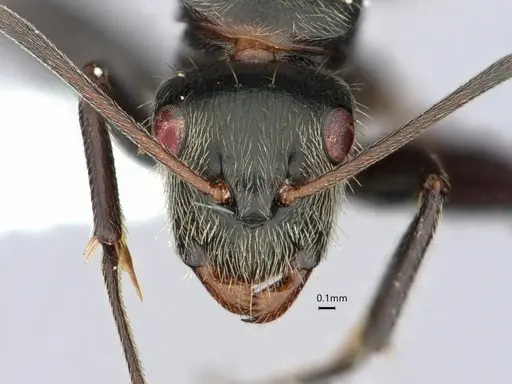
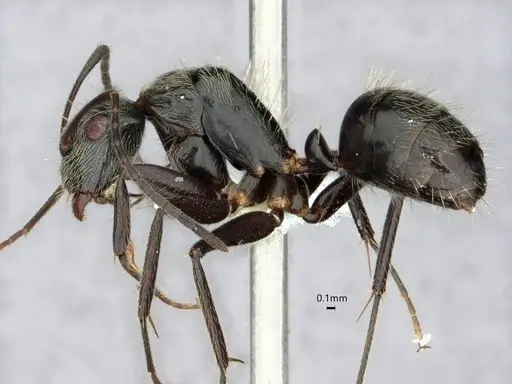
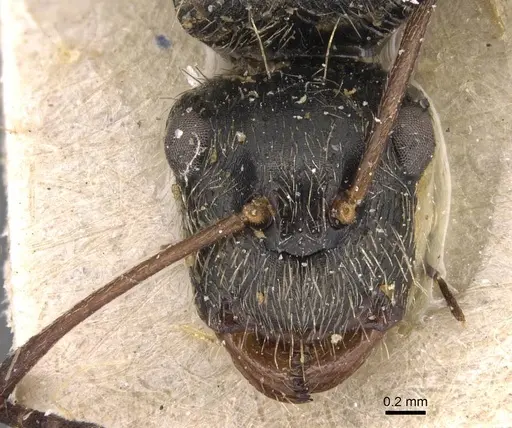
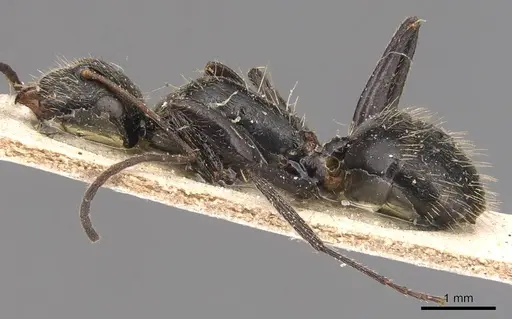
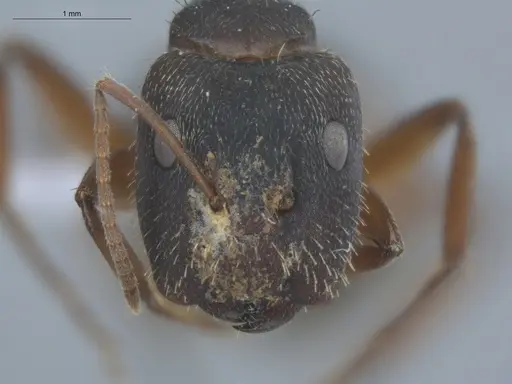
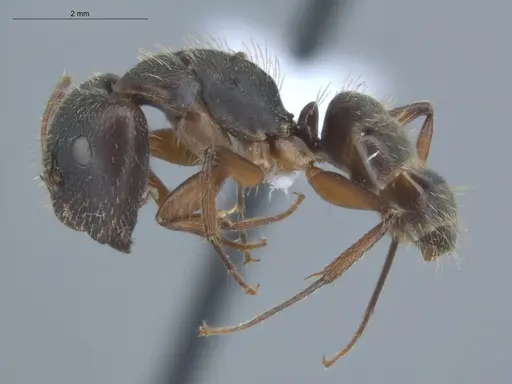
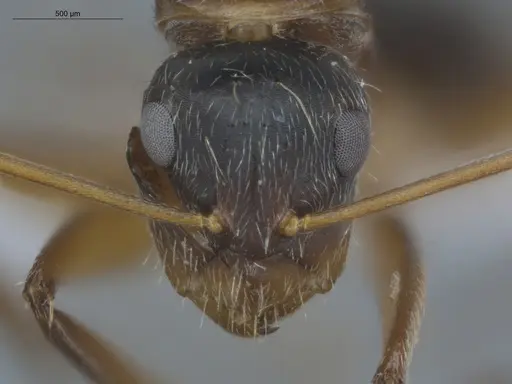
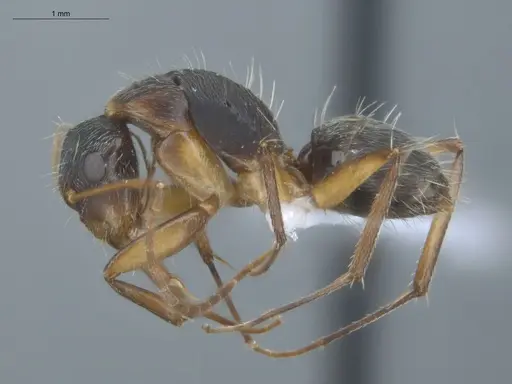
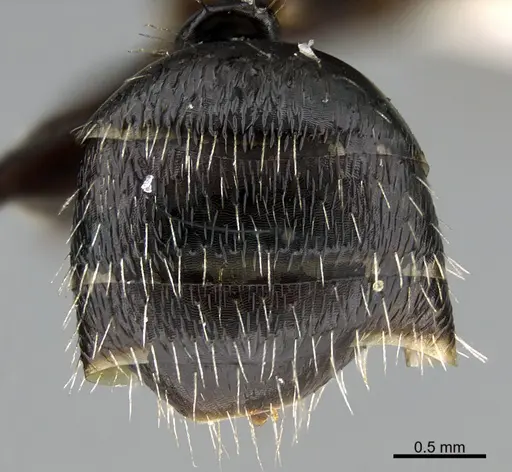
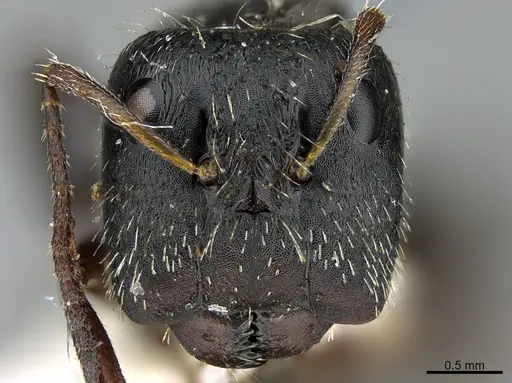
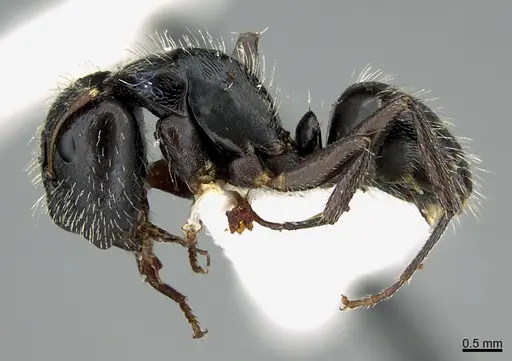
Camponotus helleri belongs to the cressoni species complex within the subgenus Myrmaphaenus and is notoriously difficult to separate from C. integellus, a closely related species [1]. The main distinguishing feature is that C. helleri has a partially smooth and shiny gaster (abdomen), while C. integellus workers have a completely opaque gaster [1]. Major workers have a rectangular head with a well-developed clypeal carina that protrudes when viewed from the side. Minor workers have a distinctive swollen area posterior to the eye and a humpbacked mesosoma. If you obtain stock from the hobby, verify the seller's identification, as these species are frequently confused.
Frequently Asked Questions
Is Camponotus helleri good for beginners?
Camponotus helleri is rated as medium difficulty. They are more sensitive to temperature than common temperate species like Camponotus novaeboracensis or Lasius niger. You'll need to provide consistent warmth (24-28°C) year-round, which may require a heating setup. If you're new to antkeeping, consider starting with a hardier species first. However, they are not aggressive and are relatively calm to handle once established.
What temperature do Camponotus helleri need?
Keep them at 24-28°C. These are tropical ants that need warm conditions. A heating cable on top of the nest can help maintain temperature. Avoid letting temperatures drop below 20°C for extended periods, as this can harm or kill the colony.
How long does it take for first workers to hatch?
Based on typical Camponotus development, expect 6-10 weeks from egg to first worker at optimal temperature (around 26°C). The queen is claustral, she seals herself in and raises the first brood alone without foraging. Be patient, as founding colonies grow slowly and are vulnerable to stress.
What do Camponotus helleri eat?
They are omnivorous. Offer sugar water, honey, or maple syrup as a constant carbohydrate source. For protein, feed small insects like fruit flies, small crickets, or mealworms 2-3 times per week. They will also eat honeydew if you keep aphids.
Can I keep multiple queens together?
No. Camponotus helleri is monogyne, colonies have a single queen. Combining unrelated queens will likely result in fighting. Only keep one queen per colony.
How big do colonies get?
Based on typical Camponotus patterns, colonies likely reach several hundred workers over time. The major workers can reach 5-6mm, making them impressive for a Camponotus species.
Do they need hibernation?
No. As a tropical species from northern South America, they do not require a diapause or hibernation period. Keep temperatures stable and warm year-round.
Why are my ants dying?
The most common issues are: temperatures too cold (below 20°C), excessive moisture causing mold, or stress from disturbance during founding. Check your temperature settings first. Ensure the nest is not too wet. If the colony is new, minimize vibrations and disturbances near the nest.
References

This caresheet is licensed under CC BY-SA 4.0 .
CASENT0173421
View on AntWeb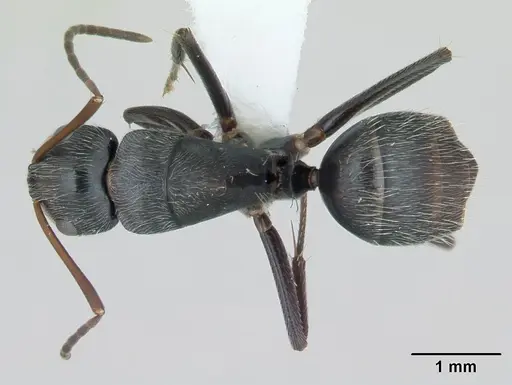
CASENT0882052
View on AntWeb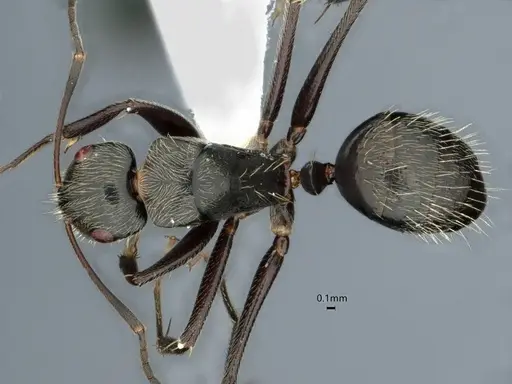
CASENT0905492
View on AntWeb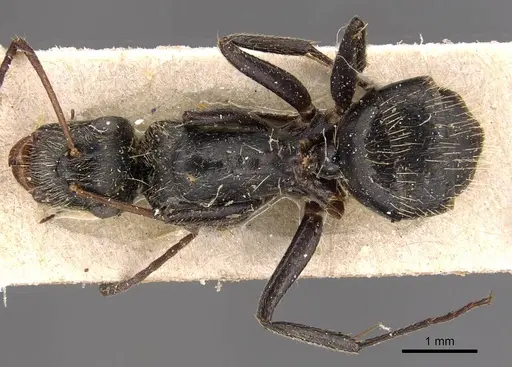
ECOFOG-MI15-0381-06-S
View on AntWeb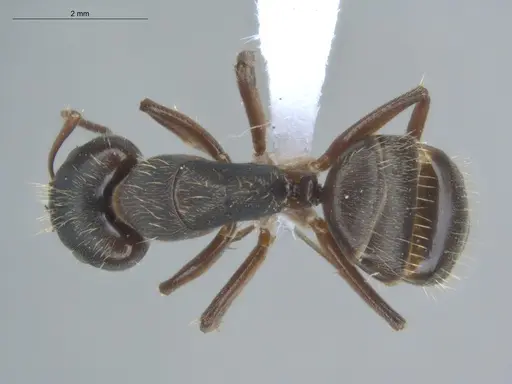
ECOFOG-MI15-0381-06
View on AntWeb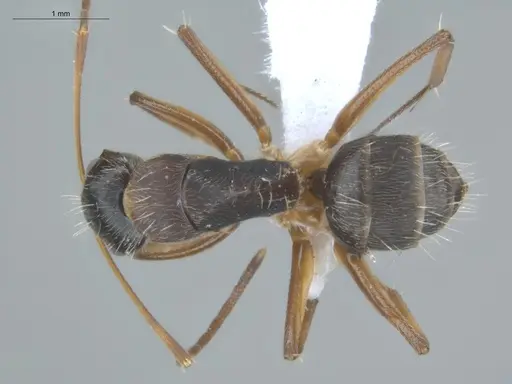
UTEPENTO26084
View on AntWeb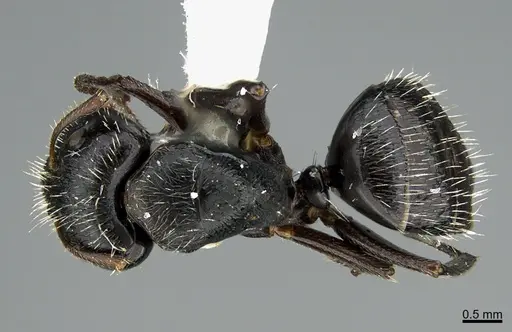
Literature
Loading...Loading products...