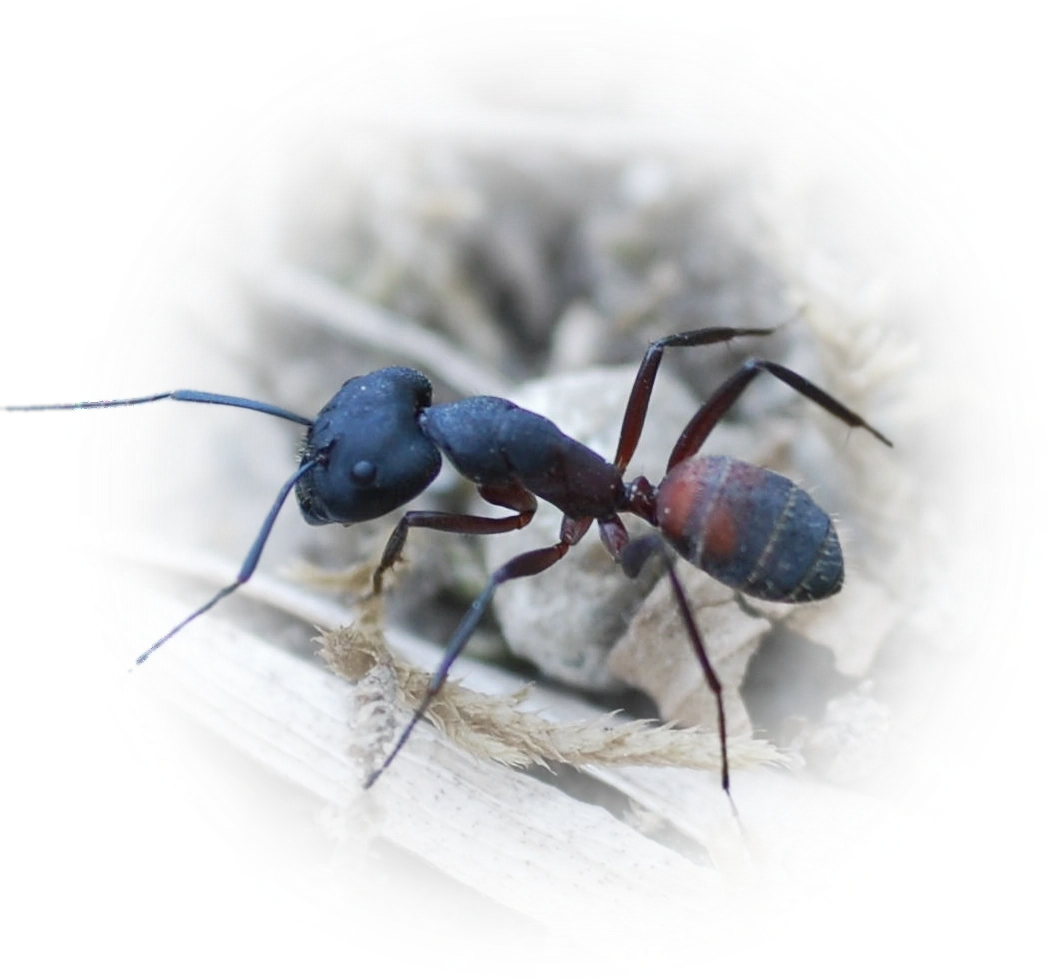
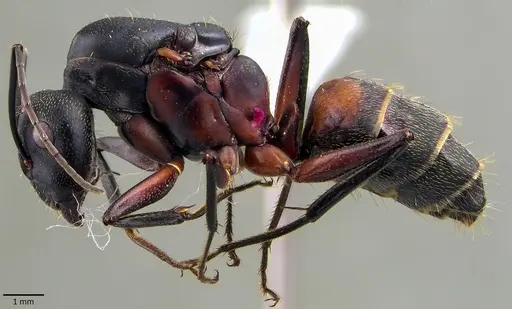
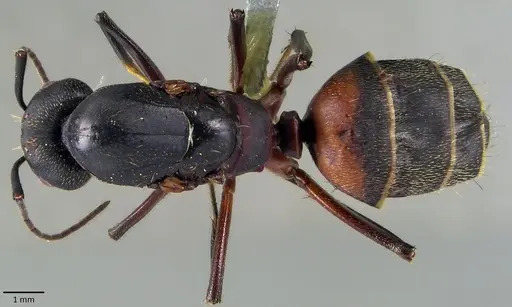
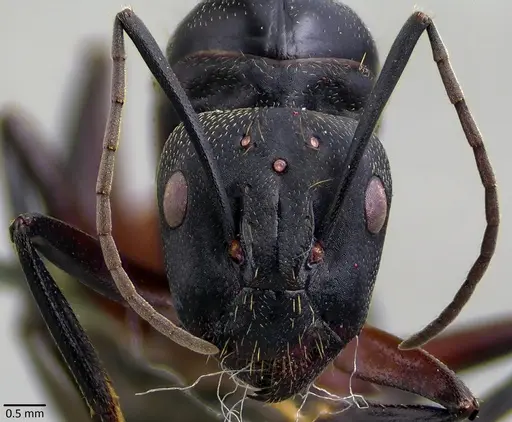
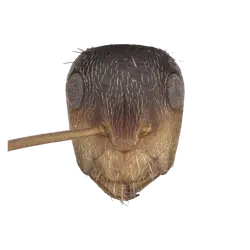
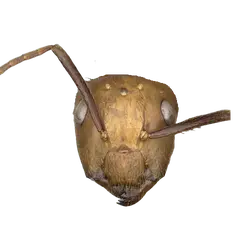
Camponotus cruentatus - "Blood-red Carpenter Ant"
The Camponotus cruentatus, often called the "blood-red carpenter ant," is a striking ant species native to southern Europe. They are notable for their dark grey to black bodies, contrasted by vibrant orange on the first two abdominal segments. These ants are polymorphic, meaning their colonies feature distinct castes, including smaller workers, larger majors, and a significantly larger queen. Workers are known for their efficiency and aggressive nature, especially when defending the nest or during feeding. Queens are also notably aggressive.
- Difficulty: Easy
- Origin & Habitat: Southern Europe, including Spain, Italy, Greece, and Turkey. in Open forest areas, forest edges, and temperate woodlands. They typically nest under rocks, in the soil, or in dead wood..
- Colony Type: Monogyne (single queen), claustral (queen seals herself in) founding.
- Size & Growth:
- Queen: 14-20mm
- Worker: 4-18mm
- Colony: Large (several thousand to 10,000 workers). Slow initially, but accelerates significantly after the first year or once the colony reaches around 30-60 workers. growth.
- Antkeeping:
- Temperature: Nest: 21-28°C is ideal, with 23-25°C being optimal. A hot spot can be provided during warmer months to speed up brood development. Outworld: 20-28°C..
- Humidity: Nest: 50-70%. Outworld: 30-60%. They are not overly fussy with humidity as long as it's not extremely high or low..
- Diapause: Required. 3-5 months at 8-16°C.
- Nesting: Acrylic, Ytong, wooden, 3D printed, or natural bioactive setups are suitable. They are known for excavating wood in nature. Avoid nests that are too large for the colony's current size..
- Behavior: Medium (aggressive towards other ants and when defending the nest) aggressiveness.
- Common Issues: Colony stalling (especially in early stages if disturbed or temperatures are too low), Humidity fluctuations (while adaptable, extreme levels can be problematic), Overfeeding leading to waste and mold, Queen stress (especially during founding, avoid frequent disturbances), Larvae eating each other if sand/support for cocoon spinning is not provided in natural setups.
One fascinating aspect of Camponotus cruentatus is their impressive polymorphism. You'll observe a clear distinction between the smaller minor workers and the much larger majors, which can grow to be nearly the size of the queen. This size variation allows them to perform diverse tasks within the colony, from foraging to more specialized roles like cracking seeds or defending the nest with their powerful mandibles. Watching a major worker in action, especially as they process food or guard the colony, is truly a sight to behold and highlights the incredible division of labor within a mature colony.
While they are considered an easy species to care for, patience is key, especially during the initial founding stage. Queen Camponotus cruentatus are fully claustral, meaning they don't need to be fed until their first nanitic workers emerge. However, growth can be slow in the beginning, with colonies only reaching a few dozen workers in the first year. Don't be discouraged; once the colony establishes itself and reaches around 30-60 workers, their growth rate accelerates significantly, leading to a bustling colony of thousands.
These ants are quite adaptable when it comes to their nest environment, thriving in a variety of setups including acrylic, Ytong, wooden, and 3D-printed nests. In their natural habitat, they are known for their carpentry skills, excavating intricate networks of tunnels and chambers within dead wood. When selecting a nest, it's crucial to choose one that isn't too large for your colony's current size, as an overly spacious setup can cause stress and make it difficult for the colony to manage humidity and feel secure.
Camponotus cruentatus require a period of diapause, often referred to as hibernation, typically from late October to late March in temperate regions. This resting period is crucial for the long-term health and success of the colony. During diapause, temperatures should be lowered to between 8-16°C. While some keepers might skip the first year of hibernation to encourage faster initial growth, it's generally recommended for the colony's longevity. Ensure they have constant access to water during this time, even if feeding is minimal.
When it comes to feeding, Camponotus cruentatus are omnivores with a strong preference for sweets. Offer a steady supply of sugar water, honey, or commercial ant nectar. For protein, provide freshly killed feeder insects such as mealworms, crickets, or roaches. Cooked chicken or ham can also be offered in small pieces. A balanced diet is essential for a healthy and thriving colony. They are enthusiastic foragers, and observing them collect food in their outworld is a rewarding experience.
Frequently Asked Questions
What kind of living space does a Camponotus cruentatus colony need?
These ants are quite flexible when it comes to their home! You can house them in acrylic, Ytong, wooden, or even 3D-printed nests. Just make sure the formicarium isn't too big for your colony's current size; a snug fit helps them feel secure and manage humidity.
How do you feed a Camponotus cruentatus colony?
Camponotus cruentatus absolutely love their sweets, so a regular supply of sugar water, honey, or ant nectar is a must. For protein, offer freshly killed insects like mealworms, crickets, or roaches. You can even give them small bits of cooked chicken or ham!
Do Camponotus cruentatus queens need feeding during founding?
Nope, good news for new keepers! Camponotus cruentatus queens are fully claustral. This means they use their stored energy reserves to raise their first batch of workers, so you don't need to feed them until those first nanitics arrive.
What's their growth rate like?
They start off a bit slow, so patience is a virtue with this species! In the first year, you might only see 10-20 workers. But don't worry, once the colony gets to around 30-60 workers, their growth really picks up and they can eventually reach thousands of individuals.
Do I need to hibernate my Camponotus cruentatus colony?
Yes, absolutely! Hibernation, or diapause, is essential for their long-term health. It typically runs from late October to late March. During this time, you'll need to lower their temperature to about 8-16°C.
What temperatures and humidity do Camponotus cruentatus prefer?
For their nest, aim for a comfortable 21-28°C, with 23-25°C being ideal. In the outworld, typical room temperature of 20-28°C is fine. They're not super picky about humidity, but keep their nest around 50-70% and the outworld 30-60%.
Are these ants aggressive?
While generally manageable for ant keepers, Camponotus cruentatus can be quite aggressive, especially when defending their nest or during feeding. Their powerful mandibles are certainly something to respect!
How long does it take for eggs to become workers?
The full development from egg to adult worker for Camponotus cruentatus typically takes about 4 to 10 weeks, largely depending on the temperature you provide.
Can Camponotus cruentatus sting?
No, these ants do not sting. They defend themselves with strong bites and by spraying formic acid.
What should I do if my queen eats her eggs or brood?
It can be alarming, but a queen eating her eggs or brood (especially in the founding stage) is often a sign of stress. Try to minimize disturbances, keep her in a quiet, dark place, and ensure stable temperature and humidity. Avoid checking on her too frequently.
Do they need substrate in their nest?
In natural setups, they nest in soil or decaying wood. For artificial nests, you can use substrates like sand or loam. Some keepers find providing a small amount of sand or a rough surface helps larvae spin their cocoons, preventing them from eating each other.
What's the typical lifespan of a Camponotus cruentatus queen?
With proper care, a Camponotus cruentatus queen can live a surprisingly long time, often reaching 10-15 years!
Are they nocturnal?
Yes, Camponotus cruentatus are primarily nocturnal, meaning they are more active during the night. You might notice more activity in their outworld during evening hours.