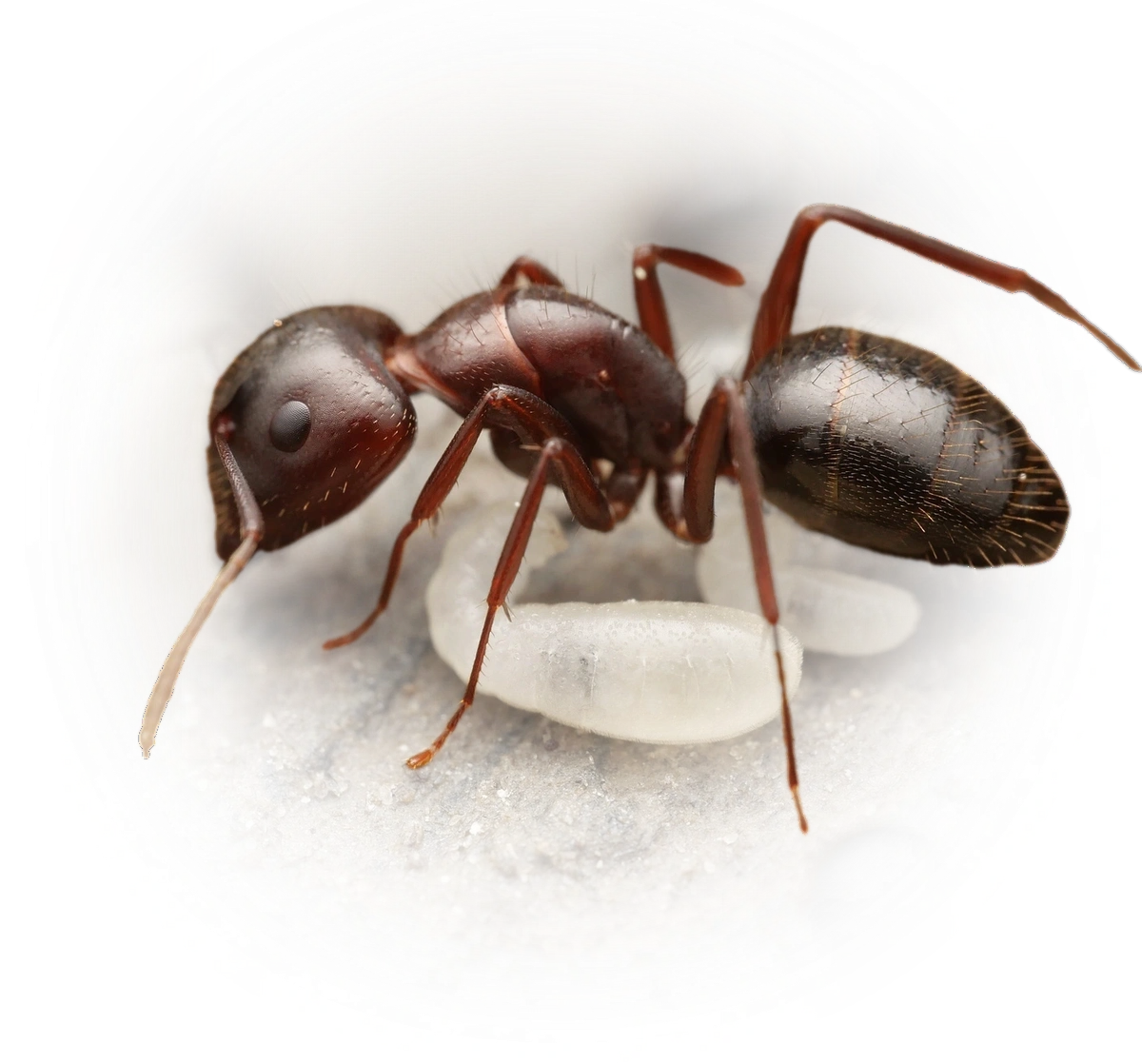
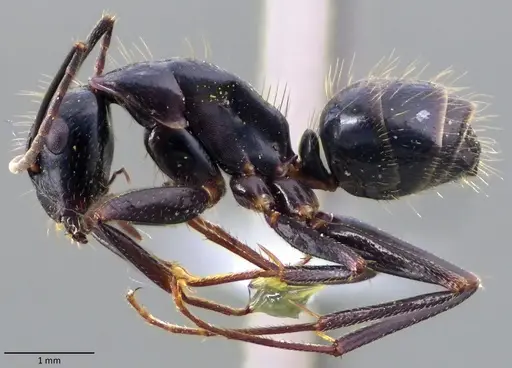
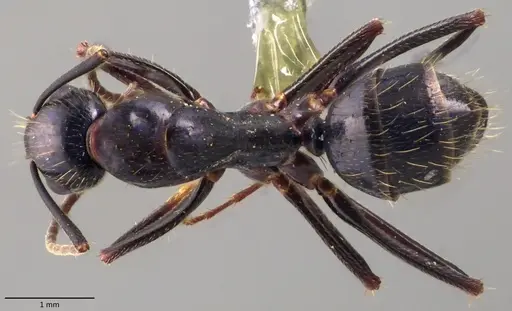
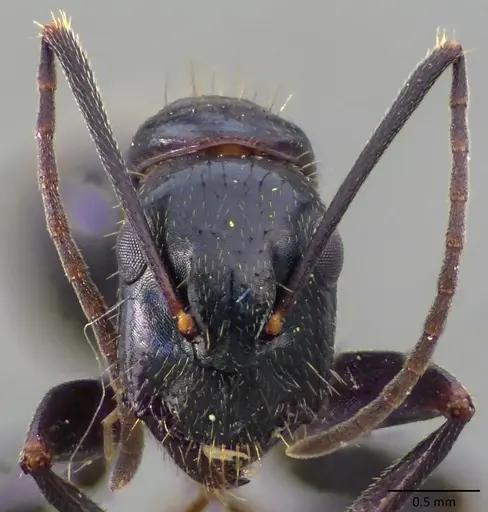
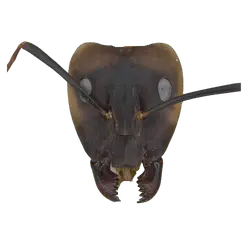
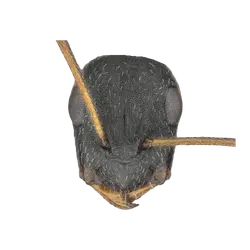
Camponotus aethiops - "Black Carpenter Ant"
Camponotus aethiops is a striking, shiny black ant species known for its polymorphic workers, meaning there's a significant size difference between the smaller minor workers and the larger major workers. Queens are also entirely black with a shiny appearance. As 'carpenter ants,' they are capable of excavating nests in wood, though they also commonly nest in soil and under stones in the wild. This species is generally heat-loving and can be quite fast-moving and aggressive if their nest is disturbed.
- Difficulty: Easy
- Origin & Habitat: Europe, North Africa, Asia Minor, Near East, Iran, Afghanistan, Kazakhstan in Xerotherm grasslands, shrub areas, Mediterranean habitats, under stones in warm pine forests, mixed forests, alpine pastures, dry meadows, and limestone areas..
- Colony Type: Monogyne (single queen), claustral (queen seals herself in) founding.
- Size & Growth:
- Queen: 11-15mm
- Worker: 4-13mm
- Colony: Medium (a few hundred to a few thousand individuals). Slow (initially slow, with exponential growth after reaching around 20 workers) growth.
- Antkeeping:
- Temperature: Nest temperature should ideally be between 21-25°C, with an outworld temperature of 18-28°C. They are heat-loving and can tolerate warmer temperatures, even up to 28-31°C, which can boost reproduction. It's good to provide a temperature gradient if possible, allowing them a cooler area..
- Humidity: Nest humidity should be around 50-65%, while the outworld can be drier at 30-60%. They don't require very high humidity, and regular hydration of the nest (about once a week) is usually sufficient..
- Diapause: Required. 3-5 months at 5-15°C.
- Nesting: They prefer nests made of acrylic, Ytong, 3D printed materials, grout, or plaster. Natural setups can work but might be more challenging due to humidity management. In the wild, they build nests in soil, sometimes under large stones, or with flat domes above ground to absorb warmth..
- Behavior: Medium (towards handler, food or other ants) aggressiveness.
- Common Issues: Colony stalling (especially if not given proper heat or during initial slow growth), Mites (often introduced through unsterilized wild-caught insects), Humidity fluctuations (ensure consistent nest humidity without overdoing it), Queen stress (avoid excessive vibrations or light disturbance during founding and early stages).
Camponotus aethiops is a fantastic species for beginners, especially considering its manageable size compared to other large Camponotus. They might be a bit slow to get going, but once a colony hits about 20 workers, you'll start seeing a noticeable increase in their activity and growth. It's truly rewarding to watch their development from tiny founding stages to a bustling colony.
These ants are quite resilient and adaptable, thriving in warmer, drier conditions typical of their native Mediterranean habitats. They exhibit striking polymorphism, with workers varying significantly in size. As the colony grows, you'll see the emergence of larger, more imposing major workers, which is always a highlight for any ant keeper.
While they're generally easy to care for, patience is key. Their slow initial growth means you won't have a massive colony overnight, but the long lifespan of the queen, potentially up to 10-15 years, makes them a long-term companion. This longevity allows for years of fascinating observation as your colony slowly but surely flourishes.
Feeding them is straightforward as they readily accept a variety of foods. A consistent supply of sugary liquids like honey water or sugar water is essential, and a good protein source from insects such as crickets, mealworms, or flies will ensure your colony thrives. Always remember to freeze or boil wild-caught insects to avoid introducing mites or other pests.
Frequently Asked Questions
What kind of enclosure is best for Camponotus aethiops?
These ants do well in acrylic, Ytong, 3D printed, grout, or plaster nests. Some keepers even use natural setups, but you'll need to pay close attention to humidity levels. Ensure your chosen formicarium allows for a stable humidity gradient, with a slightly moister area for the brood and a drier foraging area.
How often should I feed my Camponotus aethiops colony?
For smaller colonies, feeding 2-3 times a week with a mix of sugary liquids and protein is usually sufficient. As the colony grows, you might need to increase the frequency and quantity. Always ensure a consistent supply of a carbohydrate source like honey water.
Do Camponotus aethiops bite?
Yes, major workers of Camponotus aethiops can deliver a noticeable bite due to their size and strong mandibles, which might cause small cuts on your fingers. They also defend themselves by spraying formic acid. However, they are not typically aggressive unless their nest is disturbed.
Is diapause (hibernation) necessary for Camponotus aethiops?
Yes, Camponotus aethiops, being a European species, requires a period of diapause for a healthy colony and queen longevity. This typically lasts from November to February or March at cooler temperatures (5-15°C).
How long does it take for Camponotus aethiops eggs to become workers?
The development from egg to adult worker for Camponotus aethiops can take approximately 40 days, but this is highly dependent on temperature. Warmer temperatures within their preferred range can speed up brood development.
Why is my Camponotus aethiops colony growing slowly?
Camponotus aethiops colonies are known for their slow initial growth. They typically experience exponential growth only after the first 20 or so workers have emerged. Ensure they have consistent heat within their preferred range, adequate nutrition, and minimal disturbances to encourage faster development.
Can I keep multiple Camponotus aethiops queens together?
No, Camponotus aethiops is a monogyne species, meaning they will only tolerate a single queen per colony. Attempting to keep multiple queens together will likely result in conflict and the death of all but one.
What kind of protein do Camponotus aethiops eat?
They readily accept various protein sources, including fresh-killed insects like crickets, mealworms, flies, and even small spiders. Remember to always sterilize wild-caught insects by freezing or boiling them before feeding to prevent introducing mites or diseases.
What is the lifespan of a Camponotus aethiops queen?
Camponotus aethiops queens can live for a remarkably long time, with an expected lifespan of 10 to 15 years. Proper care, including correct diapause and nutrition, contributes to a long and healthy life for your queen.
How do I know if my Camponotus aethiops colony needs more humidity?
While they don't need extremely high humidity, signs of low humidity can include workers congregating around the water source in the test tube or nest, or brood appearing dried out. Regular weekly hydration of the nest is a good practice.
Can Camponotus aethiops climb smooth surfaces like glass?
Yes, Camponotus species are generally good climbers and can navigate most surfaces, including climbing vertical and even upside down on glass. However, larger workers (majors) might have some difficulty with very steep or narrow vinyl tubing.