

Azteca andreae
- Scientific Name
- Azteca andreae
- Tribe
- Leptomyrmecini
- Subfamily
- Dolichoderinae
- Author
- Guerrero <i>et al.</i>, 2010
- Distribution
- Found in 1 countries
Azteca andreae Overview
Azteca andreae is an ant species of the genus Azteca. It is primarily documented in 1 countries , including French Guiana. Detailed taxonomic data and occurrence records can be further explored via authoritative databases such as AntWeb or the Global Biodiversity Information Facility (GBIF).
Azteca andreae
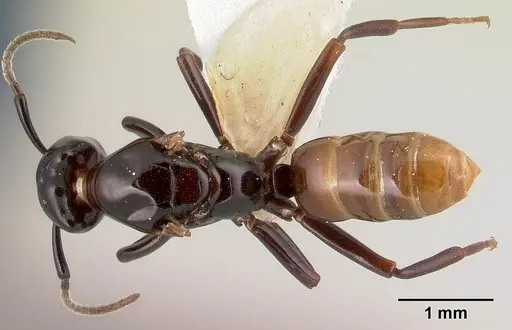
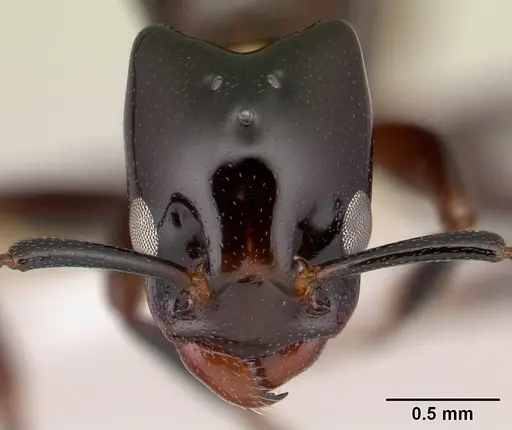
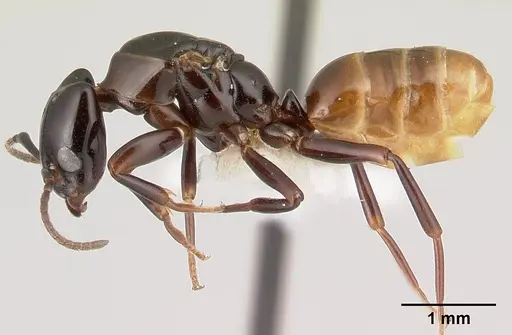
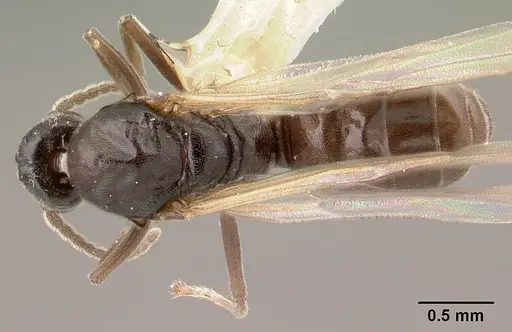
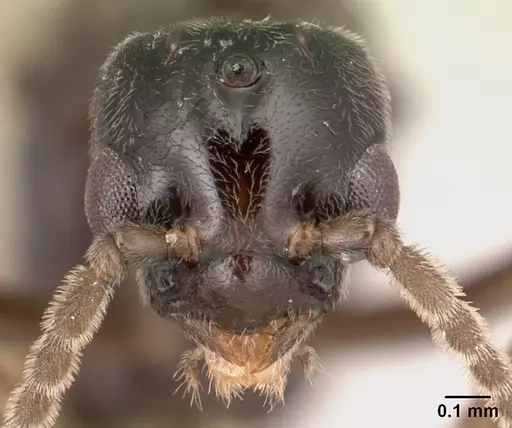
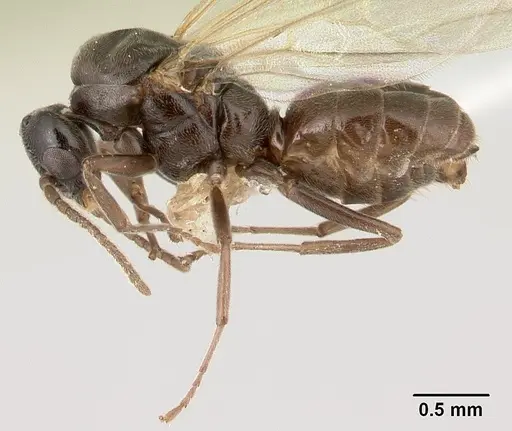
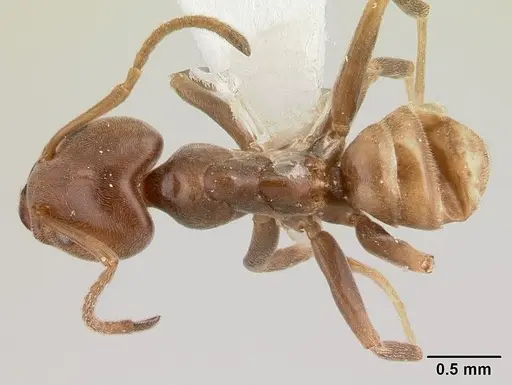
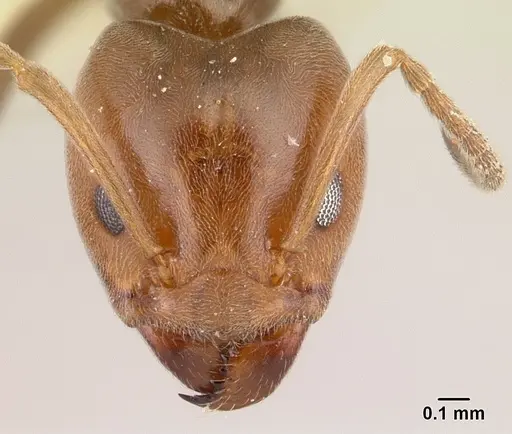
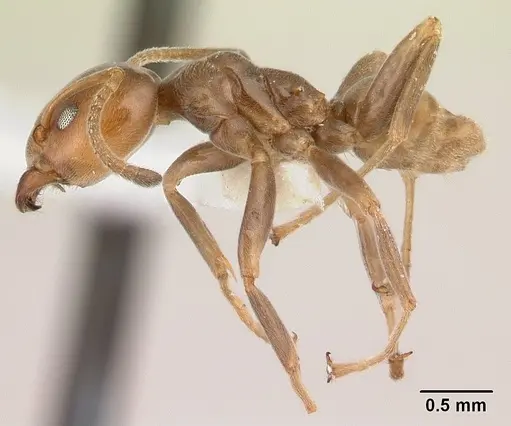
Azteca andreae is a small reddish-brown arboreal ant native to French Guiana. Workers measure 1.2-1.4 mm in head width with distinctive tube-like propodeal spiracles projecting outward, and the species constructs large, conspicuous globular carton nests on the trunks and crowns of Cecropia trees [1]. These ants are famous for their unique "Velcro" hunting strategy, where thousands of workers line up side-by-side beneath leaf margins and use hook-shaped claws to grip the velvet-like leaf underside, allowing them to collectively ambush and capture prey up to 13,350 times their individual weight [2]. They are also temporary social parasites, requiring colonies of Azteca ovaticeps to serve as hosts for new queen establishment [3].
Quick Summary
- Difficulty: Expert
- Origin & Habitat: French Guiana, Neotropical region [1]. Tropical rainforest, specifically associated with myrmecophytic Cecropia trees (C. obtusa and C. palmata) in pioneer vegetation, though occasionally found on non-Cecropia hosts like Vismia and Miconia species [3].
- Colony Type: Single-queen colonies (monogyne) with physogastric (swollen, egg-laden) queens. Temporary social parasite of Azteca ovaticeps, queens must invade and take over existing host colonies rather than founding independently [3][1].
- Colony: Monogyne
- Queen: Temporary parasitic
- Size & Growth:
- Queen: Approximately 4-5 mm body length (head width 1.06-1.10 mm) [1].
- Worker: Small, head width 1.20-1.36 mm (approximately 3-4 mm body length) [1].
- Colony: Up to 30,899 workers documented in nature [3].
- Growth: Slow founding phase (host-dependent), then rapid growth to very large colonies.
- Development: Timeline unconfirmed, based on tropical Azteca patterns, estimate 6-10 weeks at 25-28°C. (Development likely faster in established colonies than during parasitic founding phase.)
- Antkeeping:
- Temperature: Warm and stable, roughly 24-28°C. As a tropical species from French Guiana, they require consistent warmth year-round [1].
- Humidity: High humidity,70-80%. The nest substrate should remain consistently moist to support their carton nest construction, matching their rainforest habitat [3].
- Diapause: No, tropical species with no winter rest period required.
- Nesting: Arboreal carton nests. They build external ovoid nests on vertical surfaces using plant fibers and silk. You must provide vertical space and materials (dried leaves, plant fibers) for carton construction [3][1].
- Behavior: Highly specialized group ambush hunters using the 'Velcro principle' to capture massive prey. Defensive against army ants by dropping brood as a distraction. Workers are polymorphic with specialized hunting castes (heavier workers for ambush, lighter for nest duties). They do not sting but may bite, their small size makes them expert escape artists [2][4][3].
- Common Issues: temporary social parasitism makes captive founding nearly impossible, you cannot start a colony from a single queen in a test tube without a host Azteca ovaticeps colony., massive colony size (30,000+ workers) requires enormous vertical enclosures rarely available to hobbyists., tiny worker size (1.2-1.4mm head width) means they escape through standard mesh barriers and the smallest gaps., carton nest construction requires specific materials and high humidity, nests collapse or mold without proper fiber sources and moisture maintenance.
Colony Founding and Temporary Social Parasitism
You cannot found Azteca andreae using the standard test tube setup. These ants are temporary social parasites of Azteca ovaticeps, meaning new queens must invade an existing host colony to establish themselves [3]. The queen enters the host nest, likely kills or subdues the host queen, and uses the host workers to raise her first brood until her own workers mature. In nature,21 mixed colonies (A. andreae plus A. ovaticeps workers) have been documented, confirming this parasitic relationship is specific to A. ovaticeps and does not involve A. alfari [3]. For captive keepers, this makes founding essentially impossible without access to healthy host colonies and the expertise to perform introductions. Wild-caught mature colonies are the only practical option for keeping this species.
The Velcro Hunting Strategy
Azteca andreae practices one of the most elaborate group hunting strategies known in ants. Up to 85% of the colony (over 8,000 workers on a single tree) hides side-by-side beneath leaf margins with mandibles wide open, waiting for insects to land [2][3]. When prey touches the leaf edge, the nearest workers attack and spread-eagle the victim while nestmates rush to help. The workers possess hook-shaped claws that catch on the velvet-like, fibrous underside of Cecropia leaves, creating a natural Velcro effect that prevents prey escape [2]. This allows them to capture enormous prey, up to 13,350 times their body weight, including locusts weighing over 18 grams and large moths [2]. Hunting workers are significantly heavier (1.39 mg) than nest workers (0.68 mg), showing clear physical specialization for this task [3].
Nest Construction and Arboreal Requirements
Unlike soil-nesting ants, Azteca andreae builds external carton nests on the trunks and crowns of trees. They construct large, globular ovoid nests using plant fibers bound together with silk or other secretions [1][3]. In nature, they prefer Cecropia obtusa but will use C. palmata and even move to non-Cecropia trees if their host loses branches [3]. Colonies can build new nests on nearby trees within approximately three weeks when necessary [3]. In captivity, you must provide a vertical setup with cork bark or wood surfaces, plus abundant dried leaves and plant fibers for nest construction. The enclosure needs to be tall rather than wide, as they are arboreal, and must maintain high humidity to prevent the carton from drying out and crumbling.
Feeding and Prey Capture
These ants are specialist predators that do not rely on the food bodies provided by their Cecropia host plants [3]. Instead, they capture live prey through their group ambush strategy, seizing insects by the extremities and spread-eagling them for 4 to 10 minutes while recruits arrive to help carve up and transport the food [2]. They also tend hemipterans for honeydew [3]. Captive colonies need large prey items, significantly larger than the ants themselves, to trigger their hunting response. Offer whole insects like crickets, cockroaches, or moths, and provide sugar water or honeydew substitutes in addition to protein. Because they hunt in groups, they require feeding surfaces that allow multiple workers to grip simultaneously.
Defense Against Army Ants
When threatened by army ant raids (specifically Eciton burchellii), Azteca andreae practices a dramatic defensive sacrifice. Workers drop small larvae and brood onto the ground near the base of their host tree [4]. The army ants gather this dropped brood and do not climb the tree (or only advance a few workers less than 60 cm), allowing the front of the raid to pass by while the core colony survives [4]. This behavior has been observed in multiple encounters in French Guiana, with no colonies successfully invaded by the army ants [4]. In captivity, this means colonies may drop brood when stressed by disturbances or other ant species.
Temperature and Tropical Care
As a tropical species from French Guiana, Azteca andreae requires warm temperatures between 24-28°C year-round with no diapause period [1]. They cannot tolerate cold or even cool room temperatures typical of temperate regions. Use a heating cable or mat on one side of the enclosure to create a thermal gradient, but ensure it does not dry out the carton nest material. High humidity (70-80%) is essential for both the ants and their nest structure. Monitor the nest material regularly, it should feel damp but not waterlogged. Ventilation must balance humidity retention with fresh air to prevent mold growth on the organic carton material.
Frequently Asked Questions
Can I keep Azteca andreae in a test tube?
No. Unlike most ants, you cannot start an Azteca andreae colony in a test tube from a single queen. They are temporary social parasites that must invade existing Azteca ovaticeps colonies to establish new nests [3].
How long until Azteca andreae first workers arrive?
There is no standard timeline because founding depends on accessing a host colony. The queen must first take over an Azteca ovaticeps colony and use the host workers to raise her brood. Without a host, the queen will not produce workers.
Can I keep multiple Azteca andreae queens together?
No. Colonies are monogyne (single-queen). Mature nests contain one physogastric queen, and combining multiple queens would likely result in fighting [3].
What do Azteca andreae eat?
They are specialized group hunters that capture large live insects using their Velcro-like ambush strategy. They can take prey up to 13,350 times their weight, including large grasshoppers and moths. They also tend hemipterans for honeydew [2][3].
Do Azteca andreae need hibernation?
No. They are tropical ants from French Guiana and require warm temperatures year-round. They do not enter diapause or winter rest [1].
Why are my Azteca andreae dying?
Common causes include insufficient humidity causing carton nests to collapse, inability to found without host colonies, or escapes due to their tiny size (1.2-1.4mm head width). They also require enormous enclosures as colonies grow to 30,000+ workers [3].
How big do Azteca andreae colonies get?
Very large. Documented colonies in nature contain between 2,192 and 30,899 workers, with the largest nests housing over 30,000 workers plus numerous brood and sexuals [3].
Are Azteca andreae good for beginners?
No. They are expert-level ants due to their temporary social parasitic founding requirements, massive colony size, specialized carton nesting needs, and tiny escape-prone workers.
References

This caresheet is licensed under CC BY-SA 4.0 .
Literature
Loading...Loading products...