

Alfaria caelata
- Scientific Name
- Alfaria caelata
- Tribe
- Ectatommini
- Subfamily
- Ectatomminae
- Author
- Kempf, 1967
- Distribution
- Found in 3 countries
Alfaria caelata Overview
Alfaria caelata is an ant species of the genus Alfaria. It is primarily documented in 3 countries , including Bolivia, Plurinational State of, Brazil. Detailed taxonomic data and occurrence records can be further explored via authoritative databases such as AntWeb or the Global Biodiversity Information Facility (GBIF).
Alfaria caelata
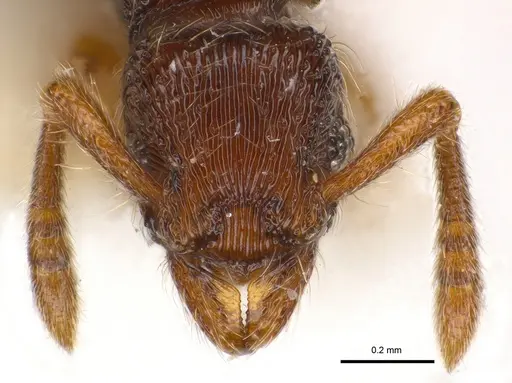
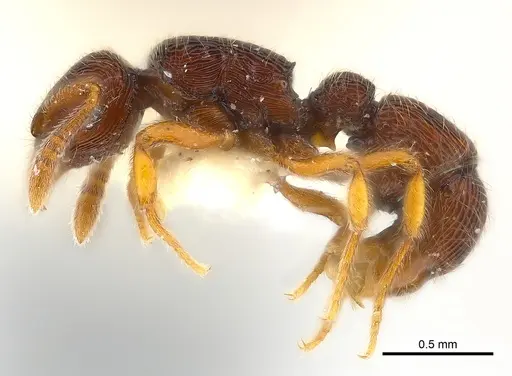
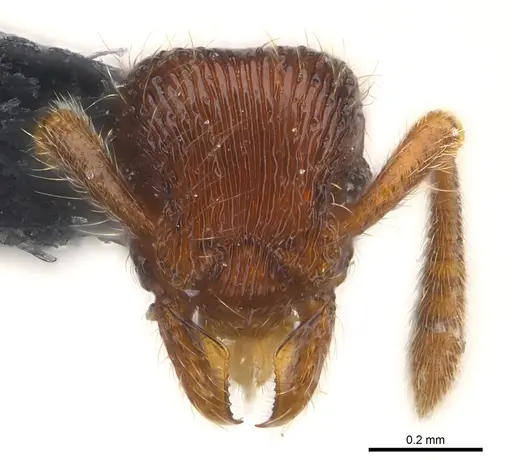
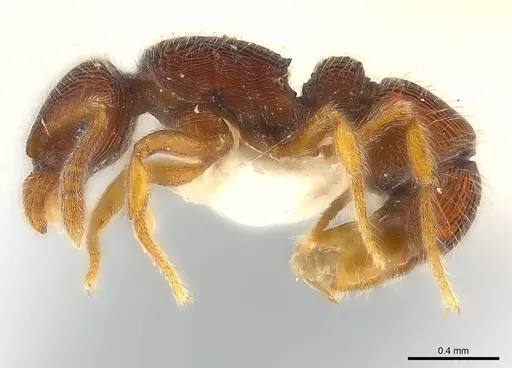
Alfaria caelata are tiny soil-dwelling ants from South America, recently moved from the genus Gnamptogenys to Alfaria in 2022 [1]. Workers are exceptionally small at under 3mm total body length, with wrinkled mandibles and a distinctive rough, striated body texture [2][3]. Unlike many of their relatives who nest in rotting wood, these ants burrow into soil [2]. They live in lowland tropical forests across Brazil, Colombia, Argentina, Paraguay and Venezuela, with most records coming from near the forest floor in leaf litter [4][5]. Despite their wide distribution across the Neotropics, researchers have documented almost nothing about their biology, papers explicitly state that nothing is known about their colony structure, breeding habits, or daily behavior [6][3].
Quick Summary
- Difficulty: Expert
- Origin & Habitat: Neotropical lowland tropical forests, recorded in Brazil (Pará, Paraná, Maranhão, Minas Gerais, Rondônia), Colombia (Amazonas), Argentina, Paraguay and Venezuela [2][4][1]. Most records are from lowland sites under 400m elevation, though one collection came from 1400m [4]. Collected from soil and leaf litter using Winkler traps [5].
- Colony Type: Unknown, no data on queen number, colony structure, or presence of ergatoid reproductives [6][3].
- Size & Growth:
- Queen: Unknown, no queen caste described in available research.
- Worker: Under 3mm total body length [2].
- Colony: Unknown, no colony size data available.
- Growth: Unknown
- Development: Unknown, estimated 6-10 weeks at 25-28°C based on similar small tropical ants, but unconfirmed. (No developmental studies exist for this species. Timeline is speculative based on genus-level patterns for small Ectatomminae.)
- Antkeeping:
- Temperature: 24-28°C (inferred from tropical lowland habitat). Start at 26°C and adjust based on activity levels [4].
- Humidity: Moderate to high humidity with moist but not waterlogged soil substrate. Allow the nest to dry slightly between waterings to prevent mold [2].
- Diapause: No, tropical species that likely remains active year-round.
- Nesting: Soil nests in nature [2]. In captivity, use a small formicarium with fine soil, sand-clay mix, or plaster with narrow chambers sized to their tiny bodies. Avoid tall open spaces.
- Behavior: Activity patterns are undocumented [6]. Their extremely small size (under 3mm) means they can squeeze through incredibly small gaps, escape prevention must be exceptional [2].
- Common Issues: lack of captive care data means most attempts will be experimental with high failure rates., workers under 3mm can escape through gaps that larger ants cannot, use fine mesh and barrier products like Fluon., unknown founding behavior makes starting colonies from queens extremely difficult since we do not know if queens need to forage., tropical humidity requirements combined with soil nesting creates mold risk without careful ventilation., prey items must be extremely small, standard fruit flies may be too large for workers to handle.
Natural History and Data Limitations
Alfaria caelata presents a unique challenge for antkeepers because scientists have documented almost nothing about how these ants live. Multiple taxonomic papers explicitly state that nothing is known about the biology of this ant [6][3]. We know they exist across the Neotropical region from Argentina to Colombia, primarily in lowland tropical forests under 400m elevation [4]. Workers have been collected from soil and leaf litter using Winkler extraction methods, confirming they are ground-dwelling rather than arboreal [5]. The species was originally described as Alfaria caelata in 1967 but moved to Alfaria in 2022 based on genetic and morphological studies [1]. For keepers, this means you will be working with an undomesticated species where no one has published captive breeding protocols, and even basic questions like 'how big do colonies get?' or 'what do they eat?' remain unanswered in the scientific literature.
Housing and Nest Setup
In nature, Alfaria caelata nests in soil, unlike wood-nesting relatives [2]. This means test tube setups may not be appropriate unless filled with substrate. For captive housing, provide a small formicarium with chambers and tunnels scaled to their tiny size, remember workers are under 3mm long [2]. A naturalistic setup with a mix of fine sand and clay, or a plaster nest with very narrow grooves (2-3mm wide), would mimic their soil-dwelling habits. Because they are tropical, maintain moderate to high humidity by keeping the substrate moist but not waterlogged. However, ensure good ventilation to prevent mold growth in the damp soil. A heating cable on one side of the nest can create a gentle gradient, but avoid placing heat underneath soil nests as this can dry them out too quickly or cause condensation flooding.
Temperature and Seasonal Care
As a lowland tropical species from the Amazon basin and surrounding regions, Alfaria caelata likely requires warm stable temperatures year-round [4]. Most collection records come from hot, humid lowland forests, suggesting you should maintain temperatures around 24-28°C [4]. One record exists from 1400m elevation in Minas Gerais, indicating some populations may tolerate slightly cooler conditions, but the majority of records suggest warmth-loving ants [4]. They likely do not require hibernation or diapause, remaining active throughout the year. If you cannot provide consistent tropical temperatures, this species is not suitable for your setup. Use a thermostat-controlled heating mat or cable on one side of the nest to create a thermal gradient, allowing the ants to self-regulate their body temperature by moving closer to or away from the heat source.
Feeding and Diet
While no specific dietary studies exist for Alfaria caelata, members of the subfamily Ectatomminae are generally predatory or scavenging hunters. Given their minute size (workers under 3mm), they require very small prey [2]. Suitable food items might include springtails (Collembola), tiny soil mites, or freshly killed small insects chopped into pieces smaller than 1mm. Standard fruit flies (Drosophila) may be too large for these tiny workers to handle effectively. They may also accept sugar sources like honey water or sugar water, though this has not been documented. Offer protein twice weekly and sugar water constantly, but observe carefully to see what they actually accept, with an undomesticated species, you will need to experiment to discover their preferences.
Colony Founding and Reproduction
Founding behavior is completely unconfirmed for Alfaria caelata [6][3]. We do not know if queens are claustral (sealing themselves in to live off fat reserves), semi-claustral (needing to forage during founding), or if they even have a distinct queen caste, some related small ants have ergatoid (wingless worker-like) reproductives. If you obtain a queen, you will be conducting original research. Start with a small soil-filled chamber or test tube with substrate, keep it at 26-28°C, and offer tiny amounts of protein regularly in case she needs to forage. Watch for eggs after 2-4 weeks, but be prepared for the possibility that founding may take longer or require conditions we have not yet identified. There is no data on whether multiple queens can cooperate (pleometrosis) or if colonies accept new queens later (polygyny).
Frequently Asked Questions
Are Alfaria caelata good for beginners?
No, these are expert-level ants only. Their biology is almost completely unknown to science, they are extremely small (under 3mm), and no captive breeding protocols exist. Beginners should start with well-documented species like Lasius niger or Tetramorium immigrans instead [6][3].
Can I keep Alfaria caelata in a test tube setup?
Standard water test tubes may not be ideal since they naturally nest in soil [2]. If using test tubes, fill them with moist sand or fine soil to provide substrate they can burrow in. Small formicaria with soil mixes are likely better than bare test tubes for this species.
How long until Alfaria caelata gets their first workers?
Unknown, no developmental data exists. Based on similar small tropical ants, estimate 6-10 weeks at 25-28°C, but this is speculative and could vary significantly [6].
Can I keep multiple Alfaria caelata queens together?
Unknown, combining multiple queens has not been documented and is not recommended. Start with one queen if you can find one, as colony structure (monogyne vs polygyne) is completely unstudied [6][3].
Do Alfaria caelata need hibernation?
No, they are a tropical lowland species from hot regions of South America and likely remain active year-round. Do not cool them below 20°C [4].
What do Alfaria caelata eat?
Their diet is undocumented, but related species are predatory. Offer very small prey like springtails or tiny insect pieces, as standard fruit flies may be too large for these sub-3mm workers [2][6].
Do Alfaria caelata ants sting?
Unknown, they belong to a subfamily that includes stinging species, but at under 3mm they likely cannot penetrate human skin even if they possess a stinger [2].
Why are my Alfaria caelata dying?
Common causes likely include escape (they are tiny enough to fit through almost any gap), incorrect humidity (they need moist soil but not waterlogging), prey that is too large to handle, or temperature fluctuations. Since no captive care data exists, mortality is unfortunately common with this species [2][6].
References

This caresheet is licensed under CC BY-SA 4.0 .
CASENT0179949
View on AntWeb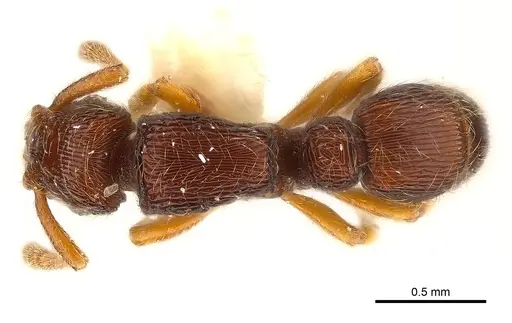
CASENT0179973
View on AntWeb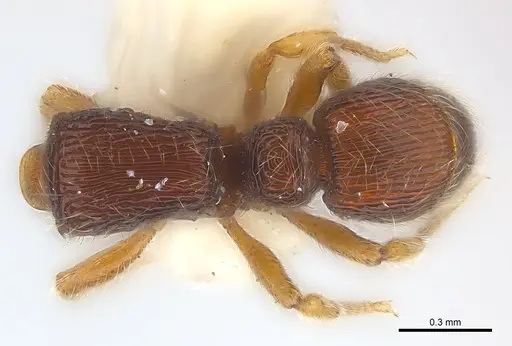
Literature
Loading...Loading products...