

Aenictus prolixus
- Scientific Name
- Aenictus prolixus
- Subfamily
- Dorylinae
- Author
- Shattuck, 2008
- Distribution
- Found in 2 countries
Aenictus prolixus Overview
Aenictus prolixus is an ant species of the genus Aenictus. It is primarily documented in 2 countries , including Australia, Papua New Guinea. Detailed taxonomic data and occurrence records can be further explored via authoritative databases such as AntWeb or the Global Biodiversity Information Facility (GBIF).
Aenictus prolixus
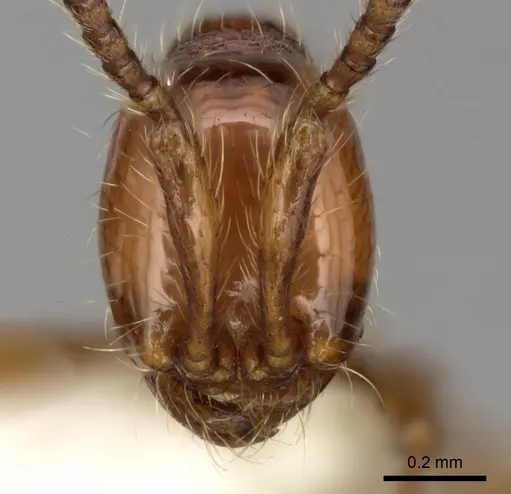
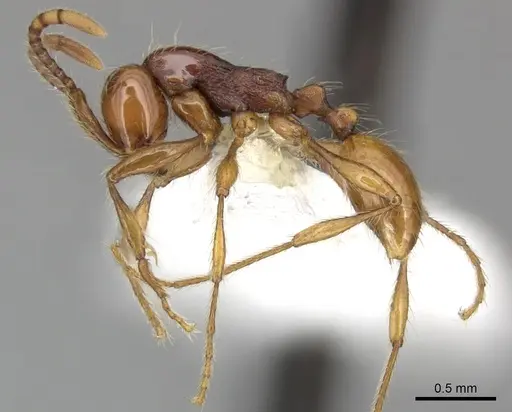
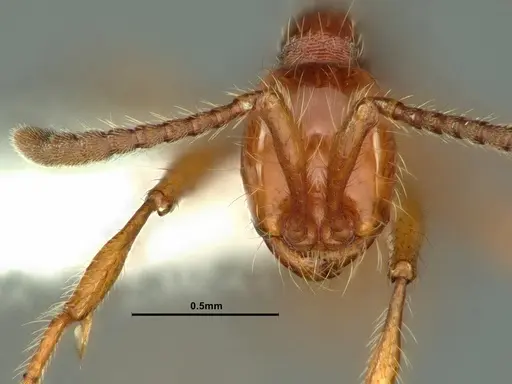
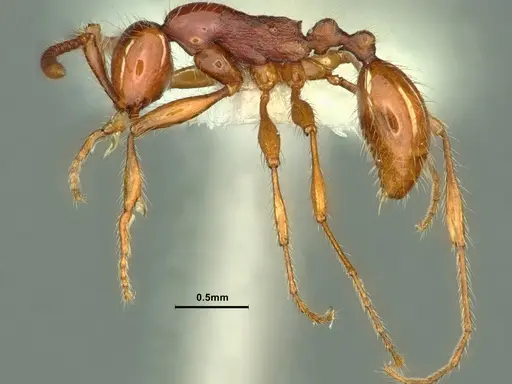
Aenictus prolixus is a tiny army ant from northern Australia, with workers measuring just over half a millimeter in length [1]. These yellow-red ants have smooth heads and relatively long antennae compared to their body size, giving them a distinctive look within the Aenictus pachycerus group [1]. They live in the tropical forests of northern Queensland and the Northern Territory, where they hunt under stones and across the forest floor [1][2].
What makes this species truly different from typical pet ants is their army ant lifestyle [3]. Unlike ants that settle permanently in one nest, Aenictus prolixus lives a nomadic existence, constantly moving between temporary camps called bivouacs [3]. They conduct organized raids day and night, swarming other ant nests, wasp colonies, and termite mounds to steal brood and prey [3]. Several workers coordinate to carry large prey items back to their ever-changing camp [3]. This wandering lifestyle and their specialized diet of other social insects makes them nearly impossible to keep in standard ant farms.
Quick Summary
- Difficulty: Expert
- Origin & Habitat: Northern Australia (northern Queensland and Northern Territory), tropical rainforest and woodland, found under stones and in leaf litter [1][2]
- Colony Type: Single-queen colonies (monogyne) inferred from genus patterns, though queens remain unknown for this species. Colonies likely large but exact size unconfirmed.
- Colony: Monogyne
- Size & Growth:
- Queen: Unknown, queens have never been collected for this species [2]
- Worker: 0.55-0.62 mm length,0.46-0.54 mm width [1]
- Colony: Unknown, based on typical Aenictus patterns, likely several thousand to tens of thousands of workers
- Growth: Unknown, army ants typically have synchronized brood development cycles
- Development: Unknown, no developmental data exists for this species (Army ants often have irregular brood cycles with bursts of development rather than continuous growth)
- Antkeeping:
- Temperature: Warm tropical conditions, roughly 24-28°C inferred from northern Australian distribution [1]
- Humidity: High humidity required, keep substrate moist but not waterlogged, matching tropical rainforest conditions
- Diapause: No, tropical species that remains active year-round [1]
- Nesting: Cannot use standard nests. Requires specialized army ant setup allowing for constant relocation (bivouac behavior) [3]
- Behavior: Highly aggressive army ant that conducts organized raids on other ant colonies and termites [3]. Nomadic lifestyle means they frequently move camp, sometimes daily when raising brood [3]. Workers are extremely small (under 1mm) creating severe escape risks [1].
- Common Issues: impossible to house in standard formicaria due to nomadic bivouac behavior, they need space to form living nests from their own bodies and move constantly [3], require massive quantities of live prey consisting specifically of other ant colonies, termites, or wasps, cannot survive on standard ant foods like honey or mealworms [3], tiny worker size (0.5mm) means they escape through the smallest gaps in any enclosure [1], no known method to start a captive colony since queens have never been documented and founding behavior is unconfirmed, wild-caught colonies likely contain specialized predators or parasites that die without natural host cycles
Army Ant Biology and Housing Challenges
Aenictus prolixus is a true army ant, which means they do not live in permanent nests like Lasius or Camponotus [3]. Instead, they alternate between a stationary phase where they occupy semi-permanent underground nests, and a nomadic phase where they form temporary bivouacs in sheltered places above ground [3]. During the nomadic phase, the entire colony moves regularly, sometimes more than once per day, especially when larvae need large amounts of food [3].
This lifestyle makes them impossible to keep in standard ant farms, test tubes, or formicaria. In captivity, you would need a specialized setup that allows the colony to form a living bivouac (a structure made from the ants' own bodies clinging together) and space to move frequently [3]. Most ant keepers lack the facilities to maintain colonies that require constant relocation and specialized prey delivery systems.
Feeding and Diet Requirements
These ants are specialist predators that primarily attack other ants, social wasps, and termites [3]. During raids, numerous workers swarm a single target nest, with several workers coordinating to carry large prey items back to their bivouac [3]. They forage both day and night, usually across the ground surface but occasionally moving into trees [3].
You cannot feed Aenictus prolixus with standard ant keeping foods like sugar water, honey, or mealworms. They require living colonies of other ants or termites to raid [3]. This means maintaining a continuous supply of 'feeder' ant colonies, which presents ethical and practical challenges for most keepers. Without constant access to appropriate live prey, the colony will starve.
Why This Species Is Not Recommended for Captivity
While Aenictus prolixus represents fascinating army ant biology, this species is unsuitable for captive keeping for several practical reasons. First, only workers are known, no queens have ever been collected or described [2]. This means you cannot start a colony from a single queen, and any wild colony you collect is already established with an unknown lifespan remaining.
Second, their nomadic behavior requires housing that allows for constant movement and bivouac formation [3]. Standard ant keeping equipment cannot accommodate this. Third, their specialized diet requires maintaining multiple other ant or termite colonies as food sources [3]. Finally, at just 0.5mm in length, workers are small enough to escape through almost any barrier [1].
If you are interested in army ants, consider documenting wild colonies through photography and observation rather than attempting captivity.
Temperature and Environmental Needs
Based on their distribution in northern Queensland and the Northern Territory, Aenictus prolixus experiences tropical conditions year-round [1]. You should maintain temperatures around 24-28°C with high humidity matching rainforest conditions [1].
As a tropical species, they do not require hibernation or diapause [1]. They remain active throughout the year. However, maintaining stable tropical conditions in a captive setup presents its own challenges, particularly when combined with the high ventilation needed to prevent mold in such humid environments.
Identification and Similar Species
Workers of Aenictus prolixus are small, yellow-red ants with entirely smooth heads and relatively long scapes (antennae segments) compared to similar species [1]. The subpetiolar process (a projection under the waist) is large and rectangular [1].
They are most similar to Aenictus acerbus and Aenictus turneri but can be separated by their longer scapes [1]. If you find these ants in the wild in northern Australia, they are likely to be foraging in columns on the ground or under stones during the day or night [1][3].
Frequently Asked Questions
Can I keep Aenictus prolixus in a test tube setup?
No. These are army ants with a nomadic lifestyle that requires constant movement and the formation of bivouacs (temporary living nests made from the ants' bodies) [3]. They cannot survive in static test tubes or standard formicaria.
How do I found an Aenictus prolixus colony from a queen?
You cannot. Queens of this species have never been collected or documented [2]. The reproductive biology remains unknown, making captive founding impossible.
What do Aenictus prolixus eat?
They are specialist predators that raid other ant colonies, social wasps, and termites [3]. They require living colonies of these prey items and cannot survive on sugar water or standard feeder insects.
How big do Aenictus prolixus colonies get?
The exact colony size is unknown, but based on typical Aenictus army ant biology, they likely contain several thousand to tens of thousands of workers.
Do Aenictus prolixus ants sting?
Like most Aenictus, they probably lack a functional stinger but can bite with their mandibles. However, at only 0.5mm in length, they are too small to harm humans [1].
Are Aenictus prolixus good for beginners?
No. This is an expert-only species requiring specialized housing for nomadic behavior, constant supply of other ant colonies as food, and handling extremely small workers that escape easily [3][1].
Do Aenictus prolixus need hibernation?
No. They are tropical ants from northern Australia and remain active year-round [1].
Can I catch a wild colony of Aenictus prolixus?
While you might find a bivouac or raid column in northern Queensland or the Northern Territory, maintaining a wild-caught colony presents extreme challenges including their nomadic behavior, massive food requirements, and unknown colony health [3].
How long does Aenictus prolixus take from egg to worker?
The development timeline is unknown for this species. Army ants often have synchronized brood cycles rather than continuous development, but specific timing has not been documented.
Why do my Aenictus prolixus keep trying to escape?
This is normal army ant behavior. They are nomadic by nature and constantly move camp [3]. Additionally, at 0.5mm long, they can fit through gaps invisible to the naked eye [1].
References

This caresheet is licensed under CC BY-SA 4.0 .
CASENT0249283
View on AntWeb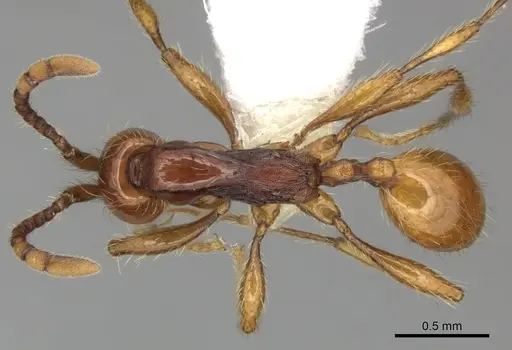
CASENT0883439
View on AntWeb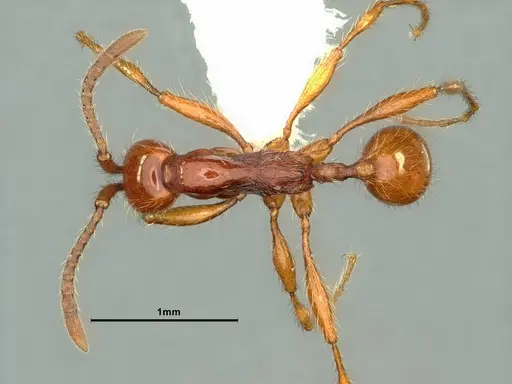
Literature
Loading...Loading products...