

Aenictus hodgsoni
- Scientific Name
- Aenictus hodgsoni
- Subfamily
- Dorylinae
- Author
- Forel, 1901
- Distribution
- Found in 1 countries
Aenictus hodgsoni Overview
Aenictus hodgsoni is an ant species of the genus Aenictus. It is primarily documented in 1 countries , including China. Detailed taxonomic data and occurrence records can be further explored via authoritative databases such as AntWeb or the Global Biodiversity Information Facility (GBIF).
Aenictus hodgsoni
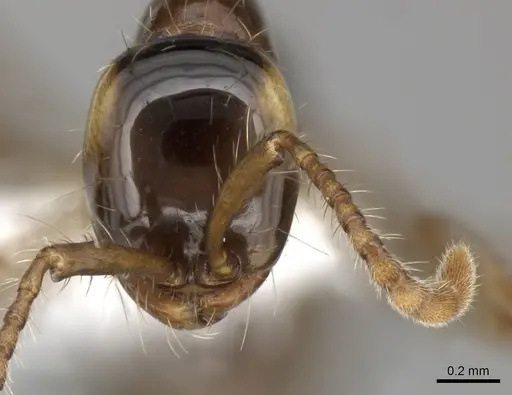
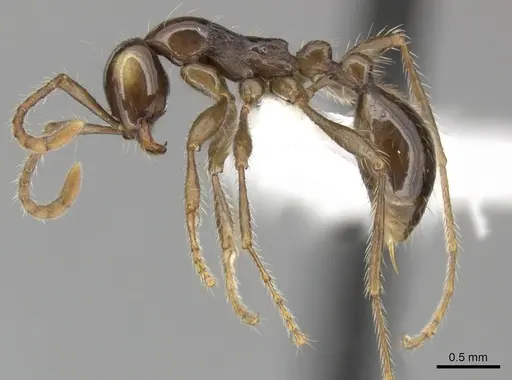
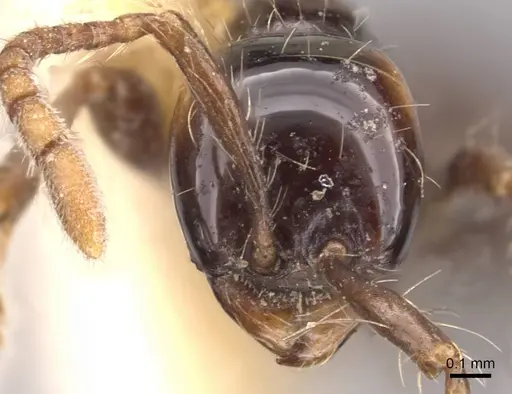
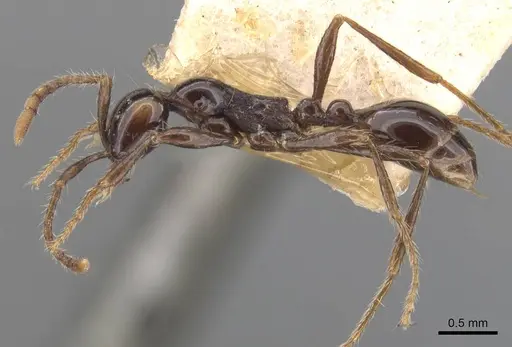
Aenictus hodgsoni is a small army ant found across Southeast Asia, from South China and Thailand down to Java and Bali [1]. Workers measure just 3.50-3.70 mm and are dark reddish-brown with smooth, shiny bodies and relatively short antennae [2][1]. They inhabit varied forest types from lowland savanna to highland evergreen rainforest [1][3]. Unlike most army ants that hunt exclusively, these ants show surprising flexibility, while they primarily prey on other ant species like Anoplolepis gracilipes and Camponotus, they have also been observed tending aphids for honeydew, making them one of only three army ant species globally known to do this [4][1].
Quick Summary
- Difficulty: Expert/Not Recommended
- Origin & Habitat: Southeast Asia including Thailand, Vietnam, Laos, Cambodia, Myanmar, China, and Indonesia, found in varied forest types from lowland to highland including hill evergreen forest, dry evergreen forest, and mixed deciduous forest [1][3]. Absent from rubber plantations, indicating need for natural forest habitat [5].
- Colony Type: Army ant, reproduces by colony fission rather than single queen founding, multiple queens likely present based on army ant biology [inferred].
- Colony: Polygyne, Supercolonial
- Size & Growth:
- Queen: Unknown, queens have not been described for this species [6].
- Worker: 3.50-3.70 mm total length [2][1].
- Colony: Unknown, army ants typically maintain colonies of thousands to millions of workers [inferred].
- Growth: Unknown.
- Development: Unknown. (Army ant brood development is typically rapid in warm conditions, but specific timeline for this species is unconfirmed.)
- Antkeeping:
- Temperature: Likely 24-28°C based on tropical Southeast Asian distribution, specific requirements unconfirmed [inferred from range].
- Humidity: High humidity, species occupies damp forest floor habitats [3].
- Diapause: No, tropical species active year-round [inferred].
- Nesting: Soil and leaf litter, nomadic species does not construct permanent nests [4][inferred].
- Behavior: Highly aggressive predatory army ant active both day and night, hunts other ant species and occasionally collects honeydew from aphids [1][4]. Workers sting and bite defensively when disturbed [4]. Their small size (3.5mm) creates significant escape risk in standard setups.
- Common Issues: colonies require massive daily food input of live ant prey, making feeding unsustainable for most keepers., nomadic behavior means they will not stay in a standard nest, they require constant space to roam and raid., small worker size (3.5mm) allows escape through the tiniest gaps in standard formicarium setups., reproduction by colony fission means you cannot start a colony from a single queen like typical pet ant species., aggressive stinging and biting poses risk during any maintenance attempts.
Army Ant Biology and Why Standard Care Won't Work
Aenictus hodgsoni is a true army ant, which immediately tells you this is not a standard pet ant species. Army ants live a nomadic lifestyle, constantly moving their entire colony through the forest rather than staying in one nest [inferred from army ant biology]. They do not have a permanent home. Instead, the colony bivouacs in temporary shelters like hollow logs or soil cavities for a few days at most before moving on to new hunting grounds. This means standard ant farms, test tubes, or formicariums are completely unsuitable, the ants will not stay put, and they require massive amounts of space to roam and hunt. Additionally, army ants reproduce by colony fission, where the colony splits into two when large enough. You cannot start a colony from a single queen in a test tube, you would need to obtain an entire established colony with multiple queens and thousands of workers already present. [1][6]
Diet and Feeding Behavior
In the wild, Aenictus hodgsoni is a specialized predator of other ants. They have been observed preying on Anoplolepis gracilipes, Camponotus rufoglaucus, Iridomyrmex anceps, and other ant species, as well as cockroaches [1]. This dietary requirement presents the biggest obstacle to captive care. A colony would need a constant supply of live ant prey, potentially hundreds or thousands of individual ants per day, to sustain itself. This is simply not feasible for hobbyists. Interestingly, these ants occasionally show flexibility in their diet. Researchers observed approximately 30 workers tending aphids (Eutrichosiphum heterotrichum) on a tree and collecting honeydew, establishing a foraging trail back to a soil nest 2 meters away [4]. The ants aggressively defended these aphids by stinging and biting. However, this appears to be opportunistic supplementation rather than a primary food source, so you cannot rely on sugar water or honeydew to sustain them.
Natural Habitat and Environmental Needs
These ants occupy a wide range of forest habitats across Southeast Asia, from lowland savanna to highland evergreen rainforest [1][3]. They are found in leaf litter and foraging columns on the forest floor, typically at elevations between 610-825 meters in surveyed locations [3]. They are notably absent from rubber plantations, suggesting they require relatively undisturbed natural forest with complex ground cover [5]. Based on this distribution, they likely need warm temperatures around 24-28°C and high humidity similar to tropical forest floor conditions. They are active both day and night, so they do not follow a strict nocturnal schedule [1]. Since they are tropical, they do not require winter hibernation.
The Reality of Keeping Aenictus hodgsoni
To be direct: this species is not suitable for ant keeping and there are no documented cases of successful long-term captive care. The combination of nomadic behavior, massive food requirements, and reproduction by colony fission makes them impossible to maintain in standard hobby setups. Their small size (3.5mm) means they can escape through the tiniest gaps, and their aggressive nature, they will sting and bite when disturbed, makes handling dangerous despite their small size [4]. If you are interested in Asian ants, consider species like Camponotus or Tetramorium that can be founded by single queens and kept in standard formicariums. Aenictus hodgsoni belongs in the forest, not in captivity.
Frequently Asked Questions
Can I keep Aenictus hodgsoni in a test tube?
No. This is an army ant species that does not found colonies from single queens. They reproduce by colony fission, meaning you would need an entire established colony with thousands of workers and multiple queens. Additionally, they are nomadic and will not stay in a test tube or standard nest.
How long until first workers for Aenictus hodgsoni?
This question does not apply to this species. Unlike ants that start with a single queen who raises her first workers alone, Aenictus hodgsoni colonies reproduce by splitting existing colonies. There is no 'founding stage' with a single queen raising her first workers.
What do Aenictus hodgsoni eat?
They are specialized predators of other ants. In the wild they hunt Anoplolepis gracilipes, Camponotus species, Iridomyrmex anceps, and other ants, plus cockroaches [1]. They have occasionally been seen collecting honeydew from aphids, but this is rare and supplementary [4]. They cannot be sustained on sugar water or typical feeder insects.
Do Aenictus hodgsoni ants sting?
Yes. Workers have been observed stinging and biting defensively when researchers approached their aphid herds [4]. They are aggressive and will defend their food sources.
Are Aenictus hodgsoni good for beginners?
Absolutely not. They are not suitable for keepers at any experience level because they require massive amounts of live ant prey daily, need huge spaces to roam due to their nomadic lifestyle, and cannot be started from a single queen. They are best observed in the wild.
How big do Aenictus hodgsoni colonies get?
The exact colony size is unknown for this specific species, but army ants typically maintain colonies of thousands to millions of workers. They are not small colony ants.
Do Aenictus hodgsoni need hibernation?
No. They are a tropical species from Southeast Asia and remain active year-round. They do not require winter rest or diapause.
Can I keep multiple Aenictus hodgsoni queens together?
Army ants naturally have multiple queens in their colonies, but this is not the same as combining unrelated queens. You should never attempt to combine separate colonies as they will fight. Army ant colonies grow by fission, not by adding new queens to existing nests.
Why are my Aenictus hodgsoni dying?
If you have obtained these ants, they are likely dying because they require specialized care that is virtually impossible to provide in captivity: constant large quantities of live ant prey, massive foraging space for their nomadic lifestyle, and specific humidity/temperature gradients from their forest floor habitat. They are extremely difficult to sustain.
References

This caresheet is licensed under CC BY-SA 4.0 .
CASENT0249281
View on AntWeb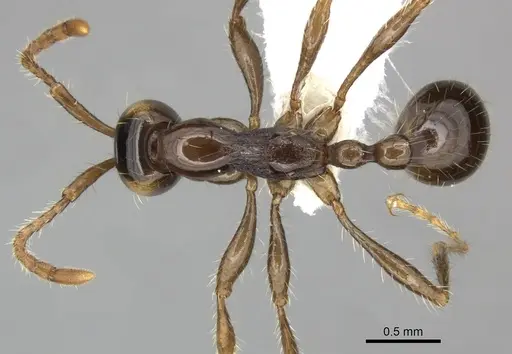
CASENT0907000
View on AntWeb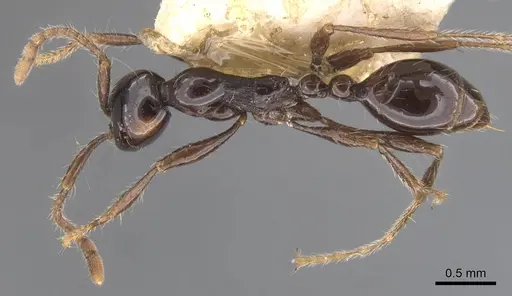
Literature
Loading...Loading products...