

Aenictus congolensis
- Scientific Name
- Aenictus congolensis
- Subfamily
- Dorylinae
- Author
- Santschi, 1911
- Distribution
- Found in 1 countries
Aenictus congolensis Overview
Aenictus congolensis is an ant species of the genus Aenictus. It is primarily documented in 1 countries , including Gabon. Detailed taxonomic data and occurrence records can be further explored via authoritative databases such as AntWeb or the Global Biodiversity Information Facility (GBIF).
Aenictus congolensis
Aenictus congolensis is a tiny army ant from the rainforests of Central Africa. Workers measure just 2mm long with dark reddish-brown thoraxes and lighter yellowish-brown heads and gasters [1]. They belong to the rotundatus species group and can be identified by their developed propodeal ridge projecting as a horizontal shelf, sparse flat-lying white hairs, and a long finger-like subpetiolar process [2]. Found from Cameroon to Zambia across the Congo Basin, they inhabit rainforest leaf litter, soil, and rotting wood [2][1].
As a member of the army ant subfamily Dorylinae, they likely live a nomadic lifestyle with large colonies containing multiple queens, though specific colony biology remains unstudied for this species. Like other Aenictus, they are probably specialized predators, but exact prey preferences, colony size, and development rates are unknown.
Quick Summary
- Difficulty: Expert
- Origin & Habitat: Central African rainforest and Miombo woodland (Congo Basin: Cameroon, Central African Republic, Congo, DRC, Gabon, Zambia) [2][1]
- Colony Type: Unknown, likely multi-queen based on typical army ant patterns, but unconfirmed for this species
- Size & Growth:
- Queen: Unknown
- Worker: ~2 mm [1]
- Colony: Unknown
- Growth: Unknown
- Development: Unknown (Development timeline unstudied for this species)
- Antkeeping:
- Temperature: Unknown, likely requires warm stable tropical temperatures around 24-28°C based on rainforest habitat, but unconfirmed
- Humidity: Unknown, likely high humidity based on rainforest leaf litter habitat
- Diapause: No, tropical species [1]
- Nesting: Soil, leaf litter, and rotten wood in nature [1]
- Behavior: Army ant, likely nomadic with mass foraging behavior. Extremely small size (2mm) creates severe escape risk [1].
- Common Issues: extremely difficult to maintain in captivity due to army ant lifestyle and unknown care requirements., tiny 2mm size means escapes are likely without excellent barriers and fine mesh., unknown dietary requirements, likely need specialized prey., unknown colony founding behavior, may not be possible to start colonies from single queens., likely require very large foraging areas incompatible with standard formicaria.
Identification and Appearance
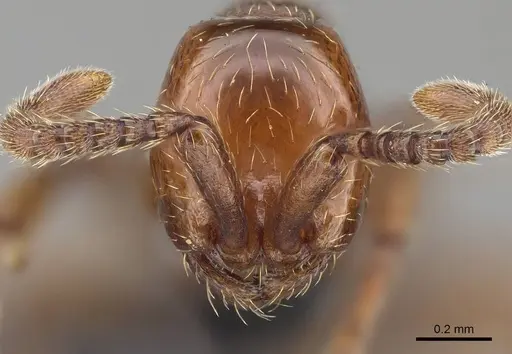
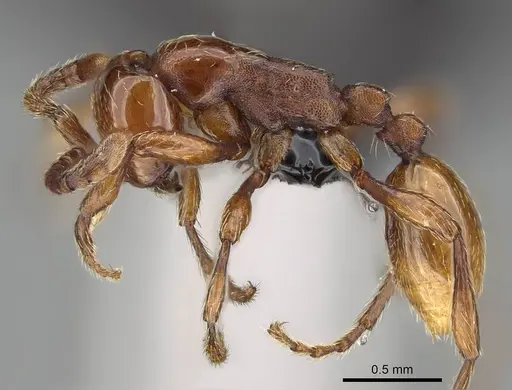
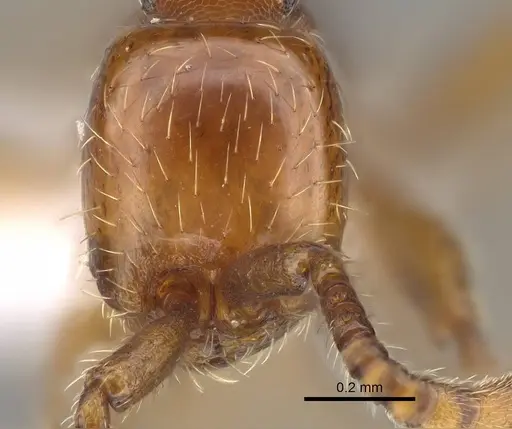
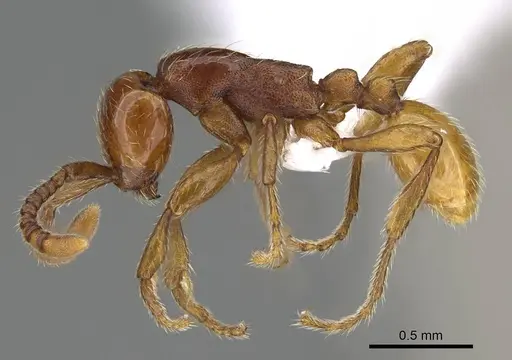
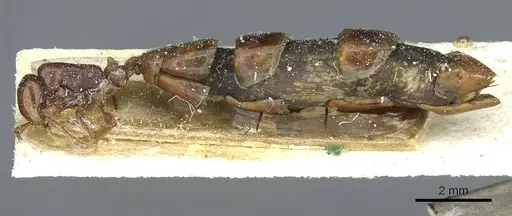
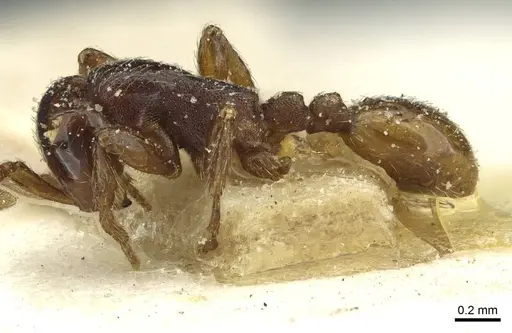
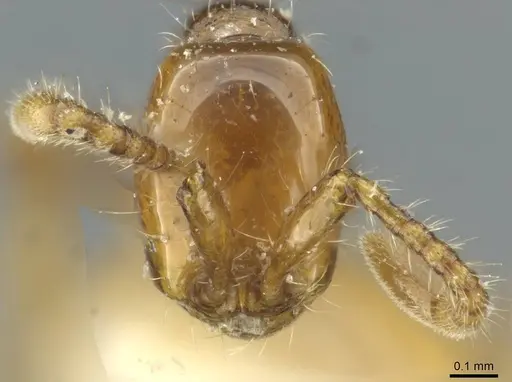
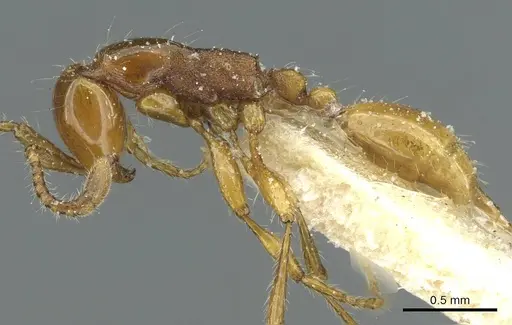
Aenictus congolensis workers are tiny, measuring approximately 2mm in length [1]. Their coloration is distinctive: the thorax, posterior half of the head, and petiole are dark reddish-brown, while the remainder of the body is brownish-yellow [1]. The head, postpetiole, and gaster are smooth and shiny, while the thorax and petiole have a matte, reticulated texture like a thimble [1].
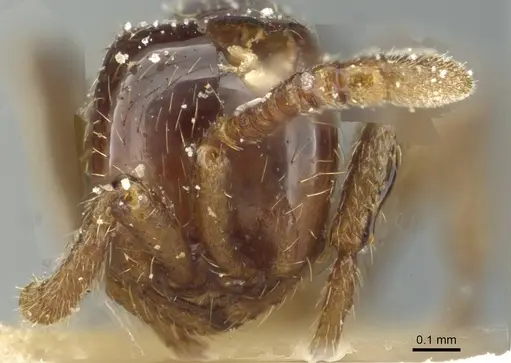
Key identifying features include a well-developed propodeal ridge that projects as a horizontal shelf when viewed from above, sparse flat-lying (adpressed) white hairs, and a long finger-like (digitiform) subpetiolar process [2]. The mandibles bear 3-6 teeth with the apical tooth longer than in related species [1]. Antennal segments 3-7 are wider than they are long [1]. These features distinguish them from similar species like Aenictus nyuyi and Aenictus weissi, which have erect hairs and poorly developed subpetiolar processes [2].
Natural History and Habitat
This species inhabits the Congo Basin across Central Africa, with records from Cameroon, Central African Republic, Congo, Democratic Republic of Congo, Gabon, and Zambia [2][1]. They have been collected from sifted litter in rainforest, leaf mold, rotten wood, and Miombo woodland soil [1]. Observations at Makokou, Gabon confirm they occur in rainforest habitats [3].
As an army ant in the subfamily Dorylinae, they likely lead a nomadic lifestyle, moving frequently between temporary bivouacs rather than maintaining permanent nests. However, specific details about colony size, queen number, foraging behavior, and diet remain unstudied for Aenictus congolensis specifically.
The Army Ant Challenge
Aenictus congolensis represents one of the most challenging groups in ant keeping. Army ants (Dorylinae) have specialized biology that makes them extremely difficult to maintain in captivity. Their nomadic lifestyle requires vast foraging areas that standard formicaria cannot provide. They likely need continuous access to specific prey items, possibly other ants or termites, but exact dietary requirements are unknown.
The tiny 2mm worker size creates additional problems. They can escape through the smallest gaps in standard enclosures and require extremely fine mesh or barriers. Their colony founding behavior is unconfirmed, army ants often have complex reproductive strategies that may not involve single queens founding alone, making it potentially impossible to start colonies from captured queens using standard methods. [1]
Captive Care Status
Currently, there are no documented successful captive care methods for Aenictus congolensis. Basic parameters like optimal temperature, humidity, nest design, and diet remain unknown. While their tropical rainforest origin suggests warm temperatures (likely 24-28°C) and high humidity, these are estimates based on habitat rather than experimental data.
If attempting to keep this species, you would need specialized equipment including extremely secure enclosures with sub-millimeter barriers, massive foraging spaces, and likely live prey cultures of appropriate size. However, success is uncertain given the lack of foundational biological data. This species is recommended only for research facilities with appropriate resources, not for hobbyist keepers.
Frequently Asked Questions
Can I keep Aenictus congolensis in a test tube?
No. Test tubes are completely unsuitable for Aenictus congolensis. As army ants, they likely require large foraging areas and specific nest conditions that test tubes cannot provide. Additionally, their tiny 2mm size means they would easily escape through standard cotton plugs or gaps.
What do Aenictus congolensis eat?
Their exact diet is unknown. As army ants in the genus Aenictus, they are likely specialized predators, possibly hunting other ants, termites, or small soil arthropods. However, specific prey preferences have not been documented for this species.
How big do Aenictus congolensis colonies get?
Colony size is unknown for this species. Army ants typically maintain large colonies with thousands of workers, but specific numbers for Aenictus congolensis have not been documented.
Are Aenictus congolensis good for beginners?
No. These are expert-only ants, if they can be kept in captivity at all. Their army ant biology, unknown care requirements, tiny size, and likely need for specialized prey and massive foraging areas make them unsuitable for beginners or even most experienced keepers.
What temperature do Aenictus congolensis need?
Specific temperature requirements are unknown. Based on their Central African rainforest habitat, they likely need warm stable temperatures around 24-28°C, but this is an estimate rather than confirmed data.
Do Aenictus congolensis need hibernation?
No. As a tropical species from Central Africa, they do not require hibernation (diapause). They likely remain active year-round.
Can I keep multiple queens together?
Unknown. Army ants are typically polygyne (multi-queen), but whether unrelated queens can be combined or how colony founding works in this species is unconfirmed. Natural colony structure remains unstudied.
References

This caresheet is licensed under CC BY-SA 4.0 .
CASENT0066799
View on AntWeb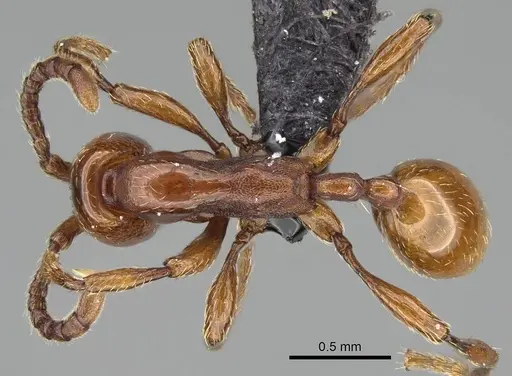
CASENT0400001
View on AntWeb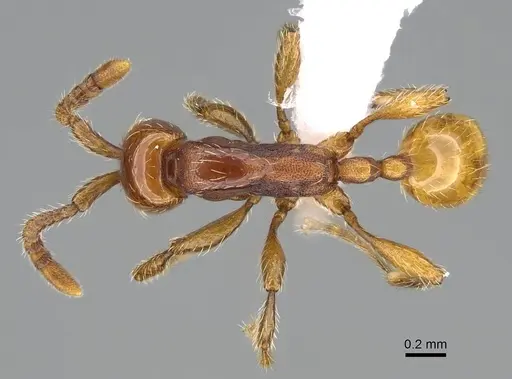
CASENT0911419
View on AntWeb
CASENT0911420
View on AntWeb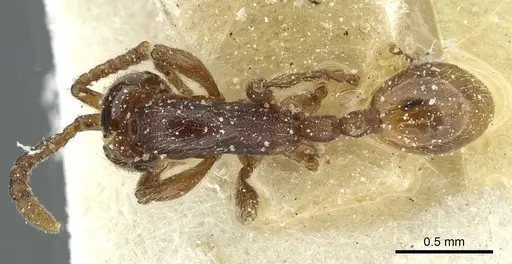
CASENT0911445
View on AntWeb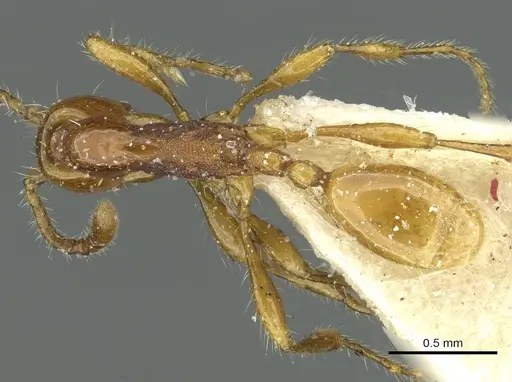
Literature
Loading...Loading products...