

Aenictus nyuyi
- Scientific Name
- Aenictus nyuyi
- Subfamily
- Dorylinae
- Author
- Gómez, 2022
- Distribution
- Found in 1 countries
Aenictus nyuyi Overview
Aenictus nyuyi is an ant species of the genus Aenictus. It is primarily documented in 1 countries , including Senegal. Detailed taxonomic data and occurrence records can be further explored via authoritative databases such as AntWeb or the Global Biodiversity Information Facility (GBIF).
Aenictus nyuyi
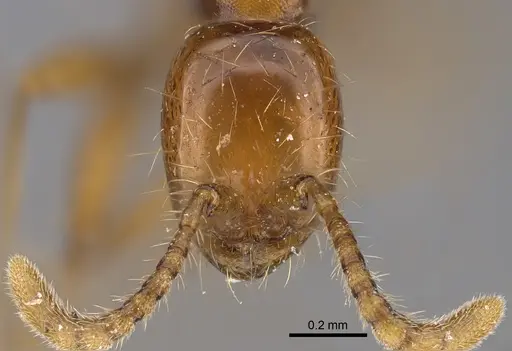
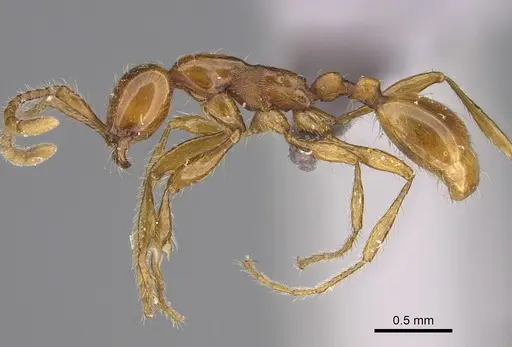
Aenictus nyuyi is a tiny army ant from the forests of southeastern Senegal. Workers are light brown to brown, approximately 2-3mm in total length, with exceptionally long antennae that extend well beyond three-quarters of the head length [1]. They are known only from the Afia Forest near Dindefelo, where they were collected in leaf litter samples from a gallery forest habitat [1][2]. The species name "nyuyi" comes from the Fula word for "small ant, " reflecting their diminutive size [1]. Only worker ants have ever been found, no queens or males are known, and the species was only described scientifically in 2022 [1].
This is one of the most poorly known ants in the hobby. Because only workers have been found, starting a captive colony is currently impossible. They are army ants (subfamily Dorylinae), which typically form massive nomadic colonies with specialized biology that does not fit standard ant-keeping practices [2].
Quick Summary
- Difficulty: Expert
- Origin & Habitat: Southeastern Senegal (Kedougou, Afia Forest), gallery forest leaf litter [1][2]
- Colony Type: Unknown, only worker caste found [1]
- Size & Growth:
- Antkeeping:
- Behavior: Army ant, likely nomadic with aggressive predatory behavior. Extremely small size makes escape through standard barriers inevitable [1].
- Common Issues: only workers are known, no queens have been found, making captive colony founding impossible., extremely small size (head width under 0.6mm) allows escape through standard mesh and gaps., army ant biology typically requires massive colony sizes and specialized care not practical in captivity., known from single location, removing specimens may impact the wild population.
Why This Species Is Not Currently Keepable
This species was described in 2022 from only ten workers collected in Senegal [1]. No queens have ever been found, which means you cannot start a colony from a single queen as you would with most ants [1]. Army ants like Aenictus typically reproduce through colony fission rather than single queen founding, requiring an existing colony to split [2]. Additionally, their extremely small size means they would escape any standard ant farm setup [1].
Morphology and Size
Workers are among the smallest ants you might encounter, with head widths of just 0.47-0.54mm [1]. Their most distinctive feature is their exceptionally long scapes (the first antenna segment), which extend well beyond three-quarters of the head length [1]. The head is rectangular and longer than it is wide, and the body is light brown to brown with a smooth, glassy appearance [1].
Natural History and Habitat
Aenictus nyuyi lives in the leaf litter of gallery forests in southeastern Senegal [1]. The type series was collected at 395m elevation in the Afia Forest near Dindefelo using Winkler extraction, a method that samples soil and litter arthropods [1]. A second sampling of the same site in 2018 found more workers, confirming the population persists there [2]. The species appears restricted to this single location [1].
Army Ant Biology Considerations
While specific behavior is unstudied, Aenictus species are army ants that typically form large nomadic colonies [2]. They are specialized predators that require massive amounts of food and space to maintain their raiding behavior. Unlike typical ant colonies that stay in one nest, army ants frequently relocate, making them unsuitable for standard formicaria [2].
Frequently Asked Questions
Can I keep Aenictus nyuyi in a test tube?
No. Only workers are known for this species, so you cannot start a colony. Even if you had a colony, army ants require specialized setups, not test tubes [1].
How long until Aenictus nyuyi gets its first workers?
Unknown. No queens have been found, so founding behavior and development time are unconfirmed [1].
What do Aenictus nyuyi eat?
Likely small arthropods and other ants based on typical Aenictus behavior, but specific diet is unstudied [2].
Where can I buy an Aenictus nyuyi colony?
You cannot. This species is known only from scientific collections in Senegal and is not available in the ant trade [1].
How big do Aenictus nyuyi colonies get?
Unknown. Only ten workers have ever been collected [1].
Are Aenictus nyuyi good for beginners?
No. This is not a species for keeping due to lack of knowledge about their biology and reproductive strategies [1].
Do Aenictus nyuyi need hibernation?
No. They come from tropical Senegal and do not require winter rest [2].
References

This caresheet is licensed under CC BY-SA 4.0 .
KGCOL00562
View on AntWeb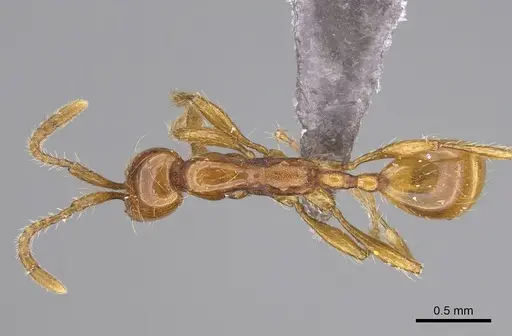
Literature
Loading...Loading products...