

Adelomyrmex laevigatus
- Scientific Name
- Adelomyrmex laevigatus
- Tribe
- Solenopsidini
- Subfamily
- Myrmicinae
- Author
- Mackay, 2003
- Distribution
- Found in 2 countries
Adelomyrmex laevigatus Overview
Adelomyrmex laevigatus is an ant species of the genus Adelomyrmex. It is primarily documented in 2 countries , including Costa Rica, Panama. Detailed taxonomic data and occurrence records can be further explored via authoritative databases such as AntWeb or the Global Biodiversity Information Facility (GBIF).
Adelomyrmex laevigatus
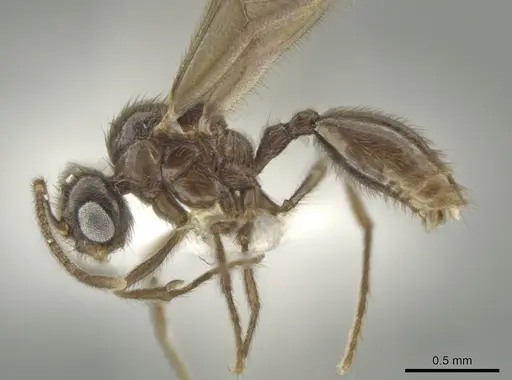
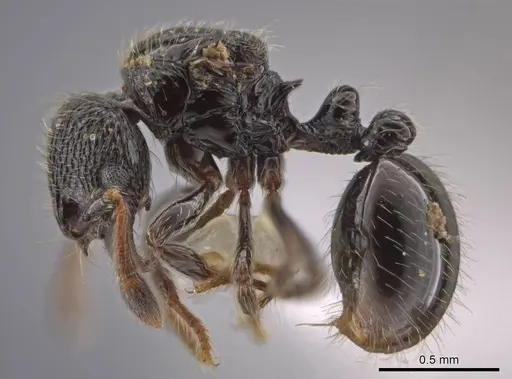
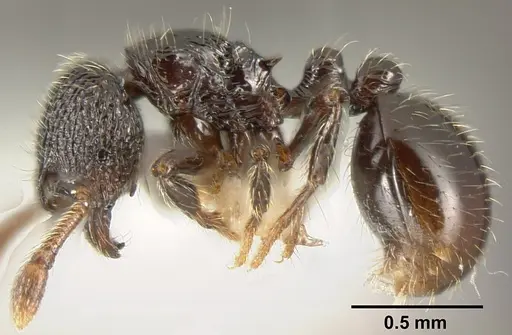
Adelomyrmex laevigatus is a tiny ant species native to the cloud forests of Costa Rica and western Panama. Workers measure just 2.5-2.9mm in total length, making them one of the smaller ant species kept in captivity. They have a distinctive appearance with a dark brown body, nearly smooth and shiny promesonotum (the middle body section), and a notably concave first abdominal tergite when viewed from above. Their most unique feature is the large, robust hypostomal teeth (mouthparts) which are more pronounced than any other species in the genus. These ants live in mature cloud forest leaf litter at elevations between 800-1500 meters, where they occur at lower densities than their close relative A. tristani. The queen and male castes remain unknown in scientific literature, making captive breeding challenging.
Quick Summary
- Difficulty: Expert
- Origin & Habitat: Cloud forests of Costa Rica and western Panama, found in leaf litter at elevations 800-1500m [1][2]
- Colony Type: Colony structure is unconfirmed, only worker caste has been described, queen and male are unknown [3]
- Size & Growth:
- Queen: Unknown, queen caste has not been described [3]
- Worker: 2.54-2.87 mm total length [4]
- Colony: Unknown, likely small colonies based on related species and low field densities [2]
- Growth: Unknown
- Development: Unknown, no development data exists for this species (Development timeline has not been studied. Related Adelomyrmex species suggest 4-8 weeks at tropical temperatures, but this is purely estimated.)
- Antkeeping:
- Temperature: Based on their cloud forest origin at 800-1500m elevation, they likely prefer cooler temperatures than typical tropical ants. Start around 20-24°C with a gentle gradient and observe colony behavior. Avoid overheating.
- Humidity: Cloud forest species require high humidity, aim for 70-85% relative humidity. Keep the nest substrate consistently moist but not waterlogged. These tiny ants are sensitive to drying out.
- Diapause: Unknown, cloud forest species from equatorial regions may not require a true diapause, but may have reduced activity periods. Monitor for seasonal slowdowns.
- Nesting: In nature they live in leaf litter and rotting wood. In captivity, they do well in naturalistic setups with moist substrate (like a mixture of soil and organic material) or in small acrylic/plaster nests with tight chambers scaled to their tiny size. Their very small size means they need chambers and passages sized appropriately.
- Behavior: These ants are tiny and likely cryptic, living hidden in leaf litter. Their behavior in captivity is not well documented. They probably have small colonies and are not aggressive. Their very small size means escape prevention must be excellent, they can squeeze through the tiniest gaps. The large hypostomal teeth suggest they may have some specialized feeding habit, though this is not well understood.
- Common Issues: queen unavailability, only workers have been described, making wild colony collection the only option, escape risk, their tiny 2.5mm size means they can slip through standard barrier setups, humidity control, cloud forest species are sensitive to drying and may die quickly in dry conditions, unknown colony structure, without documented queen biology, establishing colonies is speculative, slow growth, small litter-dwelling ants typically develop slowly, requiring patience
Natural History and Distribution
Adelomyrmex laevigatus is a cryptic leaf-litter ant found exclusively in mature cloud forests of Costa Rica and western Panama. They inhabit elevations between 800 and 1500 meters across multiple mountain ranges (cordilleras) in these countries. This species appears to be an upland version of the related Adelomyrmex microps, while they occur on the same mountain slopes (such as Volcan Barva in Costa Rica), they have never been found together, with A. laevigatus occurring only at 800m and above, and A. microps below 500m [2]. Field studies show this is a lower density species compared to sympatric Adelomyrmex tristani. At a 1000m study site on the Volcan Barva transect, researchers found A. laevigatus in only 18 out of 150 leaf litter samples, while it was absent from adjacent sites at 500m and 1500m elevation despite similar sampling effort [2]. This patchy distribution suggests specific microhabitat requirements that can be challenging to replicate in captivity.
Identification and Morphology
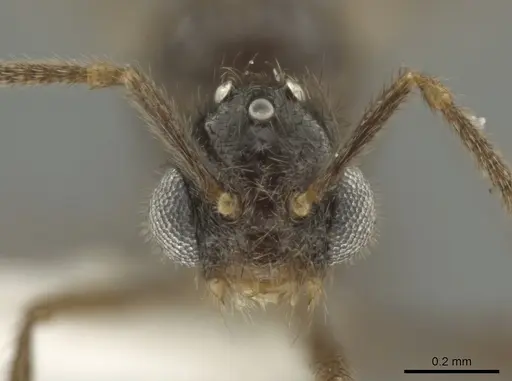
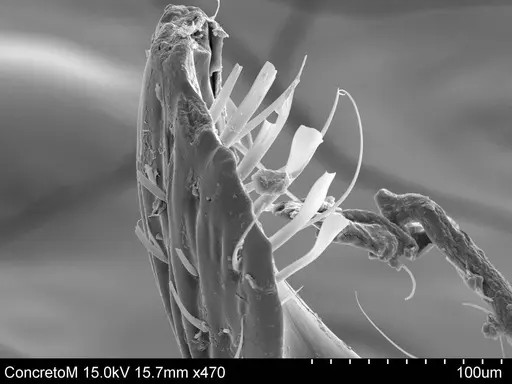
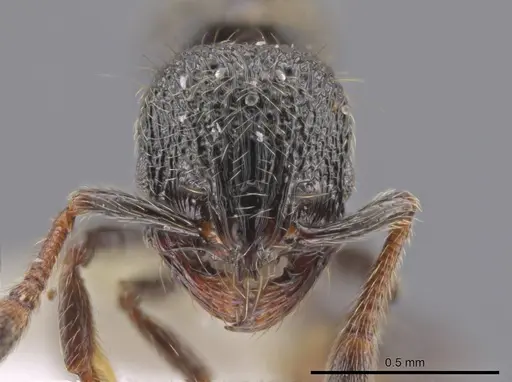
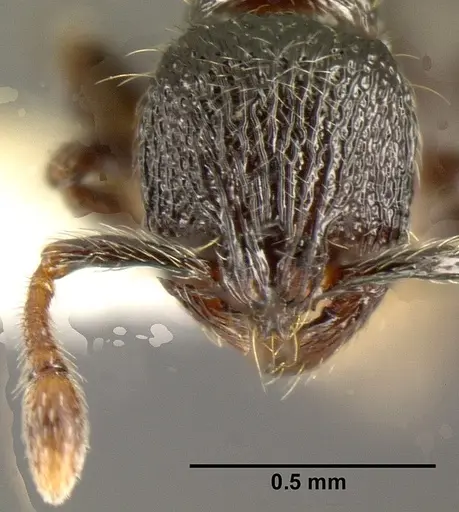
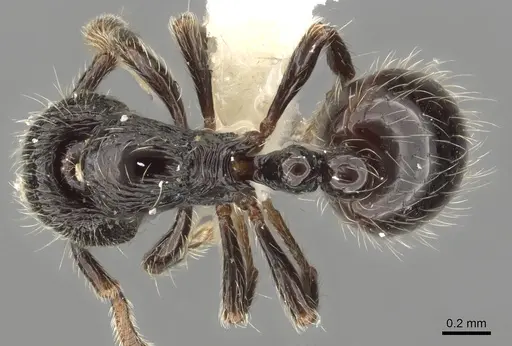
Workers of Adelomyrmex laevigatus are among the smallest ants in the genus, measuring just 2.54-2.87mm in total length [4]. Their most distinctive feature is the nearly smooth and shiny promesonotum (the fused mesonotum and pronotum), with only faint longitudinal rugulae on the sides. No other Adelomyrmex species shares this characteristic except A. micans, which has an entirely smooth head. The head sculpture is unique, showing a mixture of rugae (wrinkles) and foveae (pits) that merge together. When viewed from above, the first abdominal tergite is notably concave at the anterior margin. Their most striking morphological feature is the large, robust hypostomal teeth, these mouthparts are significantly larger and more powerful than in any other species in the genus [3][4]. They have very small eyes with only 5-12 ommatidia (individual lens units), reflecting their cryptic, litter-dwelling lifestyle where vision is less important than chemosensory cues [1]. The body is dark brown with lighter-colored antennal segments.
Housing and Nest Setup
Keeping Adelomyrmex laevigatus requires attention to their tiny size and cloud forest origins. Because workers measure only 2.5-2.9mm, standard ant keeping setups may be too large and impersonal. Use nests with small, tight chambers, acrylic nests with narrow passages or small plaster nests work well. The naturalistic approach with a thin layer of moist forest floor substrate (a mixture of soil, leaf litter, and small rotting wood pieces) may be most appropriate since these ants naturally live in leaf litter. Regardless of nest type, escape prevention must be excellent, these tiny ants can slip through gaps that would hold back larger species. Apply fluon or other barriers to all connections and openings. The nest should be kept in a humid environment, ideally within a larger enclosure (like a plastic box with ventilation holes) where humidity can be maintained at 70-85%. Provide a small outworld area for foraging, but keep it appropriately scaled to their tiny size.
Feeding and Diet
The diet of Adelomyrmex laevigatus has not been studied in detail, but like other leaf-litter Myrmicinae, they likely feed on small arthropods, honeydew from aphids or scale insects, and nectar. Their unusually large hypostomal teeth suggest they may have specialized feeding habits, possibly being more predatory than typical litter ants, though this is speculative. In captivity, offer a varied diet including small live prey (fruit flies, springtails, or other tiny arthropods), honey water or sugar water in small amounts, and possibly small protein sources like pieces of mealworm. Start with very small portions and observe what they accept. Given their tiny size, any prey items should be appropriately scaled, even a fruit fly is a significant meal for these ants. Remove uneaten food promptly to prevent mold in the humid setup they require.
Temperature and Humidity Requirements
As a cloud forest species from 800-1500m elevation in Costa Rica and Panama, Adelomyrmex laevigatus likely prefers cooler, more stable conditions than typical lowland tropical ants. The cloud forest environment features high humidity year-round and moderate temperatures that rarely get extreme. Aim for temperatures in the range of 20-24°C, avoiding overheating. A heating cable on one side of the nest can create a gentle gradient, but monitor carefully, these ants are likely sensitive to temperature stress. Humidity is critical, maintain 70-85% relative humidity by keeping the nest substrate consistently moist. Use a moisture reservoir or water tube in the nest, and consider housing the nest within a larger humid enclosure. However, ensure adequate ventilation to prevent stagnant air and mold growth. The substrate should feel damp to the touch but not be waterlogged.
Challenges and Limitations
Adelomyrmex laevigatus represents one of the most challenging ant species to keep due to significant knowledge gaps. The queen caste has never been described, meaning there is no documented way to establish colonies through captive breeding [3]. Wild colonies can potentially be collected from leaf litter in their native range, but this requires specific permits and expertise. Even basic biology like colony structure (monogyne vs polygyne), founding behavior, development timeline, and nuptial flight timing remains unknown. This makes them unsuitable for beginners and even experienced antkeepers should approach with realistic expectations. The extremely small worker size creates practical challenges for feeding, escape prevention, and observing colony behavior. Given all these factors, Adelomyrmex laevigatus is best considered an expert-level species for antkeepers with specific scientific interest who can contribute to understanding this poorly studied species.
Frequently Asked Questions
Can I keep Adelomyrmex laevigatus in a test tube?
A test tube setup can work for a small colony or founding queen, but standard test tubes may be too large for these tiny 2.5mm ants. If using a test tube, choose one with a small water reservoir and ensure the cotton is packed tightly to prevent escapes. However, a naturalistic setup with small chambers scaled to their size is more appropriate for long-term housing.
How long does it take for Adelomyrmex laevigatus to develop from egg to worker?
This is unknown, no development data exists for this species. Related Adelomyrmex species in tropical conditions may develop in 4-8 weeks, but this is a rough estimate with no confirmation. Without documented queen biology, even this estimate is speculative.
Are Adelomyrmex laevigatus good for beginners?
No. This species is not recommended for beginners due to the complete lack of documented captive care information, the unknown queen caste, their extremely small size requiring specialized setups, and their specific humidity and temperature requirements from cloud forest habitats. Only experienced antkeepers with scientific interest should attempt this species.
What do Adelomyrmex laevigatus eat?
Their exact diet is unstudied. Based on related litter-dwelling Myrmicinae, they likely accept small live prey (springtails, fruit flies), honeydew from aphids, and nectar. In captivity, offer small live prey, sugar water, and small protein items. Start with tiny portions and observe acceptance.
Can I keep multiple queens together?
This is unknown. The colony structure of Adelomyrmex laevigatus has not been studied, the queen caste has never been described. Without knowing whether they are monogyne (single queen) or polygyne (multiple queens), combining queens is not recommended.
Do Adelomyrmex laevigatus need hibernation?
This is unclear. As a cloud forest species from equatorial regions (Costa Rica and Panama), they likely do not require a true diapause. However, they may have seasonal activity patterns tied to wet/dry seasons. Monitor your colony for natural slowdowns and adjust care accordingly rather than forcing a hibernation period.
Why are my Adelomyrmex laevigatus dying?
Without documented care requirements, diagnosing problems is difficult. Common issues likely include: drying out (critical for cloud forest species), overheating, escape through tiny gaps, starvation if prey is too large, and stress from inappropriate humidity. Ensure excellent humidity, appropriate temperature (20-24°C), and offer correctly-sized live prey.
How big do Adelomyrmex laevigatus colonies get?
This is unknown. Based on their low density in field samples and related species, colonies are likely small, probably under 100 workers. They appear to be a cryptic, low-density species even in their natural habitat.
Where can I get an Adelomyrmex laevigatus queen?
Queens have never been described for this species, making them essentially unavailable through normal antkeeping channels. The only known caste is workers. If you want to keep this species, you would need to collect a colony directly from leaf litter in Costa Rica or Panama, which requires proper permits and expertise. This makes them an expert-level species for scientific study rather than typical antkeeping.
References

This caresheet is licensed under CC BY-SA 4.0 .
BIOUG01262-D12
View on AntWeb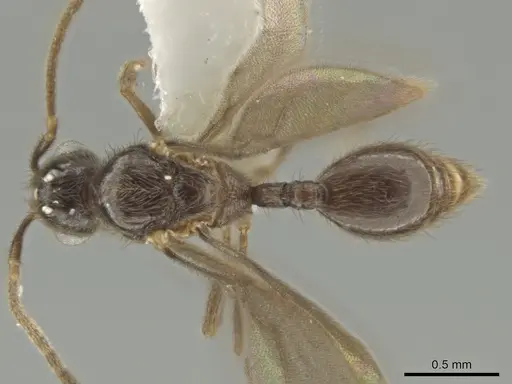
CASENT0631981
View on AntWeb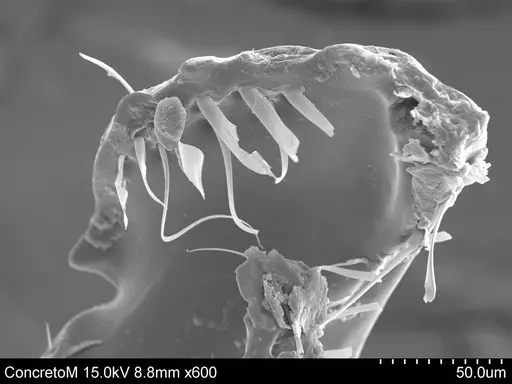
CASENT0637333
View on AntWeb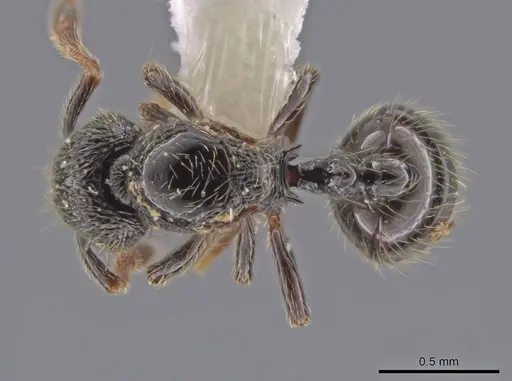
INBIOCRI001279868
View on AntWeb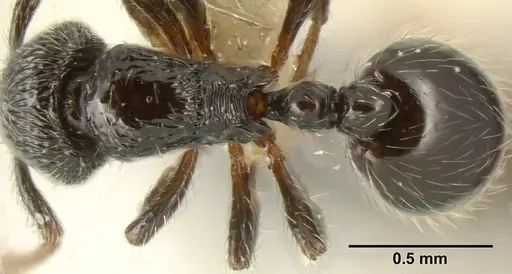
INBIOCRI001279890
View on AntWeb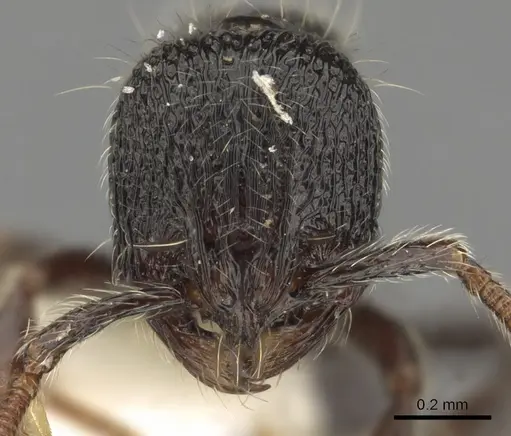
Literature
Loading...Loading products...