

Adelomyrmex microps
- Scientific Name
- Adelomyrmex microps
- Tribe
- Solenopsidini
- Subfamily
- Myrmicinae
- Author
- Fernández, 2003
- Distribution
- Found in 3 countries
Adelomyrmex microps Overview
Adelomyrmex microps is an ant species of the genus Adelomyrmex. It is primarily documented in 3 countries , including Costa Rica, Honduras, Nicaragua. Detailed taxonomic data and occurrence records can be further explored via authoritative databases such as AntWeb or the Global Biodiversity Information Facility (GBIF).
Adelomyrmex microps
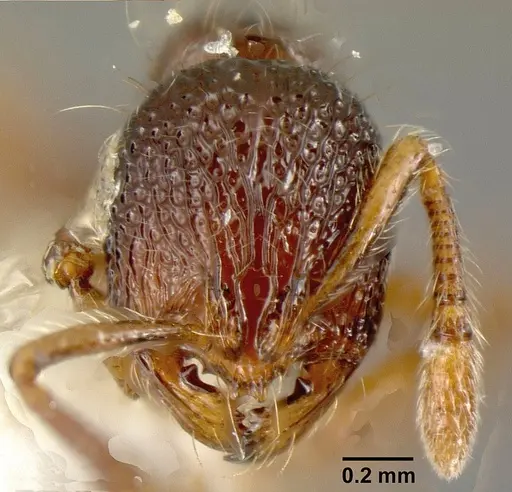
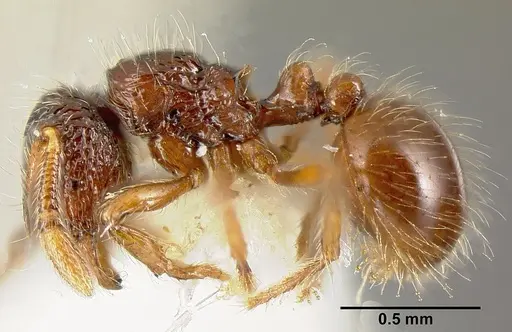
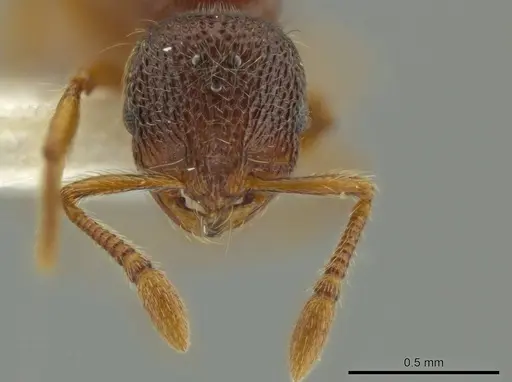
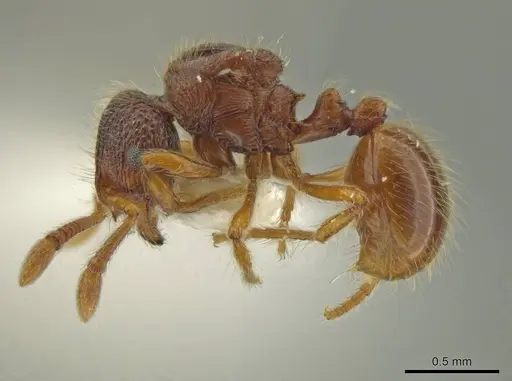
Adelomyrmex microps is an exceptionally rare tiny ant species from the lowland rainforests of Central America. Workers measure just 2.4mm in total length, making them one of the smallest ant species you could keep [1]. They have a reddish-brown body with dense long hairs on their dorsal surface, and their most striking feature is their extremely reduced eyes, containing only about 2 ommatidia each [2]. This species is known from only 13 specimens ever collected, making it one of the rarest ants in the world [3]. Found in Costa Rica, Honduras, and Nicaragua at low elevations (50-310m), these ants live in the humid leaf litter of tropical rainforests [3]. The queen and male castes remain unknown, only workers have ever been documented [4].
Quick Summary
- Difficulty: Expert
- Origin & Habitat: Lowland rainforest of Costa Rica, Honduras, and Nicaragua at 50-310m elevation [3]. Known primarily from La Selva Biological Station in Costa Rica [2].
- Colony Type: Unknown, only the worker caste has ever been documented. Colony structure, queen number, and reproductive biology are completely unstudied [4][3].
- Size & Growth:
- Queen: Unknown, queens have never been documented [4]
- Worker: 2.41mm total length (TL), with head width 0.53mm [1]
- Colony: Unknown, only 13 specimens have ever been collected [3]
- Growth: Unknown
- Development: Unknown, development has never been studied for this species (Based on related Solenopsidini species and their tiny size, expect development of 4-8 weeks at optimal temperature. This is an estimate only.)
- Antkeeping:
- Temperature: Keep at 24-28°C, mimicking warm lowland rainforest conditions. Use a heating cable on one side of the nest to create a gentle gradient if room temperature is below this range.
- Humidity: High humidity is essential, aim for 70-85%. These ants come from perpetually humid tropical forest floor environments. Keep nest substrate consistently moist but not waterlogged.
- Diapause: Unknown, no data on seasonal behavior. Given their lowland tropical origin, they likely do not require a diapause period, but maintain stable conditions year-round.
- Nesting: Use a naturalistic setup with high humidity retention. A Y-tong (AAC) nest or plaster formicarium works well. Provide deep substrate for tunneling, these tiny ants need appropriately scaled chambers and passages.
- Behavior: Behavior is unstudied in captivity. In the wild, they are collected from leaf litter samples using Berlese and MiniWinkler extractors, indicating they live in the forest floor layer [3]. Their extremely reduced eyes suggest they may be adapted to dark, confined spaces and likely have limited visual capacity. They are probably slow-moving and non-aggressive. Escape prevention is critical due to their tiny 2.4mm size, they can squeeze through the smallest gaps. Use fine mesh barriers and tight-fitting lids.
- Common Issues: extreme rarity makes obtaining this species nearly impossible, only 13 specimens have ever been found in the wild, colony structure is completely unknown, you may receive workers without a queen or with an unknown reproductive system, their tiny size means escapes are likely without fine mesh barriers and excellent sealing, no captive breeding data exists, establishing a productive colony may be extremely challenging, high humidity requirements can lead to mold problems if ventilation is inadequate
Why This Species Is So Challenging
Adelomyrmex microps represents perhaps the most difficult ant species to keep in captivity, not because of any special care requirements, but because of how incredibly rare it is. Only 13 specimens have ever been collected from the wild, across decades of intensive ant sampling in Central America [3]. This species has never been found in large numbers, and no queen or male has ever been documented [4]. This means you will almost certainly not find this species available from any ant breeder or supplier. If you were to obtain specimens, they would likely be wild-caught workers without a queen, making captive establishment essentially impossible. The complete lack of biological data on their colony structure, reproduction, and development adds another layer of difficulty, even if you obtained a queen, no keeper would have any guidance on how to successfully raise her.
Natural History and Habitat
This species inhabits the leaf litter layer of lowland tropical rainforests in Central America. Their known range spans from Costa Rica through Honduras to Nicaragua, at elevations between 50 and 310 meters above sea level [3]. The primary collection site is La Selva Biological Station in Costa Rica, a famous research station where extensive ant surveys have been conducted for decades, yet even there, A. microps appeared in less than 1% of samples [3]. The extremely reduced eyes (only about 2 ommatidia) suggest they are adapted to life in dark, confined spaces within the forest floor, perhaps in rotting wood or deep leaf litter [2]. Their dense dorsal pilosity (long hairs) may help them navigate and sense their environment in these dark microhabitats.
Housing and Nest Setup
If you were to keep this species, you would need to replicate their natural lowland rainforest environment. Use a nest that maintains high humidity (70-85%) while providing darkness and confined spaces. A Y-tong (AAC) nest or plaster formicarium with appropriately scaled chambers would work, remember these ants are tiny at only 2.4mm total length. The chambers and tunnels should be small and tight-fitting. Provide a deep layer of moist substrate for them to potentially tunnel in. The outworld should be simple and easy to maintain at high humidity. Given their probable ground-dwelling nature, provide hiding spots and cover to reduce stress. Excellent escape prevention is mandatory, their tiny size means they can slip through gaps invisible to the naked eye. Use fine mesh (at least 0.5mm or smaller) on any ventilation holes.
Feeding and Diet
The diet of Adelomyrmex microps is unstudied, but as members of the Solenopsidini tribe, they likely have typical myrmicine feeding habits. Based on related genera, they probably feed on small arthropods (micro-prey like springtails, mites, and tiny insects), honeydew from aphids or scale insects, and may accept sugar sources. Given their tiny size, any prey items must be appropriately scaled, very small live prey like springtails would be most appropriate. Sugar water or honey water could be offered occasionally. However, since this species has never been kept in captivity, all feeding recommendations are speculative. Start with tiny live prey and observe acceptance.
Temperature and Seasonal Care
Maintain warm, stable temperatures in the low-to-mid 20s Celsius (24-28°C). This matches their natural lowland rainforest habitat where temperatures remain consistently warm year-round. Unlike temperate species, they likely do not require any diapause or cooling period. Avoid temperature fluctuations and keep them away from air conditioning vents or cold windows. A heating cable placed on one side of the nest can create a gentle thermal gradient, allowing the ants to choose their preferred temperature zone. Monitor for signs of stress (lethargy, clustering in specific areas) and adjust accordingly.
Frequently Asked Questions
Can I buy Adelomyrmex microps ants?
No. This species is essentially unavailable in the antkeeping hobby. Only 13 specimens have ever been collected from the wild across all of Central America. No queen or male has ever been documented, making captive breeding impossible. You will not find this species for sale from any ant supplier.
How big are Adelomyrmex microps workers?
Workers are tiny at only 2.41mm total length, with a head width of 0.53mm [1]. This makes them one of the smallest ant species you could keep.
Where does Adelomyrmex microps live?
They are found in lowland rainforests of Costa Rica, Honduras, and Nicaragua at elevations between 50 and 310 meters. The primary known location is La Selva Biological Station in Costa Rica [3].
Are Adelomyrmex microps good for beginners?
No. This species is absolutely not suitable for beginners, in fact, it is not suitable for anyone. They are one of the rarest ant species in the world, with only 13 specimens ever collected. No queen has ever been found, so captive establishment is impossible. Even if specimens were available, no care information exists.
Do Adelomyrmex microps have eyes?
They have extremely reduced eyes containing only about 2 ommatidia (individual eye units) each [2]. This is highly unusual and suggests they are adapted to dark environments with minimal visual needs.
What do Adelomyrmex microps eat?
Their diet is unstudied. Based on related Solenopsidini ants, they likely eat small arthropods and may tend honeydew. Any prey offered would need to be tiny (springtails, mites) due to their 2.4mm size. This is entirely speculative since no captive feeding observations exist.
How many queens does Adelomyrmex microps have?
Unknown. No queen has ever been documented for this species, only workers have been collected [4]. The entire reproductive biology of this species remains a mystery.
Do Adelomyrmex microps need hibernation?
Probably not. As a lowland tropical species from Costa Rica, Honduras, and Nicaragua, they likely experience year-round warm temperatures in their natural habitat. No diapause requirement would be expected, but this has never been studied.
Why are Adelomyrmex microps so rare?
This species appears to have a genuinely restricted distribution and low population density. Despite intensive ant surveys at La Selva Biological Station (one of the most studied tropical forests in the world), they appeared in less than 1% of samples [3]. They may have very specific habitat requirements or limited geographic range that makes them naturally uncommon.
What makes Adelomyrmex microps different from other ants?
Their most distinctive feature is their extremely reduced eyes, only about 2 ommatidia, compared to hundreds in most ants [2]. They are also one of the rarest ant species known, with only 13 specimens ever collected. Additionally, they are one of the few ant species whose queen and male castes remain completely unknown to science.
References

This caresheet is licensed under CC BY-SA 4.0 .
INBIOCRI001266263
View on AntWeb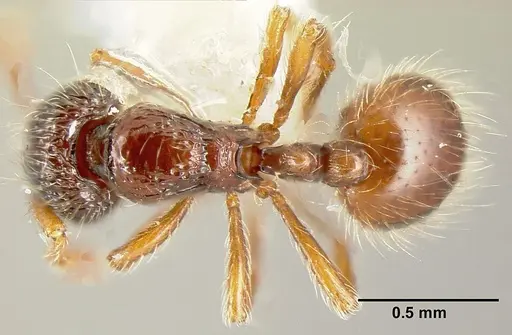
INBIOCRI002720020
View on AntWeb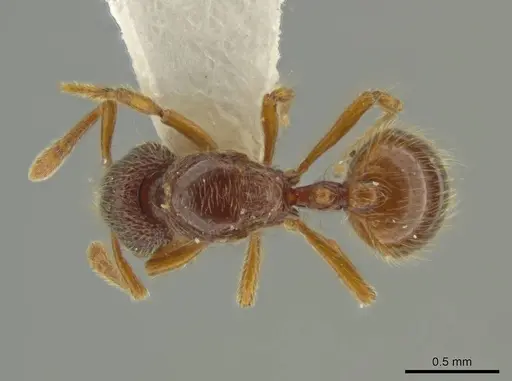
Literature
Loading...Loading products...