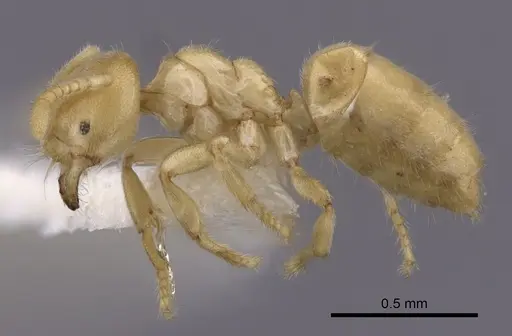
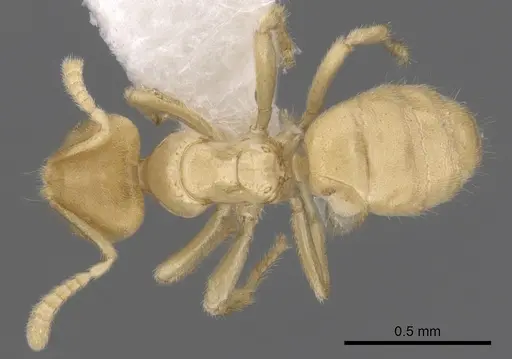
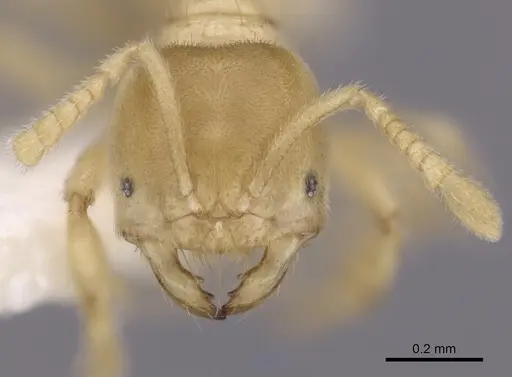
Acropyga fuhrmanni - "Mealybug-tending Ant"
Acropyga fuhrmanni is a fascinating, small, and robust ant species, typically sporting a yellowish to brownish-yellow hue, though some individuals may exhibit a darker gaster, giving them a slightly bi-colored look. Workers range from about 1.39mm to 2.56mm in total length, while queens are a bit larger, measuring around 2.55mm to 2.88mm. These ants are particularly notable for their relatively large eyes and eight-segmented antennae. What truly sets them apart is their unique and obligate symbiotic relationship with root mealybugs, on whose honeydew they depend entirely. As such, they spend almost their entire lives underground, rarely venturing to the surface.
- Difficulty: Hard
- Origin & Habitat: Neotropical (e.g., Colombia, Bolivia, Brazil, Costa Rica, Ecuador, Guyana, Trinidad) in Found in diverse habitats, including leaf litter, under stones, rotten wood, and within the soil. They thrive in environments ranging from grassy, open areas to dense rainforests, and have also been observed in cacao plantations, at elevations up to 950 meters..
- Colony Type: Polygynous (multiple queens), claustral (queen seals herself in), with trophophoresy (queen carries a mealybug to establish a new colony) founding.
- Size & Growth:
- Queen: 2.55-2.88mm
- Worker: 1.39-2.56mm
- Colony: Large (tens of thousands). Medium growth.
- Antkeeping:
- Temperature: Maintain temperatures between 22-28°C (72-82°F). Consistency within this range is crucial, mimicking their tropical and subtropical origins..
- Humidity: High humidity is essential, ideally between 70-90%. Their subterranean lifestyle demands a constantly moist environment to thrive and support their mealybug partners..
- Diapause: Not required. Not specified at Not specified.
- Nesting: These ants require a specialized nest setup that mimics their natural subterranean environment. Nests should be made of materials like Ytong, plaster, or a deep, naturalistic soil/loam substrate. A multi-chambered setup with interconnected tunnels is ideal, allowing them to establish their diffuse colony structure and manage their mealybug farms effectively..
- Behavior: Low aggressiveness.
- Common Issues: Maintaining mealybug symbiosis, Finding appropriate host mealybug species, Humidity fluctuations in the nest, Colony stalling if symbionts are not thriving, Challenges in initial setup to establish mealybug population.
One of the most captivating aspects of keeping Acropyga fuhrmanni is their truly obligate symbiotic relationship with root mealybugs, primarily species from the genus Neochavesia. Unlike many ant species that just visit honeydew-producing insects, Acropyga fuhrmanni colonies subsist entirely on the honeydew provided by these specialized mealybugs. This means that successful ant husbandry for this species absolutely hinges on maintaining a healthy and thriving population of their specific mealybug partners within the formicarium. Without these tiny, honeydew-producing 'livestock,' your colony simply won't survive.
A remarkable behavior observed in Acropyga fuhrmanni queens is their 'trophophoresy.' When a new queen embarks on her nuptial flight to found a colony, she carries a mealybug in her mandibles. This 'seed' mealybug is then used to establish the initial mealybug farm in her newly excavated nest, providing the crucial food source for her first brood and the nascent colony. This complex founding strategy highlights the deep co-evolutionary bond between these ants and their symbiotic partners, a bond spanning millions of years, making them truly unique in the antkeeping world.
Acropyga fuhrmanni are almost entirely hypogaeic, meaning they live their entire lives underground, rarely venturing onto the surface. This subterranean lifestyle influences their colony structure, which tends to be diffuse, with tunnels and indistinct chambers spreading out over significant areas within the soil or substrate. In captivity, recreating this expansive, humid, and stable underground environment is key to their success. You'll need to consider deep substrate setups or specialized nests that allow for extensive tunneling and root access, which is where their mealybugs typically reside.
These ants exhibit fascinating 'farming' behaviors beyond just tending their mealybugs. Observers have noted that Acropyga fuhrmanni workers will actively move their mealybug partners between different underground chambers. This isn't just random relocation; it's believed to be a sophisticated method of regulating honeydew production and even protecting the host plant's roots from overuse by the mealybugs. Understanding and providing the necessary space and substrate for these intricate interactions will be vital for any antkeeper looking to delve into the complex world of Acropyga fuhrmanni.
Frequently Asked Questions
What do Acropyga fuhrmanni colonies eat in a formicarium?
These incredible ants, Acropyga fuhrmanni, are truly unique because their entire diet in the wild, and thus in your formicarium, consists solely of honeydew produced by their specialized root mealybug partners. They literally farm these tiny insects underground for their sugary secretions, which means you'll need to cultivate a healthy mealybug colony alongside your ants to keep them thriving. It’s an obligate symbiosis, so forget offering fruit flies or sugar water directly; it just won’t cut it!
How do Acropyga fuhrmanni queens establish new colonies after their nuptial flight?
The founding process for Acropyga fuhrmanni queens is quite extraordinary! After their nuptial flight, the dealate queen doesn't just seal herself away. Instead, she embarks on what's called 'trophophoresy' – she carries a live mealybug in her mandibles. This mealybug acts as the 'seed' for her new colony's subterranean farm, providing the essential honeydew to nourish her first generation of brood and ensuring the symbiotic relationship begins right from the start. It's truly a marvel of ant behavior!
Is Acropyga fuhrmanni a good species for beginner antkeepers?
Frankly, no, Acropyga fuhrmanni is definitely not recommended for beginner antkeepers. Their survival is entirely dependent on their symbiotic root mealybugs, which are notoriously difficult to source, identify, and maintain in a closed setup. Managing the specific environmental conditions (especially high humidity) and the delicate balance of the ant-mealybug farm presents significant challenges that are best tackled by experienced hobbyists who understand the intricacies of advanced ant care.
Do these mealybug-tending ants sting or spray formic acid?
As members of the Formicinae subfamily, Acropyga fuhrmanni don't possess a functional stinger. Instead, like many other formicine ants, they're capable of spraying formic acid as a defense mechanism. However, given their small size and strictly subterranean lifestyle, they pose virtually no threat to antkeepers. Their primary defense is typically retreating into their hidden nest tunnels.
What kind of formicarium setup is best for Acropyga fuhrmanni?
For Acropyga fuhrmanni, you'll need a nest setup that closely mimics their natural underground habitat. Think deep, moist substrate setups in acrylic or glass enclosures, or custom nests made from Ytong or plaster with ample, humid chambers. Their colonies tend to be diffuse, so providing plenty of tunneling space and areas where they can tend their mealybug farms on plant roots is crucial. Remember, high humidity and consistent temperatures are non-negotiable for their well-being.
Can I keep Acropyga fuhrmanni without their mealybug partners?
Absolutely not. This is perhaps the most critical point for Acropyga fuhrmanni care. They have an obligate mutualistic relationship with their specific root mealybugs. They cannot survive without them, as the mealybugs are their sole food source (honeydew). Attempting to keep them without their symbiotic partners would be akin to trying to keep leafcutter ants without their fungus – it simply won't work.
How large can an Acropyga fuhrmanni colony get?
Acropyga fuhrmanni colonies can grow quite sizable! While exact numbers are hard to pinpoint due to their diffuse, subterranean nesting habits, field observations suggest they can reach into the tens of thousands of individuals. Providing enough space and a consistently productive mealybug farm will be key to allowing your colony to flourish and reach its full potential.
Where are Acropyga fuhrmanni found in the wild?
These fascinating ants are native to the Neotropics, meaning you'll find them across parts of Central and South America, including countries like Colombia, Brazil, Costa Rica, and Trinidad. They inhabit a range of environments from open grassy areas to lush rainforests, always underground in soil, leaf litter, or decaying wood, where they can tend their root mealybugs.
Do Acropyga fuhrmanni workers forage on the surface?
Foraging on the surface is an extremely rare sight for Acropyga fuhrmanni workers. They are almost entirely hypogaeic, spending their lives within their intricate subterranean tunnels and chambers. All their 'foraging' activity is focused on tending their mealybug herds on plant roots deep underground, bringing the honeydew back to the colony.
How do these ants manage their mealybug 'farms'?
Acropyga fuhrmanni are expert mealybug farmers! They don't just protect them; they actively manage their herds. Observations indicate they'll move mealybugs between different underground chambers, possibly to optimize honeydew production or even to prevent overuse of specific root systems. This level of 'agricultural' sophistication makes them incredibly interesting to observe for any dedicated ant enthusiast.