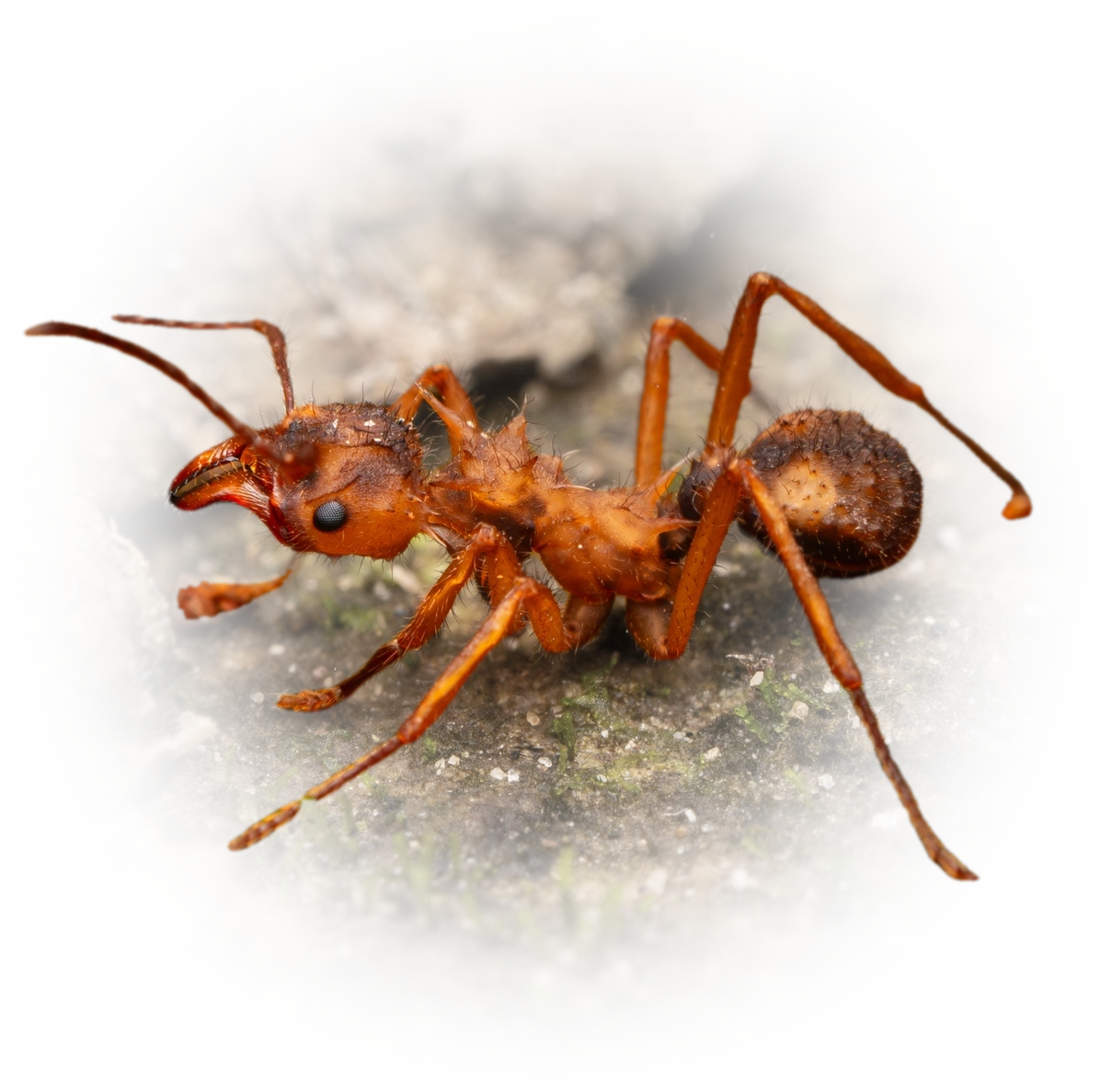
Acromyrmex echinatior - "Panamanian Leafcutter Ant"
Acromyrmex echinatior, often called the Panamanian leafcutter ant, is a fascinating species known for its remarkable fungus-growing behavior. These ants actively cut and collect leaves to cultivate a specialized fungus, which serves as their primary food source. They are characterized by distinctive spines on their bodies and a reddish-brown coloration. This species exhibits a complex social hierarchy with multiple worker castes, each fulfilling specific roles within the colony, from tending the fungus garden to foraging and defending the nest. Mature colonies can be quite substantial, featuring intricate networks of underground tunnels and chambers.
- Difficulty: Expert
- Origin & Habitat: Central America (from Mexico to Panama) in Tropical regions, including rainforests, disturbed areas, open dry habitats like urban areas, and seasonally dry habitats. Nests are typically built in soil but can occasionally be arboreal..
- Colony Type: Facultative polygyne, claustral (with a piece of fungus from the mother colony) founding.
- Size & Growth:
- Queen: 11-14mm
- Worker: 5-9mm
- Colony: Large (tens of thousands to hundreds of thousands, typically around 137,500 workers). Fast, once established, with continuous fungus cultivation. growth.
- Antkeeping:
- Temperature: Fungus garden and nest area: 20-28°C (optimal 24.1°C). Foraging area: 20-28°C. Consistent temperature is crucial for fungus health..
- Humidity: Fungus garden and nest area: 80-90%. Foraging area: 40-70%. High humidity is vital for the fungus..
- Diapause: Not required. Not specified at Not specified.
- Nesting: Prefers nests built in soil. In captivity, requires specialized formicariums with multiple basins for fungus cultivation, feeding, and waste management. Good ventilation is important..
- Behavior: Medium (aggressive towards foreign intruders and during inter-colony conflicts) aggressiveness.
- Common Issues: Mold in fungus garden, Mites, Colony stalling due to inadequate fungus growth, Humidity fluctuations leading to fungus death, Improper diet for fungus, Escape attempts.
Keeping Acromyrmex echinatior is a challenging yet rewarding experience, primarily due to their unique fungus-farming lifestyle. Unlike typical ants that consume sugars and proteins directly, these ants rely entirely on a specific fungus they cultivate. This fungus requires precise temperature and humidity conditions, making environmental control paramount for colony survival. Any deviation can quickly lead to the decline of the fungus garden, which then directly impacts the health and growth of your entire colony.
One fascinating aspect of Acromyrmex echinatior care is their foraging behavior and diet. They are true herbivores, meticulously cutting and collecting plant material like fresh leaves, flowers, and fruits to feed their fungus garden. Providing a diverse and consistent supply of suitable plant matter is crucial. However, be cautious, as some plants, like sumac leaves, are toxic to their fungus and must be avoided at all costs. It's often recommended to slightly moisten the leaves before offering them, which can aid in the ants' processing.
Colony management involves more than just feeding; it requires careful attention to waste. Leafcutter ants produce a significant amount of refuse, consisting of used substrate and discarded fungus. This waste must be managed effectively in a dedicated 'garbage chamber' or outworld. Maintaining a dry and clean waste area (around 30-40% humidity) helps prevent the growth of harmful molds and mites that could jeopardize the entire colony.
Acromyrmex echinatior colonies exhibit a remarkable division of labor based on worker size, showcasing distinct polymorphic castes. Smaller workers, often called 'minims' or 'garden ants,' predominantly handle intranidal tasks, such as caring for the brood and meticulously maintaining the fungus garden. Larger workers, the 'majors,' are primarily responsible for foraging, nest maintenance, and colony defense. This specialization highlights the intricate social organization crucial for their agricultural success.
Interestingly, the major workers of Acromyymex echinatior possess a unique biomineral armor made of high-magnesium calcite, which accumulates as they mature. This unusual exoskeleton provides significant protection during aggressive encounters with other ant species, particularly against larger soldier castes of Atta leafcutters. It also offers a defense against entomopathogenic fungi, highlighting a fascinating adaptation for survival in their competitive natural habitats.
Frequently Asked Questions
What is the primary food source for Acromyrmex echinatior?
Acromyrmex echinatior, being a leafcutter ant, doesn't eat the leaves directly! Instead, they cultivate a specific type of fungus using the harvested plant material, and this fungus is their sole food source. Think of it as a sophisticated underground farm.
How big can an Acromyrmex echinatior colony get?
These colonies can grow quite substantial! A mature Acromyrmex echinatior colony can reach tens of thousands, often averaging around 137,500 workers. This extensive workforce is dedicated to maintaining their elaborate fungus gardens.
Do Acromyrmex echinatior queens start colonies alone?
Yes, queens of Acromyrmex echinatior typically found their colonies claustrally. This means the queen seals herself off in a chamber, using a piece of fungus from her mother colony, and starts the new colony without needing to forage for outside resources initially.
What kind of enclosure is best for keeping Panamanian Leafcutter Ants?
Keeping these ants requires a specialized setup. You'll need a formicarium with multiple distinct sections: one for the crucial fungus garden, another for foraging (the 'outworld'), and a dedicated area for waste disposal. Maintaining precise temperature and humidity in each section is key to keeping the fungus, and thus the colony, healthy.
What is the ideal temperature and humidity for their fungus garden?
For optimal fungus health, aim for a consistent temperature between 20-28°C, ideally around 24.1°C, and a high humidity level of 80-90% within the fungus chamber. This replicates their natural, humid tropical environment and ensures the fungus thrives.
What should I feed Acromyrmex echinatior to keep their fungus healthy?
They require a variety of fresh plant materials, such as blackberry leaves, raspberry leaves, rose petals, and certain fruit pieces like apple, orange, or banana. Always ensure the plant material is clean and free of pesticides. Avoid sumac leaves, as they are toxic to the fungus.
Are Acromyrmex echinatior aggressive?
While not overly aggressive towards keepers if handled gently, Acromyrmex echinatior workers can be quite defensive towards foreign ant species or intruders. Their larger worker castes, the majors, are particularly aggressive in defending the colony and its precious fungus garden.
Do Acromyrmex echinatior sting?
Yes, like many ant species, Acromyrmex echinatior workers can sting. While their sting isn't typically severe for humans, it's always best to exercise caution and avoid direct contact when working with your colony.
How long does it take for an Acromyrmex echinatior egg to develop into an adult worker?
The full developmental cycle from an egg to an adult worker for Acromyrmex echinatior can take approximately 8.8 to 10.3 weeks, although this can vary slightly depending on environmental conditions within the nest.
Do these ants need a diapause or hibernation period?
No, Acromyrmex echinatior, being a tropical species, does not require a diapause or hibernation period. They are active year-round in their natural habitat and should be kept at stable temperatures in captivity.
What are the different worker castes in an Acromyrmex echinatior colony?
Acromyrmex echinatior colonies display a high degree of polymorphism, featuring four distinct worker castes: minims (the smallest, often tending the fungus), minors, media (intermediate sizes), and majors (the largest, involved in foraging and defense). Each caste has specialized roles contributing to the colony's success.
Why do some Acromyrmex echinatior workers have a whitish coating on their exoskeleton?
That's their unique biomineral armor! The major workers, especially, develop a dense layer of high-magnesium calcite over their exoskeleton as they mature. This mineral layer provides enhanced hardness and protection, particularly useful in battles with other ant species and as a defense against fungal infections.
What are common challenges when keeping Acromyrmex echinatior?
The main challenges revolve around maintaining the health of their fungus garden. Issues like mold growth, mite infestations, and improper humidity or temperature can quickly lead to the fungus dying, which then impacts the entire colony. Providing a correct and consistent diet of fresh plant material is also crucial.