

Acanthognathus lentus
- Scientific Name
- Acanthognathus lentus
- Tribe
- Attini
- Subfamily
- Myrmicinae
- Author
- Mann, 1922
- Distribution
- Found in 3 countries
Acanthognathus lentus Overview
Acanthognathus lentus is an ant species of the genus Acanthognathus. It is primarily documented in 3 countries , including Brazil, French Guiana, Honduras. Detailed taxonomic data and occurrence records can be further explored via authoritative databases such as AntWeb or the Global Biodiversity Information Facility (GBIF).
Acanthognathus lentus
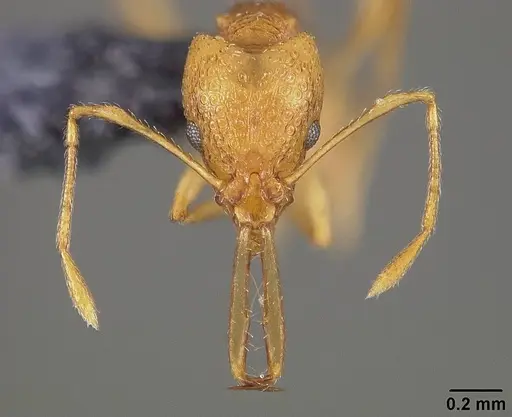
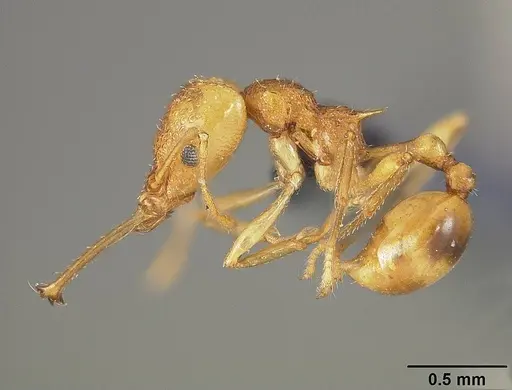
Acanthognathus lentus is a small trap-jaw ant from the Neotropical region. Workers possess long mandibles with a mandible index greater than 75,and show distinctive head sculpturing with large, shallow fossae on the posterior half of the head [1]. The species nests in rotten wood in tropical forests across Brazil, Colombia, Guyana, Honduras, and Suriname [2][3][4].
This species remains one of the lesser-known members of the trap-jaw ant genus. Researchers have questioned whether it represents a distinct species or merely a coarsely-sculptured local variant of Acanthognathus ocellatus [1]. In nature, these ants likely hunt small springtails using their specialized mandibles, though specific prey records for this species remain unpublished.
Quick Summary
- Difficulty: Expert
- Origin & Habitat: Tropical forests of Brazil, Colombia, Guyana, Honduras, and Suriname [2][3][4]. Nests in rotten wood [2].
- Colony Type: Single-queen colonies suspected based on typical Acanthognathus patterns, but unconfirmed.
- Size & Growth:
- Antkeeping:
- Temperature: Warm and stable, roughly 24-28°C (inferred from tropical distribution).
- Humidity: High humidity, keep nest substrate damp similar to rotting wood conditions [2].
- Diapause: Not required (tropical species).
- Nesting: Small chambers mimicking rotting wood cavities, Y-tong or plaster nests with tight spaces [2].
- Behavior: Specialized predator likely hunting springtails with trap-jaw mandibles. Small size requires excellent escape prevention. Likely cryptic and slow-moving.
- Common Issues: extreme rarity in captivity and limited availability of colonies., specialized diet requirements likely limit success to experienced keepers., tiny size makes escape prevention critical without fine mesh barriers., taxonomic uncertainty may complicate accurate identification.
Taxonomic Status and Identification
Acanthognathus lentus presents an identification challenge for keepers and researchers alike. The species was originally described from Honduras and later recorded in Brazil, Guyana, and Suriname [1][3][4]. However, Brown and Kempf noted in 1969 that this may represent only a coarsely-sculptured variant of Acanthognathus ocellatus rather than a distinct species [1].
If you acquire these ants, verify the identification carefully. Workers show long mandibles with a mandible index exceeding 75,and the dorsum of the head has large, shallow fossae that are mostly contiguous or separated by simple longitudinal rugulae [1]. At least a strip bordering each eye mesially appears nearly smooth and shining [1]. These characteristics distinguish them from other Acanthognathus species, though the distinction from A. ocellatus remains unclear.
Nest Preferences
In nature, Acanthognathus lentus nests in rotten wood [2]. This preference for decaying wood suggests they require humid, tight-fitting cavities with limited air exchange.
For captive colonies, replicate these conditions using Y-tong (aerated concrete) nests or plaster nests with small chambers. The nest material should stay consistently damp but not waterlogged. Avoid large open spaces, as these small ants prefer confined quarters similar to the narrow galleries found in rotting logs. Provide a substrate that retains moisture well, such as plaster with a hydration chamber or naturalistic setups with decaying wood pieces.
Feeding and Diet
While specific prey records for Acanthognathus lentus remain unpublished, related species in the genus Acanthognathus are specialized predators of springtails (Collembola) and other tiny soil arthropods. They use their trap-jaw mandibles to strike prey with incredible speed.
You will likely need to culture springtails as a primary food source. Offer small live prey that fits their size range. Sugar sources such as honey or sugar water may not be accepted, as these ants appear to be obligate predators rather than generalist foragers. Success in captivity depends heavily on establishing a reliable supply of appropriate small prey. [2]
Temperature and Humidity
As a tropical species from Brazil, Colombia, and surrounding regions, Acanthognathus lentus requires warm, stable temperatures. Keep the nest area around 24-28°C with minimal fluctuation [2]. You can achieve this using a heating cable or mat placed on one side of the nest to create a gentle gradient, allowing the ants to thermoregulate by moving closer to or farther from the heat source.
Humidity needs are high. Maintain damp substrate conditions similar to the interior of rotting wood [2]. The substrate should feel moist to the touch but not soggy. Check regularly for condensation, which can flood small colonies, and ensure adequate ventilation while maintaining humidity to prevent mold growth.
Rarity and Availability
Acanthognathus lentus remains extremely rare in ant-keeping collections. Recent records confirm its presence in Colombian Vaupés, located over 1200 kilometers from the nearest Brazilian records, suggesting a scattered distribution across the Amazon basin [3]. The species has also been documented in Guyana, representing a new record for that country [4].
You are unlikely to find this species through commercial vendors. Most available specimens would come from scientific collections or specialized field collectors in Central and South America. Due to this scarcity and the species' uncertain taxonomic status, consider whether you can provide appropriate care before acquiring a colony, as replacement colonies may be impossible to source.
Frequently Asked Questions
Can I keep Acanthognathus lentus in a test tube?
Test tubes may work for founding queens, but ensure the water reservoir is small to prevent flooding. These ants prefer tight spaces similar to rotting wood cavities, so move them to a small Y-tong or plaster nest once workers arrive.
What do Acanthognathus lentus eat?
Specific diet records are unavailable, but related Acanthognathus species are specialized springtail predators. You will likely need to provide live springtails and other tiny soil arthropods. Sugar sources may not be accepted.
Are Acanthognathus lentus good for beginners?
No. These ants require expert-level care due to their rarity, likely specialized diet of live springtails, and poorly documented care requirements. Beginners should start with more common species like Lasius niger or Camponotus species.
How big do Acanthognathus lentus colonies get?
Colony size is unknown for this species. Based on related dacetine ants, colonies likely remain small, possibly under 100 workers.
Do Acanthognathus lentus need hibernation?
No. As a tropical species from Central and South America, they do not require hibernation or diapause. Keep them warm year-round.
Where are Acanthognathus lentus found?
They occur in Brazil, Colombia, Guyana, Honduras, and Suriname, inhabiting tropical forests where they nest in rotten wood [2][3][4].
How do I identify Acanthognathus lentus?
- and distinctive head sculpturing with large, shallow fossae on the posterior half of the head. However, this species may be a variant of Acanthognathus ocellatus, making identification difficult [1].
Can I keep multiple Acanthognathus lentus queens together?
Combining multiple queens is not recommended. The colony structure is unconfirmed, and attempting to house multiple queens together risks fighting and colony failure.
How long until first workers for Acanthognathus lentus?
The egg-to-worker timeline is unconfirmed for this species. Based on related tropical Myrmicinae, expect roughly 8-12 weeks, but this is only an estimate.
References

This caresheet is licensed under CC BY-SA 4.0 .
USNMENT00445715
View on AntWeb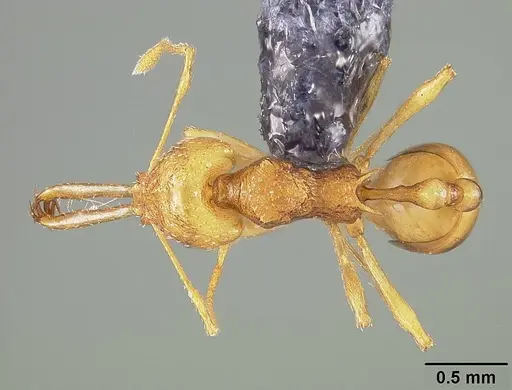
Literature
Loading...Loading products...