

Zasphinctus wilsoni
- Scientific Name
- Zasphinctus wilsoni
- Subfamily
- Dorylinae
- Author
- Hita Garcia, 2017
- Distribution
- Found in 1 countries
Zasphinctus wilsoni Overview
Zasphinctus wilsoni is an ant species of the genus Zasphinctus. It is primarily documented in 1 countries , including Mozambique. Detailed taxonomic data and occurrence records can be further explored via authoritative databases such as AntWeb or the Global Biodiversity Information Facility (GBIF).
Zasphinctus wilsoni
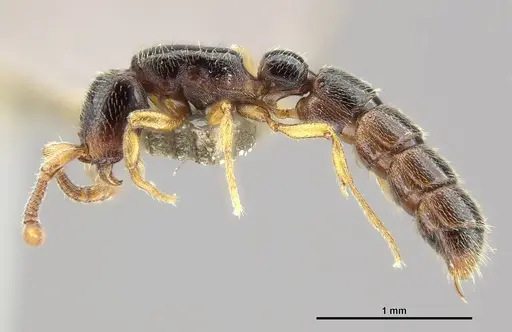
Zasphinctus wilsoni is a tiny army ant species belonging to the Dorylinae subfamily, discovered in Mozambique and named in honor of the renowned myrmecologist Edward O. Wilson [1]. Workers measure just 0.60mm in head length and 0.87mm in total body length, making them among the smallest ants in the genus [1][2]. They belong to the Zasphinctus obamai species group, characterized by their relatively thin head, lack of a median clypeal tooth, and distinctive surface sculpture with a reticulate-rugose head and mostly smooth, shiny mesosoma [2]. This species was originally described from Gorongosa National Park in Sofala Province, Mozambique, and has since been found at two additional locations further north in Cabo Delgado and Zambezia provinces [2]. The species shows surprising habitat flexibility, having been collected in secondary dry forest, miombo woodland, and rainforest across its range [2].
Quick Summary
- Difficulty: Expert
- Origin & Habitat: Mozambique, Gorongosa National Park, Quirimbas National Park, and Mount Mabu. Found in leaf litter and soil at elevations from 1-375m in tropical forest and woodland habitats [1][2].
- Colony Type: Colony structure unconfirmed. As a Dorylinae species, they likely have ergatoid (wingless) replacement queens, but this has not been documented for this specific species.
- Size & Growth:
- Queen: Undocumented, no queen specimens have been collected or described [1][2]
- Worker: 0.60mm head length,0.87mm total length (HL 0.60-0.61mm, WL 0.87mm) [1][2]
- Colony: Unknown, only known from four collected specimens (holotype plus three additional specimens) [1][2]
- Growth: Unknown
- Development: Unconfirmed, no breeding or development data exists for this species (Development timeline has not been studied. Based on related Dorylinae and tropical ant patterns, expect 4-8 weeks at warm temperatures, but this is an estimate.)
- Antkeeping:
- Temperature: Keep warm, around 24-28°C. This species comes from tropical Mozambique where temperatures are consistently warm year-round [2]. Use a heating cable or mat on one side of the nest to create a gradient.
- Humidity: High humidity required, think damp tropical forest floor. Keep the nest substrate consistently moist but not waterlogged. These ants were collected from leaf litter and soil in rainforest environments [2].
- Diapause: Unlikely, Mozambique has a mild climate without true winters. No diapause requirement has been documented [2].
- Nesting: In the wild they nest in soil and leaf litter at ground level [2]. For captivity, a small naturalistic setup with moist substrate (like a plaster nest or soil-filled formicarium) would be most appropriate. Given their tiny size, they need tight chambers and excellent escape prevention.
- Behavior: Behavior is poorly documented. As Dorylinae, they are likely predatory on small invertebrates and may have a stinger [1]. Their small size and ground-nesting habits suggest they are cryptic foragers in the leaf litter layer. Escape prevention is critical, at under 1mm, they can squeeze through the tiniest gaps. Use fine mesh and tight-fitting barriers.
- Common Issues: escape prevention is critical due to their tiny size, they can squeeze through standard mesh, virtually no captive care information exists, this is an expert-level species, wild-caught colonies may have parasites or fail to adapt to captivity, humidity must be maintained consistently, drying out is likely fatal, temperature must remain warm year-round, no cooling period needed but no cold tolerance either
Species Overview and Identification
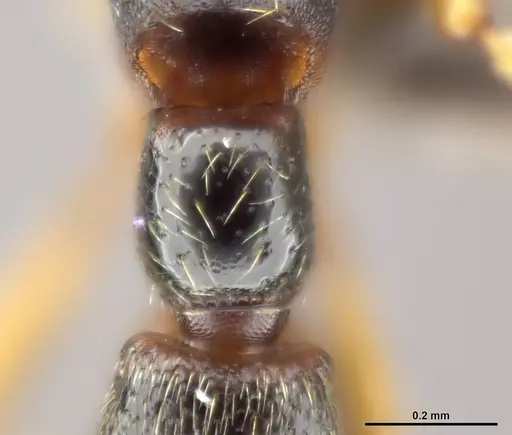
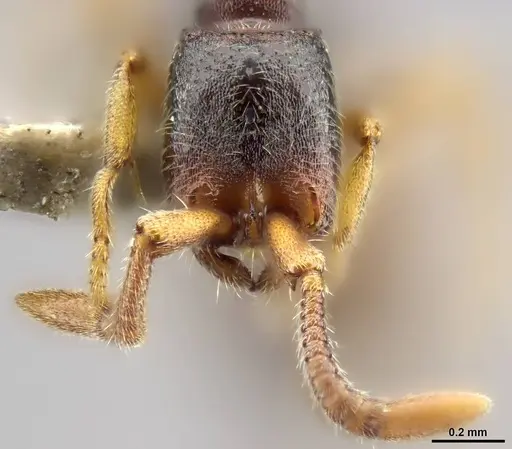
Zasphinctus wilsoni is one of the smallest species in the genus Zasphinctus, with workers measuring just 0.60mm in head length and 0.87mm in total body length [1][2]. The species was described in 2017 from a single specimen collected in Gorongosa National Park, Mozambique, but recent surveys have identified additional specimens from two more northern locations [2]. The species belongs to the Z. obamai group, characterized by their relatively thin head (cephalic index 82), lack of a conspicuous median tooth on the clypeus, and distinctive body sculpture [2]. The head has a reticulate-rugose surface, while the mesosoma and metasoma are mostly smooth and shiny with abundant piliferous foveae (tiny pits where hairs emerge) [2]. The species was named in honor of Edward O. Wilson for his decades of contributions to myrmecology and sociobiology [1].
Distribution and Habitat
Zasphinctus wilsoni is known only from Mozambique, with confirmed records from three locations spanning over 600km from south to north [2]. The type locality is Gorongosa National Park in Sofala Province at just 1m elevation in secondary dry forest [1]. Additional specimens were collected from Quirimbas National Park in Cabo Delgado (180m elevation, miombo woodland) and Mount Mabu in Zambezia (375m elevation, rainforest) [2]. This distribution across very different habitats (dry forest, woodland, rainforest) suggests the species is relatively flexible in its habitat requirements [2]. The Gorongosa area has a tropical climate with warm temperatures year-round and distinct wet and dry seasons. Given the limited sampling in southeastern Africa, the species may eventually be found in neighboring Tanzania or Zimbabwe [2].
Temperature and Care Requirements
This species requires warm, stable temperatures typical of tropical ants from Mozambique. Keep the nest area at 24-28°C with a gentle gradient allowing workers to self-regulate [2]. A heating cable placed on one side of the nest works well, avoid placing heat directly on water reservoirs to prevent excessive evaporation. Temperature drops below 20°C are likely stressful for this species. Humidity should be high, maintain consistently damp substrate without flooding. These ants were collected from leaf litter and soil in humid forest environments [2]. The substrate should feel damp to the touch. Provide a water tube or moisture reservoir connected to the nest area. Do not allow the nest to dry out completely. Ventilation should be adequate to prevent mold but not so much that the setup dries out quickly.
Feeding and Diet
As a Dorylinae species, Zasphinctus wilsoni is likely predatory on small invertebrates [1]. In captivity, offer small live prey appropriate to their tiny size, springtails, fruit flies, and other micro-arthropods are ideal. Given their minute size (under 1mm), standard ant prey items are too large. You may need to culture your own micro-prey. Sugar sources may be accepted occasionally but should not be the primary food. Observe feeding behavior and remove uneaten prey to prevent mold. Feed small amounts every few days, adjusting based on colony consumption.
Nesting and Housing
In the wild, Zasphinctus wilsoni has been collected from soil and leaf litter at ground level [2]. For captive housing, a small naturalistic setup with moist substrate works best. A plaster or acrylic nest with a soil chamber allows for proper humidity control. Given their tiny size, chambers should be appropriately scaled, small passages and chambers prevent the ants from wandering into areas where they cannot be easily monitored. Escape prevention is absolutely critical, these ants are under 1mm and can squeeze through standard ant mesh. Use fine mesh (at least 0.5mm gap or smaller) or apply fluon to barrier edges. Test tube setups may work for founding colonies but monitor for drying.
Behavior and Temperament
Behavior is poorly documented for this species. As a Dorylinae ant, they likely have a functional stinger for prey capture and defense [1]. Their cryptic lifestyle in leaf litter and soil means they are probably nocturnal or crepuscular foragers. Workers are extremely small and can be easily lost or crushed during colony maintenance. Handle with extreme care. The colony structure is unknown, Dorylinae often have ergatoid (wingless) replacement queens, but this has not been documented for Z. wilsoni specifically [1]. Expect slow colony growth given the small size of the workers and likely limited brood production.
Frequently Asked Questions
How long does it take for Zasphinctus wilsoni to develop from egg to worker?
The development timeline has not been documented for this species. Based on typical Dorylinae and tropical ant patterns, expect approximately 4-8 weeks from egg to first worker at optimal warm temperatures (around 26°C). However, this is an estimate, no specific data exists for this species.
Can I keep Zasphinctus wilsoni in a test tube?
Test tubes can work for founding colonies, but you must monitor humidity carefully. These ants need consistently moist conditions. A small cotton ball as a water reservoir works, but check frequently that the tube hasn't dried out. Given their tiny size, ensure the cotton is packed tightly enough to prevent escape but not so tight it blocks movement.
What do Zasphinctus wilsoni ants eat?
As Dorylinae, they are likely predatory on small invertebrates. Feed tiny live prey like springtails, fruit flies, and micro-arthropods. Standard ant food items are too large. Sugar water may be accepted occasionally but should not be the primary food source.
Are Zasphinctus wilsoni good for beginners?
No. This is an expert-level species with virtually no captive care information available. Only experienced antkeepers should attempt this species. The combination of tiny size, unknown colony structure, specific humidity needs, and lack of any established husbandry protocols makes this a challenging species even for experts.
How big do Zasphinctus wilsoni colonies get?
Colony size is unknown. Only four specimens have ever been collected. Based on related Dorylinae and their tiny worker size, colonies are likely small, possibly under 100 workers. Expect slow growth.
Do Zasphinctus wilsoni need hibernation?
No. This species comes from tropical Mozambique with year-round warm temperatures. No diapause or hibernation requirement has been documented, and none is expected based on their natural range.
Why are my Zasphinctus wilsoni dying?
Common issues include: drying out (maintain consistent humidity), temperature stress (keep at 24-28°C), escape (use fine mesh), inadequate prey (they need tiny live prey), and stress from wild-caught origins. This species has no established captive husbandry, troubleshooting requires careful observation and adjustment.
When should I move Zasphinctus wilsoni to a formicarium?
Move to a formicarium only when the colony outgrows its founding setup. Given their small size and humidity needs, a small naturalistic setup with moist substrate is preferable to large formicariums. Ensure the transition maintains appropriate humidity.
Can I keep multiple Zasphinctus wilsoni queens together?
Colony structure is unconfirmed. Combining unrelated queens has not been documented and is not recommended. Dorylinae can have complex queen relationships. Do not attempt multi-queen setups without specific knowledge of this species' behavior.
References

This caresheet is licensed under CC BY-SA 4.0 .
MCZ-ENT00512764
View on AntWeb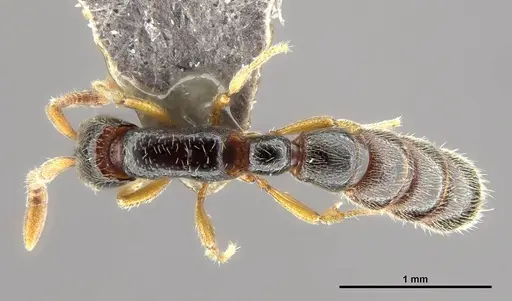
Literature
Loading...Loading products...