

Wasmannia lutzi
- Scientific Name
- Wasmannia lutzi
- Tribe
- Attini
- Subfamily
- Myrmicinae
- Author
- Forel, 1908
- Distribution
- Found in 2 countries
Wasmannia lutzi Overview
Wasmannia lutzi is an ant species of the genus Wasmannia. It is primarily documented in 2 countries , including Brazil, Paraguay. Detailed taxonomic data and occurrence records can be further explored via authoritative databases such as AntWeb or the Global Biodiversity Information Facility (GBIF).
Wasmannia lutzi
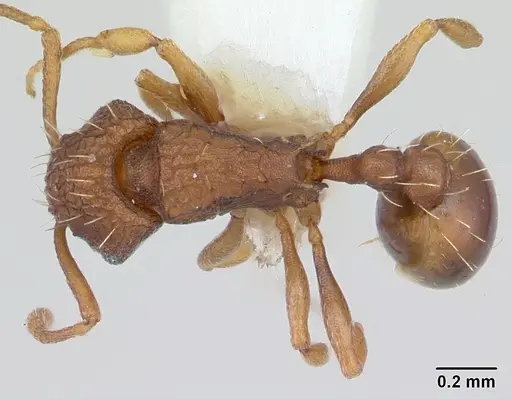
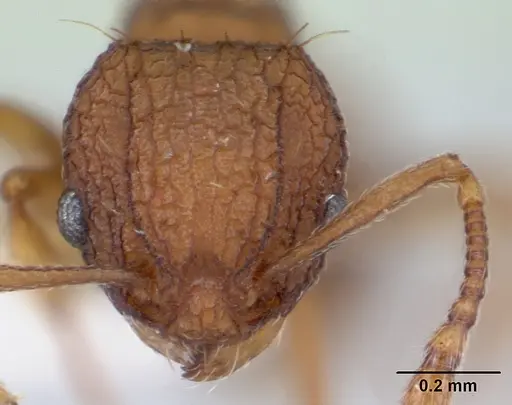
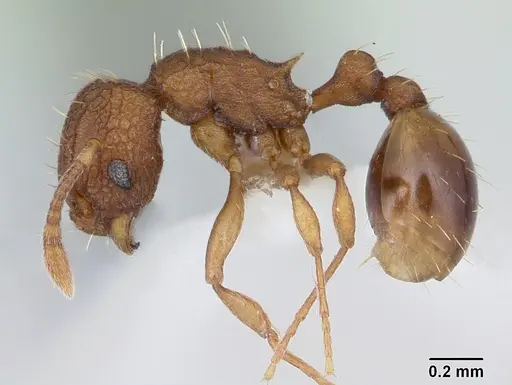
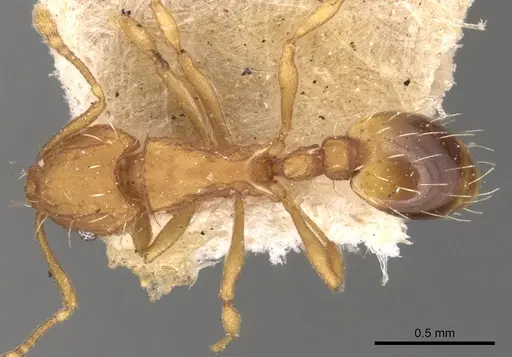
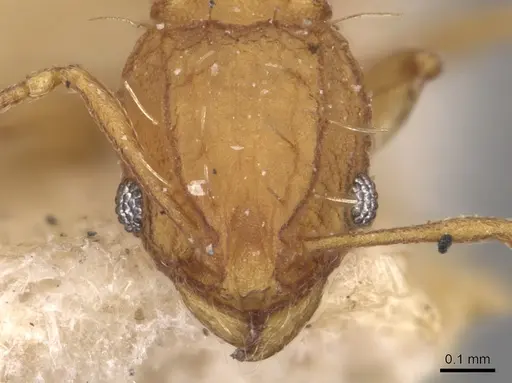
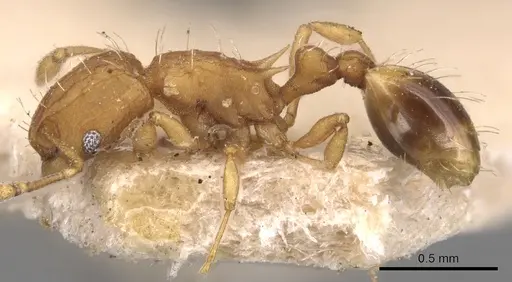
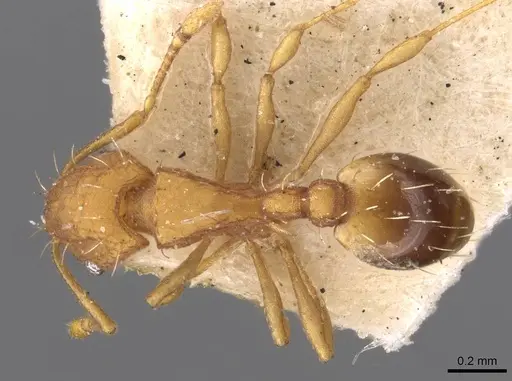
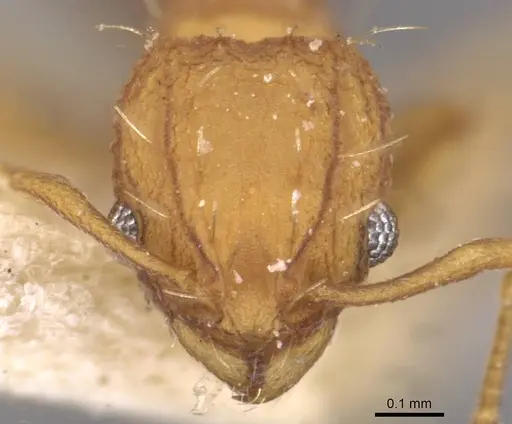
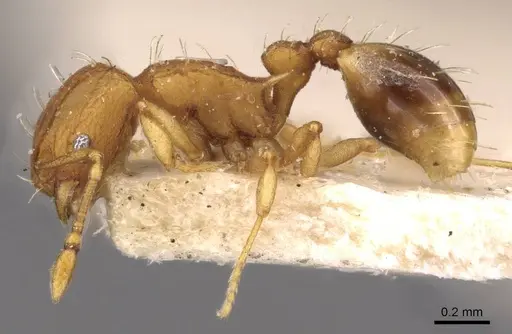
Wasmannia lutzi is a tiny ant species native to the Neotropical region of South America, found throughout southeastern Brazil, Paraguay, and northern Argentina [1][2]. Workers are exceptionally small at only 0.56mm in mesosoma length, making them one of the smaller ant species in cultivation [1]. The species is easily recognized by its uniquely broad antennal scrobe that forms a flat surface extending from the frontal carinae to the side of the head, giving the head a distinctive angular appearance [1]. Queens are slightly larger at 1.15mm mesosoma length and have a strongly trapezoidal head shape that is broader behind the eyes than across them [1]. This species belongs to the tribe Attini (fungus-growing ants), though its specific fungal symbiont relationships are not well studied [2].
Quick Summary
- Difficulty: Medium
- Origin & Habitat: Native to the Neotropical region of South America, specifically southeastern Brazil (São Paulo state), Paraguay, and northern Argentina [1][2]. Found in the Atlantic Forest of southeastern Brazil and the Amazon Forest in Brazil, with records also in the Caatingas biome of northeastern Brazil and Cerrado habitats [3][4][5]. This species inhabits tropical and subtropical forests, including secondary forest, regeneration fragments, and forest edges [6][7].
- Colony Type: Colony structure is not well documented. Based on related Wasmannia species, likely monogyne (single queen) colonies. No documented ergatoid replacement reproductives for this specific species.
- Colony: Monogyne
- Founding: Claustral
- Size & Growth:
- Queen: 1.15mm mesosoma length (WL) [1]
- Worker: 0.56mm mesosoma length (WL),0.49mm head width [1]
- Colony: Unknown for this species. Related Wasmannia auropunctata colonies can reach several thousand workers.
- Growth: Unknown, likely moderate to fast based on related species patterns
- Development: Estimated 5-8 weeks at tropical temperatures (25-28°C) based on typical Myrmicinae development (Development timeline not specifically studied for this species. Estimates based on genus-level patterns for small tropical Myrmicinae.)
- Antkeeping:
- Temperature: Keep at 24-28°C, these are tropical ants from Brazil and need warm conditions [2]. A gentle gradient allowing cooler areas around 22°C is recommended.
- Humidity: Moderate to high humidity (60-80%). In nature they inhabit forest floor environments in tropical regions. Keep the nest substrate consistently moist but not waterlogged.
- Diapause: No diapause required, this is a tropical species that does not experience cold winters [2]. Maintain warm temperatures year-round.
- Nesting: In nature they nest in soil, under stones, and in rotting wood in forest habitats [7][4]. For captivity, a small test tube setup works well for founding colonies. As colonies grow, a small acrylic nest or Y-tong setup with moist substrate works well. Given their tiny size, ensure chambers are appropriately scaled.
- Behavior: Wasmannia lutzi is a small, generally non-aggressive species. Workers are active foragers that search for food items on the forest floor. Like other Wasmannia species, they likely have a stinger but due to their minute size, the sting is negligible to humans [2]. Escape prevention is critical, their tiny size means they can squeeze through standard barrier setups. Use fine mesh and tight-fitting lids. They are likely nocturnal or crepuscular foragers based on typical genus behavior.
- Common Issues: escape prevention is critical due to their very small size, they can squeeze through standard barriers, tropical temperature requirements mean they cannot tolerate cool conditions, limited available information on specific care requirements makes experimentation necessary, wild-caught colonies may carry parasites that can cause colony losses, small colony size means founding colonies are particularly vulnerable to stress
Housing and Setup
For founding colonies, a standard test tube setup works well. Use a small test tube with a water reservoir sealed with cotton, the tube should be only slightly wider than the queen. Since workers are tiny (under 1mm), even small test tubes provide adequate space. As the colony grows to 50+ workers, you can move them to a small acrylic nest or Y-tong setup. The nest chambers should be appropriately scaled to their small size, narrow passages and small chambers help them feel secure. Keep the nest substrate consistently moist but not flooded. A small outworld area allows for feeding. Escape prevention is absolutely critical, these ants are tiny and can squeeze through gaps that seem insignificant. Use fluon on tube rims and ensure all connections are sealed [2].
Temperature and Heating
Wasmannia lutzi requires warm tropical conditions. Maintain temperatures between 24-28°C year-round. These ants come from southeastern Brazil and surrounding regions where temperatures remain warm throughout the year. A heating cable or heating mat on one side of the nest can create a gentle gradient, allowing the ants to self-regulate their temperature preference. Avoid temperatures below 20°C as this can stress the colony and slow or stop brood development. Room temperature may be sufficient if your home stays in the 24-26°C range, otherwise provide supplemental heating. Monitor colony activity, if workers cluster near the heat source, increase temperature slightly, if they avoid heated areas, reduce heat. [2]
Feeding and Diet
As a member of the tribe Attini, Wasmannia lutzi may have fungal associations, though this is not well documented for the species specifically. In captivity, offer a varied diet similar to other small Myrmicinae: small live prey items like fruit flies, pinhead crickets, and small mealworms. They will likely accept sugar water or honey as an energy source. Feed small amounts every 2-3 days, removing uneaten food to prevent mold. Since they are tiny ants, portion sizes should be correspondingly small. Fresh water should always be available. Based on related Wasmannia species, they are generalist foragers that will collect various food resources. [2]
Colony Development
Queens measure approximately 1.15mm in mesosoma length, making them small but not tiny [1]. Workers are exceptionally small at only 0.56mm mesosoma length [1]. The claustral founding process likely takes 4-6 weeks until the first workers (nanitics) emerge, based on typical Myrmicinae patterns. First workers will be very small but will grow with subsequent broods. Colony growth rate is not well documented but is likely moderate, several months to reach 50 workers, and potentially a year or more to reach several hundred. Patience is key with small ant species. Do not disturb the queen during founding, stress can cause her to abandon or consume her brood.
Handling and Temperament
Wasmannia lutzi is a docile species that poses no threat to keepers. Their tiny size means even if they do sting, the effect is negligible. However, their small size makes them excellent escape artists. Always use fine mesh (at least 0.5mm or tighter) on any ventilation holes. Apply fluon or petroleum jelly to barrier edges. When observing the colony, work in a well-lit area and move slowly to minimize stress. These ants are best observed with magnification due to their minute size. Do not handle the ants directly if possible, use soft brushes or allow them to walk onto tools for transfer. [2]
Frequently Asked Questions
How long does it take for Wasmannia lutzi to produce first workers?
Based on typical Myrmicinae development patterns, expect first workers (nanitics) to emerge around 5-8 weeks after the queen lays her first eggs, assuming temperatures are maintained at 25-28°C. The exact timeline for this specific species has not been documented, so this is an estimate based on genus-level patterns.
Can I keep Wasmannia lutzi in a test tube setup?
Yes, test tubes work well for founding colonies. Use a small-diameter tube appropriate for their tiny size. The water reservoir should be sealed with cotton, and the tube should be kept horizontal or slightly tilted so the queen can access water. Once the colony reaches 50+ workers, consider moving to a small acrylic or Y-tong nest.
What temperature do Wasmannia lutzi need?
Keep them at 24-28°C. These are tropical ants from Brazil that require warm conditions year-round. Do not allow temperatures to drop below 20°C. A heating cable or mat can provide supplemental heat if needed.
How big do Wasmannia lutzi colonies get?
The maximum colony size for this specific species is unknown. Based on related Wasmannia species, colonies likely reach several hundred to a few thousand workers. Growth is relatively slow due to their tiny size and small worker caste.
Do Wasmannia lutzi need hibernation or diapause?
No, these are tropical ants that do not require a diapause period. Maintain warm temperatures year-round. They are adapted to the consistently warm climate of their native Brazil habitat.
Why are my Wasmannia lutzi escaping?
Their extremely small size makes them expert escape artists. Use fine mesh (0.5mm or tighter) on all ventilation, apply fluon or petroleum jelly to barrier edges, and ensure all connections are tightly sealed. Check for gaps even in seemingly small spaces.
Are Wasmannia lutzi good for beginners?
They are moderate difficulty. While generally hardy once established, their tiny size requires excellent escape prevention and attention to temperature. The limited specific care information available means some experimentation may be needed. Beginners should be prepared for their small size and specific requirements.
What do Wasmannia lutzi eat?
Offer small live prey like fruit flies, small crickets, and mealworms. They will likely accept sugar water or honey. Feed small amounts every 2-3 days and remove uneaten food. Fresh water should always be available.
When should I move Wasmannia lutzi to a formicarium?
Keep them in a test tube setup for the founding stage. Once the colony reaches 30-50 workers and you notice the tube becoming crowded or fouling, consider moving to a small acrylic nest or Y-tong setup with appropriately sized chambers.
References

This caresheet is licensed under CC BY-SA 4.0 .
Literature
Loading...Loading products...