

Trachymyrmex arizonensis
- Scientific Name
- Trachymyrmex arizonensis
- Tribe
- Attini
- Subfamily
- Myrmicinae
- Author
- Wheeler, 1907
- Distribution
- Found in 2 countries
Trachymyrmex arizonensis Overview
Trachymyrmex arizonensis is an ant species of the genus Trachymyrmex. It is primarily documented in 2 countries , including Mexico, United States of America. Detailed taxonomic data and occurrence records can be further explored via authoritative databases such as AntWeb or the Global Biodiversity Information Facility (GBIF).
Trachymyrmex arizonensis
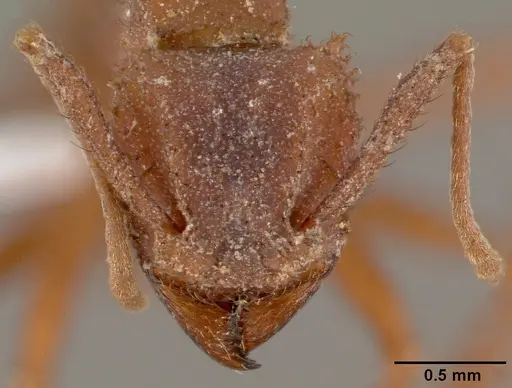
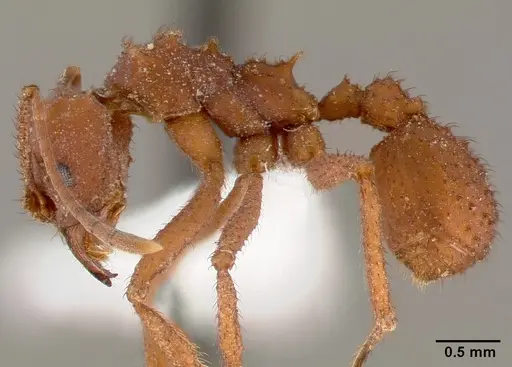
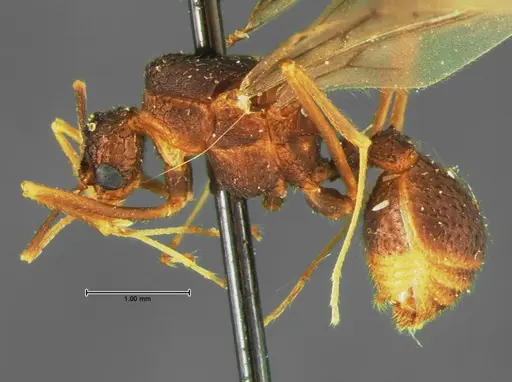
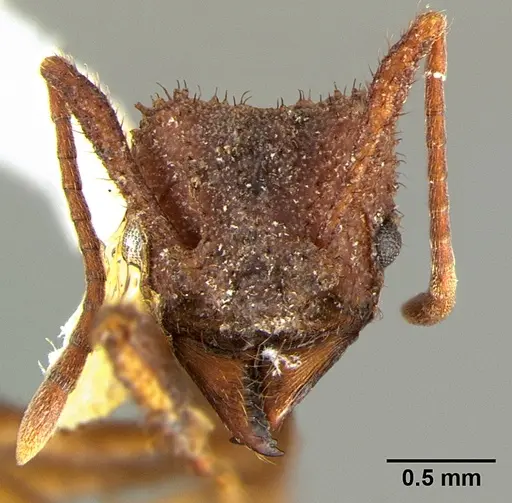
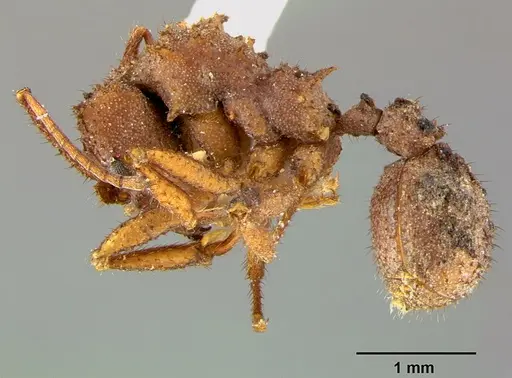
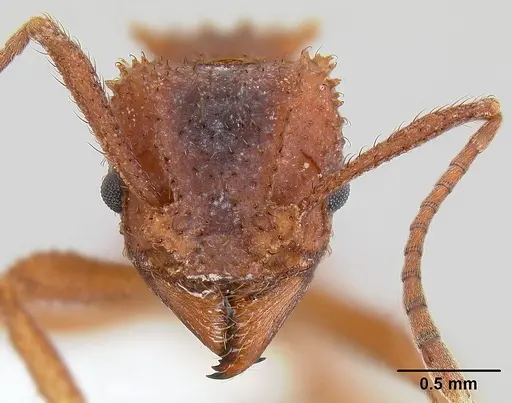
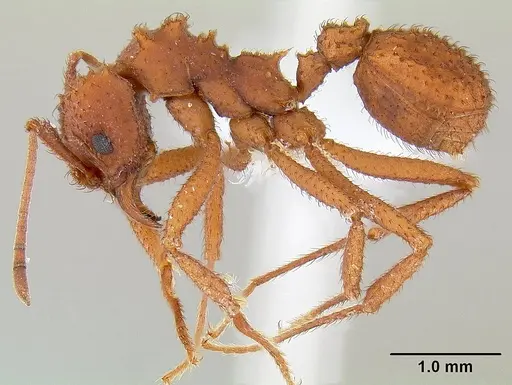
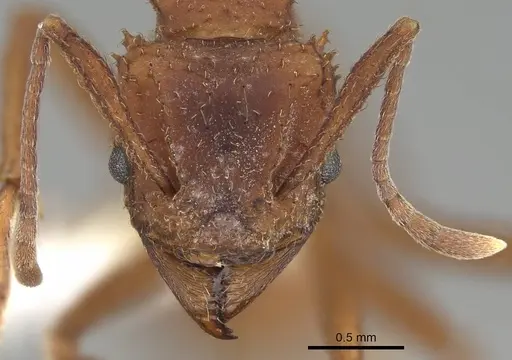
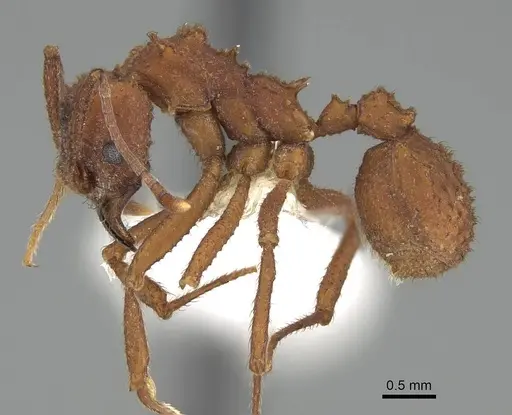
Trachymyrmex arizonensis is a medium-sized fungus-growing ant native to the southwestern United States and northern Mexico. Workers measure 0.88-1.20mm in head length with a brownish yellow to reddish brown coloration, and they have distinctive tubercles covering their body and unusually long legs and antennae [1]. This species is one of only two North American Trachymyrmex species that build conspicuous external refuse middens, yellowish-gray piles of spent fungal substrate near their nest entrance, which is a key identifying feature in the field [1][2]. Colonies can grow quite large, with established nests containing 3-5 fungus garden chambers and over 1000 workers [1]. Unlike leafcutter ants (Atta), these ants don't cut leaves but instead forage for oak catkins, insect frass, and other organic debris to feed their fungal crop [2].
Quick Summary
- Difficulty: Medium
- Origin & Habitat: Native to central and southern Arizona, western New Mexico, and the Mexican states of Chihuahua and Sonora. Found at mid elevations (1000-2000m) in mountainous areas within the Chihuahuan and Sonoran Deserts, including oak-juniper-pine woodlands and arid ocotillo-acacia scrub [1][2].
- Colony Type: Monogyne (single-queen colonies). One documented case of a colony with two dealate queens, but this appears unusual [2]. Queens areclaustral, sealing themselves in to raise the first workers [3].
- Colony: Monogyne
- Founding: Claustral
- Size & Growth:
- Queen: 1.19-1.38mm head length [1]
- Worker: 0.88-1.20mm head length [1]
- Colony: Over 1000 workers in mature colonies [1][2]
- Growth: Moderate
- Development: 8-12 weeks (estimated based on related Trachymyrmex species) (Development times are not directly studied for this species, but similar Trachymyrmex species typically take 2-3 months from egg to first worker at optimal temperatures)
- Antkeeping:
- Temperature: Keep nest at 22-26°C. This species naturally occurs at mid-elevations in desert mountain ranges with variable temperatures. Laboratory colonies have been successfully maintained at room temperature around 24°C [4]. Provide a gentle temperature gradient so ants can choose their preferred zone.
- Humidity: Moderate to high humidity in the nest (60-80%). These ants require moisture for their fungal symbiont to thrive. Keep the fungus garden substrate consistently damp but not waterlogged. The nest should have a moist chamber for the fungus and slightly drier areas for the ants to regulate their own humidity [2].
- Diapause: Yes. Based on their natural habitat in Arizona mountains with cold winters, colonies likely require a winter rest period. Reduce temperature to 15-18°C for 2-3 months during winter months, mimicking their natural seasonal cycle.
- Nesting: Y-tong (AAC) nests or plaster nests work well. These ants need a nest chamber specifically designed for fungus gardening, a cavity where the fungal garden can be maintained. Naturalistic setups with stones embedded in soil can also work, as in the wild they often attach fungus gardens to the underside of stones underground [2]. Avoid overly dry nest materials.
- Behavior: Generally peaceful and non-aggressive. Workers are small and slow-moving, not particularly defensive. They are active foragers that collect organic material (oak catkins, insect frass, vegetable debris) to feed their fungal garden [2]. They are not known to sting and pose no danger to keepers. Escape risk is moderate, while not tiny, they can squeeze through small gaps, so use standard escape prevention. A unique behavior is their external waste management: they create distinctive yellowish-gray refuse piles outside the nest, a trait shared with only one other North American Trachymyrmex species [1].
- Common Issues: Fungal symbiont death is the most serious issue, without their fungus, the colony cannot survive. Never let the fungus garden dry out completely., Army ant predation is a natural threat. While not present in most captive setups, this species has evolved defensive behaviors against raids, so observe how they respond to disturbances., Overfeeding can cause mold problems in the fungus garden. Only provide fresh organic material as the colony can consume, and remove uneaten food promptly., Colony founding is challenging, queens need a starting piece of fungal garden to inoculate their first garden. Without fungal material, founding colonies will fail., Temperature extremes can kill the fungus. Keep the nest away from direct heat sources and avoid temperatures above 30°C.
The Fungus Garden: Why This Ant Is Different
Trachymyrmex arizonensis belongs to the tribe Attini, fungus-growing ants that cultivate a specialized fungal crop for food. Unlike leafcutter ants (Atta) that cut fresh leaves, this species collects oak catkins, insect frass, and decaying vegetable matter to feed their fungus [2]. The fungus forms a special relationship with the ants, and the colony's survival depends entirely on maintaining a healthy fungal garden. In the wild, colonies typically have 3-5 underground fungus garden chambers connected by narrow passages [1]. Some populations naturally cultivate Leucoagaricus gongylophorus (Clade-A fungus), while others grow clade-B fungi, remarkably, this species can switch between fungal types in laboratory settings [5][6]. For captive colonies, you'll need to provide appropriate fungal substrate and ensure the garden stays moist and healthy.
Feeding and Nutrition
In captivity, feed your colony oak catkins (flower buds from oak trees) as their primary food source, this is what they use most in the wild [2]. Other acceptable substrates include dried leaves, small pieces of fruit, or insect frass (insect droppings). The ants don't eat these materials directly, they feed them to their fungal garden, which produces special structures called gongylidia that the ants consume [4]. Fresh organic material should be provided in small amounts and replaced every few days to prevent mold. Avoid sugary foods like honey or fruit, these ants are not attracted to sugar like many other ant species. Remove any uneaten material promptly to prevent mold from killing the fungus garden. Some keepers report success with commercial fungus-growing ant diets, but fresh oak material remains the most reliable option.
Temperature and Seasonal Care
Keep your colony at 22-26°C, which mimics their natural environment in Arizona mountain elevations. These ants are adapted to variable desert mountain conditions, so room temperature around 24°C works well for established colonies [4]. A heating cable on one side of the nest can create a temperature gradient, allowing ants to move between warmer and cooler areas. During winter (roughly November through February), reduce temperatures to 15-18°C to provide a dormancy period, this mimics the cold winters at 1000-2000m elevation in their natural range. Do not hibernate them at room temperature, the seasonal temperature drop is important for colony health. In summer, ensure the nest doesn't overheat, temperatures above 30°C can damage or kill the fungal symbiont.
Nest Setup and Housing
Y-tong (AAC) nests or plaster nests with a dedicated fungus chamber work best for this species. The key requirement is a moist chamber where the fungal garden can be maintained, the rest of the nest can be slightly drier [2]. The chamber dimensions should be at least 2-3cm in diameter to accommodate the growing fungus garden. Some keepers use a two-chamber setup: one chamber for the fungus garden kept consistently moist, and a dry chamber for the ants to rest and forage. Naturalistic setups with flat stones embedded in moist soil can also replicate their natural nest architecture, where fungus gardens attach to the underside of stones underground [2]. Ensure excellent escape prevention, while not tiny, these ants can squeeze through small gaps, and standard fluon barriers on test tube rims are recommended.
Colony Founding
Starting a colony from a newly caught queen is challenging because Trachymyrmex queens cannot found a new fungal garden from scratch, they must be given a piece of fungus from an established colony to begin [4]. If you're catching a queen in the wild, look for colonies after summer monsoon rains (July-August in Arizona). The queen should be provided with approximately 50g of fungal garden material from a donor colony, placed in a small moist chamber [4]. Without this fungal inoculum, the founding queen will not survive. After the first workers emerge (nanitics), they will tend the fungus garden and begin foraging for additional substrate. This makes Trachymyrmex arizonensis more difficult to start than most ants, but established colonies can thrive for years with proper care.
Defense and Predators
In the wild, Trachymyrmex arizonensis faces significant predation from army ants, particularly Neivamyrmex rugulosus and N. nigrescens [1][7]. Studies show that army ant raids can result in 75% brood loss and significant damage to the fungus garden [7]. Interestingly, T. arizonensis workers have particularly tough, sclerotized bodies with spines that provide some protection, researchers noted workers were not injured during observed battles with army ants [7]. Workers respond to raids by evacuating the nest with brood and attempting to rescue the fungal garden. In captivity, you're unlikely to encounter army ants, but this evolutionary history means these ants may be more sensitive to disturbances than truly peaceful species. They are not aggressive toward keepers and cannot sting.
Unique Waste Management
One of the most distinctive features of Trachymyrmex arizonensis is its external refuse midden, a pile of spent fungal substrate deposited outside the nest entrance [1][2]. This yellowish-gray pile is a key identifying feature in the field and sets this species apart from most other North American Trachymyrmex, which only have internal refuse chambers. The external refuse pile serves an important ecological function: it creates a moist microhabitat that supports populations of Collembola (springtails), which in turn support a commensal ant species called Strumigenys arizonica that lives exclusively in or near T. arizonensis nests [2]. In captivity, you may notice your colony creating similar refuse piles, this is normal and indicates a healthy, established colony. Simply clean the external refuse periodically to maintain hygiene.
Frequently Asked Questions
Can I keep Trachymyrmex arizonensis in a test tube?
Test tubes are not ideal for this species because they need space for a fungal garden. A small Y-tong (AAC) nest or plaster nest with a dedicated fungus chamber works much better. If you must use a test tube for a founding colony, use a large test tube (16mm+) and provide moist cotton on one end with a small piece of fungal garden. However, plan to move them to a proper fungus-growing ant setup once the colony reaches 20-30 workers.
What do Trachymyrmex arizonensis eat?
They don't eat conventional ant food. Instead, they feed on their fungal garden. Provide oak catkins (oak flower buds) as the primary substrate, you can collect these from any oak tree in autumn/winter. Other acceptable materials include small pieces of dried leaves, insect frass, or vegetable matter. Remove uneaten material every few days to prevent mold. Do not offer sugar, honey, or protein insects, they are not part of their natural diet.
How long does it take for the first workers to emerge?
Based on related Trachymyrmex species, expect 8-12 weeks from egg to first worker at optimal temperature (around 24°C). This is slower than many common ant species. The founding queen needs a piece of fungal garden to start, and the first nanitic workers will be small. Growth is moderate, established colonies can reach several hundred workers over 1-2 years with good care.
Are Trachymyrmex arizonensis good for beginners?
No, this is not a beginner species. The biggest challenge is that founding queens cannot start a fungal garden from scratch, they need a piece of fungus from an established colony. Additionally, maintaining the fungal symbiont requires attention to humidity and substrate quality. If you're interested in fungus-growing ants, start with an established colony rather than trying to found from a queen. Once established, they are relatively hardy.
Do Trachymyrmex arizonensis need hibernation?
Yes, they benefit from a winter rest period. In their natural habitat at 1000-2000m elevation in Arizona mountains, temperatures drop significantly in winter. Reduce nest temperature to 15-18°C for 2-3 months (roughly November-February in the Northern Hemisphere). This seasonal cycle appears important for colony health, though established colonies can survive year-round at room temperature if necessary.
Why is my fungus turning dark brown?
A healthy fungus garden should be light brownish-yellow with visible white mycelium. Dark brownish-orange coloration with a matted appearance indicates the fungus is stressed or dying, this can happen after raids (in the wild), excessive heat, or drying out [7]. Check humidity levels immediately and ensure the substrate is moist but not waterlogged. Remove any dead fungal material and provide fresh oak substrate. If the fungus dies, the colony will not survive.
Can I keep multiple queens together?
No. Trachymyrmex arizonensis is monogyne, colonies typically have a single queen. While one documented case exists of a colony with two dealate queens, this appears unusual and their reproductive status was not confirmed [2]. Combining unrelated queens is not recommended and would likely result in fighting. Start with a single queen colony.
How big do colonies get?
Mature colonies can reach over 1000 workers with 3-5 fungus garden chambers [1][2]. In captivity, with good care, colonies commonly reach several hundred workers within 1-2 years. The fungus garden itself will grow in size alongside the colony. This is a moderately large species by North American ant standards.
What's the difference between Trachymyrmex and Atta ants?
Both are fungus-growing ants, but Atta (leafcutter ants) cut and transport fresh leaf material to feed their fungus, while Trachymyrmex species like arizonensis collect smaller organic debris like oak catkins and insect frass [2]. Atta colonies are much larger (millions of workers) and more complex. Trachymyrmex arizonensis is a 'higher attine' that cultivates the same fungal species (Leucoagaricus gongylophorus) used by leafcutter ants, but on a much smaller scale.
Why do they have a refuse pile outside the nest?
This is one of the most distinctive traits of T. arizonensis, they're one of only two North American Trachymyrmex species that routinely create external refuse middens [1][2]. The spent fungal substrate is deposited outside, creating a moist microhabitat that supports springtails and other small invertebrates. This external waste management may help keep the nest interior clean and prevent fungal disease. In captivity, you'll see this yellowish-gray pile near the nest entrance, it's completely normal.
References

This caresheet is licensed under CC BY-SA 4.0 .
CASENT0000334
View on AntWeb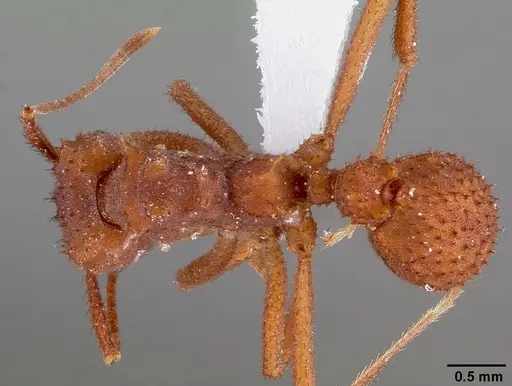
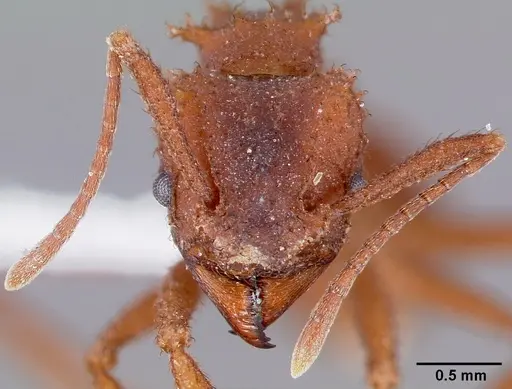
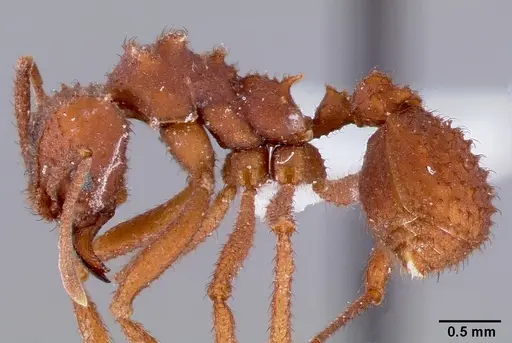
CASENT0000359
View on AntWeb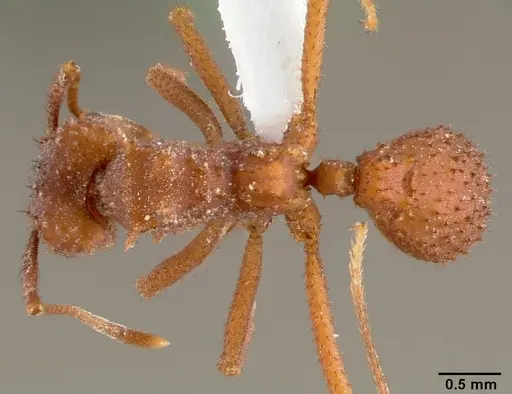
CASENT0105667
View on AntWeb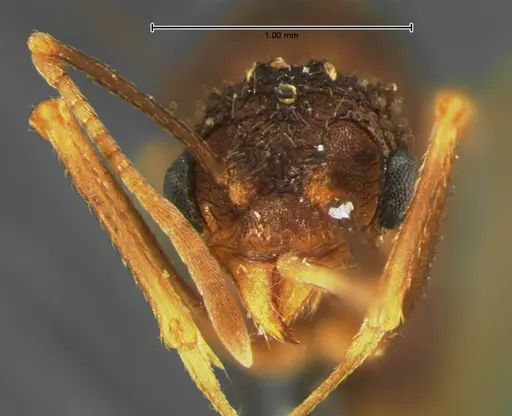
CASENT0105872
View on AntWeb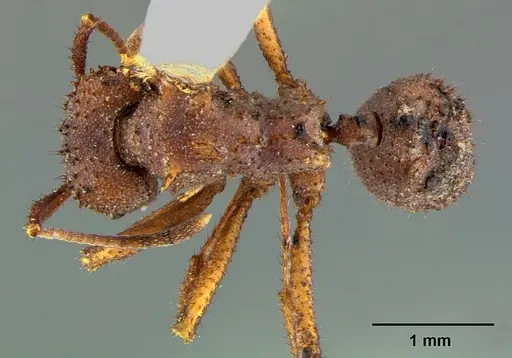
CASENT0106047
View on AntWeb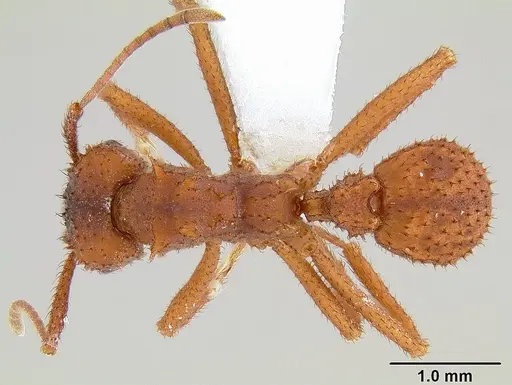
CASENT0919967
View on AntWeb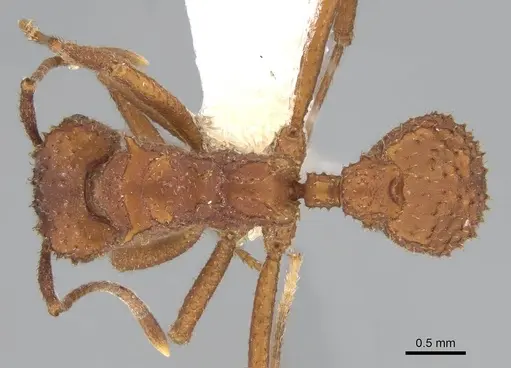
Literature
Loading...Loading products...