

Tetraponera connectens
- Scientific Name
- Tetraponera connectens
- Tribe
- Pseudomyrmecini
- Subfamily
- Pseudomyrmecinae
- Author
- Ward, 2001
- Distribution
- Found in 1 countries
Tetraponera connectens Overview
Tetraponera connectens is an ant species of the genus Tetraponera. It is primarily documented in 1 countries , including Thailand. Detailed taxonomic data and occurrence records can be further explored via authoritative databases such as AntWeb or the Global Biodiversity Information Facility (GBIF).
Tetraponera connectens
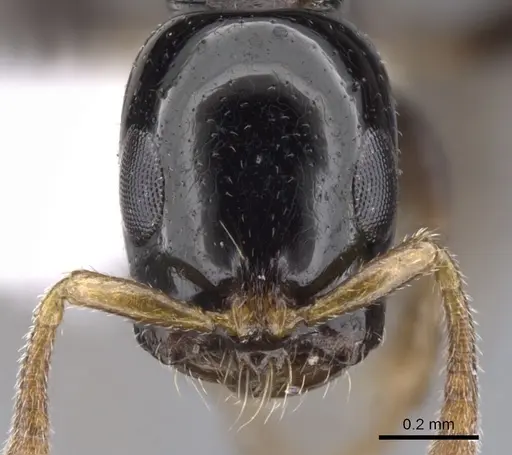
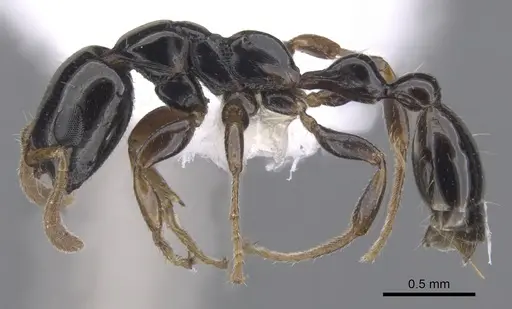
Tetraponera connectens is a tiny black ant species belonging to the Pseudomyrmecinae subfamily, native to Thailand. Workers measure just 0.58-0.63mm in head width, making them one of the smaller ant species you'll encounter [1]. They have a distinctive appearance with disproportionately small eyes, short antennae scapes, and a broad profemur, all black to dark brownish-black in color with lighter brown antennae, mandibles, and tarsi [1]. This species was described by Ward in 2001 and is only known from its type locality in Khao Lak National Park, Thailand, where it was collected from canopy fogging in semi-primary dipterocarp hilltop forest at 300m elevation [1]. As a member of the Tetraponera allaborans species group, these ants are arboreal by nature, typically nesting in hollow plant stems or crevices in trees rather than in ground nests.
Quick Summary
- Difficulty: Medium
- Origin & Habitat: Thailand, specifically Khao Lak National Park, Thone Chong Fa Fall, at 300m elevation in semi-primary dipterocarp hilltop forest [1]. This is a tropical forest environment with high humidity and warm temperatures year-round.
- Colony Type: Colony structure is unconfirmed for this species. Most Tetraponera species are monogyne (single queen) but some can be polygynous. Further research needed on T. connectens specifically.
- Size & Growth:
- Queen: Unknown, not described in available literature. Based on related species, likely 5-7mm.
- Worker: 0.58-0.63mm head width,0.77-0.84mm head length,0.50-0.52mm scape length [1]
- Colony: Unknown, no colony size data available for this species
- Growth: Unknown, no development data available for this species
- Development: Unknown, no direct measurements. Based on typical Pseudomyrmecinae patterns in tropical conditions, estimate 4-8 weeks at optimal temperature. (No specific development data exists for T. connectens. Related tropical Pseudomyrmecinae species typically develop faster than temperate ants due to year-round warm conditions.)
- Antkeeping:
- Temperature: Keep at 24-28°C, these are tropical ants that need warm conditions. A heating cable on one side of the nest creates a gradient allowing them to regulate their temperature [2]
- Humidity: High humidity required, think tropical forest canopy. Keep nest substrate consistently moist but not waterlogged. Aim for 70-85% humidity in the nest area [2]
- Diapause: No, as a tropical species from Thailand, they do not require hibernation. Keep them at stable warm temperatures year-round [2]
- Nesting: Arboreal specialists, they prefer nests with vertical passages that mimic their natural hollow stem habitat. Y-tong (AAC) nests or acrylic nests with narrow chambers work well. Provide climbing structures and avoid ground-level-only setups [2]
- Behavior: These are active, agile ants with strong climbing abilities, a hallmark of the Pseudomyrmecinae subfamily. They are generally not aggressive toward keepers but can be nervous and fast-moving. Their small size (under 1mm) means escape prevention is critical, they can squeeze through tiny gaps. They are likely omnivorous, feeding on nectar, honeydew, and small insects in the wild. Workers are slender and elegant compared to the chunkier formicines.
- Common Issues: escape prevention is critical due to their tiny size, use fine mesh and tight-fitting lids, tropical humidity requirements can lead to mold issues if ventilation is poor, no species-specific care data exists, you may need to experiment with conditions, wild-caught colonies may carry parasites that can devastate captive colonies, fast movement makes them harder to contain when feeding or cleaning
Housing and Nest Setup
Tetraponera connectens is an arboreal species, so your setup should reflect their natural preference for elevated, enclosed spaces. Y-tong (AAC) nests work well because they provide the narrow, tight chambers these tiny ants prefer. Acrylic nests with small chambers are also suitable. Avoid large, open spaces, these ants feel safest in snug quarters. Add some climbing structures like twigs or fake plants since they love to climb. A small outworld connected to the nest allows for foraging space. Because they're tiny, use a test tube setup for founding colonies with a cotton plug creating a water reservoir. Cover any ventilation holes with fine mesh, these ants will find and use any gap to escape [2].
Temperature Requirements
As a tropical species from Thailand, Tetraponera connectens needs warm conditions to thrive. Keep the nest area between 24-28°C for optimal activity and brood development. Room temperature may be sufficient if your home stays in this range, but most keepers use a heating cable or heat mat on one side of the nest to maintain warmth. Place the heating on top of the nest, not underneath, to avoid drying out the nest too quickly. Create a temperature gradient so workers can move between warmer and cooler areas as needed. Avoid temperatures below 20°C for extended periods, this species is not adapted to cool conditions [2].
Humidity and Water
These ants come from tropical Thai forests, so they need high humidity. Keep the nest substrate consistently moist, it should feel damp to the touch but not have standing water. For test tube setups, ensure the water reservoir is adequate but not so large that flooding becomes a risk. Mist the outworld occasionally but avoid excess moisture that leads to mold. Good ventilation is essential to prevent mold while maintaining humidity, stagnant air causes more problems than slightly drier air. Watch for condensation on nest walls, which indicates humidity is in the right range. If the nest dries out too quickly, consider covering part of it with plastic wrap to retain moisture [2].
Feeding and Diet
In the wild, Tetraponera species feed on nectar, honeydew from aphids and scale insects, and small insects. In captivity, offer a mix of sugar sources (honey water, sugar water) and protein (small fruit flies, pinhead crickets, mealworms). Since these ants are so tiny, prey items need to be appropriately sized, springtails or fruit fly pupae work well. Feed sugar water constantly using a cotton ball or small container. Offer protein 2-3 times per week, removing uneaten prey after 24 hours. Because of their small size, they don't need much food, overfeeding leads to mold and attracts pests. Remove any moldy food immediately to protect the colony [2].
Colony Development
Since no specific data exists for Tetraponera connectens, care is based on general Pseudomyrmecinae husbandry. Expect slow colony growth initially, founding colonies often take months to produce their first workers (nanitics). Once the colony reaches 10-20 workers, growth typically accelerates. A mature colony may eventually reach several hundred workers, though exact maximum size is unknown for this species. Be patient with founding colonies, disturbing them too often can cause stress and abandonment. Minimize nest inspections during the founding stage. Workers are long-lived compared to many ant species, which helps colonies recover from setbacks [2].
Escape Prevention
With workers measuring just 0.58-0.63mm, escape prevention is absolutely critical for this species. They can squeeze through gaps that seem impossible, even the space between a lid and container rim is enough. Use fine mesh (at least 0.5mm or smaller) on any ventilation. Apply fluon or similar barrier grease to the upper edges of the outworld. Check all connections between the nest and outworld regularly. When feeding, do so in a contained space where you can catch any escapees. Keep the colony room free of other ant colonies that might attract these tiny foragers. A single worker can slip through a gap the width of a credit card edge, there's no such thing as too careful with this species [2].
Frequently Asked Questions
How long does it take for Tetraponera connectens to produce first workers?
The exact timeline is unknown for this species since no development studies exist. Based on typical Pseudomyrmecinae patterns in tropical conditions, expect 4-8 weeks from egg to worker at optimal temperature (24-28°C). Founding colonies may take longer as the queen establishes herself. Be patient, disturbing the nest can cause the queen to abandon or eat her brood [2]
Can I keep Tetraponera connectens in a test tube?
Yes, test tubes work well for founding colonies. Use a small test tube with a cotton plug creating a water reservoir. The tube should be dark (wrapped in aluminum foil or paper) to reduce stress. Once the colony reaches 20-30 workers, consider moving to a small Y-tong or acrylic nest. The key is providing snug chambers appropriate for their tiny size, too much open space stresses them [2]
Do Tetraponera connectens ants sting?
Pseudomyrmecinae ants have functional stingers, but these tiny ants are not considered dangerous to humans. Their sting is mild and barely detectable due to their small size. They are more likely to flee than fight when disturbed. However, they can deliver a minor sting if handled roughly or cornered [2]
What temperature do Tetraponera connectens need?
Keep them at 24-28°C. This is a tropical species from Thailand that needs warm conditions year-round. A heating cable on top of the nest helps maintain stable temperatures. Avoid temperatures below 20°C, prolonged cold exposure can kill the colony. Room temperature is often sufficient if your home stays in the mid-to-high 20s [2]
Are Tetraponera connectens good for beginners?
This species is rated as medium difficulty. While not the hardest ant to keep, the lack of species-specific care data means you may need to experiment with conditions. Their tiny size and escape risk add challenge. Beginners should master easier species first before attempting T. connectens. The main challenges are escape prevention and maintaining proper humidity without causing mold [2]
How big do Tetraponera connectens colonies get?
Colony size is unknown for this species, no published colony data exists. Based on related Tetraponera species, expect several hundred workers at maturity. Growth is slow initially but accelerates once the colony reaches 20-30 workers. Be patient with founding colonies, it may take a year or more to reach significant numbers [2]
Do Tetraponera connectens need hibernation?
No, as a tropical species from Thailand, they do not require hibernation. Keep them at warm temperatures year-round. Simulating seasonal temperature changes can actually stress them. Maintain stable conditions between 24-28°C throughout the year. This is one of the easier aspects of their care, no winter preparation needed [2]
What do Tetraponera connectens eat?
They are omnivorous like most Pseudomyrmecinae. Offer sugar water or honey water constantly, these ants need carbohydrates. For protein, provide small prey like fruit flies, springtails, or tiny crickets appropriate to their size. Feed protein 2-3 times per week. Remove uneaten food within 24 hours to prevent mold. Their small size means even small fruit fly pieces are acceptable [2]
Why are my Tetraponera connectens dying?
Common causes include: temperature too cold (below 20°C), humidity too low or too high (mold is a major killer), escape-related deaths (check for tiny gaps), stress from too much disturbance, or parasites from wild-caught colonies. Review each parameter and make gradual adjustments. If the colony is founding, the queen may simply be establishing, give it time. Sudden colony collapse often indicates environmental problems rather than disease [2]
Can I keep multiple Tetraponera connectens queens together?
Colony structure is unconfirmed for this species. Most Tetraponera species are monogyne (single queen), but polygyny has been observed in some related species. Without specific data on T. connectens, combining unrelated queens is not recommended. If you obtain a wild colony, assume single-queen structure and house accordingly. Multiple-queen situations should only be attempted with careful observation for aggression [2]
When should I move Tetraponera connectens to a formicarium?
Move from test tube to a proper nest once the colony reaches 20-30 workers or when the test tube shows signs of mold from waste buildup. Y-tong or acrylic nests with small chambers work best. Make the transition gradual, connect the test tube to the new nest and let them move on their own. Don't force them, as this causes stress. The new nest should already be at proper temperature and humidity before introducing the colony [2]
Is Tetraponera connectens invasive anywhere?
This species is only known from Thailand and has not been documented as invasive. It has not been introduced to any other regions. As with all ant species, never release captive colonies into the wild outside their natural range, this applies even to native species due to potential disease transmission to wild colonies [2]
References

This caresheet is licensed under CC BY-SA 4.0 .
CASENT0902826
View on AntWeb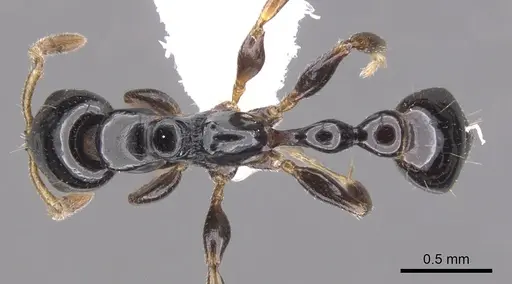
Literature
Loading...Loading products...