

Tetramorium scutum
- Scientific Name
- Tetramorium scutum
- Tribe
- Crematogastrini
- Subfamily
- Myrmicinae
- Author
- Hita Garcia & Fisher, 2014
- Distribution
- Found in 1 countries
Tetramorium scutum Overview
Tetramorium scutum is an ant species of the genus Tetramorium. It is primarily documented in 1 countries , including Madagascar. Detailed taxonomic data and occurrence records can be further explored via authoritative databases such as AntWeb or the Global Biodiversity Information Facility (GBIF).
Tetramorium scutum
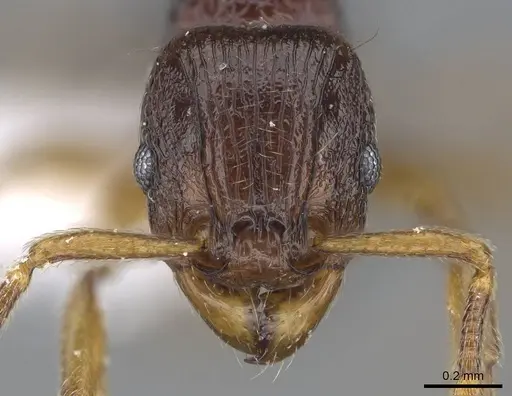
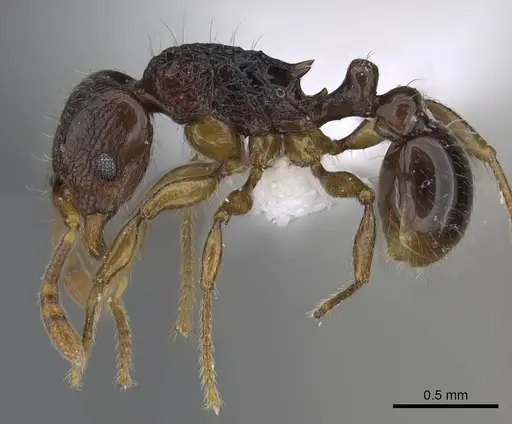
Tetramorium scutum is a small to medium-sized ant native to the montane rainforests of southeastern Madagascar. Workers measure 2.6-2.8mm in total body length with a distinctive dark brown to nearly black body contrasting sharply with yellowish-brown mandibles, antennae, and legs [1]. The species gets its name from the Latin word 'scutum' meaning 'shield', referring to its uniquely shaped petiolar node that appears shield-like when viewed from above [1]. This ant is only known from a small area around Ivohibe, Madagascar, where it lives at elevations between 1200-1575m in montane rainforest leaf litter [1]. The species is a member of the Tetramorium schaufussii species group and can be distinguished from related species by its moderately long propodeal spines and lobes that are strongly inclined toward each other, a feature unique among its closest relatives [1].
This is a relatively newly described species (2014) with limited available husbandry data. Based on its montane rainforest origin, it likely prefers cooler temperatures with high humidity. As a litter-dwelling species, it probably forages in the upper soil layers and may form moderate-sized colonies typical of the genus.
Quick Summary
- Difficulty: Medium
- Origin & Habitat: Southeastern Madagascar, specifically the Ivohibe area in Fianarantsoa region. Found exclusively in montane rainforests at elevations of 1200-1575m, where it lives in leaf litter [1].
- Colony Type: Unconfirmed colony structure. Based on typical Tetramorium patterns, likely single-queen colonies (monogyne), but this has not been directly studied for this species.
- Size & Growth:
- Queen: Not yet described, this species was only described in 2014 and queen caste has not been documented [1]
- Worker: 2.6-2.8mm total length (HL 0.65-0.70mm, HW 0.60-0.64mm, WL 0.79-0.86mm) [1]
- Colony: Unknown, no colony size data available for this species
- Growth: Unknown, likely moderate growth rate typical of Tetramorium genus
- Development: Estimated 6-10 weeks at optimal temperature based on typical Tetramorium development patterns (Direct development data not available for this species. Estimates based on related species in the genus.)
- Antkeeping:
- Temperature: Keep at 20-24°C. This species comes from montane rainforests at 1200-1575m elevation in Madagascar, suggesting it prefers cooler, more temperate conditions than lowland tropical ants. A gentle gradient with a slightly warmer side allows workers to self-regulate
- Humidity: High humidity required, think damp forest floor. Keep the nest substrate consistently moist but not waterlogged, with some drier areas available. Montane rainforests are persistently humid environments
- Diapause: Unknown, no specific data on overwintering requirements. Madagascar's highlands do experience cooler winters, so a brief cool period may be beneficial. Monitor colony behavior and consider a slight temperature reduction (15-18°C) for 2-3 months during winter months
- Nesting: Litter-dwelling species that naturally nests in leaf litter and upper soil layers. In captivity, a naturalistic setup with moist substrate or a Y-tong/plaster nest works well. Provide materials they can tunnel through
- Behavior: Litter-dwelling foragers that likely search for food in the upper substrate layers. Workers are moderately active and may show territorial behavior typical of Tetramorium. Escape risk is moderate due to small worker size, use standard barrier methods. Aggression level is typical for the genus, they will defend the nest but are not particularly aggressive toward humans. No functional stinger, but they may bite if provoked
- Common Issues: limited availability, this is a rarely kept species with no established husbandry protocols, high humidity requirements can lead to mold problems if ventilation is inadequate, cold-sensitive, temperatures below 18°C may slow or stop activity, wild-caught colonies may carry parasites that are difficult to treat in captivity, small colony size means any losses have significant impact on population
Housing and Nest Setup
Tetramorium scutum is a litter-dwelling species that naturally lives in the upper layers of forest floor debris. In captivity, you can house them in several ways. A naturalistic setup with a moist soil substrate works well, use a mix of soil and organic material like coco fiber or leaf litter to replicate their natural environment. Alternatively, a Y-tong (AAC) or plaster nest provides more control over humidity levels. Whatever setup you choose, ensure the nest chambers are appropriately sized for their small workers, tight chambers help them feel secure. Because they come from montane rainforests, they need more ventilation than typical tropical ants but still require high humidity. A small ventilation hole or mesh top helps prevent mold while maintaining moisture.
Temperature and Humidity Requirements
This species requires cooler temperatures than many other ant species due to its montane origin. Keep the nest area at 20-24°C, with a slight gradient if possible so workers can self-regulate. A heating cable on one side of the nest can create this gradient, place it on top of the nest to avoid drying out the substrate. Humidity is critical, these ants come from constantly damp montane forest floors. Keep the substrate consistently moist but not waterlogged. The substrate should feel damp to the touch, with condensation occasionally visible on the nest walls. If you see persistent condensation or mold, increase ventilation slightly. If the substrate dries too quickly between waterings, consider a more moisture-retentive mix or reduce ventilation.
Feeding and Diet
Based on typical Tetramorium feeding patterns, these ants are omnivorous and will accept both protein and sugar sources. Offer sugar water or honey as a constant energy source. For protein, small live or frozen invertebrates like fruit flies, small mealworms, or springtails work well. As litter-dwelling ants, they likely forage for small arthropods and may also tend aphids for honeydew in the wild. Feed them protein 2-3 times per week, removing any uneaten prey after 24 hours. Sugar should be available constantly, a small drop of sugar water or honeydew feeder works well. Observe your colony's preferences and adjust feeding frequency accordingly.
Colony Development and Growth
As a recently described species (2014), there is limited husbandry data for T. scutum. Based on typical Tetramorium development, expect 6-10 weeks from egg to first worker at optimal temperature (around 22°C). The first workers (nanitics) will likely be smaller than mature workers. Colony growth is likely moderate, don't expect rapid expansion. Founding colonies may be slow to develop as the queen invests energy in producing her first brood. Be patient during the founding phase and avoid disturbing the nest. Once workers establish foraging patterns, growth typically accelerates. Monitor for any signs of stasis or decline, which may indicate temperature or humidity issues.
Seasonal Care and Overwintering
In their montane Madagascar habitat, temperatures drop significantly during winter months at 1200-1575m elevation. While specific diapause requirements are unknown, a slight cool period during winter months (roughly 15-18°C for 2-3 months) may benefit the colony. Reduce feeding during this period and allow the colony to slow naturally. Do not cool them suddenly, gradually reduce temperatures over 1-2 weeks. Monitor the colony throughout the cool period, if they remain active and healthy, the rest period is likely beneficial. Resume normal temperatures and feeding gradually in spring. If your room temperature stays in the low 20s year-round, you may skip the cool period, but expect slower winter growth.
Frequently Asked Questions
How long does it take for Tetramorium scutum to raise their first workers?
Direct data is not available for this species, but based on typical Tetramorium development patterns, expect 6-10 weeks from egg to first worker at optimal temperature (around 22°C). The exact timing depends on temperature and feeding. Be patient during founding, queens may seal themselves in and not emerge until their first workers hatch.
What temperature range is best for Tetramorium scutum?
Keep them at 20-24°C. This species comes from montane rainforests at 1200-1575m elevation in Madagascar, so they prefer cooler conditions than typical tropical ants. A slight temperature gradient allows workers to regulate their own temperature by moving between warmer and cooler areas of the nest.
Can I keep Tetramorium scutum in a test tube setup?
Yes, a test tube setup can work for founding colonies. Ensure the cotton is kept moist but not flooded, and maintain temperatures in their preferred range. However, because they require high humidity, you may need to monitor moisture levels more closely than with larger setups. A test tube with a water reservoir works well for founding colonies.
Do Tetramorium scutum ants sting?
Tetramorium ants have a stinger but are not considered dangerous to humans. They may bite if threatened, but their small size and mild venom mean they pose minimal risk. These ants are not aggressive toward keepers and will typically flee rather than attack.
How big do Tetramorium scutum colonies get?
Colony size data is not available for this species. Based on typical Tetramorium patterns, expect moderate colony sizes, likely several hundred workers at maturity. This is a recently described species (2014) and no one has yet documented maximum colony size in captivity or the wild.
What do Tetramorium scutum eat?
They are omnivorous. Offer sugar water or honey as a constant energy source, and protein sources like small fruit flies, pinhead crickets, or mealworms 2-3 times per week. They likely forage for small invertebrates in the wild and may also collect honeydew from aphids. Remove uneaten prey after 24 hours to prevent mold.
Are Tetramorium scutum good for beginners?
This species is rated as Medium difficulty. While not the most challenging species, it has specific requirements (cool temperatures, high humidity) that require attention. Additionally, this is a rarely kept species with limited husbandry information available. Beginners may want to start with more established species like Tetramorium caespitum or other well-documented ants before trying T. scutum.
Do Tetramorium scutum need hibernation?
Specific diapause requirements are unknown, but based on their montane origin (1200-1575m elevation in Madagascar), a slight cool period during winter months is likely beneficial. Reduce temperatures to 15-18°C for 2-3 months during winter. This mimics their natural seasonal conditions and may promote healthier colony cycles.
Why is my Tetramorium scutum colony declining?
Common causes include: temperatures below 18°C (they are cold-sensitive), low humidity causing desiccation, mold from excessive moisture with poor ventilation, or lack of adequate protein. Also check for parasites, which are common in wild-caught colonies. Review your temperature, humidity, and feeding regimen and adjust accordingly.
When should I move Tetramorium scutum to a formicarium?
You can move them once the colony reaches roughly 30-50 workers and the test tube is becoming crowded. However, because they require high humidity, ensure your formicarium setup can maintain appropriate moisture levels. A Y-tong or plaster nest with a moisture reservoir works well for this species.
References

This caresheet is licensed under CC BY-SA 4.0 .
CASENT0189116
View on AntWeb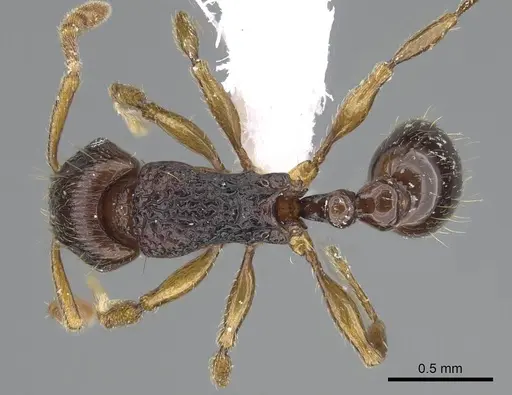
Literature
Loading...Loading products...