

Tetramorium salomo
- Scientific Name
- Tetramorium salomo
- Tribe
- Crematogastrini
- Subfamily
- Myrmicinae
- Author
- Mann, 1919
- Distribution
- Found in 1 countries
Tetramorium salomo Overview
Tetramorium salomo is an ant species of the genus Tetramorium. It is primarily documented in 1 countries , including Solomon Islands. Detailed taxonomic data and occurrence records can be further explored via authoritative databases such as AntWeb or the Global Biodiversity Information Facility (GBIF).
Tetramorium salomo
Tetramorium salomo is a small yellow to light yellow-brown ant native to the Solomon Islands archipelago in Oceania [1]. Workers measure 3.2-3.5mm in length, making them a relatively small Tetramorium species. The species is easily identified by its very long, narrow, and weakly downcurved propodeal spines, along with strongly sculptured pedicel segments. This ant belongs to the ornatum-group and is one of only two species in this group found outside New Guinea, the other being Tetramorium ornatum which occurs in the Solomon Islands and Queensland. In their natural habitat, these ants have been found nesting under stones and foraging on the ground [2]. The species was first recorded from the Solomon Islands in 1919 and has since been documented on Makira and Guadalcanal islands [1].
Quick Summary
- Difficulty: Medium
- Origin & Habitat: Solomon Islands (Makira, Guadalcanal, Malaita) in Oceania. Found under stones and foraging on the ground in tropical island habitats [1][2].
- Colony Type: Colony structure is unconfirmed. Based on typical Tetramorium patterns, likely monogyne (single queen) colonies, though this has not been directly documented.
- Size & Growth:
- Queen: Unconfirmed, no documented queen measurements for this species
- Worker: 3.2-3.5mm
- Colony: Unknown, no colony size data available for this species
- Growth: Unknown, no development data available
- Development: Unconfirmed, no direct data. Based on typical Tetramorium genus patterns, estimate 6-8 weeks at optimal temperature (Development timeline is estimated based on related Tetramorium species. Specific data for T. salomo is not available.)
- Antkeeping:
- Temperature: Tropical species, keep at 24-28°C. Provide a gentle temperature gradient allowing workers to self-regulate
- Humidity: Moderate to high humidity (60-80%). Keep substrate consistently moist but not waterlogged. Mist occasionally and provide a water tube
- Diapause: Unlikely, as a tropical Solomon Islands species, they probably do not require a diapause period. However, slight seasonal slowing during cooler months may occur
- Nesting: Natural nesting: under stones and in soil. In captivity, standard test tube setups work well for founding colonies. For established colonies, a Y-tong (AAC) or plaster nest with moist substrate mimics their natural ground-nesting preferences
- Behavior: Workers are small at 3.2-3.5mm and ground-foraging. Based on typical Tetramorium behavior, they are likely active foragers that search for food on the substrate surface. Escape prevention is important due to their small size, use fine mesh and proper barriers. Temperament is likely moderate, they are not typically aggressive but will defend their nest if threatened. They likely accept a standard Tetramorium diet of small insects and sugar sources.
- Common Issues: limited data means care requirements are estimated rather than confirmed, monitor colony response and adjust, small size makes escape prevention critical, use fine mesh barriers, tropical species may be sensitive to temperature drops, keep warm and stable, no documented colony size limits known, growth expectations are uncertain, wild-caught colonies may carry parasites that can cause problems in captivity
Appearance and Identification
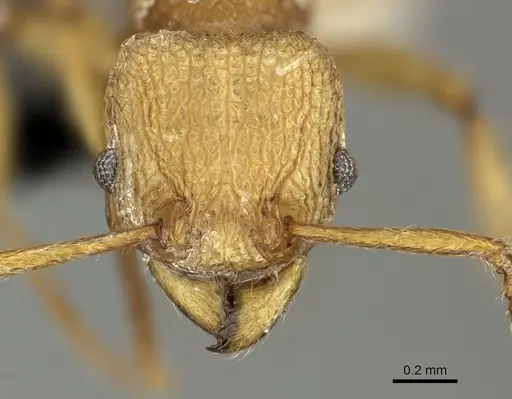
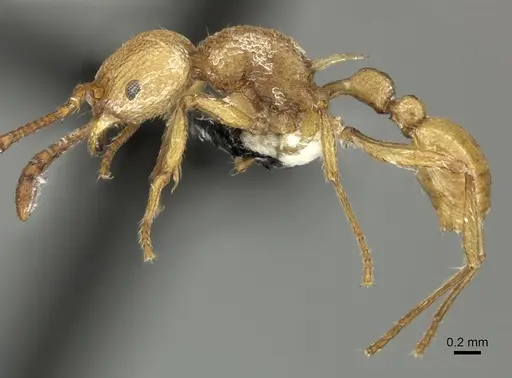
Tetramorium salomo workers are small ants measuring 3.2-3.5mm in total length. They have a distinctive appearance with a uniform yellow to light yellow-brown coloration throughout their body. The most recognizable feature is their very long, narrow, and acute propodeal spines that are weakly downcurved along their length. Their petiole (the second segment of their waist) has a long, downcurved anterior peduncle and a long, low node. The dorsal surface of their head is covered with numerous irregular longitudinal rugae (grooves), while their body segments have a very close, fine rugoreticulum (network-like sculpture). Their hind tibiae have a dense coat of very short, curved hairs directed toward the apex. These ants belong to the ornatum-group, and their combination of size, coloring, strongly sculptured pedicel segments, and very long spines distinguishes them from other Tetramorium species in the Solomon Islands.
Distribution and Habitat
Tetramorium salomo is endemic to the Solomon Islands archipelago in Oceania [1]. The species has been recorded from several islands including Malaita (where it was first described from Auki in 1919), Makira, and Guadalcanal [1][3]. This is significant because T. salomo is the only species in the ornatum-group that is not known to occur in New Guinea, and it represents one of two species in this group found outside New Guinea, the other being Tetramorium ornatum which occurs in the Solomon Islands and Queensland, Australia. In their natural environment, specimens have been found nesting under stones and foraging on the ground [2]. This ground-nesting behavior suggests they prefer moist, shaded microhabitats typical of tropical island forests.
Nest Setup and Housing
For keeping Tetramorium salomo in captivity, start with a standard test tube setup for founding colonies. Use a test tube with a water reservoir sealed with cotton, this provides humidity and a constant water source. The queen should be placed in a dark, quiet location away from vibrations. For small colonies, a test tube setup can work for many months. Once the colony grows beyond 20-30 workers, consider moving to a formicarium. A Y-tong (AAC) nest or a plaster/naturalistic setup works well for this species. Since they are ground-nesting ants that naturally nest under stones, they prefer nests with moist substrate and narrow chambers they can patrol. Ensure the nest material can hold moisture without becoming waterlogged. A small outworld (foraging area) connected to the nest allows you to offer food and watch their foraging behavior.
Feeding and Diet
Based on typical Tetramorium genus behavior, Tetramorium salomo likely has an omnivorous diet. They probably forage for small insects, arthropods, and may tend aphids for honeydew. In captivity, offer a varied diet including small live prey such as fruit flies, pinhead crickets, or small mealworms. They should also have access to sugar sources, a small drop of sugar water or honey diluted with water can be offered occasionally. Since workers are small at 3.2-3.5mm, prey items should be appropriately sized. Remove any uneaten prey after 24-48 hours to prevent mold. Feed every 2-3 days for small colonies, and more frequently for growing colonies. Always ensure fresh water is available.
Temperature and Seasonal Care
As a tropical species from the Solomon Islands, Tetramorium salomo requires warm temperatures. Keep the nest area at 24-28°C, with a slight gradient if possible so workers can regulate their temperature. A heating cable or heating mat on one side of the nest can help maintain warmth, but avoid direct heat that could dry out the nest too quickly. Room temperature may be sufficient if your home is naturally warm (24°C+), but monitor colony activity. Since they come from a tropical environment, they likely do not require a winter diapause. However, slight reduction in activity during cooler months may occur naturally. Maintain humidity by occasional misting and ensuring the water tube remains filled. Avoid temperatures below 20°C for extended periods.
Colony Development and Growth
Specific development data for Tetramorium salomo is not available in scientific literature. Based on typical Tetramorium genus patterns, you can expect the first workers (nanitics) to emerge approximately 6-8 weeks after the queen lays her first eggs, assuming optimal temperature (around 26°C). Nanitics are typically smaller than regular workers. Colony growth rate is moderate, Tetramorium colonies generally grow steadily but not rapidly. Maximum colony size is unknown for this species, but related Tetramorium species typically reach several hundred to a few thousand workers. The queen lays eggs continuously once established, and brood development depends on temperature and nutrition. Be patient with founding colonies, the first few months are slow as the queen raises her initial brood alone.
Frequently Asked Questions
How long does it take for Tetramorium salomo to raise first workers?
The exact timeline is unconfirmed for this species, but based on typical Tetramorium genus patterns, expect 6-8 weeks from egg to first worker at optimal temperature (around 26°C). The queen is claustral (seals herself in) and raises her first brood alone using stored energy reserves. Be patient during founding, this period requires minimal disturbance.
What do Tetramorium salomo ants eat?
Based on typical Tetramorium behavior, they are omnivorous. Offer small live prey like fruit flies, tiny crickets, or small mealworms appropriately sized for their 3.2-3.5mm workers. They also likely accept sugar sources such as diluted honey or sugar water. Remove uneaten food after 24-48 hours to prevent mold. Always provide fresh water.
Do Tetramorium salomo ants need hibernation?
As a tropical species from the Solomon Islands, they likely do not require a true hibernation or diapause. They may show slight reduction in activity during cooler months, but this is not a necessary dormancy period. Keep them warm year-round at 24-28°C.
Are Tetramorium salomo good for beginners?
This species is rated as Medium difficulty. While they are relatively small and manageable, there is very limited specific care information available since this species has not been widely kept in captivity. Expect to adjust care based on observation rather than established protocols. If you have experience with other Tetramorium species, this is a reasonable choice.
How big do Tetramorium salomo colonies get?
Colony size data is not documented for this species. Based on related Tetramorium species, colonies likely reach several hundred to a few thousand workers at maturity. Growth is moderate, expect steady expansion over the first year or two after founding.
Can I keep multiple Tetramorium salomo queens together?
Colony structure (monogyne vs polygyne) has not been documented for this species. Most Tetramorium species are monogyne (single queen), but some can be polygynous. Without specific data for T. salomo, it is not recommended to combine unrelated queens. Start with one queen per colony.
What temperature should I keep Tetramorium salomo at?
Keep them warm at 24-28°C. As a tropical Solomon Islands species, they require consistent warmth. A heating cable on one side of the nest can create a gradient. Avoid temperatures below 20°C for extended periods.
Do Tetramorium salomo ants sting?
Tetramorium belongs to the subfamily Myrmicinae, which includes many species with functional stingers. While not specifically documented for T. salomo, they likely can sting if threatened. However, their small size means any sting would be very mild. They are not considered dangerous to humans.
Why are my Tetramorium salomo workers dying?
Common causes include: temperature stress (too cold or too hot/dry), improper humidity (too dry or waterlogged), mold from uneaten food, or stress from disturbance during founding. Review your setup and ensure conditions match their tropical ground-nesting preferences. Also ensure escape prevention is adequate, small ants can slip through gaps.
References

This caresheet is licensed under CC BY-SA 4.0 .
CASENT0199901
View on AntWeb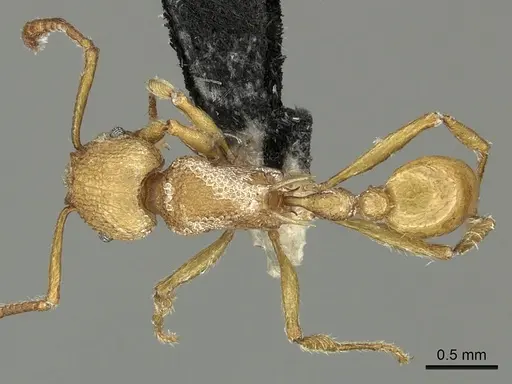
Literature
Loading...Loading products...